REVIEW · CHIANG MAI
Chiang Mai: Chiang Rai Temples & Black House Discovery Tour
Book on GetYourGuide →Operated by Chiang Mai Footsteps Travel · Bookable on GetYourGuide
This route feels like a art-and-spirit sprint, not a museum shuffle, and the White Temple and Black House are the reason. I love how the day mixes jaw-dropping temple design with Thai contemporary art, so you see more than one version of faith and creativity. The main drawback is simple: it’s a long day in a van, and popular stops can get crowded fast.
You’ll start with a hotel pickup around 7:00–7:30, then head north with an English-speaking guide and a small group (up to 12). It’s well set up if you want the big names in Chiang Rai without spending your whole day figuring out transport. Just note the pace can feel rushed, especially if you like to linger.
Before you go, do two practical things: pack for heat and respect temple rules. You’ll walk in comfortable shoes, and you’ll need to cover shoulders and knees and remove your shoes at the main temple areas.
In This Review
- Key points before you go
- A packed northbound day: White Temple, Blue Temple, Black House
- The van ride + Mae Kachan hot spring: where the day starts
- Wat Rong Khun (White Temple): pure white, crowded cameras, and sharp details
- Wat Rong Suea Ten (Blue Temple): tiger legends meet colorful architecture
- Baan Dam (Black House): when Thai contemporary art gets dark
- Lunch, timing, and the small-group reality (including guide differences)
- What to pack and wear for a full day of temple rules
- Price and value: is $51 a fair deal for this route?
- Who this Chiang Mai to Chiang Rai day trip suits best
- Should you book this Chiang Mai to Chiang Rai day trip?
- FAQ
- What’s included in the tour price?
- How long is the Chiang Mai to Chiang Rai tour?
- Where do I meet the tour?
- What time is pickup?
- Can I swim at Mae Kachan Hot Spring?
- Is the tour suitable for mobility impairments?
Key points before you go
- Three iconic Chiang Rai stops in one day: Wat Rong Khun, Wat Rong Suea Ten, and Baan Dam
- Small group feel (limited to 12) helps with questions and timing
- Hot spring stretch stop at Mae Kachan, but it’s not for swimming
- Thawan Duchanee’s Black House offers a strong contrast to the white-and-blue temples
- Crowds are real at the White Temple, so plan to take your photos quickly and move on
- Lunch is included, but quality can vary, so don’t expect fine-dining
A packed northbound day: White Temple, Blue Temple, Black House
If you’re short on time in Northern Thailand, this is a smart way to see Chiang Rai’s headline attractions without building your own day trip. You get a full loop from Chiang Mai that turns into a mini “Thailand in three styles” lesson: dazzling religious symbolism, stylized temple art tied to local legends, and then a dark, contemporary art space that pushes back against the usual expectation of what a temple day should look like.
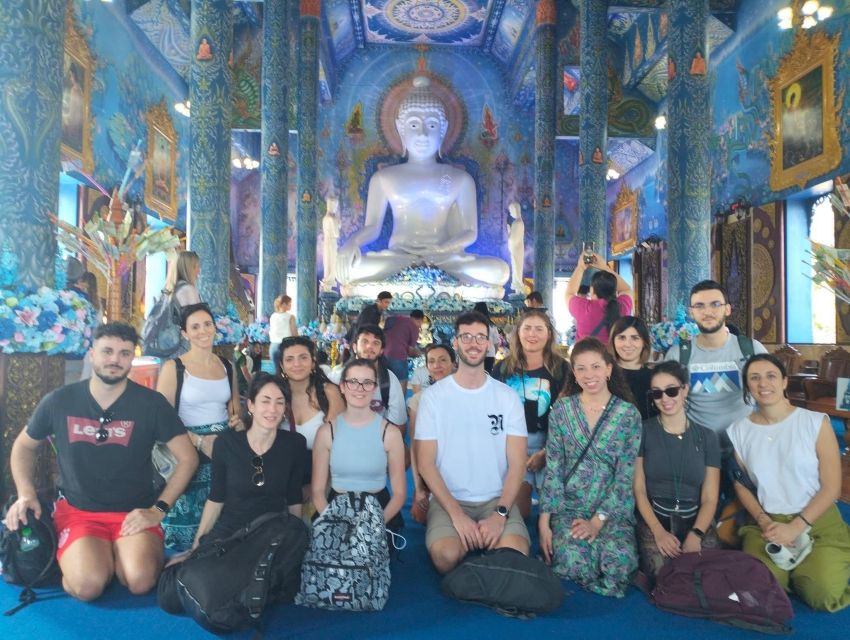
What I like most is the contrast. Wat Rong Khun (White Temple) gives you clean, bright religious imagery. Wat Rong Suea Ten (Blue Temple) shifts the mood into something more theatrical and story-driven. Then Baan Dam (Black House) changes the emotional temperature completely, with an artist’s world built from shadowy forms and strange objects. If you’re the type who gets bored by one-note sightseeing, this mix helps.
The flip side? A day like this doesn’t leave much room for slow wandering. Even with guided visits, you’ll feel the day is “on schedule,” and your comfort depends on how tired you get after the driving.
You can also read our reviews of more tours and experiences in Chiang Mai.



The van ride + Mae Kachan hot spring: where the day starts
Your day trip kicks off with pickup from Baan Meesuk, in Chiang Mai’s old town. The pickup window is typically 7:00–7:30, and you’ll be in the van for the trip up to Chiang Rai with a couple of stretches along the way.
Right before the temples, you’ll pass Mae Kachan Hot Spring. It’s a chance to stretch your legs, not swim. This is worth knowing up front. If you’re imagining a soak, you’ll be disappointed. But as a quick break—bathroom, a little walking, a chance to reset—it makes the later temple stops feel less grindy.
On the driving side, you’ll be in a van for multiple chunks of time and then another drive back in the afternoon/evening. The tour includes round-trip transfers, which is the big win: you don’t have to negotiate rides or change vehicles. The small tradeoff is that van comfort can make or break your mood on a long day.
Wat Rong Khun (White Temple): pure white, crowded cameras, and sharp details
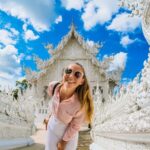
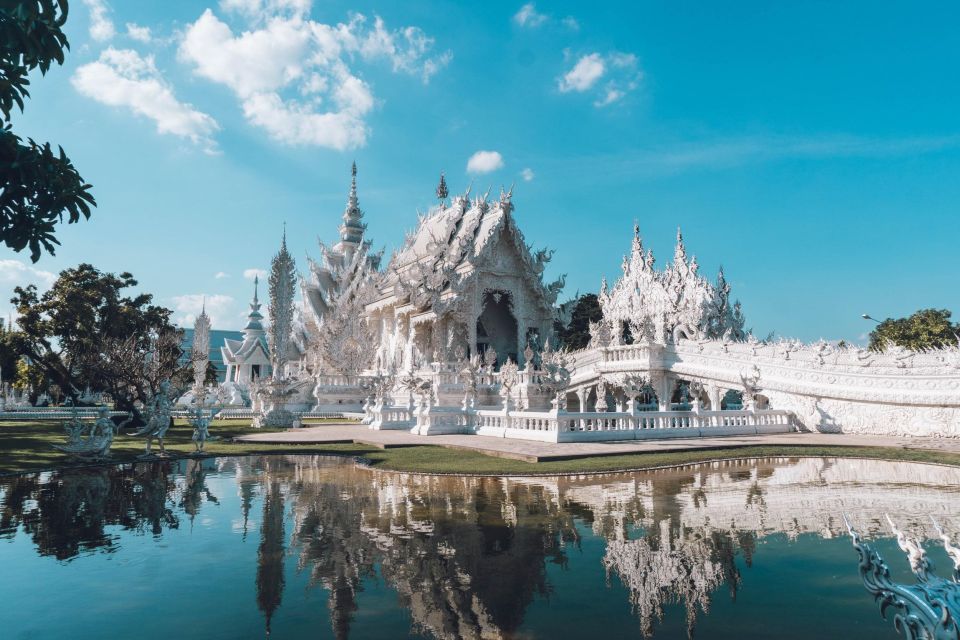
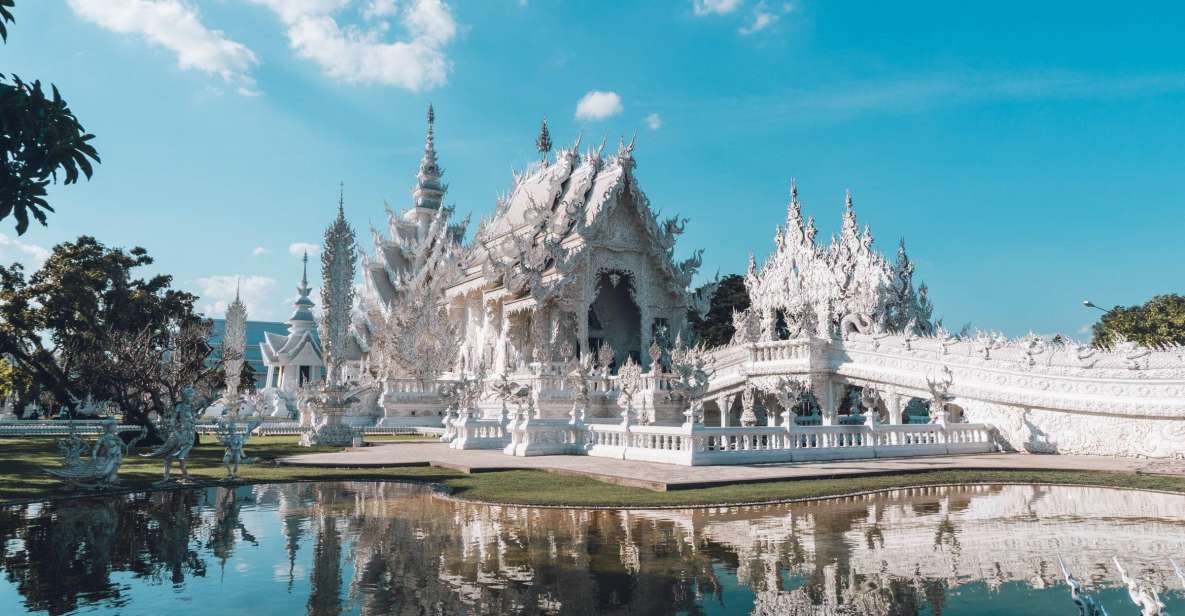
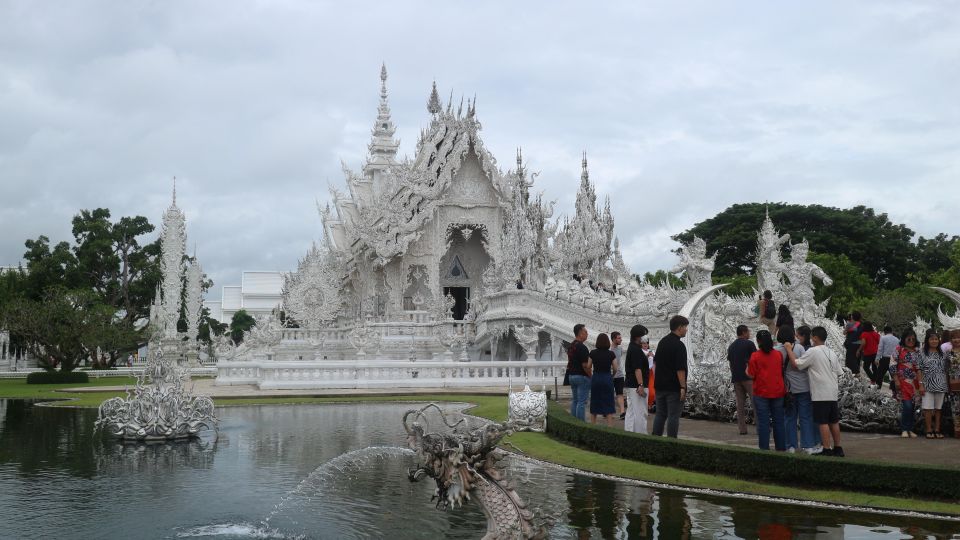
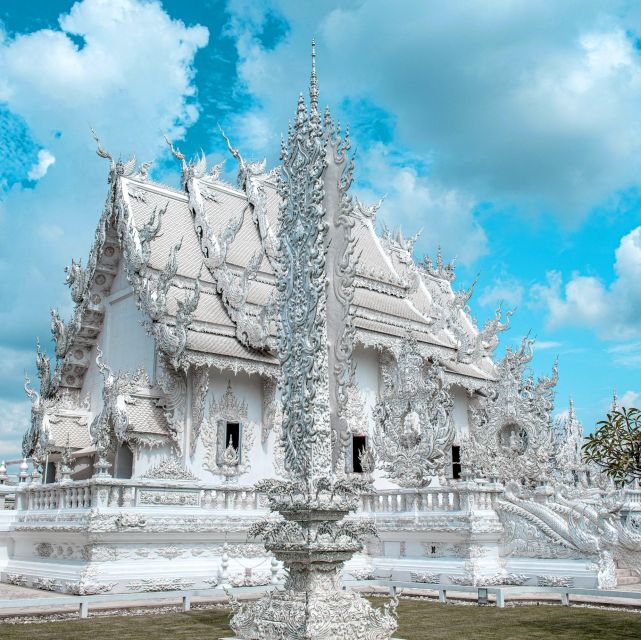
Wat Rong Khun is the stop people recognize instantly, even if you haven’t seen it in person. It’s famous for its white exterior and sparkling decorative elements that catch the light in a way that feels almost unreal—like the temple is lit from within. There’s also a pond reflection effect, and that quiet water gives you a chance to frame photos with less chaos than you might expect from a high-traffic site.
What makes it special for you isn’t only the color. It’s the symbolism behind the look: the white surfaces are meant to represent purity and Buddha’s wisdom. That’s why it doesn’t feel random. Even if you’re not there for deep symbolism, the design reads clearly as intentional and “meaning first.”
The practical catch: the White Temple can be very crowded. Expect long lines or packed viewing areas at peak times. This tour does include a guided visit, and that helps you move with purpose instead of getting stuck in the slow shuffle. Still, go in ready to treat the first part as photo-and-see quickly, then enjoy the quieter moments as you walk deeper into the complex.
Temple etiquette matters here. You’ll need respectful clothing (shoulders and knees covered) and you should plan on removing your shoes when entering main temple areas. Comfortable shoes are a must because you’ll likely do more standing and walking than you think.
Wat Rong Suea Ten (Blue Temple): tiger legends meet colorful architecture
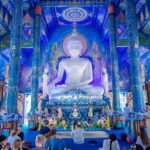
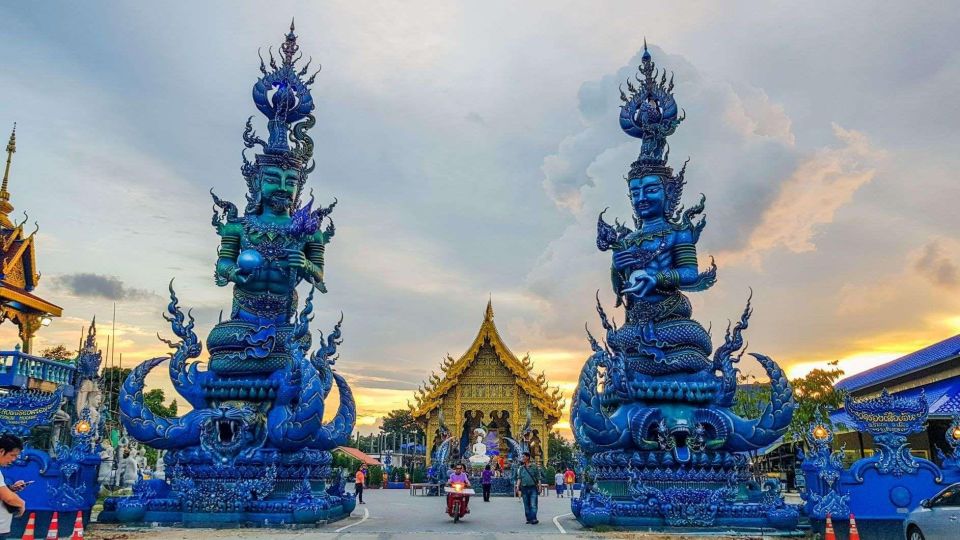
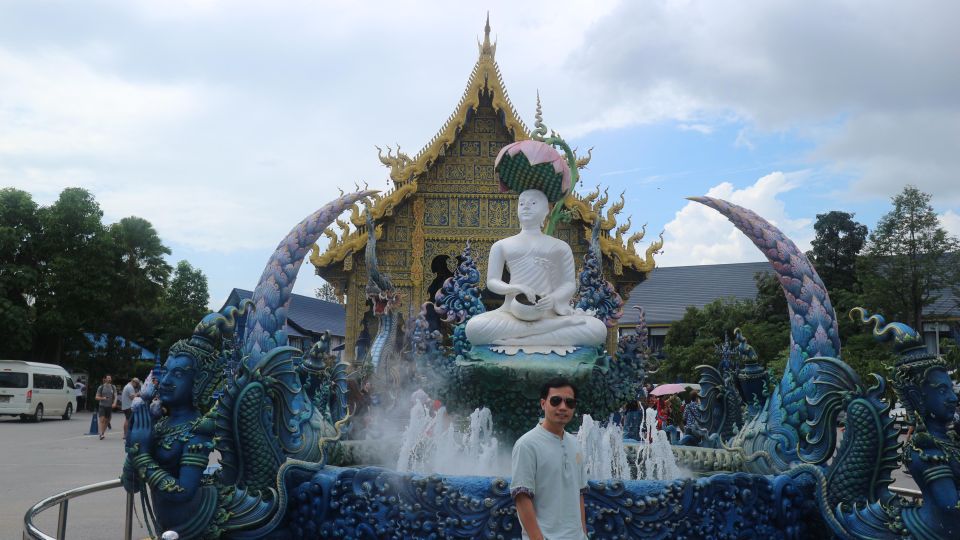
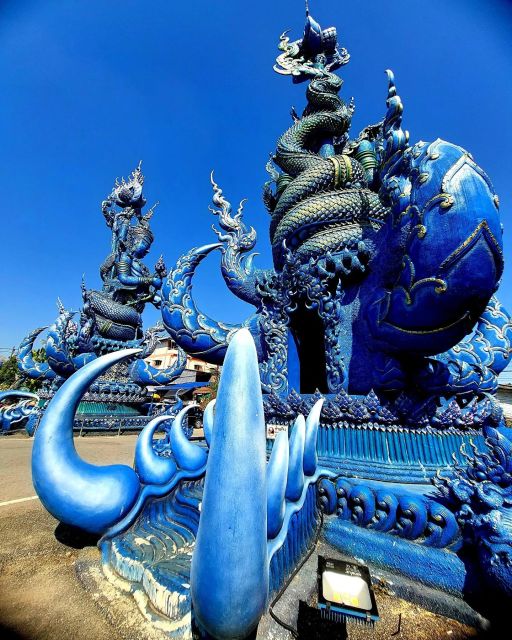
Next comes Wat Rong Suea Ten, known as the Blue Temple. This one doesn’t aim for clean minimalism like the White Temple. Instead, it leans hard into color, ornate decoration, and dramatic visual rhythm.
The story angle is part of the appeal. The site is believed to have once been roamed by majestic tigers, and that kind of legend gives the temple a more myth-flavored atmosphere than the symbolism-only approach you might get elsewhere. You’ll see how the design reflects the temple’s creative spirit and religious devotion through bold choices in paint and structure.
For many people, the Blue Temple is where the day clicks emotionally. After the white shine of Wat Rong Khun, the blue tones feel different in a good way. It’s also a chance to practice a more relaxed pace—slow down your viewing, pick one section to study, and let the colors and details do the work.
One consideration: even though it’s a major attraction, the tone can still feel tourist-heavy during the visit window. If you prefer quiet temples with lots of empty space, you might find you’re sharing the experience. Still, as part of a full day trip, this stop works because it gives you a distinct visual identity.
Baan Dam (Black House): when Thai contemporary art gets dark
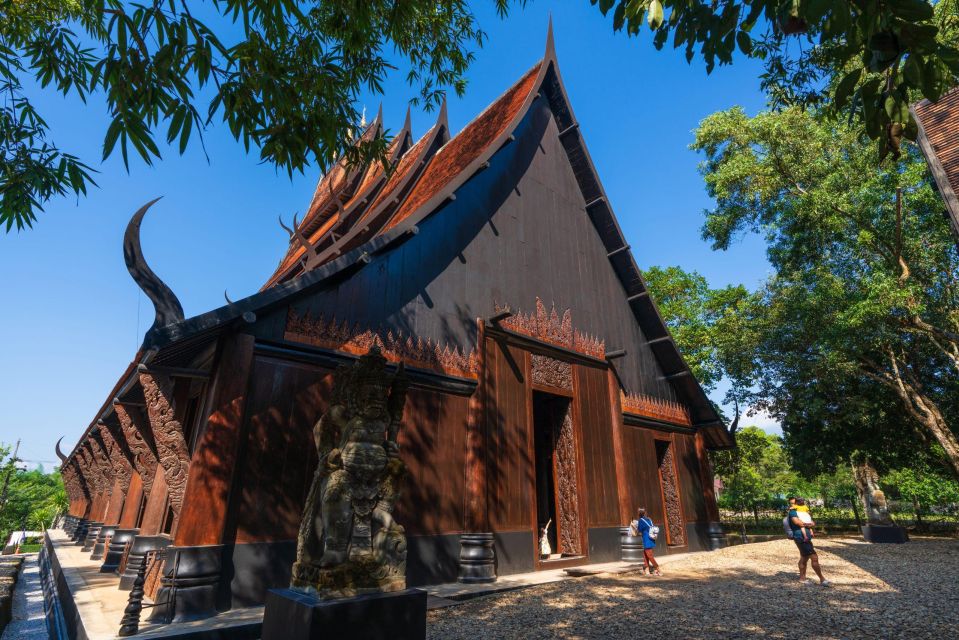
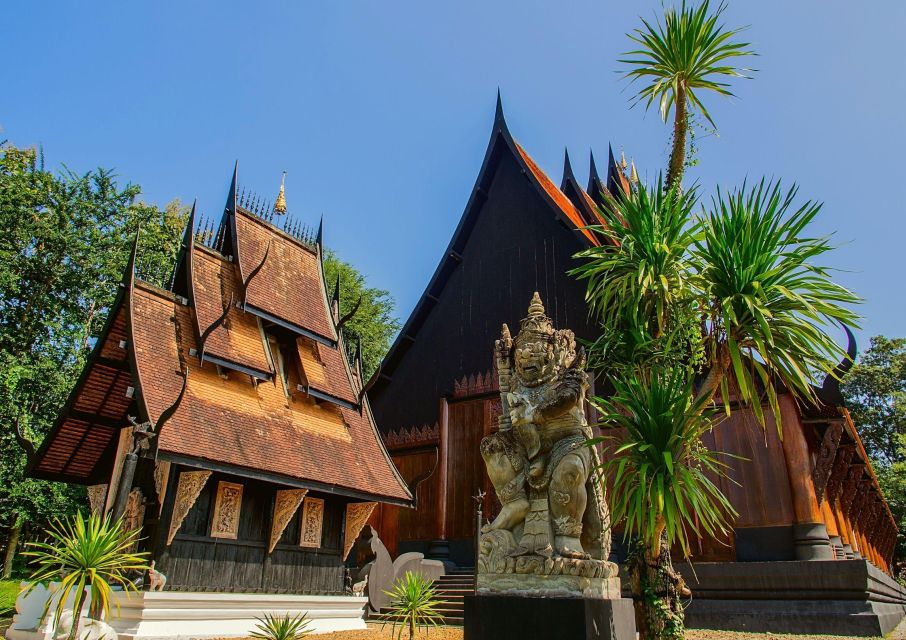
Then the schedule shifts. Baan Dam, or the Black House, breaks the usual temple-day pattern. Instead of a traditional religious complex, you’re walking through an art space created by the artist Thawan Duchanee.
This stop is the reason this tour isn’t just sightseeing. The architecture is dark and the collection inside feels eclectic—less about harmony and more about contrast. It can read as shocking at first, but that’s the point. Baan Dam challenges expectations, and it asks you to sit with discomfort and curiosity instead of treating the building as a pretty backdrop.
I love how that contrast works for your brain. After the White Temple’s symbolism and the Blue Temple’s myth-driven artistry, Baan Dam hits like a new conversation. Even if you’re not an art expert, you’ll understand quickly that this place is trying to provoke thought.
The practical side: you’ll likely feel tired by the time you reach Baan Dam. That’s normal on a day trip. If you want to get the most out of it, keep your expectations realistic: this isn’t about big outdoor photo moments the way the temples can be. It’s about slower looking and absorbing mood.


Lunch, timing, and the small-group reality (including guide differences)
This tour includes lunch and entrance fees, plus drinking water and insurance. Those inclusions matter because they reduce decision fatigue. In one paid package, you’re covered for the costs that add up fast on DIY days.
The bigger factor is timing. A day trip like this stacks three major attractions plus travel time. That means you may feel like you’re always moving—even with guided tours. Some people end up wanting more time at the sights to simply walk at their own speed instead of staying inside the group flow.
Group size is capped at 12, which usually helps a lot. Smaller groups mean you can hear the guide better and ask questions without shouting. Still, one thing to keep in mind: if a tour ends up running with a slightly larger-than-ideal group, it can change the experience at the busiest areas.
Guide quality can also shift the feel. I’ve seen examples where guides were very attentive (one guide named Eve stood out for being especially sweet and responsive). At the same time, not every tour guide delivers the same depth or historical context. If you care about explanations beyond quick facts, ask during the first stop or pay attention early—guides often set the tone within the first hour.
What to pack and wear for a full day of temple rules
Your best day starts before you even leave the hotel. Bring comfortable shoes because temple floors and courtyard walking can add up. Pack sunscreen, insect repellent, and a sun hat—you’ll be outside between stops, and the heat can be steady even when you’re not in direct sun.
Dress for temples means more than looking respectful. It’s required: cover shoulders and knees, and expect to remove your shoes for main chapel areas. If you’re used to packing light, this is where you’ll thank yourself for bringing a light layer that covers easily.
Also bring a small attitude adjustment: plan to move through crowds without getting annoyed. The White Temple is the most likely place to feel shoulder-to-shoulder. Your goal is not to fight the crowd—it’s to use your eyes and timing efficiently.
Price and value: is $51 a fair deal for this route?
At $51 per person for a one-day trip, the value comes from what you don’t have to organize: round-trip transfers from Chiang Mai, pickup and drop-off, entrance fees for the main sites, lunch, an English-speaking guide, and drinking water.
If you tried to DIY this, you’d pay for transport up and back, then pay each entrance fee, and you’d still be stuck coordinating the day so you don’t miss closing times. The tour format trades some flexibility for convenience and cost control.
Is it “cheap”? Not exactly. But it’s reasonable if you want three major destinations in one day and you’d rather spend your mental energy on the sights instead of route planning. The only time this price feels less worth it is if you’re picky about guide depth, lunch quality, or you strongly prefer lots of free time at each stop. In those cases, a private plan (or separate temple visits) might fit better.
Who this Chiang Mai to Chiang Rai day trip suits best
This tour fits you if:
- You want the headline Chiang Rai experiences without scheduling chaos.
- You’re okay with a busy day and you don’t need long, slow wandering.
- You enjoy art contrasts—religious symbolism plus contemporary provocation.
- You like guided context, and you’re fine with the fact that guide style can vary.
You may want to skip or adjust expectations if:
- You hate crowds at iconic photo spots.
- You’re sensitive to long van rides and want more comfort.
- You’re expecting a spa-style hot spring stop (it’s not for swimming).
- Mobility is an issue, because the tour is not suitable for people with mobility impairments.
It’s also a good option for first-time visitors to Northern Thailand who want a compact cultural hit.
Should you book this Chiang Mai to Chiang Rai day trip?
Book this tour if you want a single-day plan that hits Wat Rong Khun, Wat Rong Suea Ten, and Baan Dam with transport and fees handled, plus lunch and an English-speaking guide. It’s especially worth it for the contrast—white-and-blue temple drama followed by the darker, thought-provoking world of Thawan Duchanee’s Black House.
Skip it (or consider alternatives) if you want lots of free time, quiet temples, or if you know you’ll be cranky after several hours in a van. Also, if you need accessibility accommodations, this one isn’t designed for mobility impairments.
FAQ
What’s included in the tour price?
The tour includes hotel pickup and drop-off, round-trip transfers, all entrance fees, an English-speaking tour guide, lunch, insurance, and drinking water.
How long is the Chiang Mai to Chiang Rai tour?
It’s listed as a 1-day experience.
Where do I meet the tour?
Meeting is at Baan Meesuk in Chiang Mai (old town). You should meet there at the start of the tour.
What time is pickup?
Pickup is optional, and you’ll be picked up between 7:00 and 7:30.
Can I swim at Mae Kachan Hot Spring?
No. It’s a stop to pass by and stretch your legs, but it is not a place to swim.
Is the tour suitable for mobility impairments?
No, it’s not suitable for people with mobility impairments.