REVIEW · CHIANG MAI
Evening Cooking Class in Traditional Pavilion with Beautiful Garden – Chiang Mai
Book on Viator →Operated by Oh-Hoo · Bookable on Viator
A garden dinner lesson beats restaurant hopping. You get picked up from Chiang Mai and spend the evening at Grandma’s Home Cooking School in a traditional pavilion surrounded by an organic farm. I love the small group setup and the hands-on pace, because you’re not watching a demo from the back.
Two things I really like: you’ll cook four real Thai dishes (from soup to dessert) and you create your own curry paste with an English-speaking instructor guiding you step by step. There’s also a short farm walk to pick up fresh ingredients like eggs, which makes the cooking feel grounded and practical.
One thing to consider: the class is outdoors in good weather, and the menu can shift based on seasonal ingredient availability. If you’re coming at the edge of rainy season or bad-weather weeks, plan to be flexible.
In This Review
- Key highlights you’ll actually care about
- From Tha Phae Gate Pickup to the Garden Pavilion
- Organic Farm Walk: Eggs, Herbs, and Why It Changes the Cooking
- Your Hands-On Cooking Session: Four Dishes and Curry Paste Craft
- Soup, Noodles, and Curries: What Each Dish Teaches You
- Tom Yam or Tom Kha: Sour heat vs. creamy comfort
- Rice noodles (Pad Thai style): the importance of stir-fry timing
- Green or Red Curry: the paste is the whole story
- Mango sticky rice: dessert that fits the meal
- Sharing Your Meal: The Real Win Is What You Learn to Taste
- Price and Logistics: Why $51.46 Makes Sense for a 4-Hour Skill Class
- Who This Evening Cooking Class Is Best For
- A Few Practical Tips Before You Go
- Should You Book This Chiang Mai Cooking Class?
- FAQ
- Where does the experience start in Chiang Mai?
- What time does the class begin?
- How long is the cooking class?
- Is pickup from my hotel included?
- How many dishes will I cook?
- What dishes are included?
- Is the group size small?
- How do I access my ticket?
- What happens if the weather is bad?
- What is the cancellation window for a full refund?
Key highlights you’ll actually care about
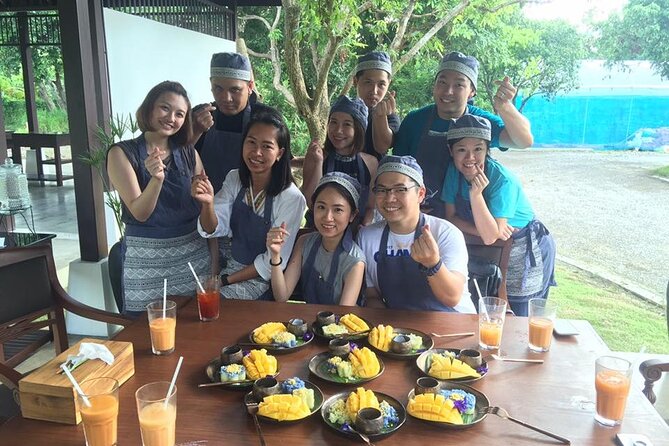
- Max 8 people, individual stations so you cook instead of waiting.
- Create curry paste from scratch with guidance, not just chopping.
- Farm walk before cooking for fresh herbs and ingredients you’ll use later.
- Cook four dishes total covering soup, noodles, curry, and dessert.
- Garden pavilion setting makes the evening feel special without the tourist show.
- Pickup and drop-off makes a 4pm start easier than DIY.
From Tha Phae Gate Pickup to the Garden Pavilion
The evening starts right where many Chiang Mai trips begin: a meeting point near Tha Phae Gate, on Tha Phae Road. The start time is 4:00 pm, which is a sweet spot. You’re early enough to cook with daylight nearby, but you still get that night-market energy later in town if you want it.
If your package includes pickup, you’ll be collected from your hotel in Chiang Mai and brought to the school with your group. This matters more than it sounds. A cooking class where you have to figure out transport at rush hour can get stressful fast. Here, the plan is designed so you show up, put on your game face, and start.
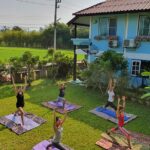
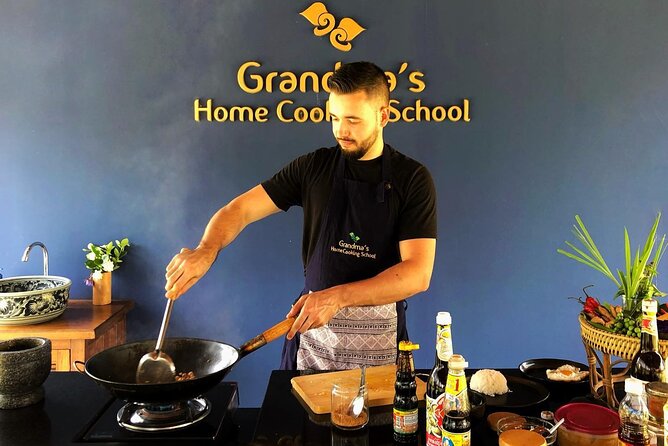
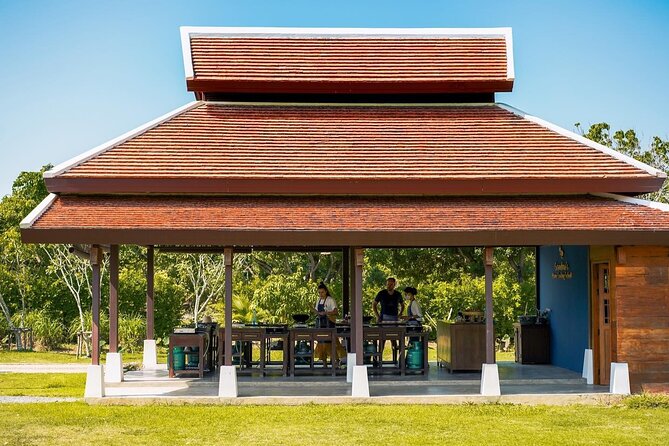
The setting is an open pavilion inside a beautiful garden on an organic farm just outside the city. That means you’re not stuck in a tiled classroom. You’ll feel like you’ve left the noise of town for a calmer pocket of green while you learn the food.
You can also read our reviews of more cooking classes in Chiang Mai

Organic Farm Walk: Eggs, Herbs, and Why It Changes the Cooking
Before you touch a knife, you walk around the organic farm with your instructors. The point isn’t just pretty scenery. It’s to connect the Thai flavors you’ll cook later to the actual plants you’re looking at now—herbs, vegetables, and other fresh ingredients.
A standout detail: you can collect eggs during the farm part of the experience. It’s a small task, but it adds a real sense of involvement. You’re not just paying for a meal. You’re paying to understand where ingredients come from and how they fit into Thai cooking.
As you move through the farm, your instructor explains Thai herbs and vegetables. Even if you don’t memorize every plant name, you’ll start recognizing ingredients you see in markets back in town. That’s the travel advantage here: you leave with better shopping instincts.
Practical note: because the class takes place in and around gardens and farm paths, wear shoes you’re comfortable getting dirty. You’ll thank yourself during the walk and again when you’re standing around your cooking station later.
Your Hands-On Cooking Session: Four Dishes and Curry Paste Craft
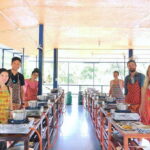
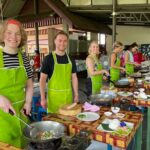
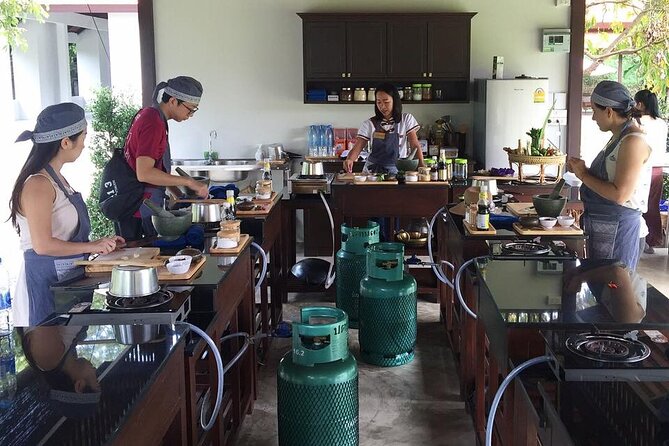
The heart of the class happens in the traditional open pavilion cooking area. The school keeps group size tight—up to 8 participants—and you get your own individual cooking station. That one detail changes everything.
With small groups, you can ask questions without waiting your turn. You can correct mistakes while they’re small. And you’re more likely to come home with dishes you can reproduce, not just a story about how fun it was.
The class teaches you to cook four dishes during the evening. The menu includes options like:
- Hot and Sour Soup (Tom Yam) or Coconut Soup (Tom Kha)
- A Thai stir-fried dish with rice noodles (often in the Pad Thai style)
- Green Curry or Red Curry
- Mango Sticky Rice (Khao Niao Mamuang)
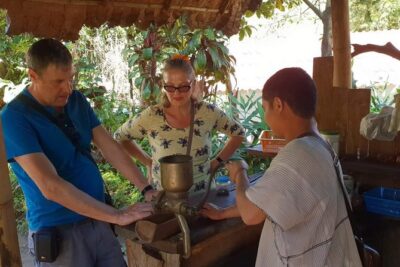
One of the biggest skills you’ll build is curry paste. You’ll make your own curry paste with help and guidance from the English-speaking instructor. This is where Thai cooking gets real. Curry flavor doesn’t come from a single sauce; it starts from the paste and its balance of aromatics.
When you make the paste yourself, you learn what to pay attention to:
- the smell as ingredients hit the mortar and get crushed,
- the way spices start to blend into something fragrant,
- and how the paste changes before it ever reaches the pot.
That’s also why the class is valuable even if you cook at home already. You’re practicing method, not just copying steps.
Soup, Noodles, and Curries: What Each Dish Teaches You
Thai cooking has a logic: contrast, balance, and timing. This class keeps that logic clear by teaching dishes that each highlight a different side of flavor.
Tom Yam or Tom Kha: Sour heat vs. creamy comfort
If your menu leans toward Tom Yam, you’ll get familiar with the Thai approach to sour and spice—often with limey tang and a hot, flavorful broth. If you make Tom Kha, you’ll see how coconut softens and rounds out flavor while still keeping a strong herb backbone.
Either way, the lesson is the same: you learn what “Thai sour” tastes like before it hits your tongue, and how herbs and aromatics show up as fragrance before they show up as flavor.
You can also read our reviews of more evening experiences in Chiang Mai



Rice noodles (Pad Thai style): the importance of stir-fry timing
The stir-fried noodle dish teaches you what Thai wok cooking really means. You’ll practice keeping heat steady and moving quickly enough that noodles don’t turn mushy. The goal is to balance noodles with sauce without turning the pan into a sticky mess.
This dish also tends to be the one people want to remake at home first. Once you nail the timing, you can reproduce that restaurant-style texture more easily.
Green or Red Curry: the paste is the whole story
Whether you cook green curry or red curry, you’ll be working from the paste you created. That means your curry doesn’t taste like the curry powder shortcut version.
Curries in this style also show you how Thai cooking layers taste:
- first, aromatics react in heat,
- then, coconut or broth adds body,
- and finally, herbs and seasonings pull it into focus.
If you’ve ever tasted curry that was either flat or harsh, this is where you learn the balancing points.
Mango sticky rice: dessert that fits the meal
Mango sticky rice can feel like an afterthought in some classes. Here, it’s treated as part of the craft. You’re making a dessert that uses texture and temperature—sticky rice with coconut sweetness and mango fruitiness.
It’s also a great “wrap-up” dish because it’s simple compared to curry, but it still requires care. You’ll feel confident enough to remake it without turning it into a science project.
Sharing Your Meal: The Real Win Is What You Learn to Taste
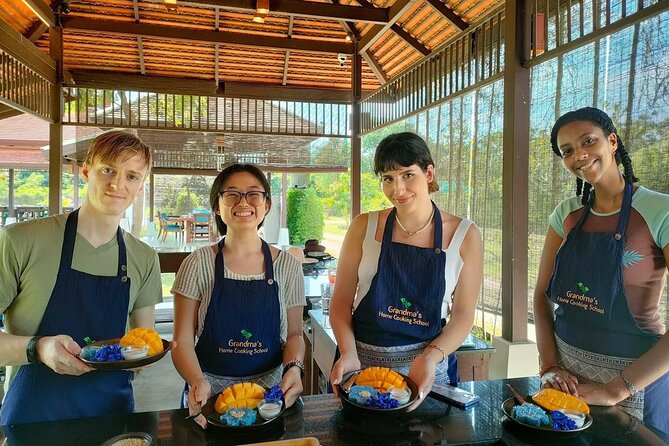
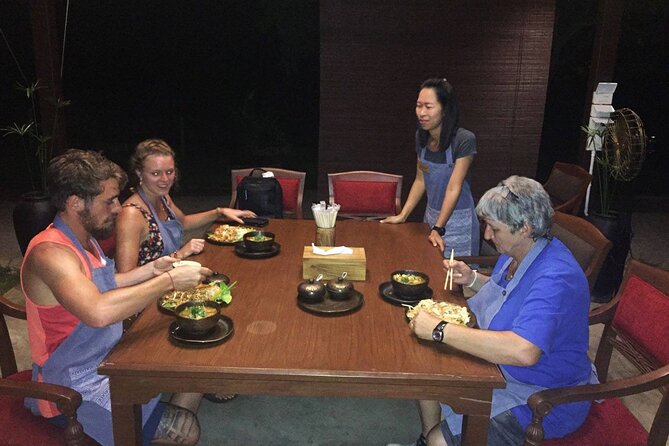
At the end, you enjoy what you cooked as a group meal. This part is more important than just sitting down to eat.
When you cook, you become more aware of what makes each dish work. When you then compare tastes with others at your table, you quickly learn the differences between slightly too salty, not sour enough, or curry paste that needed a bit more grinding.
One detail I especially appreciate from the overall experience style: people leave with ingredient notes. If you’re the type who wants to recreate a dish at home, this class gives you a clear list mindset. You start thinking in categories—herbs, aromatics, staples—and you can shop more intelligently later.
And yes, the meal you cooked tends to be one of the best you’ll eat in Chiang Mai—because it’s fresh, just-made, and you understand what each bite is supposed to do.
Price and Logistics: Why $51.46 Makes Sense for a 4-Hour Skill Class
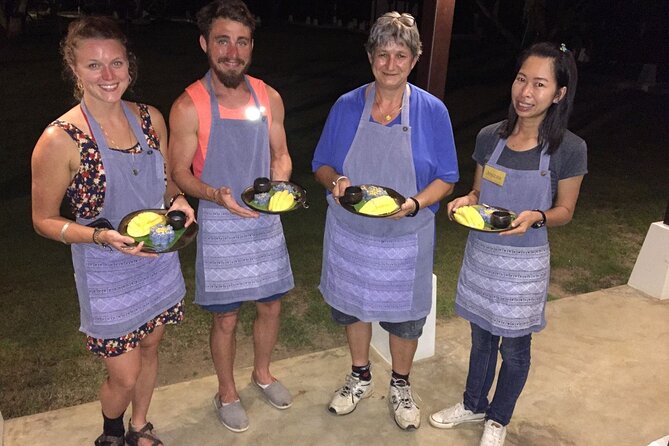
At $51.46 per person for roughly 4 hours, this is priced like a real activity, not a token cooking demo. Here’s the value logic:
- You get pickup (when offered) and return—huge for saving time and avoiding hassle.
- You cook four dishes, not just watch.
- The group max is 8, and you get an individual cooking station. That’s the difference between learning and crowd control.
- You also get the farm walk component—ingredients you see and collect before they reach the pan.
If you compare this to the cost of going out for a fancy Thai dinner plus cooking supplies plus a guide-less market guess game, the class often wins. It’s not just about the food. It’s about learning how to build flavor and what ingredients do what.
Timing also helps: starting at 4:00 pm means you’re not stuck on an all-day schedule. You can still plan evening wandering after class.
Who This Evening Cooking Class Is Best For
This is a strong choice if you:
- want a Thai food experience that’s hands-on, not just photos,
- like small groups where you can actually ask questions,
- enjoy learning ingredient basics like Thai herbs and vegetables,
- and want a practical curry-paste skill you can use again at home.
It’s also a great “family-friendly” style of evening if your group includes kids who can handle a hands-on setting. (The class runs with a small group cap and structured steps, which usually makes it easier for families than chaotic experiences.)
If you’re traveling solo, the small group setup still feels friendly. You’ll cook at your own station, then share the meal with others—social without being forced.
A Few Practical Tips Before You Go
- Wear closed-toe shoes for the farm walk.
- Expect the menu to change by season and ingredient availability. Bring curiosity, not rigid expectations.
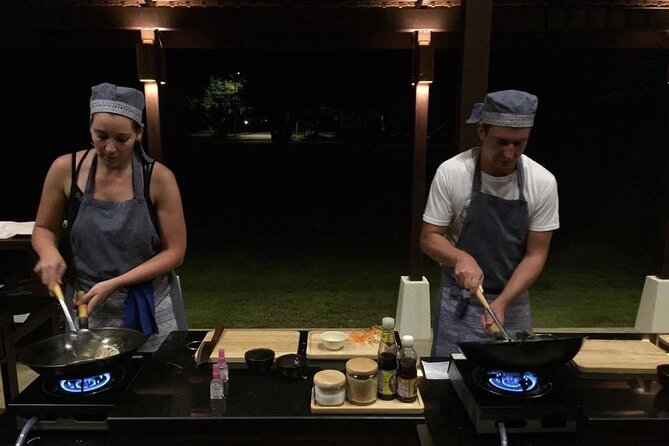
- If the forecast looks rough, remember the class requires good weather, since it’s outdoors in an open pavilion area. If weather cancels things, you’ll be offered a different date or a refund.
Also, bring a mindset of learning. You’ll get more out of the evening if you treat it like a skill session: notice smells, ask what to look for, and don’t be shy about clarifying substitutions.
Should You Book This Chiang Mai Cooking Class?
Book it if you want Thai cooking you can repeat, not just a nice dinner with a chef talking over your shoulder. The combination of small-group stations, curry paste from scratch, and four dishes in one evening is strong value for $51.46. Add the farm walk and ingredient context, and you get more than food—you get a map of flavors you can recreate later.
Skip it only if you’re the type who hates outdoor, garden-based settings or you need a strict, unchanging menu. Seasonal ingredient swaps are part of the deal.
If your schedule can handle a 4:00 pm start and you’re curious about how Thai flavor is built, this is one of those evenings that pays off twice: during dinner, and again when you try cooking at home.
FAQ
Where does the experience start in Chiang Mai?
It starts at Tha Phae Gate on Tha Phae Road, Tambon Chang Khlan, Amphoe Mueang Chiang Mai, Chang Wat Chiang Mai 50200, Thailand.
What time does the class begin?
The start time is 4:00 pm.
How long is the cooking class?
It lasts about 4 hours.
Is pickup from my hotel included?
Pickup is offered, so you can arrange to be collected from your hotel in Chiang Mai.
How many dishes will I cook?
You will cook four dishes total.
What dishes are included?
The class includes soup (Tom Yam and/or Tom Kha), a stir-fried rice noodle dish (Pad Thai style), a curry (green curry and/or red curry), and mango sticky rice (Khao Niao Mamuang). The exact menu can vary by season.
Is the group size small?
Yes. The class has a maximum of 8 travelers.
How do I access my ticket?
You’ll use a mobile ticket.
What happens if the weather is bad?
The experience requires good weather. If it’s canceled due to poor weather, you’ll be offered a different date or a full refund.
What is the cancellation window for a full refund?
Free cancellation is available. You must cancel at least 24 hours before the experience’s start time for a full refund.