REVIEW · CHIANG MAI
Chiang Mai: Chiang Rai Temples, Karen Tribe and Hot Springs
Book on GetYourGuide →Operated by MONKEY TRAVEL ASIA by Ask Discovery · Bookable on GetYourGuide
White Temple glow starts the day’s rhythm. This one-day Chiang Rai tour from Chiang Mai strings together Wat Rong Khun (White Temple) and Mae Kachan Hot Springs for a memorable mix of contemporary Thai artistry and real downtime. I like that it’s structured enough to hit the big sights without you having to plan. The main catch is the long, full day drive—so you’ll need patience for transport and temple stairs.
What makes it work is the pacing and the variety: you’ll soak your feet, meet the Karen long-neck community, then tour three standout temple stops with time for photos and a climb at the end. Your guide is English-only, but there’s an audio guide option via QR in 41 languages if you bring your own earphones.
In This Review
- Quick hits: what you’ll notice right away
- Mae Kachan Hot Springs: start slow before the temple circuit
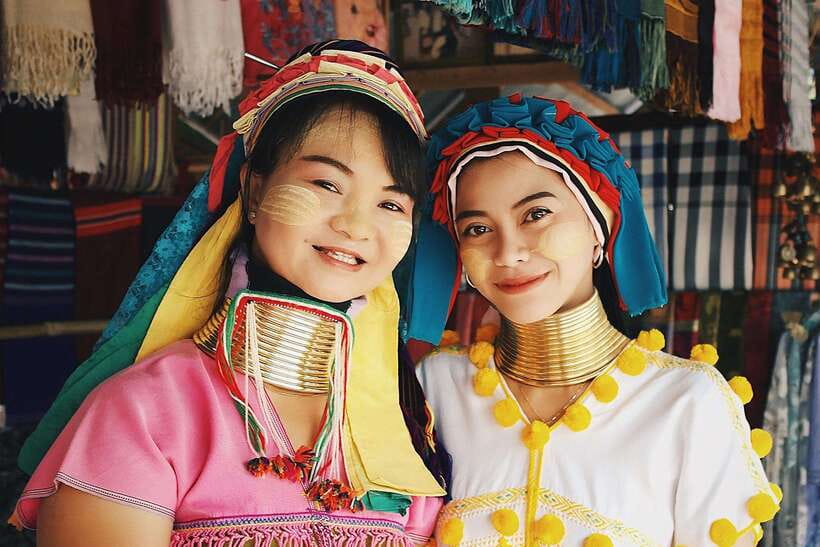
- Karen long-neck Mae Kachan village: culture, crafts, and respectful curiosity
- Wat Rong Khun (White Temple): contemporary Buddhist art with sharp details
- Lunch in Chiang Rai: plan for a break that’s on you
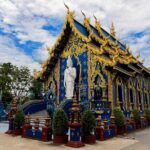
- Wat Rong Suea Ten (Blue Temple): calm Buddha in a modern Thai shell
- Huay Pla Kang Temple: Guan Yin statue and the nine-tier climb
- Logistics that matter: how the day stays smooth despite long travel
- Price and value: what $35 really covers in Chiang Rai
- Who should book this day trip (and who should skip)
- Should you book this Chiang Rai Temples and Hot Springs tour?
- FAQ
- What’s the duration of this Chiang Rai day trip from Chiang Mai?
- Where do I meet the guide?
- Which temples are included?
- Is swimming allowed at Mae Kachan Hot Springs?
- Do I need to pay extra at the long-neck village?
- Is lunch included in the price?
- What do I need for the audio guide in other languages?
Quick hits: what you’ll notice right away
- Mae Kachan Hot Springs lets you slow down first, with warm mineral-water views but no swimming
- Karen long-neck Mae Kachan village gives you a close-up look at brass neck rings and handmade crafts (long-neck village entry fee applies)
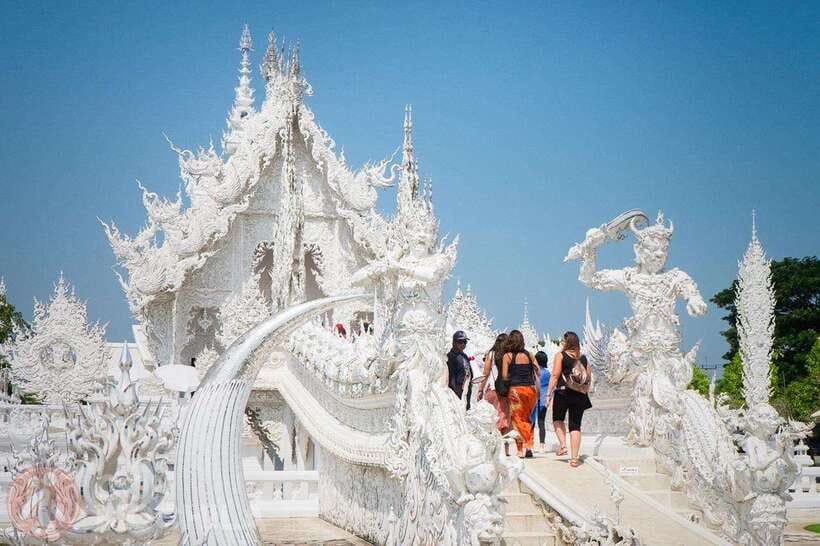
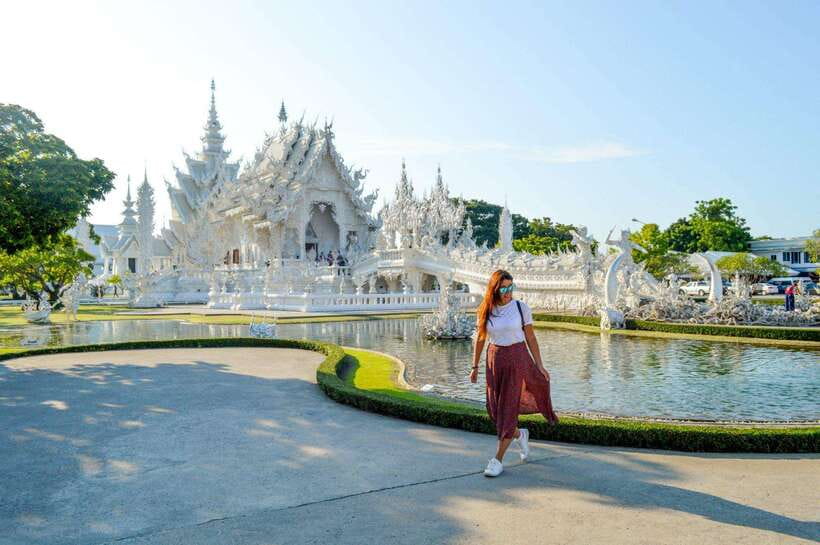
- Wat Rong Khun White Temple mixes purity symbolism with intricate glass details and surprising modern imagery
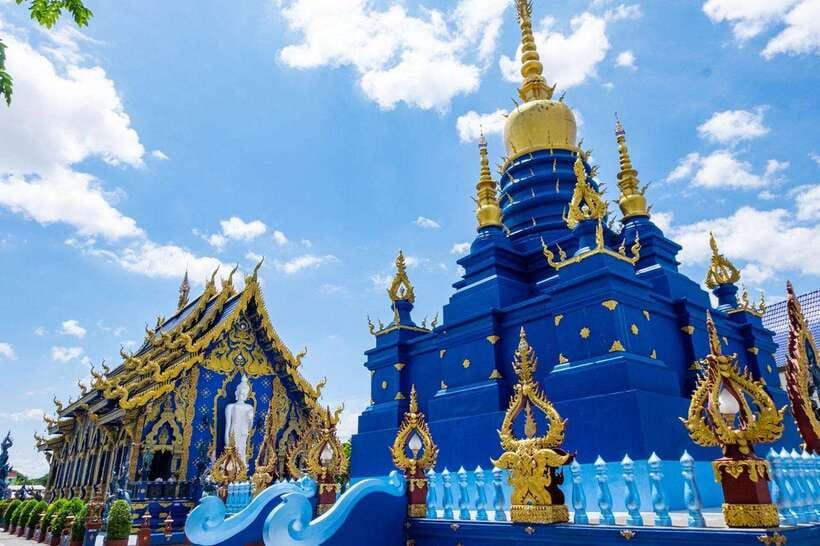
- Wat Rong Suea Ten Blue Temple is all deep blue interiors, gold accents, and guarded by dramatic dragon statues
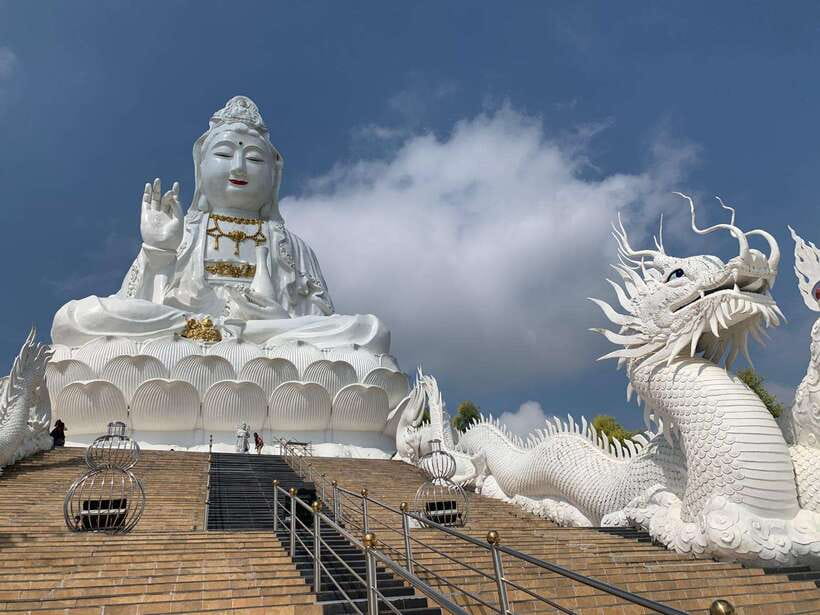
- Huay Pla Kang features the large Guan Yin statue plus a nine-tier pagoda with rewarding views from higher levels
Mae Kachan Hot Springs: start slow before the temple circuit
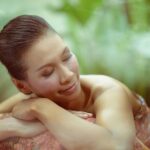
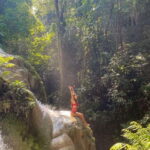
If you’re worried this will feel like nonstop sightseeing, this start helps. The day begins with a stop at Mae Kachan Hot Springs, where you get a photo moment and guided time to understand what you’re looking at. The water is warm and mineral-rich, and it’s the kind of stop that makes the rest of the day feel more human.
Important detail: swimming isn’t allowed here. Instead, you’re meant to relax and recharge—often that means a foot-soak or just lingering near the warm-water area while the air cools down a bit and you regroup. In real-world pacing, this is smart. After Chiang Mai pickup and an air-conditioned ride, you’ll want a break that doesn’t involve climbing steps or reading temple rules.
You may also find small shops and refreshment options around this stop, which makes it easy to buy water or a snack without building an extra errand into your schedule. I’d still bring your own essentials from the list—sun protection and insect repellent—because you’ll be outside again soon.
You can also read our reviews of more tours and experiences in Chiang Mai


Karen long-neck Mae Kachan village: culture, crafts, and respectful curiosity
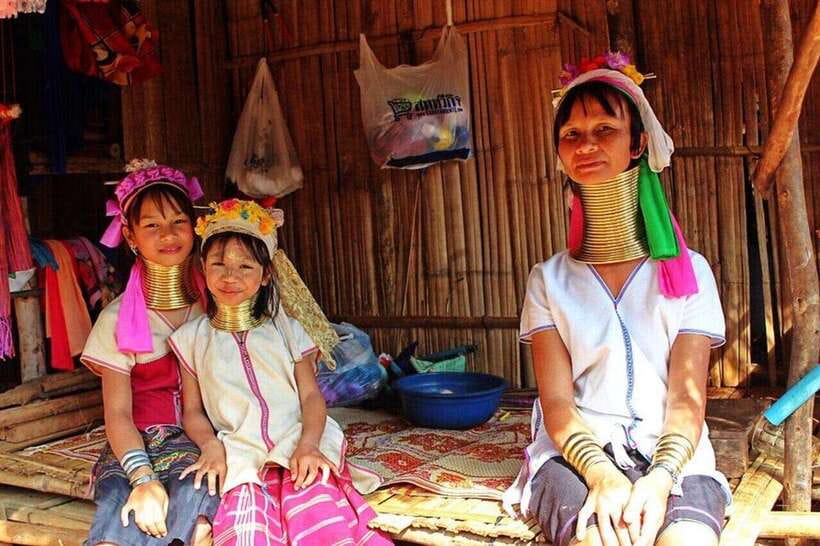
Next up is the Mae Kachan hill tribe village tied to the Karen long-neck tradition. Here, the signature custom is women wearing brass neck rings. The practice is described as one passed down through generations, and the village setting is also where you can browse colorful handmade crafts.
This stop can be emotional for some people, and it’s okay to go in with care. You don’t need to force a reaction. I’d treat it like a living community visit, not a spectacle: ask thoughtful questions through your guide, watch how you’re invited to participate (or not), and buy crafts only if they truly catch your eye. Also, remember the village entrance fee is not included, so plan on paying it on the spot. The listed fee is 300 THB.
One practical tip: this is a place where you’ll likely want small cash ready. During the day, you’ll also encounter other vendors, and having bills that are easier to exchange makes life smoother.
If your priority is Chiang Rai culture beyond temples, this village visit is one of the more meaningful parts of the trip. It also adds a different lens on northern Thailand—one shaped by Karen identity and craft traditions, not just Buddhist architecture.
Wat Rong Khun (White Temple): contemporary Buddhist art with sharp details
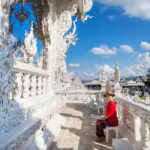
Then the tour shifts gears into full Temple Mode at Wat Rong Khun—the White Temple. This isn’t just a traditional temple you stop at and move on from. It’s a contemporary work created by artist Chalermchai Kositpipat.
The overall white design represents purity, but the temple’s impact comes from the fine details. Intricate glass elements are a major feature, and they’re described as reflecting Buddhist wisdom. What surprised many people is that the White Temple doesn’t only stick to expected religious visuals—it also includes classic Buddhist art and unexpected modern imagery.
What that means for you:
- You’ll want time for slow looking, not just photos from the front steps.
- You’ll benefit from your guide pointing out what to look for, especially where the meaning is carried through the design.
Timing matters here. This is one of the most photographed stops of the day, so you’ll likely feel the group energy and need to balance your pace with where the crowd is moving. If you’re serious about photos, bring a hat, keep your phone charged, and aim for a few dedicated “photo rounds” instead of trying to capture everything at once.
Also note: temple visits in Thailand usually require modest dress. Wear comfortable clothes that cover appropriately, and avoid anything too revealing.
Lunch in Chiang Rai: plan for a break that’s on you
Between major temples, the itinerary builds in lunch time in Chiang Rai. Lunch is not included, so you’ll need to budget separately.
This is also the time to handle the practical stuff: quick restroom stop, water refill, and a reset for your next temple walk. Some guides are known for recommending food spots that fit the vibe of the day (including vegetarian options), but you should still decide based on your own dietary needs and comfort.
If you’re trying to avoid getting rushed, keep it simple: choose a place that’s close to where the group will continue, not the farthest restaurant you can find. The rest of the day has another major temple and a pagoda climb, so you don’t want a long meal that steals your energy.
Wat Rong Suea Ten (Blue Temple): calm Buddha in a modern Thai shell
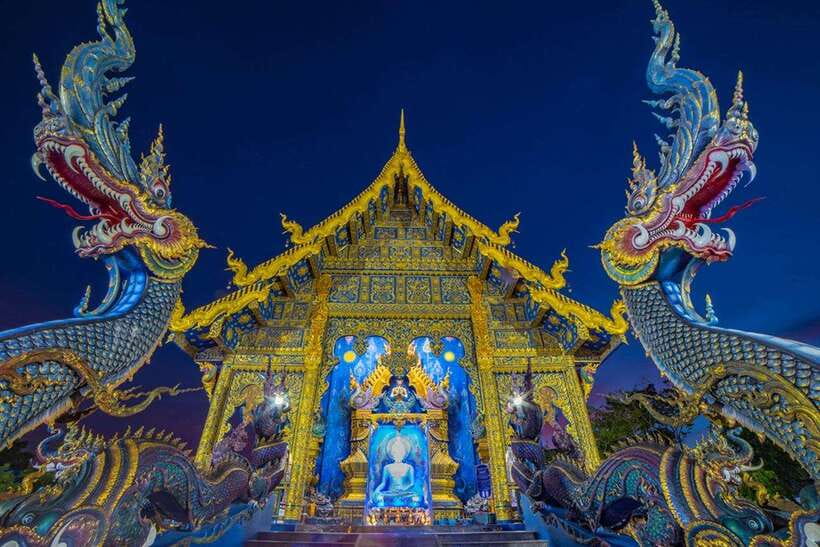
After lunch comes Wat Rong Suea Ten, known as the Blue Temple. It’s instantly recognizable for its deep blue interiors and gold details, and the style is described as blending modern and traditional elements.
The entrance is guarded by impressive dragon statues, which set a dramatic tone before you step into the calmer interior. Inside, the central focus is a bright Buddha statue, and the overall feeling is different from the White Temple. Instead of stark white contrast and glass sparkle, this one leans into cool tones and a more meditative pause.
For many people, this becomes the most relaxing temple moment because you’re not bouncing between wildly different architectural effects—you’re settling into one cohesive visual mood. I’d use your time here to:
- Look at the gold detailing at eye level, not only the big center statue
- Take a breath before the final temple, since Huay Pla Kang includes a climb
If you’re traveling in hot weather, the Blue Temple’s interior can feel like a welcome reset. Just remember it’s still a public temple space, so follow your guide’s timing and keep your steps careful on uneven surfaces.


Huay Pla Kang Temple: Guan Yin statue and the nine-tier climb
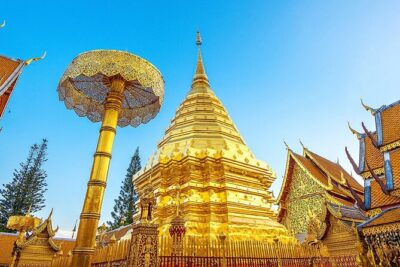
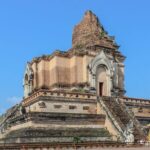
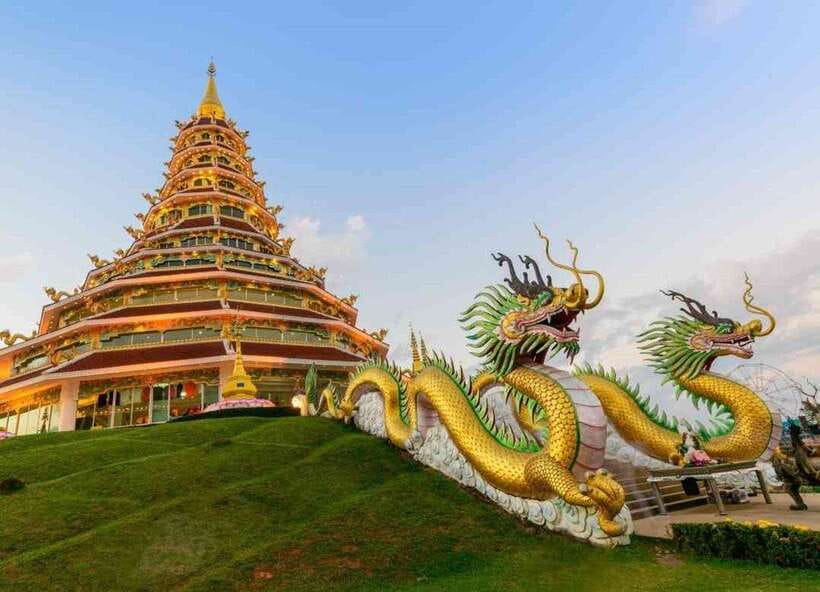
The final major temple stop is Huay Pla Kang Temple. This is where the tour delivers one of its most “wow” moments: a large statue of Guan Yin, the Goddess of Mercy, plus an impressive nine-tiered pagoda.
You’ll get a photo stop and guided tour time, and then there’s the key part: climbing toward the top. The higher levels bring better temple-view perspectives and give you a chance to see the carved statues and decorations across the grounds. Expect stairs and crowds, especially near the most popular photo points.
Here’s how to make this stop feel rewarding instead of exhausting:
- Wear shoes you can trust on stairs and uneven steps
- Pace yourself. Take breaks when you need them
- If you want food, plan it after you’re finished climbing. It’s easier to eat when you’re not juggling the climb plus lines
This is also the kind of temple where you’ll remember details longer than you expect. Even if you’ve seen pagodas before, the combination of nine tiers and the Guan Yin centerpiece makes it distinct in the Chiang Rai lineup.
Logistics that matter: how the day stays smooth despite long travel
This is an 11-hour day trip, built around time windows for each stop. That means you should expect a full day and a bit of road time. The itinerary includes multiple coach rides between locations, and Chiang Mai traffic is real. The tour starts from a specific meeting point, so being late can be a problem.
Meeting point: meet the guide 15 minutes before departure at Burger King Thapae in Hotel M Chiangmai. If pickup is optional, you’re instructed to wait in the hotel lobby 10 minutes before the scheduled pickup time.
Two things to pack that will actually help:
- Comfortable shoes for temple stairs and the pagoda climb
- Sun protection (sunscreen, sunglasses, and a sun hat), plus insect repellent
Also bring:
- Passport or ID card
- Comfortable clothes that match temple modesty expectations
You should know what’s not allowed: no large luggage or extra bags. That matters because it keeps the ride efficient for everyone, but it also means you should travel light.
Language setup: the official guide speaks ENGLISH ONLY. If you want more language support, there’s an audio guide via QR in 41 languages, but you must bring your own earphones. The tour lists earphones as not included, so don’t wait until the day-of to solve that problem.
Finally, if you have a flight on the same day, this isn’t recommended. The day ends later in the schedule, and you don’t want travel-day stress layered on top of long-distance driving.
Price and value: what $35 really covers in Chiang Rai
$35 per person is the kind of price that feels like a bargain until you compare it line by line. Here’s what’s included:
- Round trip from Chiang Mai
- Air-conditioned transportation
- Official tour guide
- Entrance fees for the White Temple, Blue Temple, and Huay Pla Kang
- Mandatory insurance
- Audio guide available via QR
Not included:
- Lunch
- Long-neck village entrance fee (300 THB)
- Earphones
So your money is doing real work. You’re paying for transport across a big chunk of Chiang Rai province plus the guided access to multiple high-profile temples. The entrances for those temples alone can add up, and the hot springs and village stops still get you a structured visit time.
Where value can shift for you is pacing. This is a lot to fit into one day, which means some stops can feel time-pressured if you want to wander longer. Still, the upside is you see the headline Chiang Rai sights without having to rent your own transport or stitch together separate tours.
Think of it like this: if you want a “greatest hits” day with guided context and less planning friction, the price makes sense. If you want slow, long museum-style temple time with lots of breathing room, you might feel the schedule squeeze a bit.
Who should book this day trip (and who should skip)
This tour is best for:
- First-time visitors to northern Thailand who want White Temple, Blue Temple, and Huay Pla Kang in one day
- People who like guided structure—so you spend less time planning and more time looking
- Travelers who enjoy a variety day: hot springs reset, hill tribe village culture, and major contemporary temples
Skip or think twice if:
- You have mobility limitations. The tour is not suitable for people with mobility impairments, and you’ll face stairs at multiple temples and a climb at Huay Pla Kang.
- You hate long days or don’t handle car time well. Between transfers, it’s a full commitment.
- You’re looking for only one or two temples and then a leisurely afternoon. This day is designed for packing a lot in.
One small human note from the experience style: multiple guides have been praised for being kind and helpful, even during personal issues like sickness or lost money. Names like Benz, K Wan, Ann, Dee, Ruby, Alex, and Mon show up in the guide lineup people appreciated. You can’t count on the same personality traits each time, but the pattern is encouraging: the best outcome usually comes from a guide who keeps the group moving and explains what you’re seeing.
Should you book this Chiang Rai Temples and Hot Springs tour?
Book it if you want a single-day Chiang Rai highlights circuit from Chiang Mai, especially if Wat Rong Khun, Wat Rong Suea Ten, and Huay Pla Kang are on your must-see list. The hot springs start helps prevent the day from feeling purely rushed, and the entrance fees for the big temples make the price feel more solid than it looks at first glance.
Skip it if you need mobility-friendly routes, prefer a slower pace, or you’re traveling with tight time constraints like a same-day flight. Also, if you’re not comfortable with village visits where culture and presentation can be sensitive, read the situation carefully and go with a respectful, curious mindset—or choose a different style of tour.
If you do book, bring your own earphones for the QR audio guide, pack sun protection and insect repellent, and keep some small cash ready for fees and snacks.
FAQ
What’s the duration of this Chiang Rai day trip from Chiang Mai?
The tour runs about 11 hours (810 minutes).
Where do I meet the guide?
Meet the guide 15 minutes before departure at Burger King Thapae in Hotel M Chiangmai.
Which temples are included?
You’ll visit Wat Rong Khun (White Temple), Wat Rong Suea Ten (Blue Temple), and Huay Pla Kang Temple, all with entrance fees included.
Is swimming allowed at Mae Kachan Hot Springs?
Swimming is not allowed there, but it’s still a relaxing stop to rest and recharge.
Do I need to pay extra at the long-neck village?
Yes. The long-neck village entrance fee is 300 THB and is not included.
Is lunch included in the price?
No. Lunch is not included, even though there is a lunch stop during the day.
What do I need for the audio guide in other languages?
The official guide speaks English only. An audio guide via QR is available in many languages, but you must bring your own earphones.