REVIEW · CHIANG MAI
Chiang Mai: White, Red/Black & Blue Temples Tour with Lunch
Book on GetYourGuide →Operated by Oh-Hoo · Bookable on GetYourGuide
A 12-hour temple run that feels like art class. This tour is interesting because it strings together Wat Rong Khun and the Blue Temple with the kind of modern Buddhist symbolism you don’t see in Bangkok, plus you add Mae Kajan Hot Springs and lunch. I love the way the guide sets context before each stop, so the architecture and symbolism make sense fast, and I also love how much you pack into one long day without making you do logistics. One drawback: it’s a long ride from Chiang Mai, so the schedule can feel intense if you hate being in a van for hours.
The guide and driver really matter on this route. Names you may hear in the mix include Danai, Suzy, Pom, Andy, and OhHoo, and the consistent theme is clear explanations and keeping timing so you don’t feel rushed.
In This Review
- Key things I’d watch for on this tour
- Chiang Rai in one day: the big reason to do it from Chiang Mai
- Hotel pickup and the long van ride (this is where comfort matters)
- Mae Kajan Hot Springs: the quick reset before temple time
- Wat Rong Khun (White Temple): the modern masterpiece you should plan for
- Blue Temple (Wat Rong Suea Ten): jewel-toned calm that contrasts the White Temple
- Huay Pla Kang (Red Temple): the giant statue and the view factor
- Baan Dam Museum (Black House): modern art turned into a whole environment
- Karen long-neck village: optional, extra cost, and emotionally real
- Lunch and timing: what’s actually included for your belly
- The value math: is $33 a fair deal for this long day?
- Practical tips that make the day easier (and nicer)
- Should you book this Chiang Rai temples tour?
- FAQ
- How long is the tour and when does it start?
- Where does hotel pickup happen?
- What’s included in the tour price?
- What extra admission fees should I budget for?
- What should I wear to visit the temples?
- Is the Karen long-neck village visit included?
- Is this tour suitable for everyone?
Key things I’d watch for on this tour
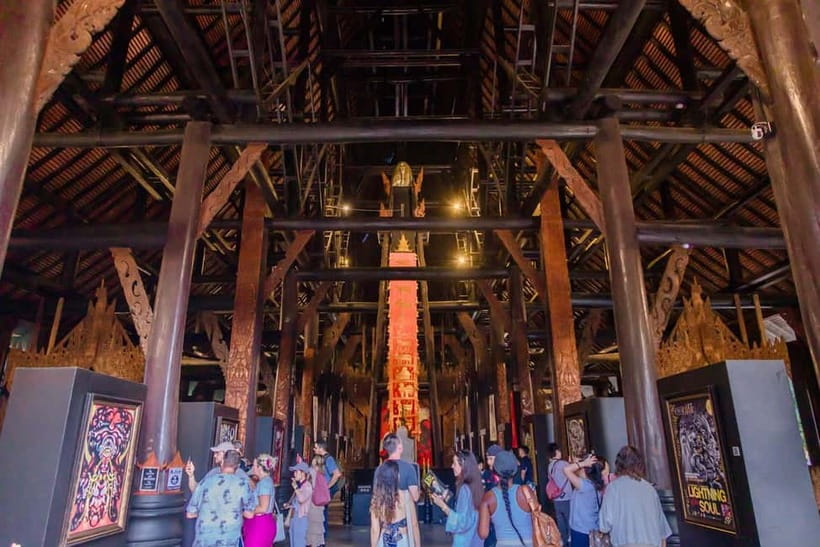
- Modern temple design with actual meaning: you’ll get the story behind the white-and-gold maze and the blue, jewel-like interior.
- A full day, not a quick hit: long drives are part of the deal, so plan snacks, water, and comfort.
- Lunch is included and not an afterthought: Thai-style buffet lunch plus drinking water and seasonal fruits.
- Two very different art stops: Baan Dam (Black House) vs Huay Pla Kang’s iconic red temple statue/views.
- Karen long-neck village is optional: it costs extra, and it can feel emotionally heavy.
- Dress code matters: covered shoes, shoulders covered, and long pants are required at temples.
Chiang Rai in one day: the big reason to do it from Chiang Mai
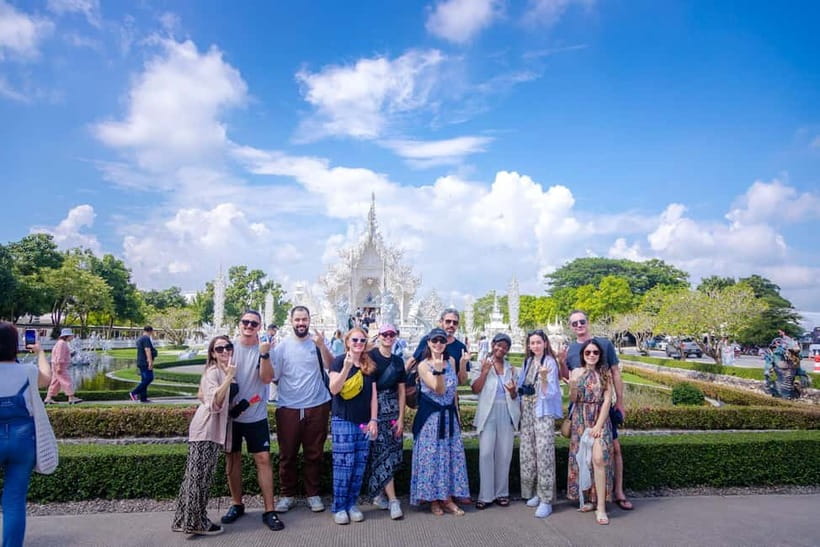
If you only have one day and you want the famous “other Chiang Rai” temples, this is a practical way to get there. Chiang Rai is a considerable drive from Chiang Mai, so the value here isn’t just the sights. It’s the fact that you’re paying for transportation, a live guide, and a built-in day plan that hits several major stops in sequence.
What I like is that the tour isn’t just sightseeing for the sake of photos. The places are visually wild, but they’re also tied to Buddhist ideas, contemporary design, and regional identity. That turns the day from random temple-matching into something you can actually follow.
The tradeoff is time. You’ll start early and you’ll spend a lot of the day on the road. If you’re the type who needs lots of decompression time, you’ll want to think twice. But if you’re a “see it all while I’m here” person, this day trip fits.
You can also read our reviews of more tours and experiences in Chiang Mai
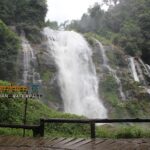
Hotel pickup and the long van ride (this is where comfort matters)
Pickup starts between 7:00 and 7:30 AM from Chiang Mai Old Town and Nimman area hotels (the operator confirms the exact time by email). You’ll want to be waiting in the lobby at least 10 minutes early, because arriving late can mean you get left behind.
You’re traveling in a vehicle that can feel tight depending on the group size. Some people have mentioned a packed minivan and limited legroom in the back seats. Also, a few guests noted that AC may not be turned on during the first stretch, so bring a light layer you can tolerate if you get warm.
The road itself is part of the experience: you’ll pass rice fields and everyday rural scenery, so it’s not just freeway time. Still, if you get motion sickness, pack what works for you (even basic medication). The day moves in a steady rhythm, and you don’t want your stomach ruining the temples.
Drop-off at the Central Plaza in Chiang Rai is possible, but only with a small bag—so keep your luggage minimal.
Mae Kajan Hot Springs: the quick reset before temple time
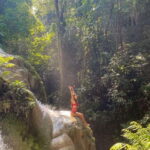
The day’s first big stop after the drive is Mae Kajan Hot Springs. You’ll get a short break that includes time to visit and a guided component, plus sightseeing time. Expect roughly 15 minutes here.
This is not a long soak day. It’s more of a reset—warm water for your feet while you breathe, stretch, and clear your head before the temple circuit starts.
If you’re thinking of bringing swimwear: don’t. This stop is for foot soaking, and you’ll look a lot more practical showing up with simple footwear you can manage around wet ground.
Also, treat this as your “timing anchor.” You won’t have hours to wander, so keep your pace calm. Once you’re back on the van, the schedule ramps into major photo stops and guided temple time.
Wat Rong Khun (White Temple): the modern masterpiece you should plan for
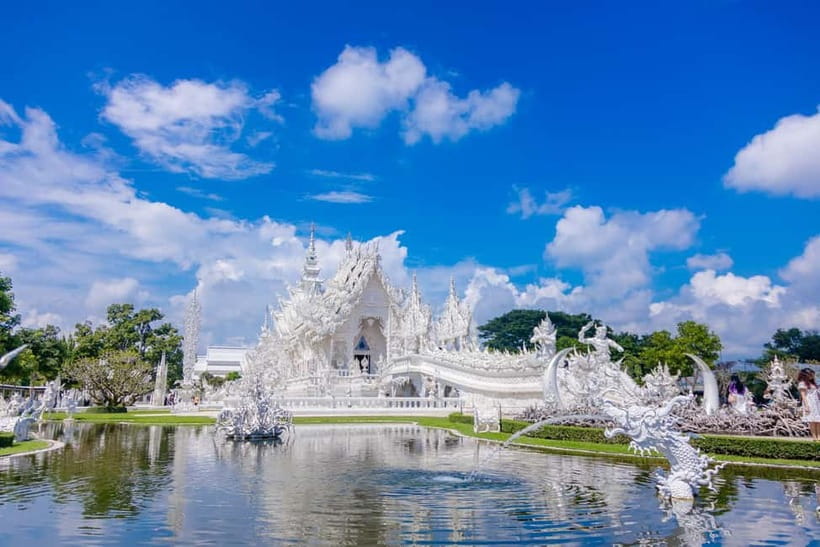
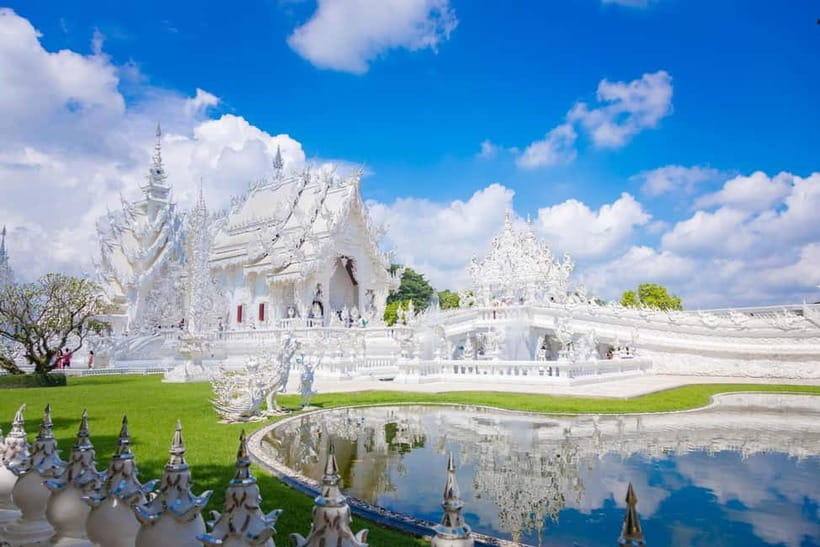
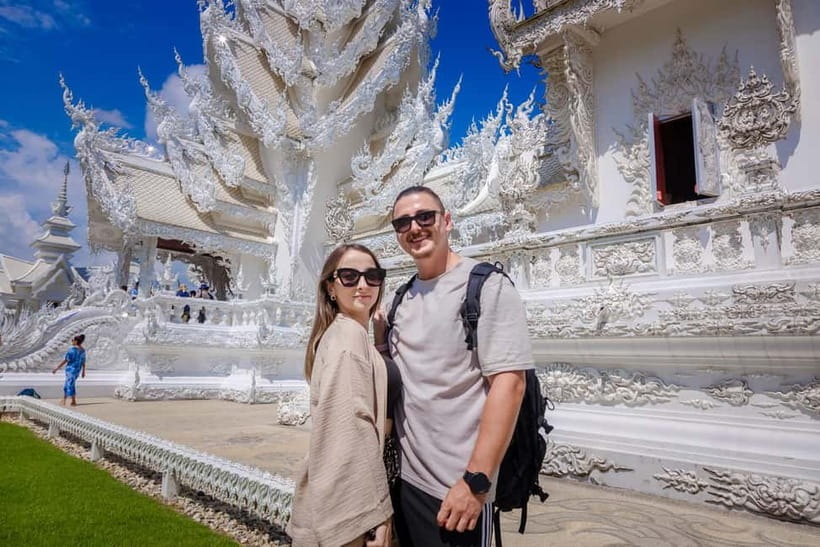
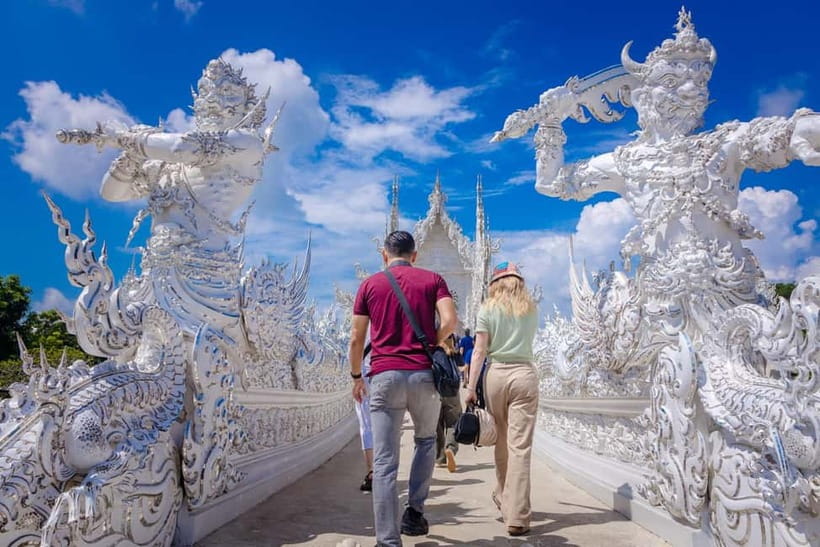
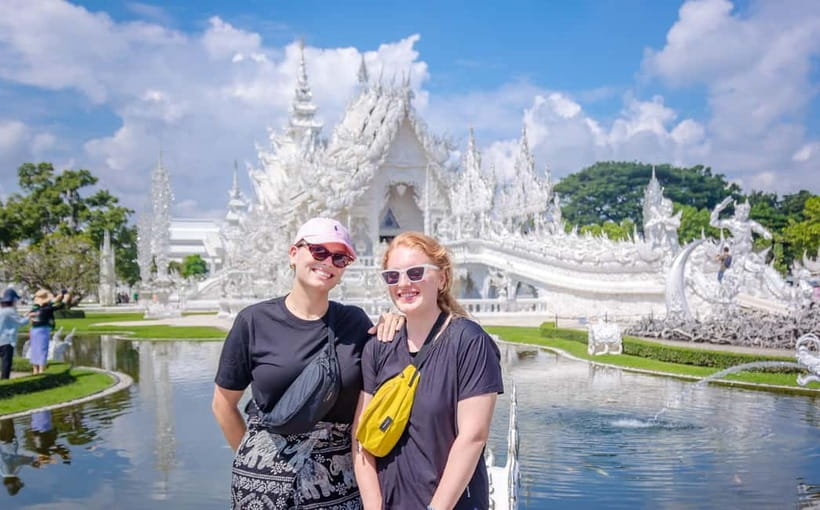
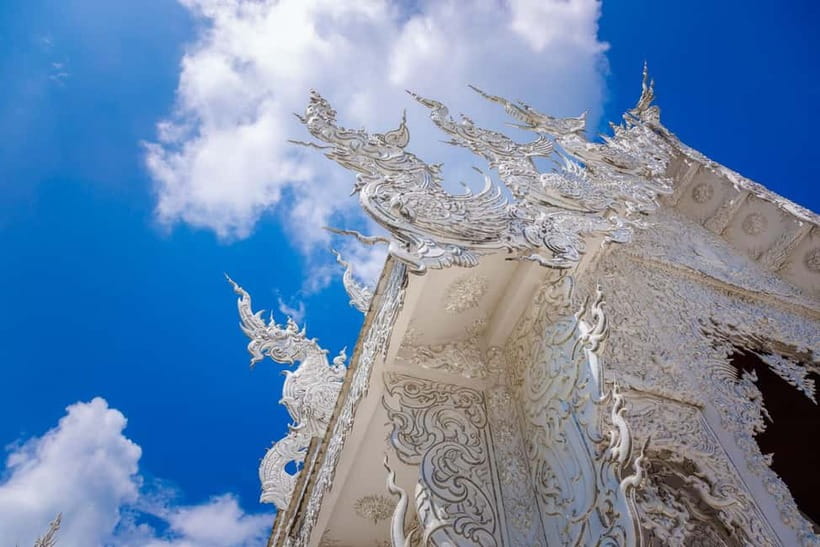
Wat Rong Khun is the star for many people—and for good reason. It’s a modern architectural statement: white surfaces, detailed carvings, and that signature “wat” style you can spot from far away once you know what to look for.
What I like about having a guide here is that the White Temple can look like pure decoration if you don’t get the context. With explanations along the way, those intricate details become more than aesthetic noise. You start noticing the symbolism and the intention behind the design.
You’ll typically get about an hour here with a guided visit plus time for photos. That’s enough for the classic angles, walking the main approach areas, and taking in the finer carving work without feeling like you’re rushing.
Practical note: temple dress code applies. You’ll need covered shoes, shoulders covered, and long pants. If you’re traveling light, this is the stop where you’ll regret not having something that meets the rules.
Blue Temple (Wat Rong Suea Ten): jewel-toned calm that contrasts the White Temple
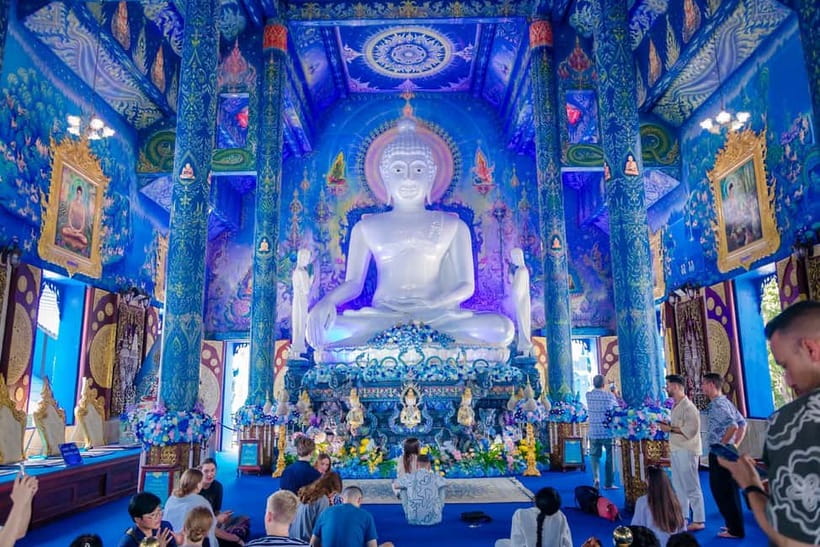
After the White Temple energy, you head to Wat Rong Suea Ten—the Blue Temple. If the White Temple is about light and sharp detail, the Blue Temple is about glow, color, and a more serene interior feel.
You’ll get guided time plus walking and sightseeing time, roughly about an hour at the stop. This timing matters because the Blue Temple’s interior details are easy to miss if you’re sprinting. With time, you can slow down and watch how the colors shift depending on where the light hits.
The best part, in my opinion, is how the two temples talk to each other. You’re not just collecting two pretty buildings. You’re comparing two styles of modern temple art—one with stark contrast and one with jewel-like calm.
If you’re hoping for maximum “wow” like a theme park, you may not feel that way about every angle. But if you like design, Buddhist symbolism, and a place where the mood is part of the experience, the Blue Temple is a strong follow-up.



Huay Pla Kang (Red Temple): the giant statue and the view factor
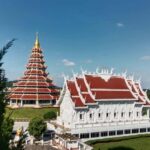
Next comes Huay Pla Kang Temple, known for its towering statue and broad views. You’ll get a photo stop plus guided visit and a walk time of about an hour.
This stop changes the pace again. The Blue Temple is interior and color-focused. Huay Pla Kang brings you back outdoors—more open air, more viewpoints, and a sense of scale.
I recommend treating this as your “take a breath and reset your eyes” moment. After traveling between art temples, the outdoor sightline helps you get your bearings. It also gives you photo variety, not just more temple close-ups.
Again, keep dress code in mind. Even if your day has been warm, the temples still require shoulders covered and long pants. Covered shoes also help with uneven surfaces during walks.
Baan Dam Museum (Black House): modern art turned into a whole environment
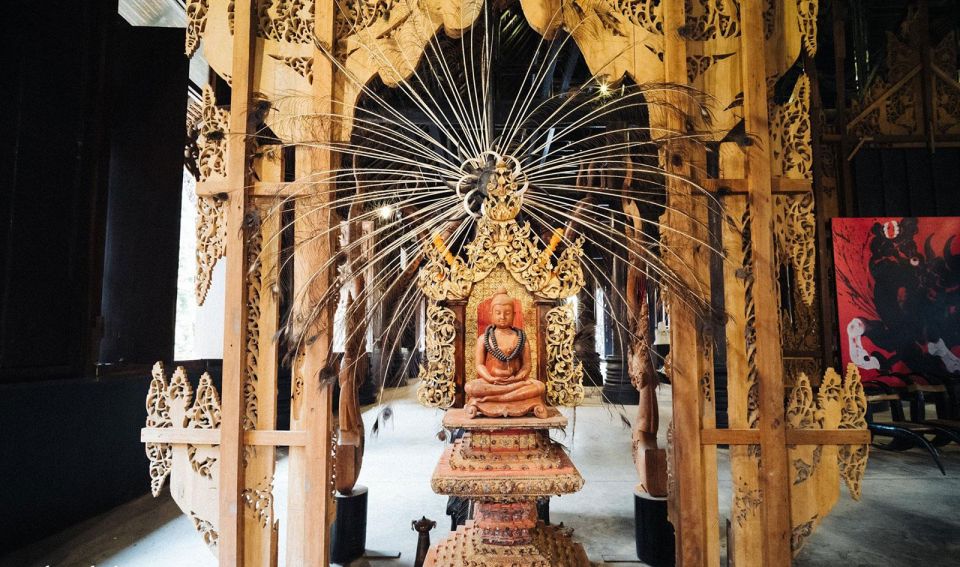
Baan Dam Museum—often called the Black House—is where the tour swings toward strange and creative. Expect dark, provocative architecture and art installations that don’t try to please everyone.
You’ll spend around an hour here with a guided visit and sightseeing time. That hour matters because Baan Dam isn’t one building you casually glance at. It’s an environment with multiple elements, and a guide helps you interpret what you’re looking at rather than just moving from photo spot to photo spot.
I like having context because the art can look shocking at first—then it starts making sense as a deliberate statement. If you enjoy contemporary art that leans raw or confrontational, you’ll likely have a good time. If you only want serene, classic temples, you might find this more odd than beautiful.
That said, this is exactly why the tour has good balance. You’re not choosing between pretty temples and one weird diversion. You get both, and the day’s rhythm makes the contrast feel intentional.
Karen long-neck village: optional, extra cost, and emotionally real
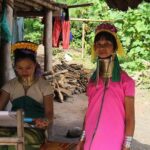
Later in the day there may be an optional visit to the Karen long-neck tribe. In the tour format you’re considering, it’s listed as an optional stop with photo stop time of about 30 minutes.
Two practical points:
- It costs extra: 300 THB per person is not included.
- This stop can feel emotionally complicated for some visitors. Some guests have described it as sad or exploitative, and at minimum you should approach it with respect and restraint.
If you go, keep it simple: watch, listen if you’re able, and follow whatever guidance your host gives you. Don’t turn the experience into a spectacle.
If you’re sensitive to this topic, skip it. The day still includes the main temples and the art stops, and you won’t be missing the core “why” of the trip.
Lunch and timing: what’s actually included for your belly
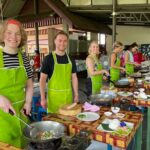
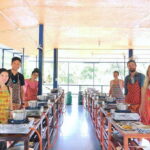
Lunch is included and it’s served as a Thai-style buffet. You’ll also get drinking water plus seasonal fruits during the day.
In a long Chiang Rai day, food quality and timing are a big deal. When lunch is included, you’re not scrambling for a meal in the middle of traffic delays. And a buffet format usually means you can find something that fits your tastes and energy level.
The best way to use lunch is to treat it like fuel for the afternoon. Don’t go heavy if you know you’ll feel sleepy on the next van stretch. And if you have dietary restrictions, it’s worth keeping expectations realistic since the tour data doesn’t list specific menu customization.
The value math: is $33 a fair deal for this long day?
At $33 per person, this tour is priced like a budget-friendly way to buy a full guided day out of Chiang Mai. The value isn’t just the sightseeing. It’s the package: round-trip transportation, a live English/Thai guide, lunch, drinking water, fruits, and even life insurance. Plus you often skip ticket lines, which saves time when you’re already working inside a tight schedule.
You do need to budget for extra admission: 280 THB per person is not included. And if you add the Karen long-neck village, add 300 THB more.
When you add those up, you’re still likely paying less than you’d spend if you tried to DIY the whole day with a private driver and a guide—especially given the distance and early start.
The only time the value drops is if you dislike long van rides or want deeper time at fewer places. This is a “see the key sights” day, not an “unhurried exploration” day. If that matches your style, it’s a great deal.
Practical tips that make the day easier (and nicer)
Here’s how to avoid the common headaches on this kind of Chiang Rai temple circuit:
- Dress for temple rules: covered shoes, shoulders covered, long pants. Plan for warm weather but keep coverage.
- Bring something for your body: the van day can be long; pack water if you like, and use motion sickness remedies if you need them.
- Use Mae Kajan Hot Springs correctly: it’s a foot-soak style stop, so don’t overpack for swimming.
- Pack light if you care about Central Plaza drop-off with a small bag only.
- Bring ID: a passport or ID card copy is accepted.
- Let the guide set context: you’ll enjoy the White and Blue Temples more when you’re not guessing what you’re seeing.
Also, since this is a long day, try to keep your expectations realistic. Some stops are photo-heavy. Some are design-heavy. None of them are quick snacks. You’ll get better value if you go in with a mindset of comparing styles and meanings.
Should you book this Chiang Rai temples tour?
Book it if you want a single-day hit of Chiang Rai’s biggest modern temple names plus Baan Dam-style art, and you’d rather pay for organization than wrestle with timing and transfers. It’s also a strong fit if you enjoy guides who explain what you’re seeing, because it turns the White and Blue Temples from pretty buildings into places with ideas behind them.
Skip it (or consider a different format) if you hate long rides, need lots of personal space, or feel strongly uncomfortable with the optional Karen long-neck village stop. This is a “do a lot” day, and the emotional tone can vary depending on what you choose.
FAQ
How long is the tour and when does it start?
The tour runs about 12 hours. Pickup from Chiang Mai starts between 7:00 and 7:30 AM, and the exact time is confirmed by email.
Where does hotel pickup happen?
Pickup is included for hotels in Chiang Mai’s Old Town and Nimman areas. You meet your guide in your hotel lobby at least 10 minutes before pickup.
What’s included in the tour price?
The tour includes round-trip transportation from Chiang Mai, lunch, drinking water, seasonal fruits, a live tour guide (English and Thai), skip-the-ticket-line access, and life insurance.
What extra admission fees should I budget for?
Temple admission is listed as 280 THB per person and is not included. If you choose the Karen long-neck village visit, admission is 300 THB per person and is also not included.
What should I wear to visit the temples?
Temple dress code requires covered shoes, shoulders covered, and long pants.
Is the Karen long-neck village visit included?
No, it’s optional. The stop has an extra admission fee of 300 THB per person.
Is this tour suitable for everyone?
It’s not suitable for pregnant women or people with mobility impairments.