REVIEW · CHIANG MAI
Half Day Traditional Handicraft Craftsmanship Tour from Chiang Mai
Book on Viator →Operated by Sightseeingbangkok.com · Bookable on Viator
Silk, wood, and umbrellas—made in real time. You’ll spend a focused morning with a small group as artisans work their materials into real products, from hand-weaving silk to umbrella-making in Bo Sang.
I like two things most. First, you get a front-row seat to hand craft processes like silk weaving and detailed wood carving, where you can see each step instead of just the final object. Second, the day is structured so you’re not stressing over transport, thanks to door-to-door hotel pickup in central areas.
The main thing to keep in mind is that this is a factory-and-workshop style tour: you’ll be moving through production spaces and showrooms, and if you’re sensitive to shopping stops, you’ll want to set your souvenir budget before you wander at Umbrella Village.
In This Review
- Key Things To Know Before You Go
- Why This Chiang Mai Craft Tour Feels Different Than Most
- The 8:00 am Start and Door-to-Door Pickup Plan
- Stop 1: Getting Oriented in Chiang Mai (30 Minutes)
- Stop 2: San Kamphaeng Road and the Silk-Weaving Workshop Feel
- Stop 3: Baan Jang Nak and Elephant Wood Carving by Process, Not Magic
- Stop 4: Umbrella Village (Bo Sang) and Saa-Paper Umbrellas Made From Scratch
- Group Size, Guide Style, and Why It Helps Your Learning
- Price and Value: What $65 Buys You (and What Might Cost Extra)
- Practical Tips That Make This Tour Easier
- Who This Tour Suits Best
- Should You Book This Half-Day Handicraft Tour?
- FAQ
- What time does the tour start?
- How many people are in the group?
- Is hotel pickup included?
- What does the tour include?
- Are there admission fees for the stops?
- What should I wear and bring?
Key Things To Know Before You Go
- Small group, big attention: maximum 10 travelers keeps the pace calm and questions easy.
- San Kamphaeng Road is the craft corridor: expect silk weaving and multiple workshop-style stops.
- Baan Jang Nak is about process: elephant wood carving and how raw material becomes finished pieces.
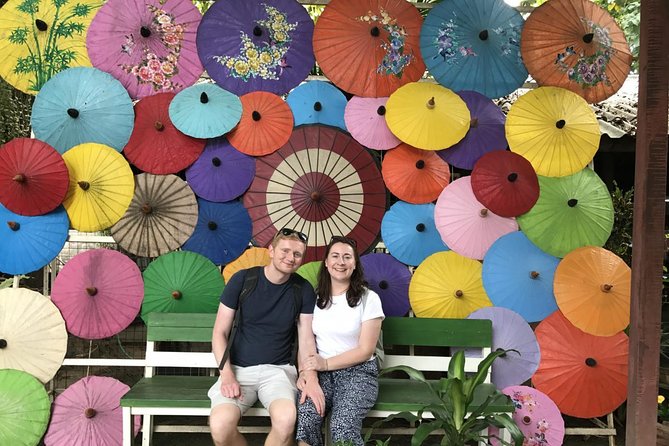
- Bo Sang Umbrella Village starts from scratch: Saa-paper umbrellas are shown through the full making flow.
- Pickup is easy in the city center: free within a 3 km radius from the listed central area, then extra fees may apply.
- Comfortable shoes matter: you’re walking through market areas and craft districts for about an hour at a time.
Why This Chiang Mai Craft Tour Feels Different Than Most
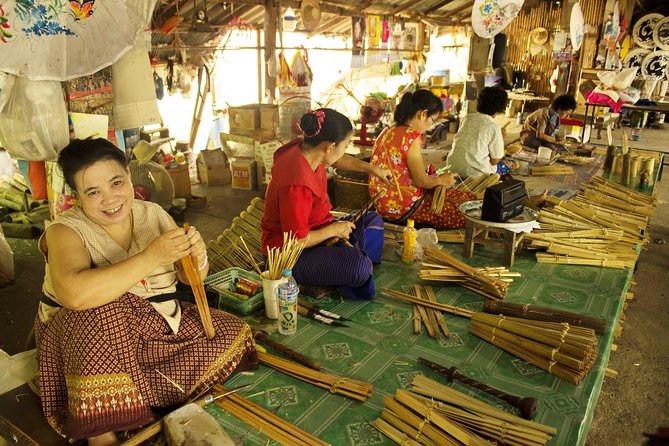
This is the kind of half-day tour that gives you craft knowledge without turning into a pushy shopping spree. You’re not just watching a show. You’re walking through craft districts where people make things for a living, and your guide keeps the day organized so you don’t lose time between stops.
The schedule is also realistic: about 4 hours total, starting at 8:00 am, with short transitions and three main craft experiences. In other words, you’re not paying for a full day of sitting in a vehicle. You’re paying for seeing how Thai crafts get made—then having a chance to browse at the end.
And because it’s max 10 people, the tone stays conversational. That matters when you want to ask, what tool is that? How is that material prepared? Why does this step take time?
You can also read our reviews of more tours and experiences in Chiang Mai.



The 8:00 am Start and Door-to-Door Pickup Plan
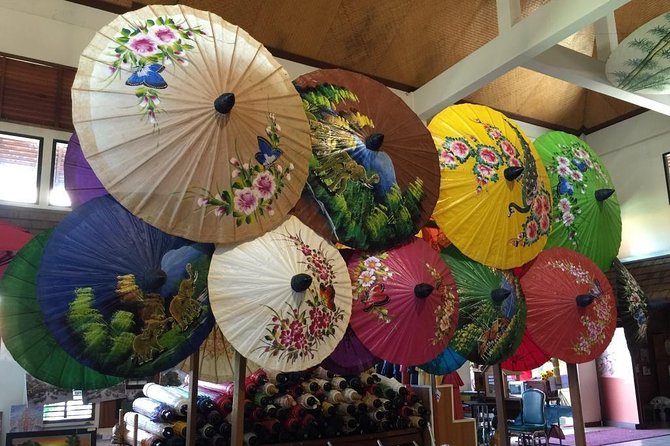
You begin with hotel pickup in Chiang Mai (selected hotels), and the tour is designed around central locations. There’s a free pickup zone within about a 3 km radius from the city center area—think Night Bazaar and nearby gates, plus parts of Huay Kaew Road and the Nimmana Haeminda/Santitham area.
If your hotel is outside that central radius, there can be a surcharge. The tour data mentions a 300 THB surcharge for pick up/drop off outside the city centre area (5 km from the 3 Kings Monument). That’s worth factoring into your real cost, especially if you’re staying farther out than the old city.
Practical tip: if you want the smoothest start, confirm your exact pickup spot when you book and have your phone ready for the mobile ticket day-of.
Stop 1: Getting Oriented in Chiang Mai (30 Minutes)
The first stop is basically the handoff from hotel time into craft-district time. You’ll travel from your pickup point toward the San Kamphaeng area. Admission is listed as free here because it’s not a ticketed attraction—just your warm-up and timing reset.
Why this part matters: craft tours can get chaotic if you arrive late or don’t know where you are. This early transfer helps you show up ready to walk, watch, and ask questions while the day is still fresh.
Stop 2: San Kamphaeng Road and the Silk-Weaving Workshop Feel

This is where the day turns into a craft road trip. San Kamphaeng Road is often called the handicraft highway of Chiang Mai, and you’ll spend about an hour in the area tied to the San Kamphaeng Saturday walking street market.
Here’s what I’d focus on while you’re there:
- Watching silk weaving by hand: you’re not just seeing fabrics. You’re observing the method and the careful, repeatable work behind it.
- Learning the production flow: the guide explains the overall silk production process, not just the finished product.
- Noticing how factories differ from small workshops: you’ll see the scale and the division of tasks that come with production.
One consideration: this stop can include a lot of displays and shopfronts because it’s a major craft area. That’s not automatically bad—just be clear about what you want. If you’re there mainly to learn, you can keep your “browse brain” on and your “buy brain” quiet until the end of the tour.
Stop 3: Baan Jang Nak and Elephant Wood Carving by Process, Not Magic
Next up is Baan Jang Nak, described as a Museum of Elephant Wood Carvings. You’ll spend about an hour here, and the highlight is the production perspective.
What you can expect:
- A visit through a wood and furniture factory area
- Seeing how pieces go from raw material to finished items
- A local handicrafts center with exhibits such as native costumes, jewelry, and home novelties
The elephant-wood carving theme can draw you in fast, but the real value is the explanation of steps. Many craft tours only show the end result. This one gives you more of the “how” so you can understand why certain designs look the way they do and why carving takes time.
Where some people may wish for more: if you love only one craft (say, wood only), you might want to be ready for a broader range of items shown in the center. Still, even if your main interest is one medium, the production-tour framing is the takeaway.





Stop 4: Umbrella Village (Bo Sang) and Saa-Paper Umbrellas Made From Scratch
Then you head to Bo Sang, the Umbrella Village. This is the stop most people remember because umbrella-making is so visual: you can follow materials turning into shape.
The core idea here is Saa-paper umbrella production from scratch. Your guide walks you through how the famous Saa-paper umbrellas are made, step by step. After that, you get about an hour to wander around the district and interact with locals, with time to purchase mementos before heading back.
Two things to keep in mind:
- Umbrella-making is hands-on to watch, but it’s also detail-heavy. You’ll get more out of it if you slow down and watch the steps rather than scanning for the biggest finished pieces.
- The district browsing at the end is where you’ll likely see the strongest souvenir pull. If you have a strict budget, decide what you want before you get pulled into the options.
Group Size, Guide Style, and Why It Helps Your Learning
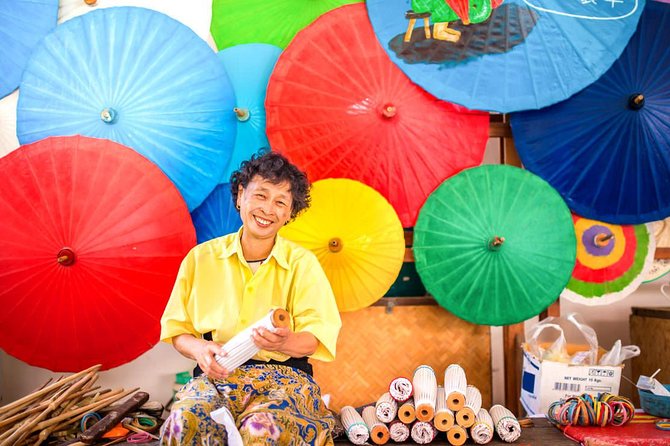
With a maximum of 10 travelers, this tour is set up for more than passive sightseeing. You’re in an air-conditioned vehicle between stops, then you’re out walking and watching people work.
That small-group format makes a difference at craft sites. You can ask questions like:
- How long does a process take?
- What stage comes next?
- What tools are essential for this style?
Also, your guide’s job is not just logistics. They explain the steps behind silk production, and they connect what you’re seeing in wood carving and umbrella-making to the bigger workflow. If you enjoy learning by watching, this structure fits well.
Price and Value: What $65 Buys You (and What Might Cost Extra)
At $65 per person for about 4 hours, this is in the “mid-budget” range for Chiang Mai. What you’re paying for is the guided craft-route experience with included hotel pickup/drop-off for selected hotels and an air-conditioned vehicle.
Value anchors:
- Guided visits to craft areas and factories rather than self-guided wandering
- A small-group size (up to 10)
- Door-to-door pickup within the city-center zone
- Admission listed as free for the described stops
Potential extra cost:
- The tour data notes a 300 THB surcharge if pickup/drop-off is outside the central area (5 km from the 3 Kings Monument).
If you’re comparing options, the key is not just the ticket price. It’s what you would otherwise pay in time and transport: getting to San Kamphaeng and Bo Sang on your own, finding the right workshops, and trying to understand processes without a translator-style guide.
Practical Tips That Make This Tour Easier
This day is short, so small choices matter.
- Wear comfortable walking shoes. You’ll move through market areas and workshop spaces.
- Plan for a morning start at 8:00 am.
- Bring a phone with a charged battery for your mobile ticket and for maps while you’re roaming the Umbrella Village district at the end.
- If you’re traveling with kids, plan on an adult accompaniment, since children must be with an adult.
- If you’re hoping for close, calm watching, arrive with patience. Craft makers are working on real schedules, and you’ll often see the best learning when you stand back slightly and let the guide explain the steps first.
Who This Tour Suits Best
I think this works best for:
- First-timers who want a concentrated look at Chiang Mai crafts
- People who like process-based learning (watching production steps)
- Travelers who want a morning activity that’s organized and not exhausting
- Anyone who prefers a guided plan with minimal pressure to buy
If you’re the type who only wants “pure heritage sites” with no factory-style context, you may find this tour more practical than museum-like. But if you like seeing how everyday Thai craft goods are made, you’ll probably leave with a lot more appreciation than you started with.
Should You Book This Half-Day Handicraft Tour?
Book it if you want a straightforward morning that combines San Kamphaeng silk weaving, a production-focused stop at Baan Jang Nak, and the visual wow-factor of Bo Sang umbrella-making. The small group size and hotel pickup keep the day comfortable, and the structure helps you learn the steps instead of only browsing finished products.
Skip it only if you dislike factory/workshop environments, or if you’re far outside the city center and the 300 THB pickup surcharge would add friction. Otherwise, this is a solid value pick for anyone who wants real craft watching in a limited time window.
FAQ
What time does the tour start?
The tour starts at 8:00 am and runs for about 4 hours.
How many people are in the group?
The maximum group size is 10 travelers.
Is hotel pickup included?
Hotel pickup and drop-off are included for selected hotels. The tour also lists free door-to-door pickup within a 3 km radius of the city center area. A 300 THB surcharge may apply if pickup/drop-off is outside that central zone (5 km from the 3 Kings Monument).
What does the tour include?
It includes a guided tour to handicraft factories in the San Kamphaeng district, plus hotel pickup/drop-off (selected hotels) and an air-conditioned vehicle.
Are there admission fees for the stops?
The itinerary lists admission tickets as free for each stop.
What should I wear and bring?
Wear comfortable walking shoes. The activity ends back at the meeting point, and the tour uses a mobile ticket.