REVIEW · CHIANG MAI
Chiang Mai: Wat Pha Lat & Wat Phra That Doi Suthep Tour
Book on GetYourGuide →Operated by CHIANGMAI SIAM TRAVEL LTD.,PART. · Bookable on GetYourGuide
A mountain temple glow is a real kind of magic. This tour lines up Wat Pha Lat in the jungle with Wat Phra That Doi Suthep at the sacred mountaintop, so you get two very different temples without the hassle of sorting transport. I especially like the evening timing for city views and light, plus the way the English-speaking guide helps you understand what you’re seeing. One thing to plan for: the main temple requires a climb of 306 steps, and the tour isn’t a fit if stairs are a dealbreaker.
Wat Pha Lat is the softer, quieter start: Thai and Burmese touches, a hidden feel, and that sense you’ve slipped away from the city. Then Doi Suthep brings the classic drama: chanting monks, a gold pagoda enshrining a relic, and sweeping views that change as night falls. The possible drawback is simple: this is a temple visit with a dress code (arms and legs covered), and there’s no wheelchair access.
If you want a focused half-day that feels like a real cultural detour rather than a rushed photo stop, this one hits the sweet spot. It’s also priced at $24 per person while bundling guide, entry tickets, and air-conditioned transport—exactly the kind of value that saves your vacation time.
In This Review
- Key points you should know before you go
- How this evening schedule makes Doi Suthep more worth your time
- Your route: Wat Pha Lat first, then Doi Suthep
- Step 1: Pickup and meeting point (and why it matters)
- Step 2: Wat Pha Lat, the quieter jungle temple
- Step 3: Drive up to Doi Suthep and the climb
- Step 4: The gold pagoda and the relic story
- The 14th-century gold pagoda: what you’re looking at and why it hits
- Chiang Mai city views: how to time your photos without losing the moment
- Monk chanting and temple etiquette (what to do in the moment)
- Dress code and what to bring so you’re comfortable
- Price and value: $24 for two temples and a guide
- Group size and the feel of the experience
- Who should book this tour, and who might skip it
- Small practicalities that make the day smoother
- Should you book the Chiang Mai Wat Pha Lat & Doi Suthep tour?
- FAQ
- What time does the tour start and end?
- Do I need to buy tickets for the temples?
- Is the cable car included at Doi Suthep?
- How many steps do I have to climb at Wat Phra That Doi Suthep?
- What should I wear for temple visits?
- Is this tour suitable for wheelchair users?
Key points you should know before you go
- Two temples, two moods: jungle serenity at Wat Pha Lat, then Doi Suthep’s sacred mountain atmosphere
- 306 steps to Doi Suthep: you’ll feel the climb, so wear proper shoes
- Evening light and views: you’ll see Chiang Mai city shift as the sun drops
- The gold pagoda relic: preserved gold at Doi Suthep with a relic enshrined inside
- Guides make it click: many groups are led by standout guides like Tomtam, Mui, PonPon, and Art
- Cable car is optional: it’s not included (20 Baht), so you’re choosing between steps vs. cost
How this evening schedule makes Doi Suthep more worth your time
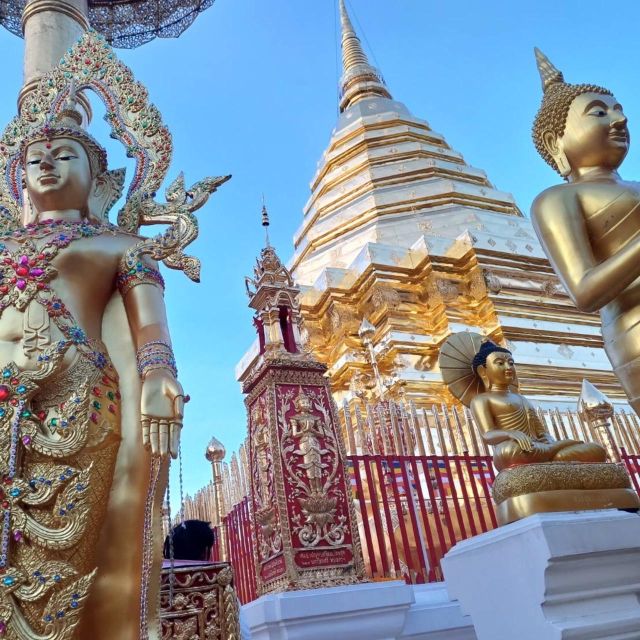
Timing is everything with Chiang Mai temples. This tour starts late afternoon or early evening, with pickup typically around 16:00–16:30, and returns around 20:00–20:30. That means you’re not baking in the midday sun, and you’re also there when the temples can feel most alive—quiet, but not dead.
The big payoff is that Doi Suthep’s setting changes as the day turns into night. You’ll climb to the temple and then spend time on the grounds as the light shifts, so you don’t just get one pretty view—you get a sequence. You’ll also be in place to catch monk chanting during the visit window.
You can also read our reviews of more tours and experiences in Chiang Mai.



Your route: Wat Pha Lat first, then Doi Suthep
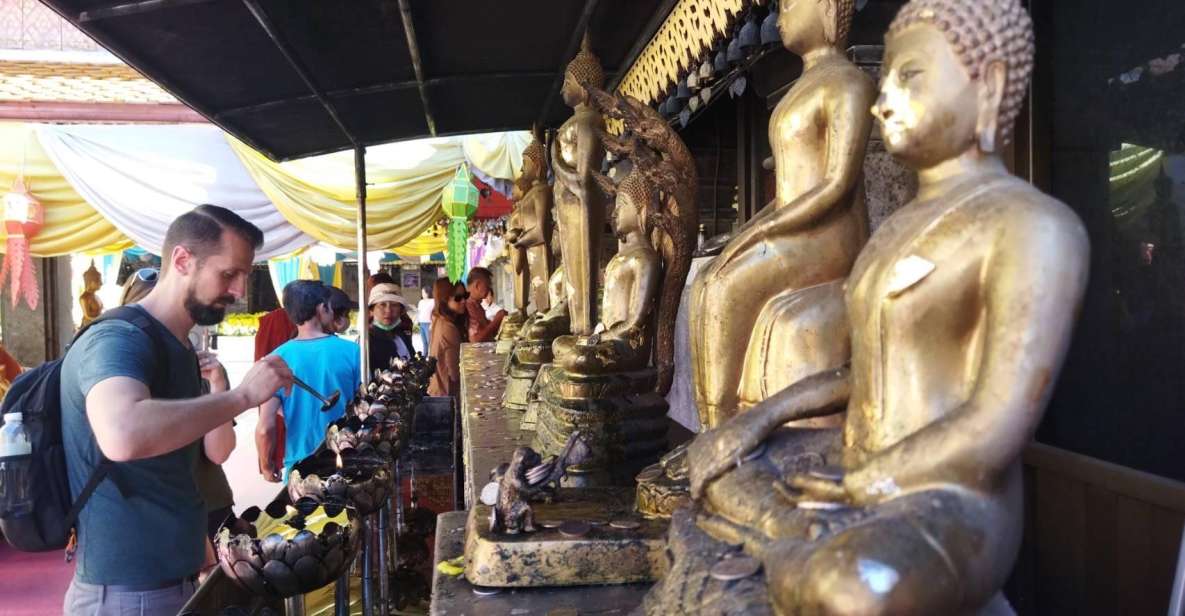
This is a straightforward plan with a smart order. You start at Wat Pha Lat first and then head to Wat Phra That Doi Suthep. Doing it this way helps: you ease into temple culture with a calmer site, then you “arrive” at the mountain’s most famous sacred spot with energy left in your legs and head.
Step 1: Pickup and meeting point (and why it matters)
If you don’t choose hotel pickup, you meet at Pharmart C Drugstore. The meeting window is listed as 15:50–16:15 (and pickup at the meeting point is between 15:50–16:00). Either way, the driver is in an air-conditioned vehicle, and you’ll have drinking water.
Practical tip: be ready a few minutes early. Temple timing is tight when you want to reach Doi Suthep for the right light.
Step 2: Wat Pha Lat, the quieter jungle temple
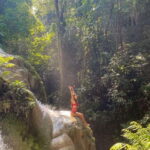
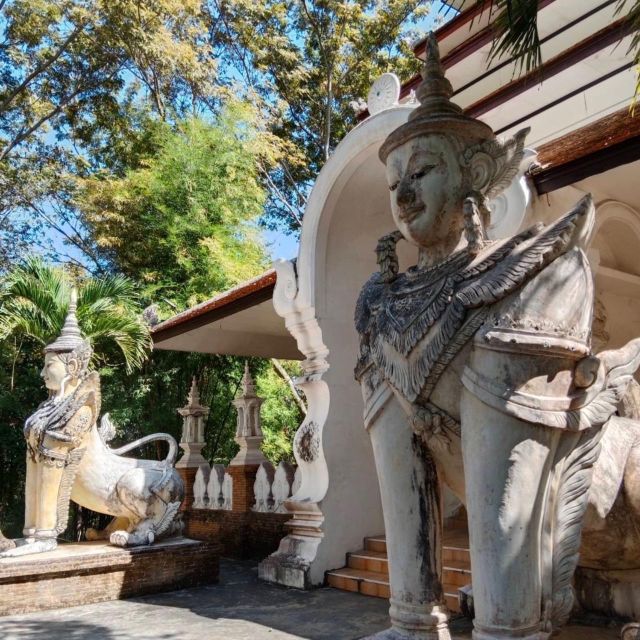
Wat Pha Lat is the one that surprises people. It’s tucked in a lush mountain jungle setting, and the architecture blends Thai and Burmese details. The atmosphere is part of the point here. From inside the grounds, you can hear the serene sounds of water—waterfalls, or at least water nearby—which makes the temple feel less like a stop and more like a pause.
This is also where a great guide shows up. Many groups report guides who explain what you’re looking at in practical terms, not just dates and names. Names you may be paired with include Tontam, Tomtam, Mui, PonPon, and Art—and the common thread is clear guidance and lots of patience for questions and photos.
You’ll get guided time at Wat Pha Lat, plus room to look around. That balance matters: you don’t want a temple visit that’s only someone talking while you stand there.
Step 3: Drive up to Doi Suthep and the climb
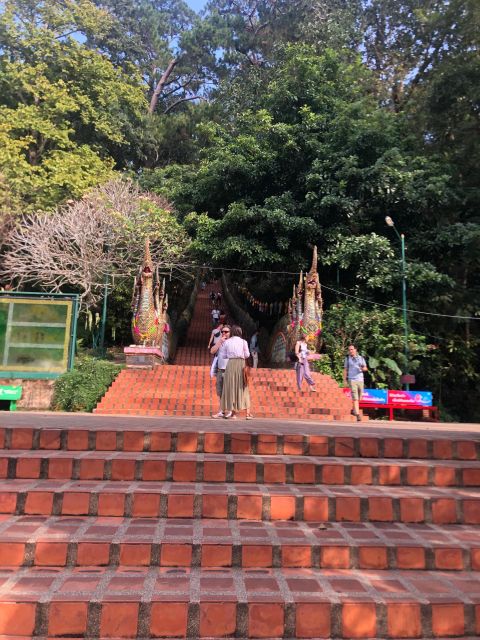
Then comes the part you can’t fake: the climb. At Wat Phra That Doi Suthep, you’ll be walking up 306 steps. The steps aren’t just physical work—they’re part of the ritual feel of getting to a sacred place on a mountain.
What I’d do if you’re sensitive to stairs: wear shoes with grip, keep your pace steady, and don’t start sprinting. The climb can feel long if you rush it, but it becomes manageable if you treat it like a slow walk.





Step 4: The gold pagoda and the relic story
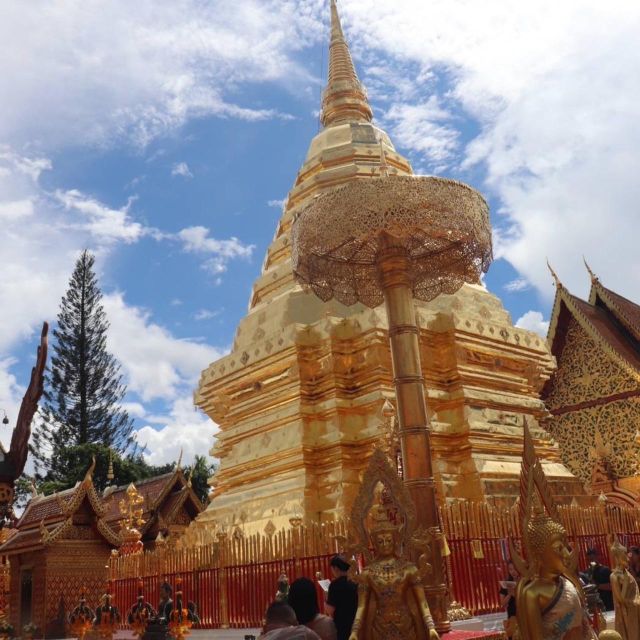
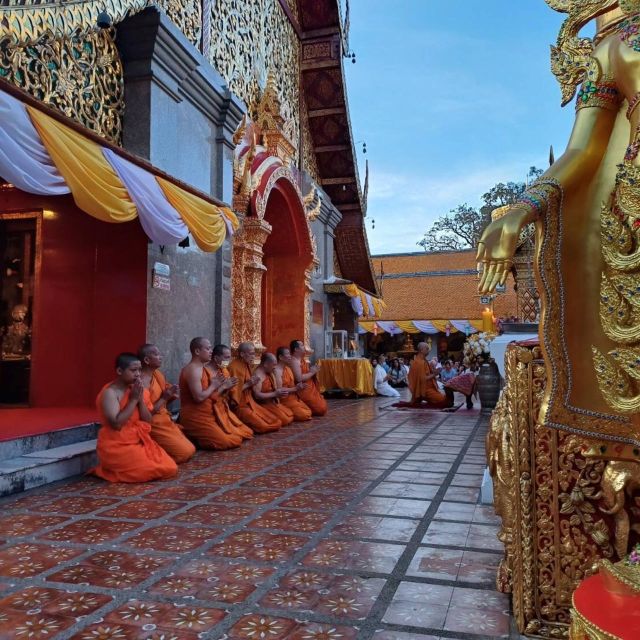
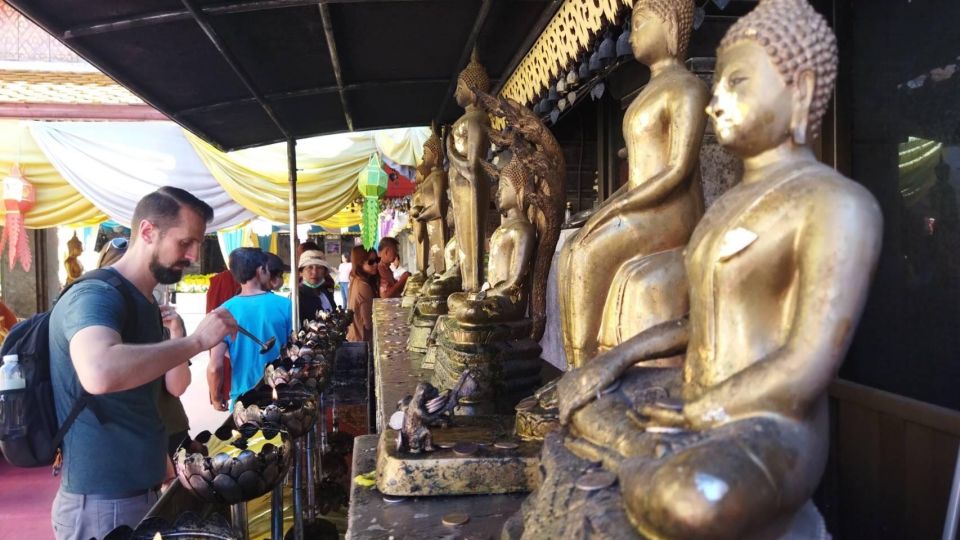
At the top, you’ll see the gold pagoda at Wat Phra That Doi Suthep. This pagoda is preserved and enshrines a relic—described on the tour as Buddha’s shoulder bone.
Even if you don’t know the religious details, the guide context helps. It’s one thing to see a gold structure; it’s another to understand why it matters to Northern Thailand’s Buddhist culture and how relic worship fits into the bigger picture of devotion.
You’ll have time to explore the temple grounds, not just pass through.
The 14th-century gold pagoda: what you’re looking at and why it hits
The gold pagoda at Doi Suthep is the main event, but it’s not just about looking at something shiny. The tour frames it as a preserved 14th-century structure that holds a relic. That “relic + preservation + sacred location” combination is what makes Doi Suthep feel heavier in meaning than an average viewpoint.
Also, gold pagodas look different at different times of day. In evening light, gold can go from bright to warm, almost candle-like. That’s one reason this tour’s schedule works: you’re there while the temple is in its best visual mood.
Chiang Mai city views: how to time your photos without losing the moment
Yes, you’ll get views over Chiang Mai, and yes, people bring phones for a reason. But the way this tour is timed helps you avoid the common mistake: rushing through the temple while your camera needs constant attention.
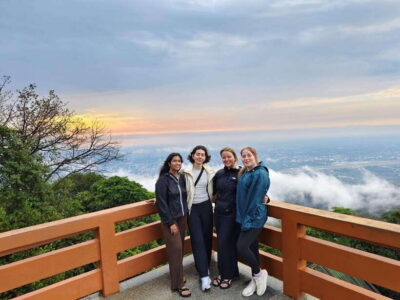
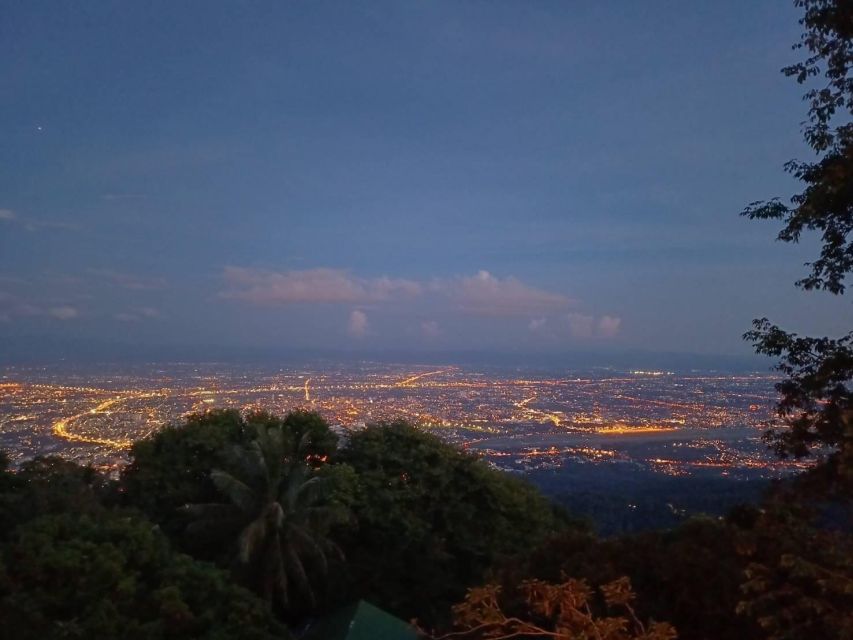
You’ll reach Doi Suthep in the afternoon or early evening and then spend time on the grounds as night approaches. That’s when views feel cinematic—lights beginning to pop on below, haze softening the edges, and temple brightness competing pleasantly with the darkening sky.
Photo strategy that works:
- Take one quick overview shot early after you arrive.
- Then put the phone away for a few minutes while the guide explains the relic and pagoda significance.
- Get your “evening glow” photos as the light changes, not right at the first moment you reach the top.
Guides often help here too. Many groups note guides who actively take photos or move people to better angles—names that come up include Toontoon and Austin, with the same theme: helpful positioning and calm patience.
Monk chanting and temple etiquette (what to do in the moment)
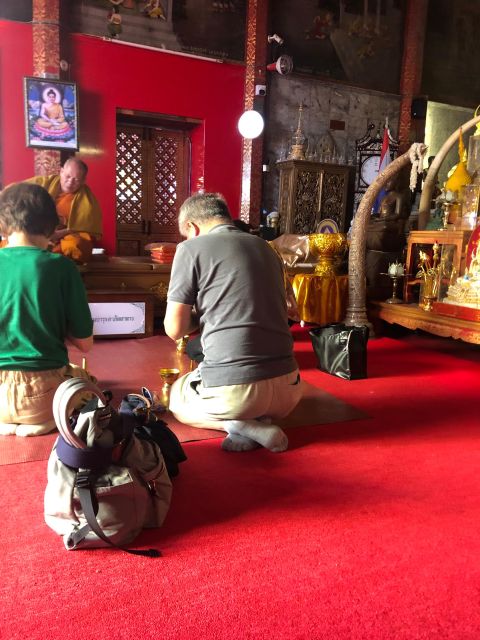
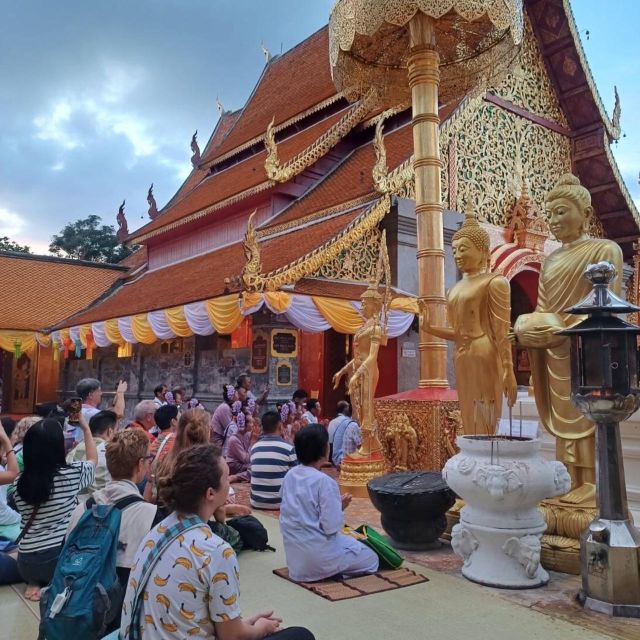
This tour includes time around the temple experience when chanting happens. That matters because it’s not just sightseeing; it’s an active religious setting.
So follow the quiet rules:
- Walk slowly and keep your voice low.
- Don’t block paths where people are moving.
- Let your guide lead if they explain a ritual sequence.
If you’re lucky with timing, you may catch the ceremony while you’re on site. The key is not to treat chanting as a show. Treat it like a moment you’re allowed to witness respectfully.
Dress code and what to bring so you’re comfortable
Temple visits in Thailand come with expectations. You’ll want:
- Comfortable shoes (you’ll climb stairs at Doi Suthep)
- Long pants
- Clothing that covers arms and legs
Short skirts and sleeveless shirts aren’t allowed. This isn’t a “maybe” situation. If you show up underdressed, you’ll waste time sorting a solution on the spot.
Also bring a light layer. Evenings can feel cooler near the mountain.
Price and value: $24 for two temples and a guide
Let’s talk money. $24 per person sounds like a bargain until you compare what’s actually included here:
- English-speaking guide
- Air-conditioned transport
- Entry tickets
- Hotel pickup/drop-off if selected
- Drinking water
You’re paying for two sites—Wat Pha Lat and Wat Phra That Doi Suthep—plus the guide’s ability to translate what matters. Without a guide, Doi Suthep can turn into “pretty temple + stairs + viewpoint.” With a guide, you get context: what the relic means, why the architecture matters, and how Buddhist practices shape what you see.
There is one extra cost you should know: the cable car at Doi Suthep is not included and costs 20 Baht. If you’d rather avoid stairs, you’ll need to decide on the spot. If you’re fine with the climb, you can save that money.
Group size and the feel of the experience
This tour runs as private or small groups (depending on the option you choose). That tends to matter on temple tours. Smaller groups move easier, you get more direct attention, and you spend less time waiting around.
A lot of the positive tone you’ll hear about this tour centers on how guides manage the pacing and photos—making sure everyone sees what’s important without constant rushing.
Who should book this tour, and who might skip it
This works best if:
- You want a half-day that still feels meaningful
- You like a guided explanation for Buddhist sites
- You care about evening views and not just daytime sightseeing
- You prefer a structured plan instead of arranging temple transport yourself
You might skip it if:
- You can’t handle stairs (306 steps at Doi Suthep)
- You need wheelchair access (the tour is not suitable for wheelchair users)
- You’re planning to dress casually without covering arms and legs (the dress code is enforced)
Also note: the tour information says this itinerary does not walk the monk’s trail, so don’t expect that specific route.
Small practicalities that make the day smoother
A few details can prevent frustration:
- Use long pants and cover your shoulders/arms.
- Expect pickup windows in the late afternoon, with timing flexibility.
- If you’re not at the hotel pickup zone, plan around the Pharmart C Drugstore meeting point.
- Keep your energy steady—this is short but not fully “sit down the whole time.”
- If you’re traveling with kids, the tour notes that children 1 to 3 years old are free (no seat), with the parent caring for them on the same seat.
Should you book the Chiang Mai Wat Pha Lat & Doi Suthep tour?
Yes, I think this is a smart booking for most first-time Chiang Mai visitors who want a strong temple hit without wasting a day. The value is clear: you’re getting two major temples, a real evening schedule, a guide, and transport for $24.
I’d especially recommend it if you care about atmosphere: Wat Pha Lat’s quiet jungle feel plus Doi Suthep’s gold pagoda glow as the city shifts into night. And if you’re the type who appreciates explanations (not just photos), the guide quality is the difference-maker—people often mention standout guides like Tomtam, Mui, PonPon, Bird, Art, and Austin for being patient, helpful with photos, and clear about temple customs.
Skip it only if the stair climb is a problem for you or you’re looking for a fully laid-back day with minimal walking. If you can handle the steps and follow the dress code, this tour is one of the better ways to see Chiang Mai’s spiritual side in a single evening.
FAQ
What time does the tour start and end?
Pickup is scheduled between about 16:00–16:30, with return drop-off around 20:00–20:30. If you meet at Pharmart C Drugstore, plan to be there in the 15:50–16:15 window.
Do I need to buy tickets for the temples?
Entry tickets are included in the tour price. You do not need to buy them separately.
Is the cable car included at Doi Suthep?
No. The cable car at Doi Suthep is listed as not included and costs 20 Baht if you want to use it.
How many steps do I have to climb at Wat Phra That Doi Suthep?
The tour includes a climb of 306 steps to reach the main temple area.
What should I wear for temple visits?
You should wear long pants and clothes that cover your arms and legs. Short skirts and sleeveless shirts are not allowed.
Is this tour suitable for wheelchair users?
No. The tour is not suitable for wheelchair users.