REVIEW · CHIANG MAI
DON’T miss It ! Doi suthep temple+ Hmong village
Book on Viator →Operated by joinusthai · Bookable on Viator
Dragons, pagodas, and hill-tribe life, in four hours. This group tour links the famous Wat Phra That Doi Suthep temple with a traditional Hmong village stop, so you get mountain views plus everyday culture in one smooth morning. The best part for many people is the included cable car up to the temple and the clear context an English-speaking guide brings to what you’re seeing.
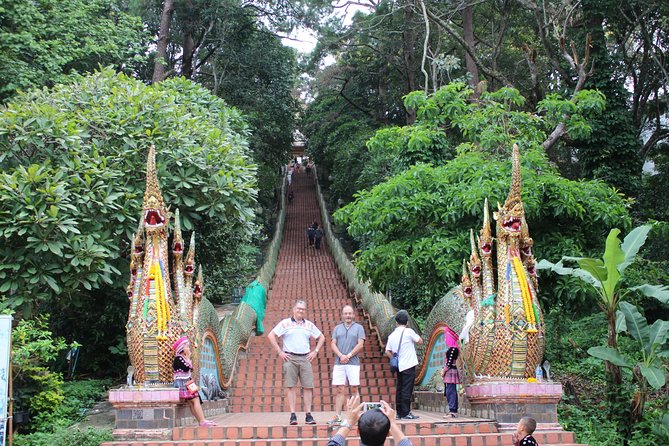
I like that the temple visit isn’t just sightseeing from the road. You either ride up by cable car (ticket included) or take the classic 306-step climb along the Naga-dragon staircase. And at the top, having an English-speaking guide helps you notice the big temple details instead of just snapping photos and moving on.
One thing to consider: the Hmong village time is short (about 50 minutes), so depending on the day you may get less cultural explanation and more time for browsing and spending. If you’re hoping for a slow, museum-style lesson, this may feel rushed.
In This Review
- Key Highlights You’ll Actually Feel
- Wat Phra That Doi Suthep: Cable Car, 306 Steps, and Temple-Top Views
- The Naga Staircase vs Funicular: Which Way Should You Go?
- The Hmong Village Stop: Daily Life, Crafts, and the Reality of Time
- How the Morning Runs: Pickup, Group Size, and Staying Sane
- Price and Value: Is $22.75 a Good Deal?
- What to Pack and Wear (So You Don’t Fight the Day)
- Who This Tour Suits Best (And Who Might Prefer Something Else)
- Should You Book This Tour?
- FAQ
- What is the duration of the Doi Suthep and Hmong village tour?
- What time does the tour start?
- How does hotel pickup work in Chiang Mai?
- Is the cable car ticket included for Doi Suthep?
- Can I choose to climb stairs instead of using the cable car?
- Is the guide English-speaking?
- Are temple and admission fees included?
- Is round-trip hotel transfer included?
- What should I wear for the temple?
- Does it run during rainy season?
Key Highlights You’ll Actually Feel
- Cable car ticket included (plus the option to climb the 306 Naga steps if you want the exercise and drama)
- Licensed English-speaking guide to connect temple art, Buddhism, and what you’re looking at
- Round-trip hotel transfer within downtown on an air-conditioned van, with a manageable half-day schedule
- Traditional Hmong village visit focused on daily life, colorful clothing, and handicrafts you can bargain for
- Small-group feel for a join-in tour (maximum 70 travelers), but you still follow shared timing
- Rain-ready plan: it runs in rainy season, so pack a light umbrella or raincoat
Wat Phra That Doi Suthep: Cable Car, 306 Steps, and Temple-Top Views
Doi Suthep sits high above Chiang Mai, and the route there already sets the tone. You’ll ride through winding roads in an air-conditioned vehicle, then arrive for the temple portion as the morning light starts to do its work.
Here’s your main choice: go up by cable car (included) or climb the stairs. The staircase is the memorable kind, lined with the mythic Naga serpent design that runs down and up the 306 steps. If you like to feel the place in your legs, the stairs are part of the experience, not just a workout. If you want the view time quickly, the cable car gets you there without the stair grind.
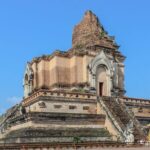
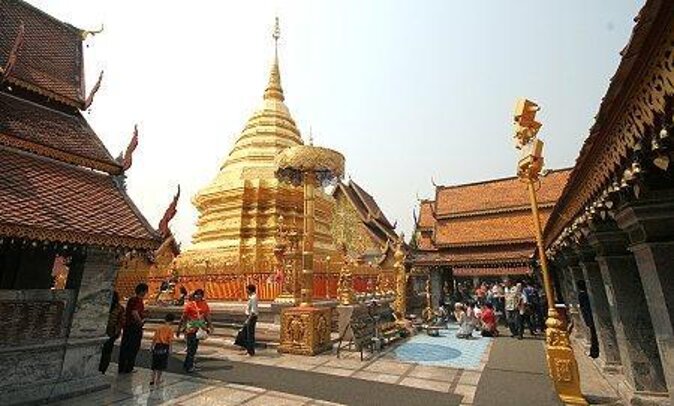
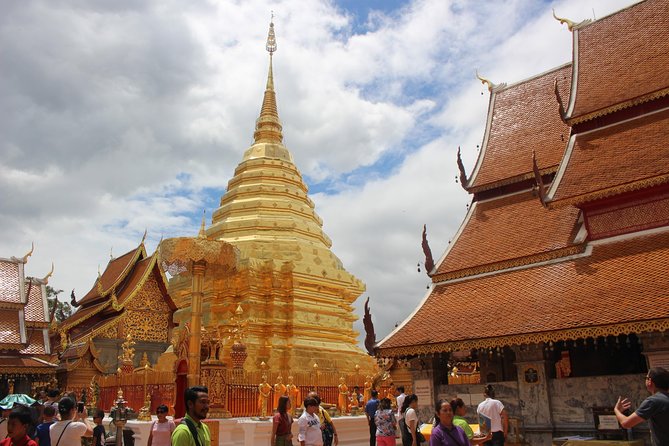
At the top, you’re not looking at some generic lookout. You’re entering one of Thailand’s most important religious sites. The temple area features a golden pagoda in the Lanna architecture style, with engraved gold plates that catch the eye even if you don’t know a single Buddhist term. A good guide helps you read the temple like a story: where to look, what the design is trying to communicate, and why locals take this place seriously.
Practical tip: bring a small amount of patience. Even on a short schedule, temples have a flow. If you want great photos, you’ll do better when you slow down for a few minutes instead of chasing the entire group.
You can also read our reviews of more tours and experiences in Chiang Mai.



The Naga Staircase vs Funicular: Which Way Should You Go?
This tour gives you a real decision, and it matters more than you’d think.
If you pick the cable car, you’ll likely spend more time enjoying the temple details and the views. It’s also a smart call when it’s hot, raining lightly, or you just don’t want to arrive sweaty and tired before you even start sightseeing.
If you choose the 306-step Naga climb, you’ll earn that temple-top payoff. The staircase is part of the show, and the physical rhythm makes the experience feel more grounded. Just remember: rainy-season conditions can make steps slippery, so take it slow and steady.
Either way, you’ll want to arrive dressed correctly. Shoulders and knees must be covered for temple entry. Sandals or flip-flops are okay, which is handy in Chiang Mai’s heat.
The Hmong Village Stop: Daily Life, Crafts, and the Reality of Time
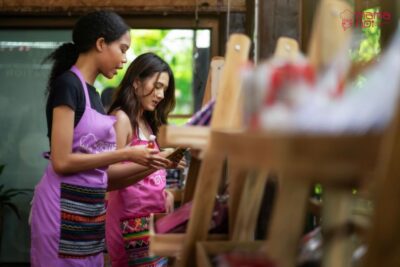
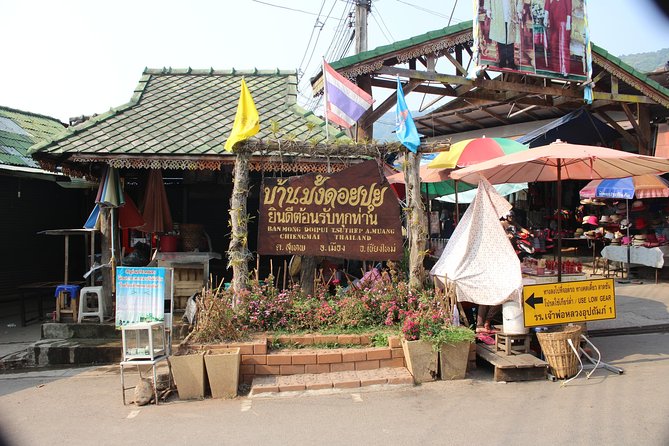
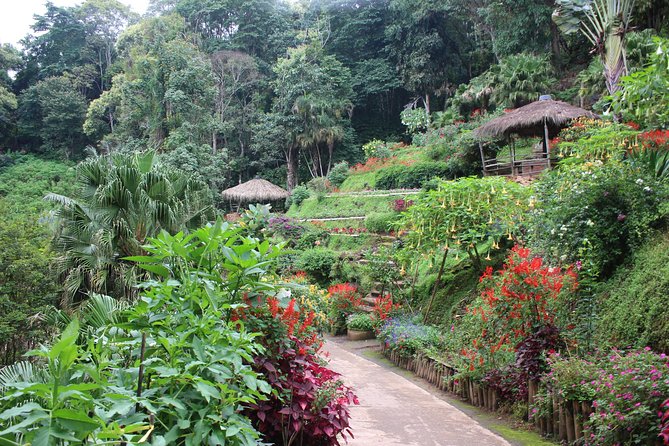
After the temple, you’ll head to the Doi Pui Mong Hmong village area. This is where the tour shifts from mountain sacred site to human scale: colorful clothing, hands-on work, and a way of life shaped by hill-tribe traditions.
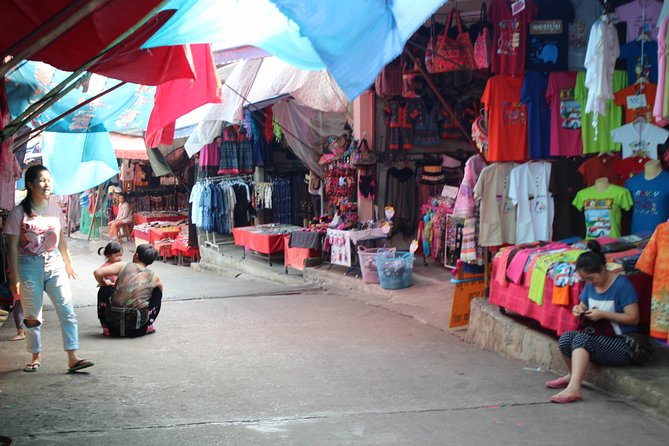
The visit is structured around meeting daily life and learning from residents, not a long classroom-style program. You’ll get time to look closely at textiles and handicrafts, and yes, this is also a shopping environment. You can bargain for items like textiles, ornaments, or other crafts, and that’s part of the interaction.
Here’s how to make this stop work for you:
- Go in curious, not demanding. You’re being hosted in a place that also supports families through sales.
- Spend your time on questions first, then browse. If you only browse, it can start to feel like a quick market stop.
- Set your expectations. With roughly 50 minutes, you’re not going to see everything. You’ll choose what matters to you most—clothing details, weaving work, or small items you can actually take home.
Some guides on this route (including names like New and Yo yo) are praised for giving helpful explanations and managing timing well. When the explanation is strong, the village visit feels more like a window into life and less like a rapid drop-off.
How the Morning Runs: Pickup, Group Size, and Staying Sane
This is a join-in tour with hotel pickup, so the rhythm is a bit different than a private driver.
You’re picked up from your hotel lobby between 8:00 and 8:30 am. Because the van visits several accommodations, it may arrive anytime in that window and could run a little late if other pick-ups take time. The simplest strategy is to be ready early and wait in the lobby from 8:00.
The group size is capped at 70 travelers, which keeps it from feeling huge, but it’s still a group. That’s why time management matters: if you want relaxed photos, you’ll need to work with the schedule rather than against it.
Also, the van has luggage rules. Carry-ons or large luggage can’t be accommodated. Plan to bring only items you can place on your lap.
On timing: the tour is about 4 hours total. That’s enough for the temple and a short village visit, but it’s not enough for a long, slow wander at either stop. If you like to soak in details for 90 minutes at a time, consider doing the temple and village separately on another day.
Price and Value: Is $22.75 a Good Deal?
At $22.75 per person, the value is mostly in what you don’t have to organize yourself.
You’re paying for:
- Air-conditioned vehicle and round-trip transfers within downtown Chiang Mai
- Round-trip transfer coverage (not a full-city pickup, but solid for central areas)
- Licensed English-speaking guide
- Admission fees
- Cable car ticket included
- Travel accident insurance
- A mobile ticket for the experience
When you add up cable car + temple admissions + guide + transport, the price starts to make sense quickly. This is especially true if you’d otherwise be paying for tuk-tuk or songthaew hopping and then trying to coordinate temple entry and timing on your own.
One note on value trade-offs: the tour’s strongest “value” moments are the cable car ease and the temple explanations. The village portion is where experiences can feel uneven depending on how much interpretive guidance you get during the short stop. If that interpretive element is what you care about most, pick the tour when you know you’ll enjoy a guided overview rather than a long village immersion.



What to Pack and Wear (So You Don’t Fight the Day)
This is the part that saves your morning.
For temple rules:
- Cover shoulders and knees.
- Sandals or flip-flops are allowed.
For rainy season (May to October):
- The tour still runs, even when rain shows up.
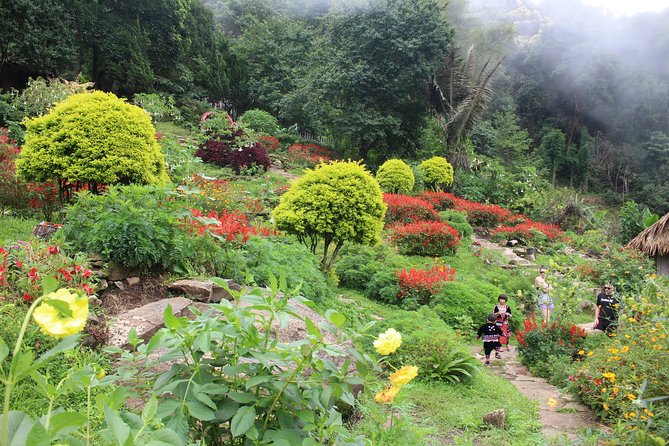
- Bring an umbrella or a raincoat. Morning mist on mountain temple days is common, and wet steps are no joke.
For comfort:
- Bring water. The day is short, but you’ll be outdoors at the temple.
- Bring a light layer if you get cold in the air-conditioned van.
For bags:
- Keep luggage small. You’ll want lap-size items only, since larger carry-ons aren’t accommodated in the van.
Who This Tour Suits Best (And Who Might Prefer Something Else)
This tour fits best if you want a structured half-day with transport handled and you’d like a guide to make the temple meaningful.
You’ll likely enjoy it if you:
- Have limited time in Chiang Mai and want a classic Doi Suthep morning
- Prefer an included, low-effort way to reach the temple top via cable car
- Want to see a Hmong village and browse textiles, but don’t need a long deep-dive education session
- Like group travel when the schedule is clear and the guide is doing the thinking for you
You might want to skip (or plan the parts separately) if you:
- Want a slower, longer village visit focused on culture over shopping
- Hate group timing and want total control of pace
- Expect the village stop to function like a museum exhibit with lots of guided commentary
Should You Book This Tour?
If you’re doing Chiang Mai in a time-efficient way, I think this is a solid pick. The included cable car and licensed English-speaking guide make the Doi Suthep piece feel easy and worth it. The Hmong village stop is the only part where experiences can swing between cultural conversation and quick browsing, mostly because the visit is short.
My quick decision rule:
- Book it if you want a well-packaged morning and you’re okay spending a short time in the village.
- Pass or adjust your expectations if you want a long, education-heavy cultural program rather than a brief window into daily life plus crafts.
If you do book, come prepared with temple-friendly clothing and a flexible mindset for the village portion. That combo makes the whole morning feel smoother, and you’ll leave with both the big views at Doi Suthep and real human detail from the village stop.
FAQ
What is the duration of the Doi Suthep and Hmong village tour?
It runs for about 4 hours (approx.).
What time does the tour start?
The start time is 8:00 am.
How does hotel pickup work in Chiang Mai?
You’ll be picked up from your hotel lobby between 8:00 and 8:30 am, and the van may arrive anytime within that range since it’s a join-in tour.
Is the cable car ticket included for Doi Suthep?
Yes. The cable car ticket is included.
Can I choose to climb stairs instead of using the cable car?
Yes. You can climb the 306 steps to reach the temple if you prefer.
Is the guide English-speaking?
Yes. The tour includes a licensed English-speaking guide.
Are temple and admission fees included?
Yes. Admission fees are included.
Is round-trip hotel transfer included?
Yes, round-trip hotel transfer is included within downtown Chiang Mai.
What should I wear for the temple?
You’ll need shoulders and knees covered. Sandals or flip-flops are allowed.
Does it run during rainy season?
Yes. From May to October it runs even on rainy days, so bring an umbrella or raincoat.