REVIEW · CHIANG MAI
One day Doi Inthanon & Trekking at Pha Dok Siew
Book on Viator →Operated by Parallel Tour · Bookable on Viator
Cold jungle air, real waterfall time, and rice terraces. I love the mix of Doi Inthanon summit views and a gentle trek through Pha Dok Siew’s forest, plus the chance to cool off at two waterfalls. The possible drawback: the early-morning pickup can be messy if the hotel name on your confirmation doesn’t match what’s on the map.
My favorite practical touch was the English-speaking guide, including Toy, who kept the pace comfortable and pointed out what mattered. You also get lunch plus bottled water, and the group stays small at max 13 people, so you spend less time waiting around and more time outside.
Wear grippy shoes. Even when the walk is manageable, slick mud near the rice terraces can be a real slip risk after rain.
In This Review
- Key things to know before you go
- A 7:00 am schedule built for cool mountain air
- Doi Inthanon summit time: views plus garden-and-greenhouse breaks
- King and Queen Stupa: flower gardens and panoramic photo angles
- Wachirathan Waterfall: the popular one for a reason
- Lunch break: refuel before the trek portion
- Pha Dok Siew jungle trekking: easy pace, real rainforest feel
- The second waterfall and your chance to get truly wet
- Ban Mae Klang Luang rice terraces: a gentle finish with mud reality
- Karen village visit: traditional life, rice farming, and chemical-free Arabica
- Guide and pacing: what you gain from a small group and an attentive English guide
- Price and value: what $63.22 covers on a full mountain day
- Who this tour suits best (and who should skip it)
- What to pack and how to stay comfortable
- Should you book this one-day Doi Inthanon and Pha Dok Siew trek?
- FAQ
- How long is the Doi Inthanon and Pha Dok Siew trek day?
- What time does the tour start?
- Where do we meet in Chiang Mai?
- Is pickup and roundtrip transfer included?
- What’s included for food and drinks?
- What if the weather is bad or I need to cancel?
Key things to know before you go
- Highest spot in Thailand plus the Royal Agricultural station gardens and greenhouses
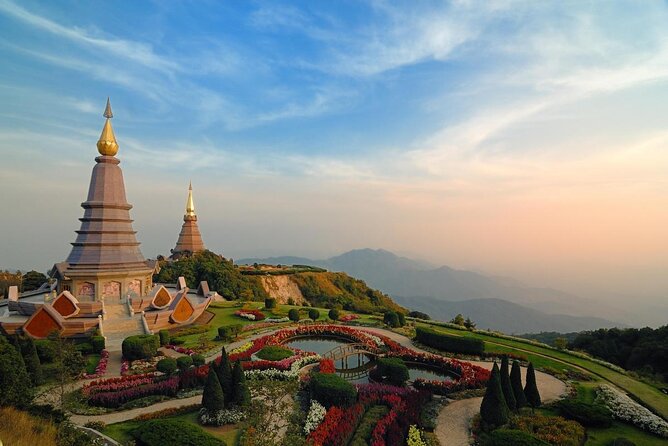
- King and Queen Stupa with flower gardens and big panoramic views
- Wachirathan Waterfall for spray and power on the mountain slopes
- A second standing waterfall where you can relax and shower under the falls
- Ban Mae Klang Luang Karen village and chemical-free Arabica coffee tied to rice farming
- Pha Dok Siew trekking through rainforest-like jungle with old trees, vines, and bamboo growth
A 7:00 am schedule built for cool mountain air
This is a one-day, high-altitude plan, starting at 7:00 am from McDonald’s on Kotchasarn Rd. You’re looking at about 9 hours in total, with roundtrip transfer from Chiang Mai Town included. The early start matters in real life: it helps you catch more comfortable temperatures as you climb and gives you better odds of clear views from the stupa and viewpoints.
The small group size (up to 13) is also part of the value. Big tours can feel like a slow-moving checkout line. Here, the day is still full, but the pace tends to feel more human, especially during the walking sections and photo stops.
One more practical point: the tour uses a mobile ticket, which is usually easy on arrival. Still, I’d treat the first hour as the moment to double-check everything, including where the driver wants you.
You can also read our reviews of more hiking tours in Chiang Mai

Doi Inthanon summit time: views plus garden-and-greenhouse breaks
Doi Inthanon is the headline, because it’s the highest spot in Thailand. Reaching the summit area isn’t only about the height sign. What I like about this day plan is that it mixes viewpoints with structured stops, so the time on the mountain feels varied rather than just hot-and-sticky driving.
Before you hit the stupa highlights, you’ll spend time around the Royal Agricultural station area. This portion is built for people who enjoy plants and simple science displays, not just waterfalls and temples. Expect stops such as:
- a rhododendron garden
- ferns greenhouse
- flower plants greenhouse
- hydroponics vegetables greenhouse
Even if greenhouses aren’t your thing, these breaks help you pace the day. They also give you context for why the mountain feels different from Chiang Mai’s plains. In other words, you’re not only climbing—you’re seeing how the ecosystem is studied and supported.
King and Queen Stupa: flower gardens and panoramic photo angles
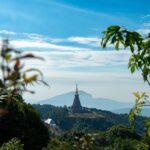
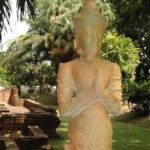
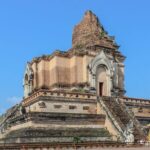
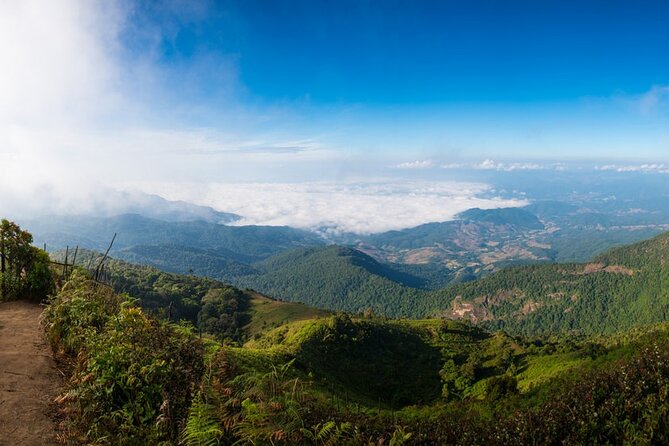
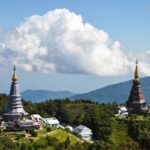
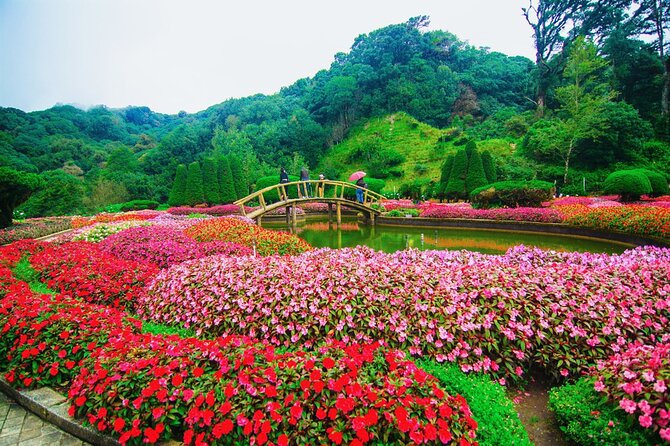
The King and Queen Stupa is the moment when your eyes get pulled outward. Flower gardens surround the stupa area, and the views are the pay-off: you get that layered mountain look that’s hard to appreciate from town.
This stop also works well for people who want a mix of culture and scenery without committing to a long temple walk. You can linger for photos, catch a few wide angles from the higher spots, and then transition back into the waterfall-and-trek rhythm.
If you’re sensitive to wind, bring a light layer. Higher elevations can feel cooler and breezier even when Chiang Mai is warm. It’s not a big trek, but it’s exposed.
Wachirathan Waterfall: the popular one for a reason
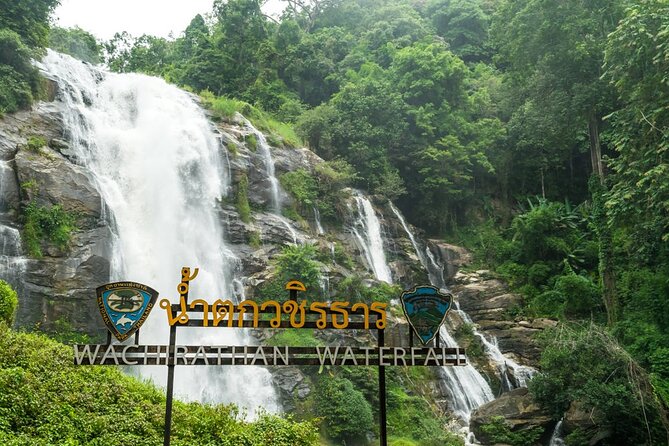
After the stupa area, the day shifts toward water. Wachirathan Waterfall is described as the second major waterfall on the way up, and it’s the one most known for power and spray.
This is where you’ll feel the mountain’s energy. You don’t just look at it from a distance. The spray can reach you, which is great when you’re there for cooling off and photos, but it also means you’ll want shoes that can handle wet ground.
This stop is a good reminder of how the itinerary is designed: it’s not just a drive-by waterfall. The timing and the route are set up so you get real access to the water experience before you head into the later walking section.
Lunch break: refuel before the trek portion
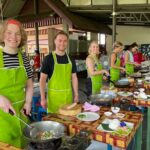
Lunch is included, and the food setup is flexible: vegan, vegetarian, gluten-free, and halal are available, plus bottled water is included. In a long mountain day, this matters more than it sounds. You don’t want to choose between walking time and meal quality.
I’d use this break strategically. Eat well, drink water, and plan your next footwear move. The trek segment later includes uneven terrain and can get muddy, so treat lunch like your gear check moment.
If you have a sensitive stomach, stick to the meal options that feel safest for you and slow down right after eating. Mountain trekking can be deceptively tiring when you’re walking on slopes with slippery patches.
You can also read our reviews of more tours and experiences in Chiang Mai
Pha Dok Siew jungle trekking: easy pace, real rainforest feel
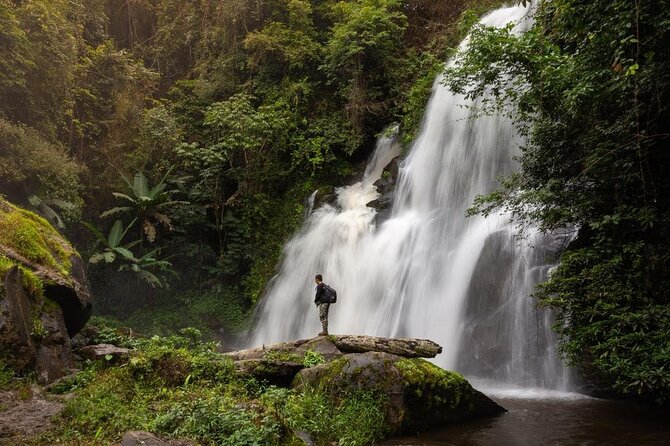
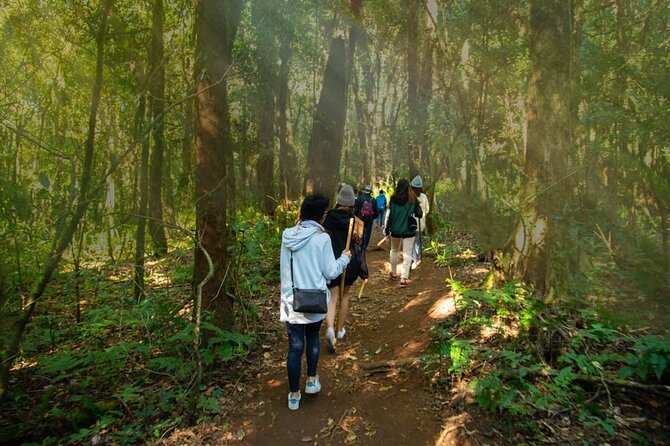
Then comes the walking. The trek at Pha Dok Siew is positioned as more authentic than the typical “photo-stop” day, with time moving through green jungle. The route description highlights big old trees, vines, and bamboo growth, plus a rainforest feel with diverse flora.
What I appreciate here is the promise of a manageable difficulty level. One of the best parts of this tour’s reputation is that people often find the trekking not too difficult, even with rain in the mix. That makes it a strong option if you want nature time without signing up for a demanding hike.
Still, keep your expectations grounded: it’s outdoors, and the ground can change fast. The terrain near the later rice-terrace area can become slippery mud after rain. If you only bring sandals or smooth-soled shoes, you’ll probably regret it.
The second waterfall and your chance to get truly wet
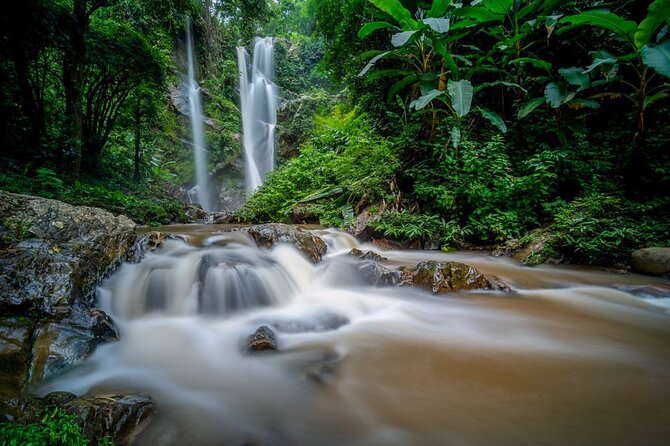
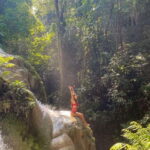
After lunch and the earlier sightseeing blocks, the day includes a further two-hour trek to a standing waterfall. This is one of the tour’s main “wow” features because you can relax there and even shower under the fresh waterfall. The description also notes this is possible even in the dry season, which is a nice detail because some waterfalls become disappointing when water levels drop.
Practically speaking, assume you’ll get wet. Even if you don’t plan to shower, you’ll likely end up with damp clothes from spray. Bring a small towel if you have one, and consider a dry shirt in your bag.
This stop also connects the itinerary themes. Earlier, you were in greenhouse gardens and stupa viewpoints. Now you’re in active water, which makes the whole day feel like a continuous nature experience instead of separate attractions.
Ban Mae Klang Luang rice terraces: a gentle finish with mud reality
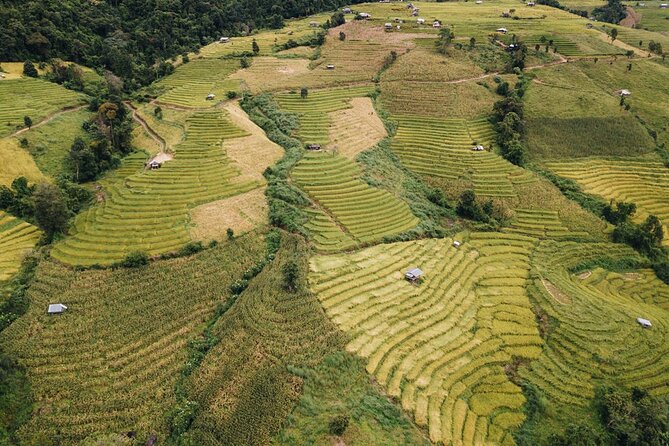
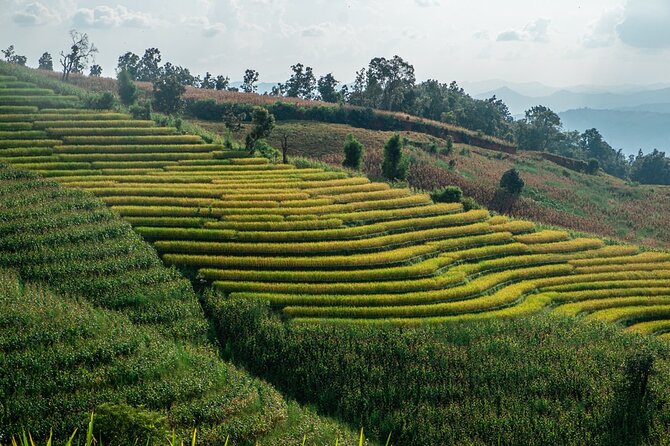
The trek’s payoff often comes at Ban Mae Klang Luang, where you’ll see the Mountain Terrace rice fields. This part feels scenic and calm, but it’s also the section where traction matters most.
In wet conditions, the ground near rice terraces can turn into slippery mud. Even if the walk is gentle overall, that’s the moment where poor footwear can turn a pleasant stroll into a cautious shuffle.
If you’re visiting during the rainy shoulder season, plan for slower steps. Trekking with care is part of enjoying it, not spoiling it.
Karen village visit: traditional life, rice farming, and chemical-free Arabica
After the rice-terrace scenery, the tour shifts to people and daily work at a Karen village in the area. You’ll visit a community at Ban Mae Klang Luang, where the Pagayaw traditionally live their way of life, with rice farming as the main occupation. The tour also highlights that the village grows chemical-free Arabica coffee.
This is valuable because it’s not only a “look and leave” village stop. You’re getting a glimpse of how agriculture, coffee growing, and everyday rhythms connect. You also see why the terraced landscape matters: it’s not just pretty. It’s the working foundation of the community.
I recommend approaching this part with curiosity and a respectful mindset. Ask questions, but keep it simple. It’s easier for you, and it’s more comfortable for the people sharing their routines.
Guide and pacing: what you gain from a small group and an attentive English guide
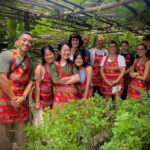
A big part of why this day tour works is the guide. The experience listing emphasizes a professional English guide, and one name that appears in the tour feedback is Toy. An attentive guide changes the day from sightseeing into understanding.
You’ll also feel the pacing in real time. This itinerary doesn’t try to do everything at a sprint. The walking sections are built into the day, and the plant-and-viewpoint stops break up the transitions. In practice, that means it’s easier to stay focused and not just “survive the schedule.”
Also, with a max group size of 13, you’re less likely to get stuck behind a crowd during viewpoints or while waiting near waterfalls.
Price and value: what $63.22 covers on a full mountain day
At about $63.22 per person, this is a solid value for what you get: roundtrip transfer from Chiang Mai Town, bottled water, lunch, and an English guide for a full day that includes two waterfall experiences plus summit-area attractions and a village visit.
Is it a bargain? It can feel like one, especially when you compare it to the cost of piecing together private transport, a guide, and entrance/time coordination across multiple stops. The included lunch and water are also the kind of details that reduce budget surprises.
The trade-off is that you’re on a set schedule for the whole day. If you hate fixed plans and want total freedom, this might feel tight. If you’re happy following a good route and making the most of a one-day window, it’s a strong deal.
Who this tour suits best (and who should skip it)
This tour is a good fit if you want:
- a one-day nature hit with rainforest trekking and waterfall time
- summit-area sights without booking multiple days
- a walk that’s described as moderate rather than extreme
- a small-group experience with an English guide and included meals
You might want to skip it (or at least reconsider) if:
- you’re not comfortable walking on wet, uneven ground
- you rely on very specific pickup locations and don’t want any chance of confusion
- you want lots of free time to wander without a timetable
What to pack and how to stay comfortable
You don’t need high-end gear, but you do need the right basics.
- Shoes with grip for slippery mud near rice terraces
- A light rain layer or poncho (spray and drizzle are part of the story)
- A small towel and a spare dry shirt if you plan to shower at the standing waterfall
- A compact day bag to keep your phone and important items protected
- Water and snacks beyond lunch if you know you get hungry fast (water is included, but personal needs vary)
One more tip: start mentally prepared for a long morning. You’re leaving early, climbing up to cooler heights, and walking through multiple changing environments.
Should you book this one-day Doi Inthanon and Pha Dok Siew trek?
I’d book it if you want one efficient day that covers Doi Inthanon, two waterfalls, jungle trekking, rice terraces, and a Karen village with a guided structure and included lunch. The best part is the combination: you get both views and real nature time, and the trek pace tends to feel manageable for people who aren’t training for a long-distance hike.
I would hesitate only if pickup accuracy could be a deal-breaker for you. One problem that can happen with early tours is a mismatch between the pickup point name and the real place the driver expects. If your confirmation includes a specific hotel pickup, double-check the exact details the night before, and be ready to go to the main meeting point if needed.
If the weather turns poor, the tour notes it may be canceled and you’ll be offered another date or a refund. That flexibility makes it easier to take the chance—just don’t plan anything non-refundable right after.
FAQ
How long is the Doi Inthanon and Pha Dok Siew trek day?
The tour runs for about 9 hours.
What time does the tour start?
Start time is 7:00 am.
Where do we meet in Chiang Mai?
The meeting point is McDonald’s at 17/1 Kotchasarn Rd, Tambon Chang Khlan, Amphoe Mueang Chiang Mai, Chang Wat Chiang Mai 50100, Thailand.
Is pickup and roundtrip transfer included?
Yes. Roundtrip transfer from Chiang Mai Town is included, and pickup is offered.
What’s included for food and drinks?
Lunch is included, and bottled water is provided. Vegan, vegetarian, gluten-free, and halal options are available.
What if the weather is bad or I need to cancel?
You can cancel for a full refund up to 24 hours before the experience starts. The experience requires good weather, and if it’s canceled due to poor weather, you’ll be offered a different date or a full refund.