REVIEW · CHIANG MAI
From Chiang Mai: Chiang Rai’s Temples Exploration Day Trip
Book on GetYourGuide →Operated by Chiang Mai Footsteps Travel · Bookable on GetYourGuide
Colorful temples. One long, well-run day from Chiang Mai. I love the mirror-bright shock of Wat Rong Khun and the way guides like Anna help you understand what you’re seeing instead of just pointing at it.
This trip also hits the big visual contrast of Chiang Rai’s blue and red temple art, not just the famous White Temple. The main thing to plan for is the drive: it’s a serious chunk of time each way.
In This Review
- Key Highlights You’ll Actually Care About
- Pickup in Chiang Mai and the Road to Chiang Rai
- A Natural Hot Spring Stop That’s More About Calm Than Swimming
- Wat Rong Khun (White Temple): Mirrors, Pond Reflections, and Meaning
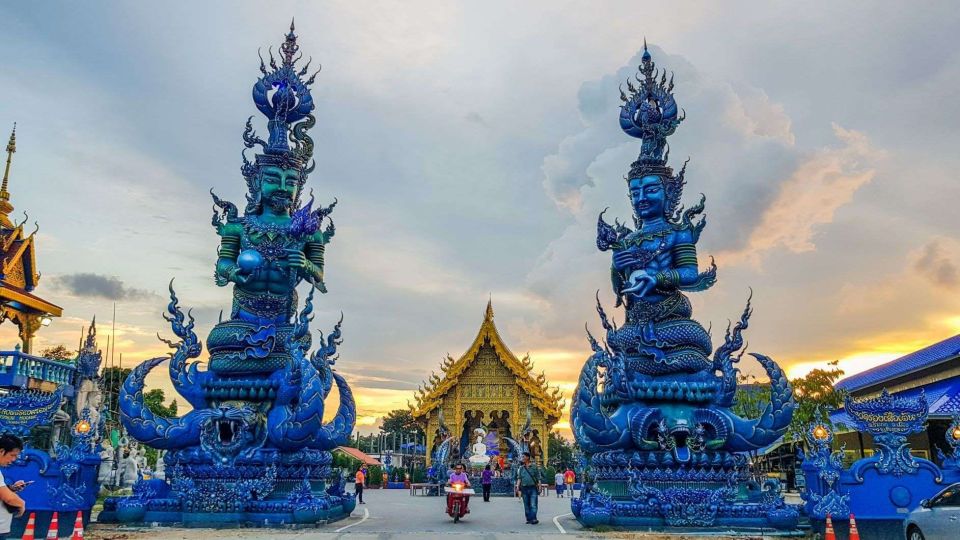
- Wat Rong Suea Ten (Blue Temple): Deep Blue Design and Tiger Lore
- The Red Temple: Thai Spiritual Art and Folk-Tale Details
- Lunch, Breaks, and How the Schedule Stays Tolerable
- Guides Matter: Clear Explanations and Real-Time Problem Solving
- Temple Etiquette and Photo Tips That Save You Frustration
- Price and Value: What $51 Covers for a Full Chiang Rai Day
- Who This Tour Suits (and Who Should Skip It)
- Should You Book It? My Simple Decision Rule
- FAQ
- How much does the Chiang Rai Temples Exploration Day Trip cost, and how long is it?
- Where is the meeting point in Chiang Mai?
- What time should I expect hotel pickup?
- What language is the tour guide?
- What’s included in the tour price?
- Do you stop at a hot spring, and is swimming included?
- How should I dress and what should I bring for temple visits?
- Is the tour suitable for people with mobility impairments?
- Can I cancel and get a full refund?
Key Highlights You’ll Actually Care About
- Wat Rong Khun’s shimmering mirror facade and the pond reflection that makes it feel unreal
- Wat Rong Suea Ten’s deep-blue design and the tiger-lore story behind its location
- The Red Temple’s Thai spiritual art tied to folk tales and storytelling details
- Hot spring steam break for a calm pause, with no swimming involved
- Small group format (12 max) so you get more real help at the temples
- Everything handled: transfers, entrance fees, lunch, and English-speaking guide time
Pickup in Chiang Mai and the Road to Chiang Rai
The day starts in Chiang Mai’s old town area, with meet-up at Baan Meesuk. If you’re doing hotel pickup, you’ll typically be collected between 7:00 and 7:30, so you’ll want to be ready early.
Then it’s straight into the long drive north to Chiang Rai. Expect about 3 hours each way, and yes, it’s a lot of road time in one day. The good part is that you’re not doing the planning—your driver and guide handle the logistics, plus you get stops along the route to stretch your legs and reset.
One more practical note: the roads out of Chiang Mai can feel winding and busy. The tour’s setup depends on a comfortable van and regular stops, so it helps to bring your usual car-day essentials (water, sun protection, and something for comfort).
You can also read our reviews of more tours and experiences in Chiang Mai
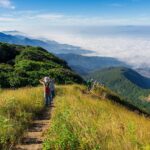
A Natural Hot Spring Stop That’s More About Calm Than Swimming
Before the temples, the itinerary includes a quick stop at a natural hot spring (often called Thaweesin Hot Spring). This is not a swimming spot. Instead, you stand back and watch steam rise from mineral-rich water, which makes it a surprisingly relaxing early break.
Think of it as a reset button. You get a short pause before you start walking temple steps, taking photos, and dealing with the midday heat. It’s also a good moment to use the restroom and grab your sunglasses again.
If you’re expecting a spa day, you’ll be slightly off. If you want a quiet, local-feeling stop that doesn’t eat your schedule, it works well.
Wat Rong Khun (White Temple): Mirrors, Pond Reflections, and Meaning
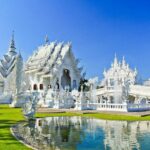
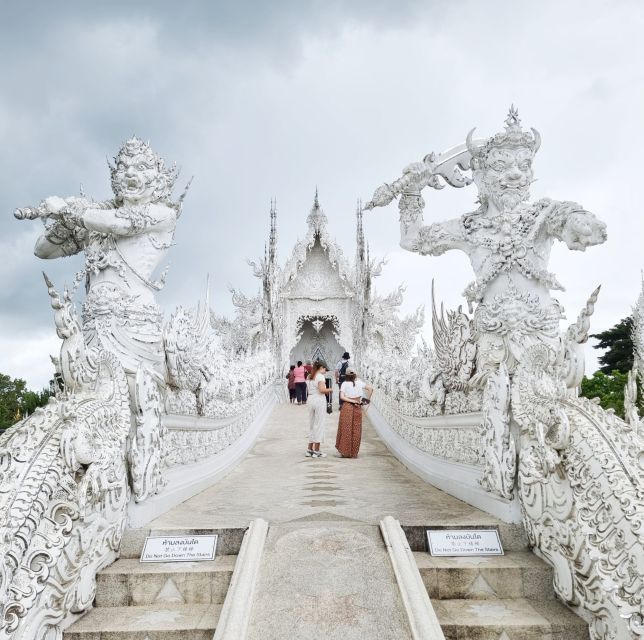
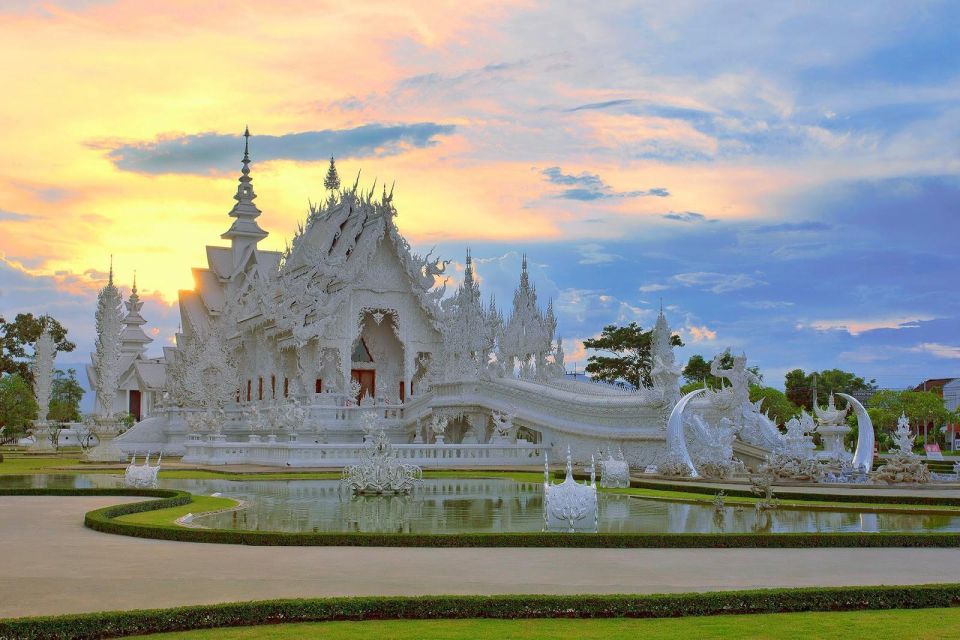
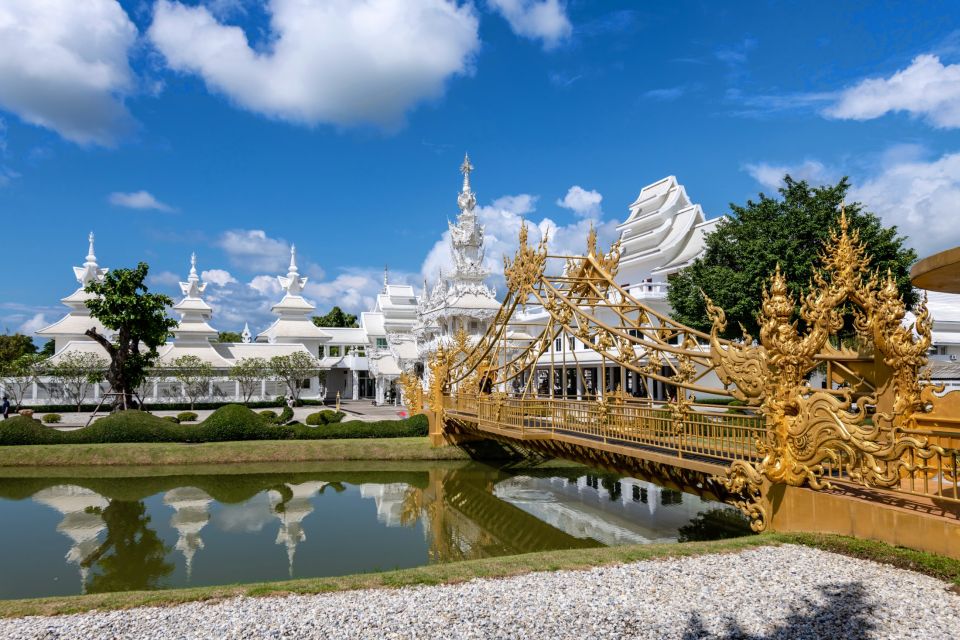
Wat Rong Khun is the reason this day trip gets attention. It’s covered in white surfaces and shimmering mirrors, and the whole place can look almost unreal—especially when the light hits just right. One of the strongest moments is seeing the temple’s reflection in the nearby calm pond, which turns “pretty photos” into something closer to a visual scene.
The White Temple also isn’t just a design flex. You’ll get Buddhist lessons presented through the temple’s artwork and layout, and the guide plays an important role here. Without that explanation, a lot of the symbolism can feel like decorative detail. With it, the temple becomes easier to read.
Time-wise, you generally get enough freedom to walk around and take photos. Still, some people find they want more time at the White Temple specifically—if you’re a slow photographer or you like reading details, you’ll feel that pinch more than others.
Practical tip: wear comfortable shoes and plan for bright sun on white surfaces. If it’s sunny, the whole place looks sharper and more striking.
Wat Rong Suea Ten (Blue Temple): Deep Blue Design and Tiger Lore
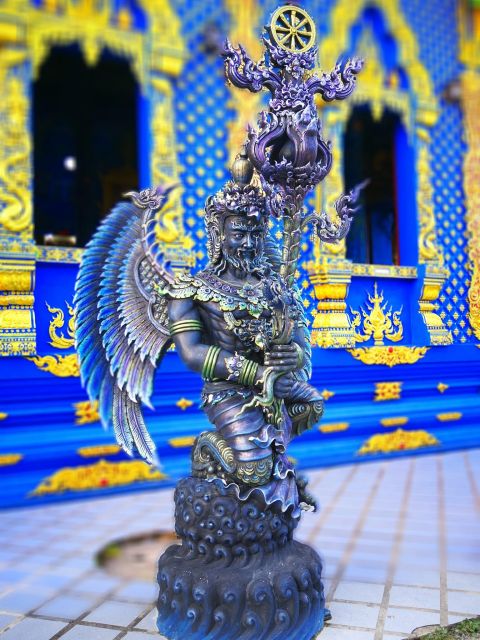
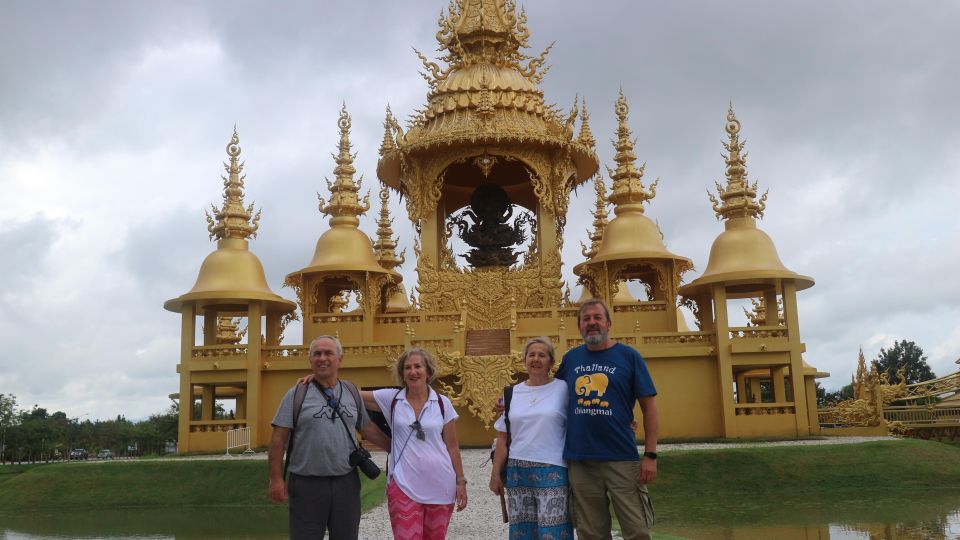
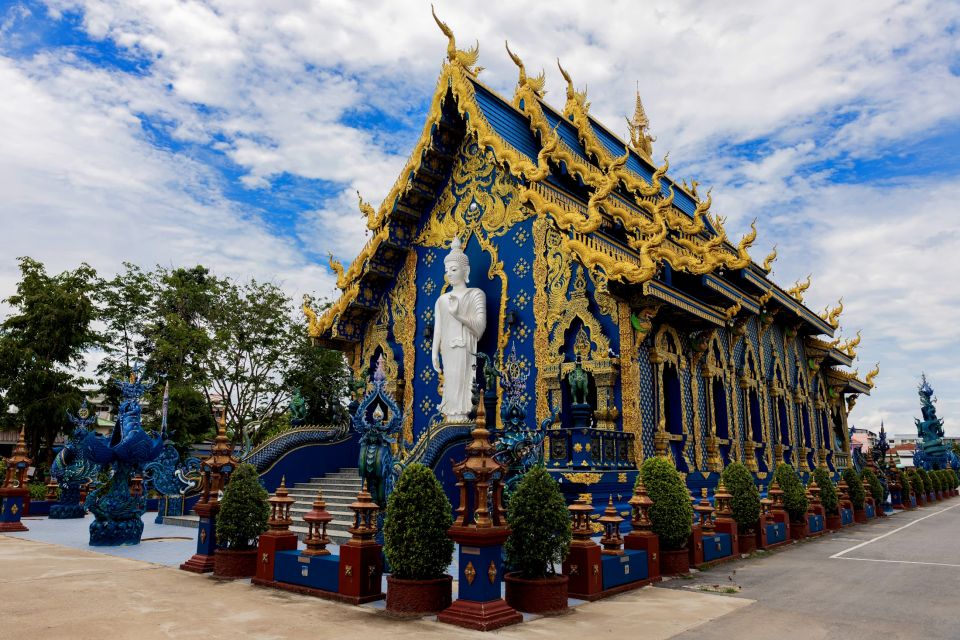
Next comes the Blue Temple, known as Wat Rong Suea Ten. It’s painted in rich deep blues and loaded with detailed design work that rewards slow looking. From a distance, it’s dramatic. Up close, it’s busy in the best way—patterns, textures, and carefully placed elements.
This temple also has a story tied to where it was built. It was constructed on the site of an older temple, a place once thought to be home to roaming tigers. That background matters because it gives you context for why the temple feels so “intentional” rather than random decoration.
The walkthrough here is usually less about one single photo moment and more about noticing design layers. If you enjoyed the White Temple for its symbolism, you’ll likely appreciate how the Blue Temple leans on mood and craftsmanship.
Dress code still applies, so don’t treat this stop as casual sightseeing. Cover up, keep shoes off when required, and let your guide tell you what to look for.
The Red Temple: Thai Spiritual Art and Folk-Tale Details
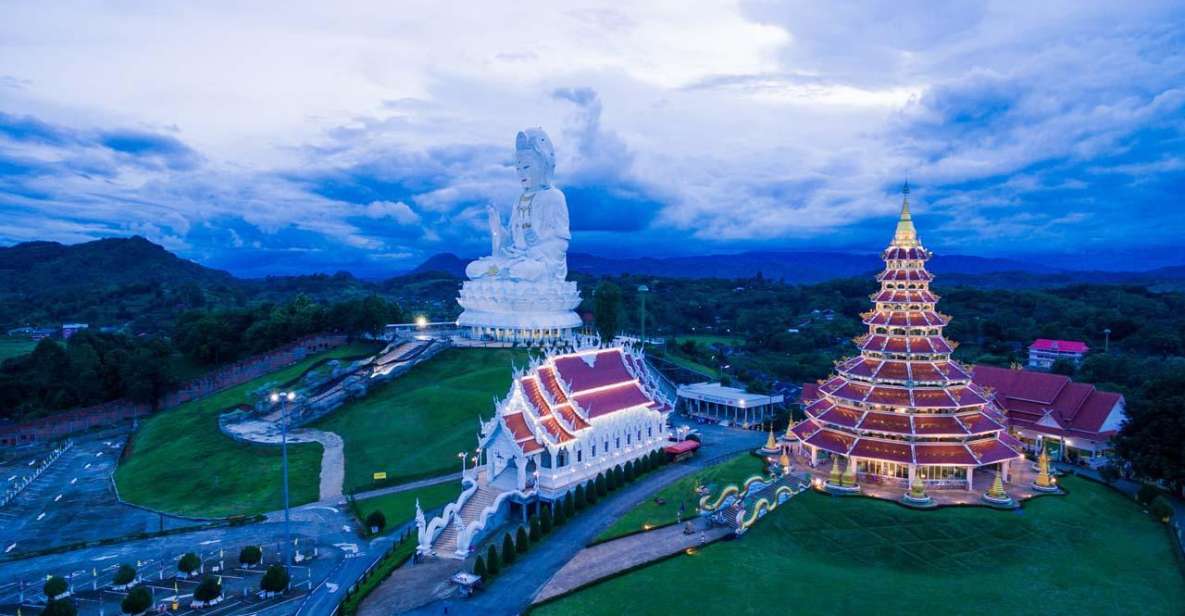
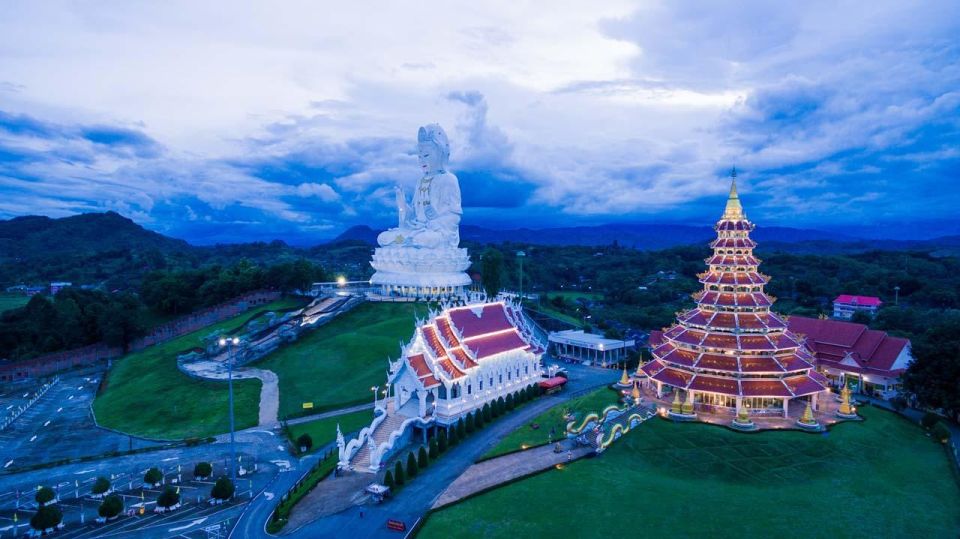
The day’s color shift lands at the Red Temple, which brings bright tones and intricate artwork into the mix. This one leans hard into Thai spirituality expressed through art—spiritual stories and folk tales show up in the details, so the guide’s narration again makes a big difference.
What I like about the Red Temple on this kind of route is how it breaks the pattern. By this point, you’ve seen mirror-shine (White), then deep color and design density (Blue). The Red Temple feels like its own world, with its own visual language and storytelling cues.
You’ll want to take a breath here. By the time you reach the Red Temple, your feet usually feel it, and the day can get mentally loud. The best approach is to pick a few areas to study carefully—doorways, painted sections, and any story scenes the guide flags for you—rather than trying to capture everything at once.
If you’re traveling with someone who just wants quick photos, you might need to compromise a little. But if you like art and stories, this stop tends to win people over fast.



Lunch, Breaks, and How the Schedule Stays Tolerable
You get lunch included, and it’s typically served as a Thai buffet style meal. In practice, that matters because it keeps you flexible if you’re picky or you have dietary needs—there are often vegetarian options available.
Throughout the day, you also get routine stops. Many tours keep breaks roughly every 90 minutes or so, which helps with comfort on a long route. You’ll also have drinking water included, which sounds small until you’re walking temple steps under Thai sun.
One small reality check: this is a one-day run from Chiang Mai, so the schedule is full. If you’re hoping for a leisurely pacing, this isn’t that kind of day. It’s more like “see the highlights, enjoy the explanations, and rest when you can.”
Guides Matter: Clear Explanations and Real-Time Problem Solving
The biggest difference between a good temple day and a forgettable one is the guide. This tour runs with an English-speaking tour guide (with Thai support too), and the guides you might meet—people like Bee, Goi, Paul, and Nine—tend to be both friendly and focused on making the stops understandable.
What stands out is how they handle the moment-to-moment stuff. They guide you on what to do in temples, they help with logistics like tickets when needed, and they often help with photos so you’re not constantly begging strangers to take one more shot. Some guides even share local names for places so you can keep track of everything.
There’s also a practical side. If something doesn’t work due to conditions like rain or closures, your guide may substitute another stop. One example that came up is a shift to a tea farm when a planned temple wasn’t available.
Temple Etiquette and Photo Tips That Save You Frustration
Temple visits in Thailand aren’t just sightseeing. You’ll want to follow the basic rules: cover your knees and shoulders, and remove your shoes before entering main chapel areas. If you show up in shorts and a tank top, you’ll likely waste time finding a solution on-site.
Bring the usual heat-and-bug setup: comfortable shoes, sunscreen, insect repellent, and a hat. White and blue temple colors can reflect sunlight hard, so sunscreen is genuinely useful, not optional.
For photos, here’s what matters most on this route:
- At Wat Rong Khun, plan for mirror shine and reflections in the pond area. Sunny days make a noticeable difference.
- At the Blue Temple and Red Temple, slow down for details. You’ll get better photos if you let your eyes adjust rather than firing off shots while standing still for 10 seconds.
If your group is small, you’ll also have an easier time waiting for better photo angles without feeling rushed.
Price and Value: What $51 Covers for a Full Chiang Rai Day
At about $51 per person, the value comes from what’s included, not just the sticker price. You get hotel pickup and drop-off, round-trip transfers, all entrance fees, an English-speaking guide, lunch, and even insurance plus drinking water.
That combination matters because Chiang Rai is a long day when you’re doing it solo. You’d spend time figuring out transportation, paying multiple entry fees, and negotiating guide time. Here, those pieces are already bundled.
The one caution is that you’re still committing to the day’s pace. This tour is built for efficiency: you’ll see the major temples and get guiding explanations, but you’re not building in long, free-form wandering.
Who This Tour Suits (and Who Should Skip It)
This is a great fit if you:
- want three iconic Chiang Rai temples in one day without arranging transport
- like having an English-speaking guide explain symbolism and design choices
- prefer a small group (12 max) over a huge bus crowd
It’s less ideal if you’re:
- sensitive to long driving days (the road time is real)
- someone who needs step-free mobility support, since the tour is not suitable for people with mobility impairments
Also, this is a temple day, so being respectful about dress and behavior helps the experience feel smooth rather than awkward.
Should You Book It? My Simple Decision Rule
Book this tour if you want maximum Chiang Rai temple impact with minimal planning. You’re paying for the full package—transport, fees, lunch, and guide time—while still getting time to walk around and take photos.
Skip it if you’re hoping for a laid-back day with lots of flexibility, or if long driving is a deal-breaker. With only one day, you’ll feel the schedule no matter how well it’s organized.
FAQ
How much does the Chiang Rai Temples Exploration Day Trip cost, and how long is it?
It costs $51 per person and runs for 1 day.
Where is the meeting point in Chiang Mai?
Meet at Baan Meesuk, located in the old town of Chiang Mai.
What time should I expect hotel pickup?
Pickup is optional, and if you’re picked up, it typically happens between 7:00 and 7:30.
What language is the tour guide?
The tour includes a live guide in English (and Thai as well).
What’s included in the tour price?
The price includes hotel pickup and drop-off, round-trip transfers, all entrance fees, an English-speaking tour guide, lunch, insurance, and drinking water.
Do you stop at a hot spring, and is swimming included?
Yes, there is a natural hot spring stop. It’s not for swimming, but you can observe the steam rising from the mineral-rich water.
How should I dress and what should I bring for temple visits?
Cover your knees and shoulders, and take off your shoes before entering the main chapel. Bring comfortable shoes, sunscreen, insect repellent, and a hat.
Is the tour suitable for people with mobility impairments?
No. The tour is not suitable for people with mobility impairments.
Can I cancel and get a full refund?
Yes. Free cancellation is available up to 24 hours in advance for a full refund.