REVIEW · CHIANG MAI
Chiang Mai: Doi Inthanon Trip with Pha Dok Siew Guided Trek
Book on GetYourGuide →Operated by LocalCNXTours · Bookable on GetYourGuide
Cold air on a Doi Inthanon day. This is one of those Chiang Mai trips that makes you feel like you crossed into another country: you get the Karen-led Pha Dok Siew trek and the King and Queen pagodas plus waterfall time and a stop near Thailand’s highest peak. The only real catch is that the summit area can be foggy and the weather can feel cold and wet, even when Chiang Mai is warm.
I like the way this day is built for balance. You spend enough time at the big sights to enjoy them, then you earn your views with a guided 2-hour walk through cooler forest. It’s also a joint group day (typically 10–12 people), so you get local insight without the price of a private car.
If you want a strong nature day with culture attached, this fits. You’ll be in and out of van mode a lot, but the best part is the guided trek where the hill-tribe connection actually feels practical, not staged.
In This Review
- Key things to know before you go
- Entering Doi Inthanon’s colder world
- Getting there: early van time without the chaos
- Twin pagodas: King and Queen, with a real dress code
- Pha Dok Siew Nature Trail: the guided trek that earns its badge
- Lunch in the Karen area (and the coffee/tea stop)
- Wachirathan Waterfall: photos first, no swimming
- The highest point of Thailand: views might be limited, but it still counts
- Group size, guide energy, and how the day actually flows
- Price and value: what your money covers (and the key fee check)
- What to pack: cold air, rain slickness, and pagoda respect
- Who should book this Doi Inthanon trip
- Should you book the Doi Inthanon with Pha Dok Siew trek?
- FAQ
- Is this a full-day tour?
- How long is the trekking part on Pha Dok Siew?
- Do I need to pay the national park fee during the trip?
- What should I wear or bring for the pagodas and the weather?
- Can I swim at the waterfalls?
- Where do pickups happen?
Key things to know before you go
- Pha Dok Siew is your main event: a 2-hour guided nature trail managed with Karen community improvements (bamboo/wood bridges, stairs, railings).
- No-swim rule at waterfalls: you’ll get photos and time to look, not a swim break.
- Pagodas need basic respect: casual dress code (no tank tops; flipper shoes not allowed).
- Guides can make the day: names like Toey, Nena, Chan, Mint, Daniel, and Mr. Bobo show up often for humor plus clear explanations.
- Bring real weather gear: cold temps and rain happen, especially at higher elevations.
Entering Doi Inthanon’s colder world
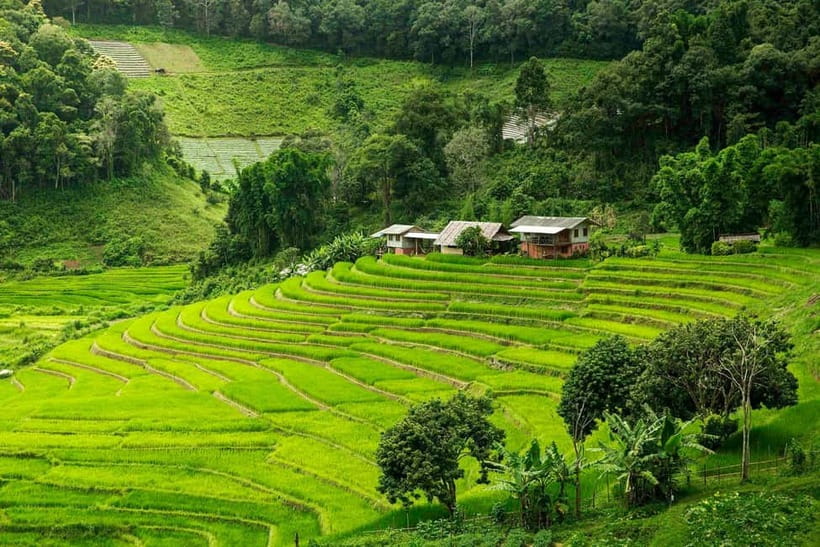
Doi Inthanon is why Chiang Mai day trips can feel like a different season. At higher elevation, the air cools down and the forest feels denser. Even on days that start gray, the park can turn into a string of waterfall viewpoints and cloud-forest views.
The route is built around three moods: ceremonial (the twin pagodas), forest-walk (Pha Dok Siew), and water-and-wildlife country (Wachirathan and the nature stops along the way). If you like variety in a single day, this one delivers.
One smart thing about the itinerary: it gives you time where you’re actually standing still. You’re not just rushing past temples and snapping photos. The pagoda stop and the waterfall stop are long enough to breathe.
You can also read our reviews of more guided tours in Chiang Mai
Getting there: early van time without the chaos
Your day starts early, around 7:00–7:30 am, with pickup in the old city area and around Burger Kings (traffic can be heavy, so travel time may differ from map apps). You’re usually departing from places like the Imm Hotel Tha Pae area, so it helps to arrive early and avoid a last-minute scramble.
The ride itself is in an air-conditioned van or minivan. In a group of 10–12, this is one of the most efficient ways to reach the park since you’re covering a lot of distance for a single-day plan. It also means you don’t have to worry about navigating park roads, parking, or timing.
Practical tip: if you get motion-sick, take precautions. The day has multiple short road legs, and the stops are spaced out enough that you won’t want to feel sick while you’re trying to enjoy views.
Twin pagodas: King and Queen, with a real dress code
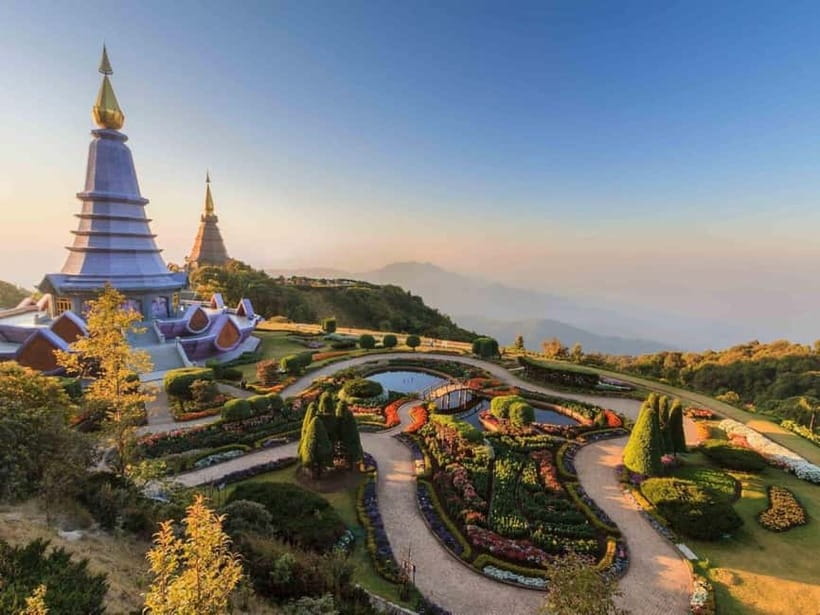
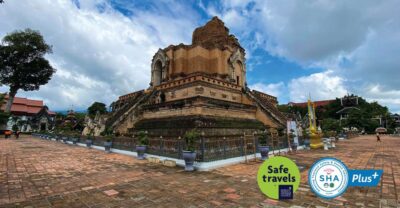
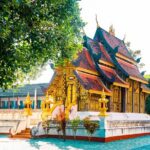
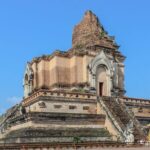
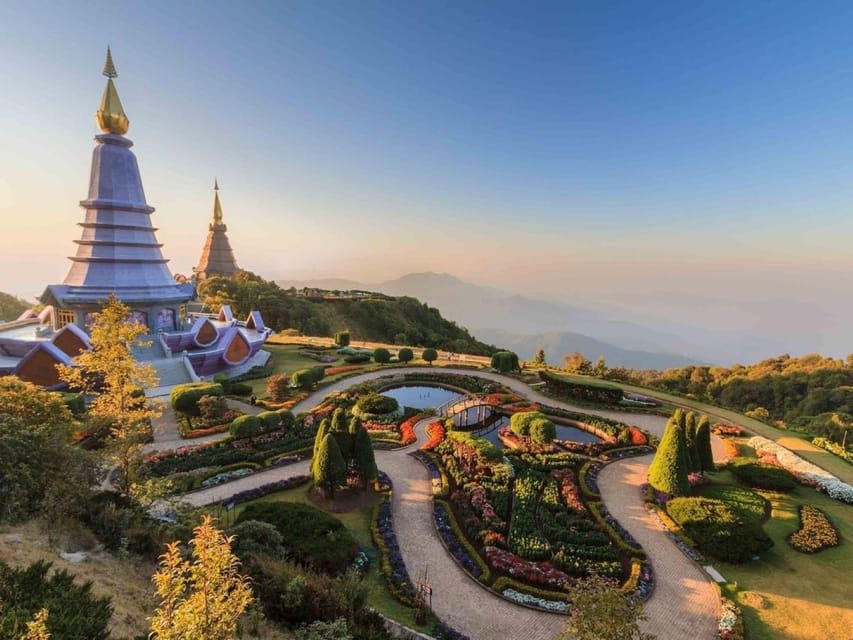
The day typically includes a stop at the Grand Pagoda Nabhapolbhumisiri (part of the famous twin-pagoda complex). This isn’t just a quick look. You get a half-hour block, which is enough to walk around, find a viewpoint, and get a calm sense of the place.
The pagodas have rules that matter in real life: you need a casual dress code. That means no tank tops, and you shouldn’t show up in flipper shoes. Regular sneakers or other normal shoes are fine.
What you’ll like here:
- The setting is scenic and elevated, so you often feel the cooler air.
- The pagoda area is calm compared with what you might expect from a busy attraction.
Potential downside: if weather is foggy, the view can be less dramatic. Still, the pagodas are worth seeing because the atmosphere and structure are the point, not just the skyline photos.
Pha Dok Siew Nature Trail: the guided trek that earns its badge
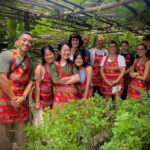
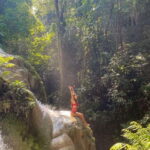
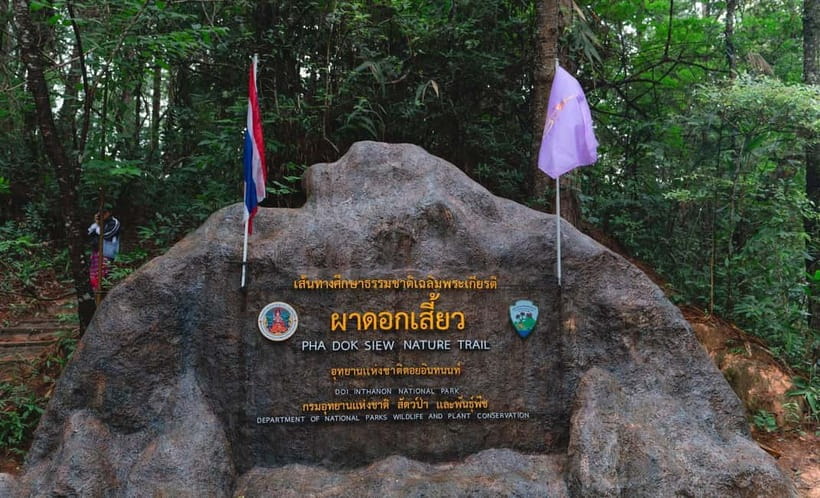
The heart of this trip is the Pha Dok Siew Nature Trail walk with a local guide from the hill tribes (often Karen). You’re on the trail for about 2 hours, and it’s guided, not just a self-walk.
This trail has recently been improved for safety. You can see the results: bamboo and wood bridges, steps, and railings in areas near water. There are also educational boards along the way, so you’re not just walking through trees—you’re getting a story about what grows there and why.
Pace and difficulty:
- In many cases, the trek feels like a manageable walk rather than a brutal hike.
- It can be mostly downhill with steps and bridges, though the heat can make it feel harder than it looks on paper.
- Rain season turns the trail slick, so you’ll want good grip shoes.
Why it’s special is how the guide explains the forest. Many guides on this route are praised for pointing out plants, wildlife, and survival skills tied to local life. Names like Nena and Toey come up for exactly this: making the walk feel like a living classroom. Guides such as Chan and Mr. Bobo are also mentioned for keeping energy up while staying practical about the trail.
If you want one “main character moment” on this day trip, it’s usually the trail. People leave talking about the forest walk, not only the waterfall.
Lunch in the Karen area (and the coffee/tea stop)
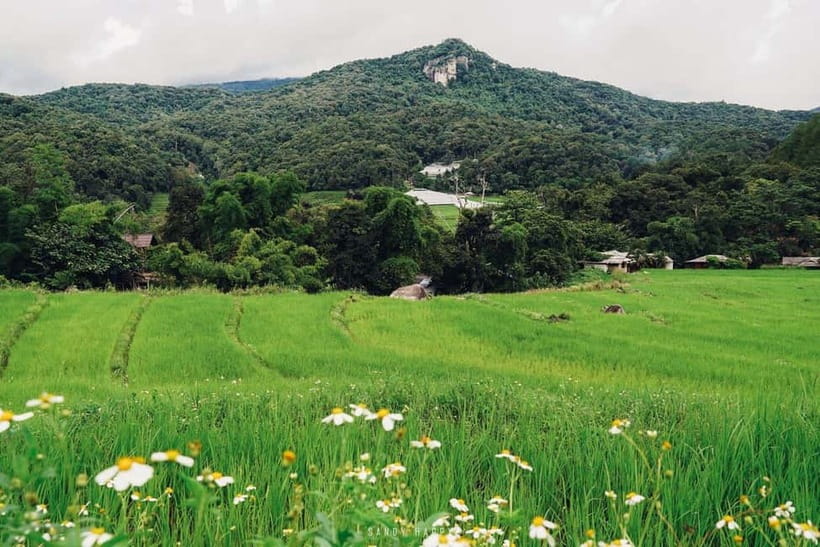
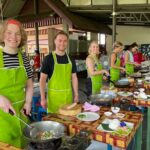
After the trek, you get lunch for about 1 hour. It’s a set menu, and in the real world it often lands on the simple side. That said, the location and context are the comfort. You’re eating in the middle of this mountain environment, not in a tourist strip.
One of the most repeated highlights from guides and groups is the food-and-drink add-on around the village visit: coffee and tea tasting. Several guides are credited with bringing people to try organic-grown arabica coffee and local tea options. That’s a nice change from a generic lunch break, and it fits the hill-tribe story you came for.
Food notes you can plan around:
- Expect Thai-style set-menu lunch.
- If you have diet needs, you might want to mention them upfront. Some groups have reported vegetarian accommodations, but the tour data only confirms it can be discussed through your contact process, not guaranteed for every item.
The lunch block is also where you reset before the waterfall and summit portion. You’ll feel the day in your legs if you didn’t pack water and a layer for the cooler air, so take your time here.
You can also read our reviews of more hiking tours in Chiang Mai



Wachirathan Waterfall: photos first, no swimming
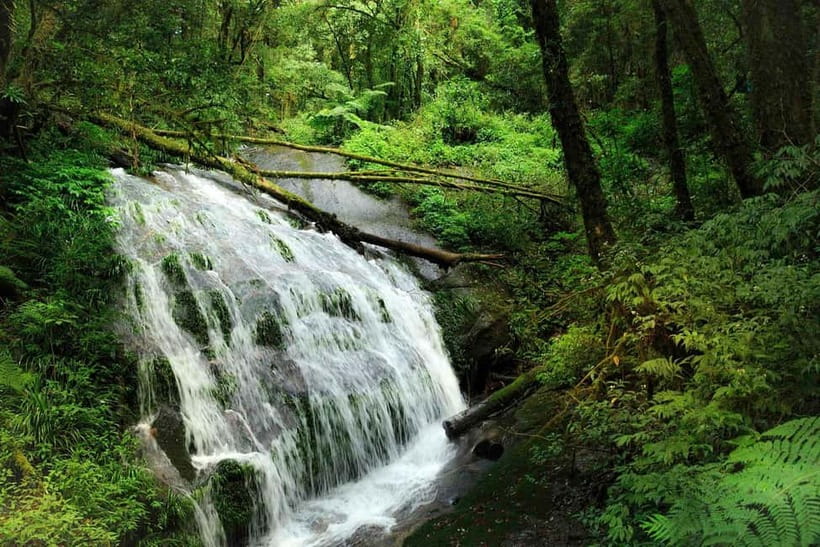
Next comes Wachirathan Waterfall, with about an hour for photo stops and visiting. This is one of those “water noise + forest air” stops that feels instantly worth it, even when it’s not sunny.
Key expectation: no swimming. You’re here to look, take photos, and soak in the atmosphere. The time is long enough to get a couple good angles, and you can usually find a spot where you’re not directly in the hardest spray.
In rainy season, waterfalls can look more dramatic. In dry season, they can feel calmer. Either way, this is one of the main sights in Doi Inthanon National Park, so the tour treats it as a centerpiece.
The highest point of Thailand: views might be limited, but it still counts
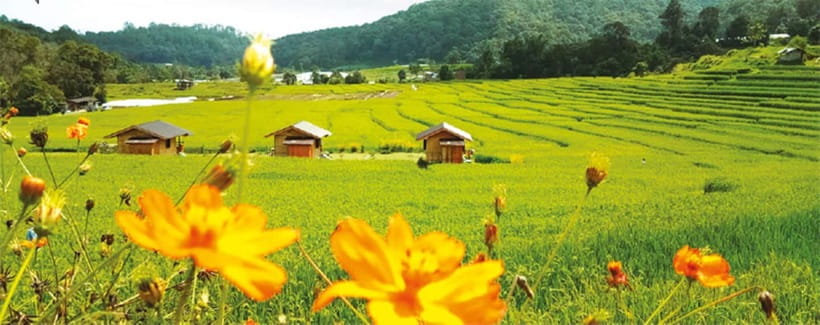
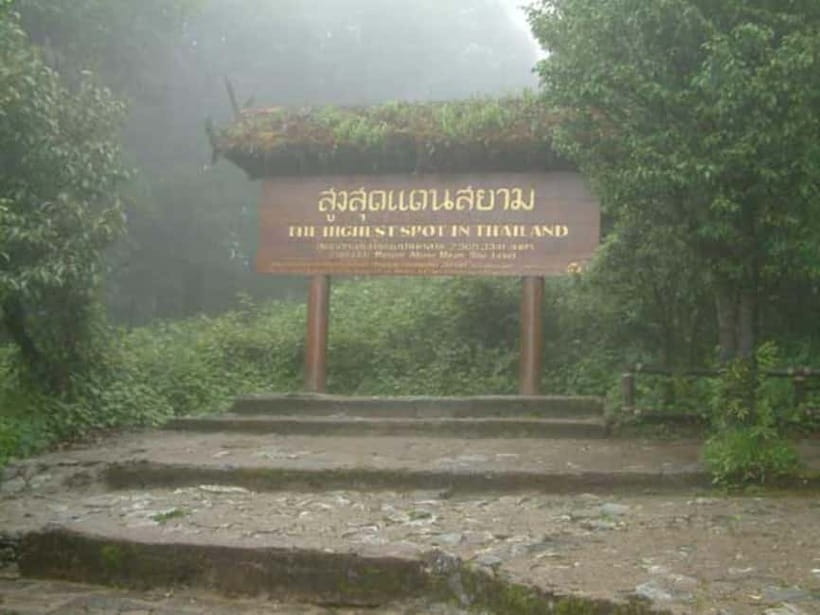
You’ll also visit Thailand’s highest point. Here’s the honest nuance: the summit area can be less scenic than you imagine from travel photos. Some descriptions note it’s more forested, and if fog or mist moves in, the big sweeping view might not show up.
But it still matters for the experience. You’ll feel the altitude change, the air cools down, and you get the sense of being at the literal top. Plus, it keeps the day from feeling one-note. Without the highest peak stop, the itinerary would lean too heavily toward pagodas and waterfalls.
If you hate surprises, plan for weather variability. If you enjoy being flexible and happy with nature even when the view is muted, you’ll probably feel it as a “real mountain day,” not a photo mission.
Group size, guide energy, and how the day actually flows
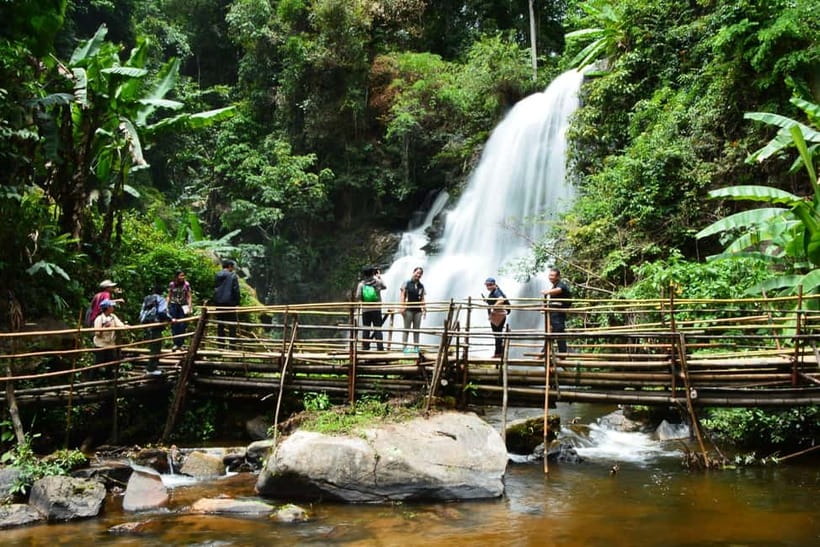
This is a joint tour with around 10–12 customers. That size is big enough to create a group vibe, but small enough that you’re not lost in a crowd.
What you should expect depends on the guide, and this route tends to get strong guide reviews. You’ll see guiding styles like:
- Toey for friendly culture storytelling and fun group dynamics
- Nena for an “amazing” trek experience that feels enjoyable, not like work
- Chan for humor and lively pacing from stop to stop
- Mint for enthusiasm and keeping the day balanced
- Daniel for organizing a day that moves without feeling rushed
- Mr. Bobo for entertaining leadership and strong navigation through the park
Most importantly, guides help you read what you’re seeing: vegetation changes, hill-tribe culture context, and why the trail is built the way it is. That’s what turns a list of stops into a day with meaning.
If you don’t want to talk to strangers, you can still enjoy this. You don’t need to be social all day. But the group setting is part of the value.
Price and value: what your money covers (and the key fee check)
The price you see for this type of Doi Inthanon day trip can be deceptively simple. Your ticket should tell you whether the national park fee is included.
Here’s what to verify carefully before you pay:
- There are two options: one that includes the national park fee (so you do not pay more), and one that excludes it.
- The excluded option typically requires 400 THB per person paid in cash on the day of travel.
This matters because it changes the real cost by a meaningful amount. It also changes your comfort level on the day—having cash ready can reduce stress.
What’s generally included:
- Roundtrip air-conditioned transport (from old city and Nimman area if selected)
- Lunch (set menu)
- Drinking water
- English tour guide
- Insurance
- National park fee and ticket if your option includes it
- Trekking trail fee
What’s not included is mostly “your extra spending.” In real terms, your biggest extra cost is usually snacks, drinks beyond water, or small purchases connected to the hill-tribe market stops.
At around $50 per group up to 1 (as listed), the value comes from bundling everything: transport, park entry, guide, and the trekking infrastructure. If you tried to assemble this yourself, you’d spend far more time and effort to coordinate drivers, tickets, and a proper guided hike.
What to pack: cold air, rain slickness, and pagoda respect
Bring layers. Even if Chiang Mai feels warm, the higher elevation can feel cool fast.
From the practical info on the trip:
- Bring a hat
- Wear clothes that fit the pagoda dress code (no tank tops; sneakers are okay; avoid flipper shoes)
Extra packing advice based on how this day tends to run:
- A light jacket or warmer layer for the summit and waterfall areas
- Rain protection for rainy season days, especially because the trail can get slippery
- Shoes with grip for steps and bridge sections
Also note the limits:
- No pets
- No big luggage (so travel light)
- The tour isn’t suitable for wheelchair users, people with altitude sickness, babies under 1 year, and people over 70, and it’s not designed for pregnant travelers.
If you fall in a category like altitude sickness, don’t gamble. The higher elevation is part of the whole point.
Who should book this Doi Inthanon trip
This works best if you:
- Want a single-day plan that hits the park’s key themes: pagodas, rainforest trekking, waterfalls, and the highest point
- Like guided nature walking, especially with local hill-tribe explanations
- Prefer group-day value over private tours
It may not be for you if you:
- Hate early mornings and long van legs
- Want guaranteed summit views no matter the weather
- Need a more flexible hiking pace than a set 2-hour trail program
It’s a good choice for first-time Chiang Mai visitors who want a true northern Thailand day outside the city.
Should you book the Doi Inthanon with Pha Dok Siew trek?
I’d book it if you’re after an all-in-one day that actually mixes culture and nature. The biggest reason is the Pha Dok Siew guided trail, and the second reason is the Karen-led village connection plus coffee/tea tasting that makes the lunch feel like part of the story, not just fuel.
Before you hit confirm, do two things:
1) Check your ticket for whether the 400 THB national park fee is already included or if it’s a cash add-on.
2) Pack for cold rain, and wear shoes that handle slick steps and bridges.
If you’re good with that, this trip is one of the more satisfying ways to experience Doi Inthanon in a day, without turning your schedule into a stressful puzzle.
FAQ
Is this a full-day tour?
Yes. It’s listed as a 1-day experience.
How long is the trekking part on Pha Dok Siew?
The guided trek at Pha Dok Sieo (Pha Dok Siew) Nature Trail is about 2 hours.
Do I need to pay the national park fee during the trip?
It depends on the option you choose. Some tickets include the national park fee, and others exclude it and require 400 THB per person paid in cash on the day of travel. You should recheck your ticket carefully.
What should I wear or bring for the pagodas and the weather?
Bring a hat. For the King and Queen pagodas, you need a casual dress code: no tank tops, and flipper shoes are not allowed (sneakers/sports shoes are okay).
Can I swim at the waterfalls?
No. The tour information specifies the waterfalls are for visiting and photo stops, with no swimming.
Where do pickups happen?
Pickup is around 7:00–7:30 am in the old city area and near Burger Kings. The meeting point may vary by option, and you may also see Imm Hotel Tha Pae listed as a meeting reference point.