REVIEW · CHIANG MAI
Completed Thai Silk Class Experience
Book on Viator →Operated by GoWithJoe · Bookable on Viator
Silk lessons in Chiang Mai have a way of getting your hands working fast. In this small-group class with hotel pickup and drop-off, you’ll learn how Thai silk is made and then create your own handmade souvenir to take home.
Two things I really liked: the hands-on focus and the full production story. You work through the basics of natural tie-dye, silk thread spinning, and cross weaving, then you leave with something you made yourself.
One thing to consider: this experience needs good weather, and the schedule is about a half-day (around 6 hours). If you’re the type who hates being tied to a start time, plan your day around the 9:00 am pickup.
In This Review
- Key Takeaways
- From Hotel Door to Silk Workshop in Chiang Mai
- What You Learn: Natural Tie-Dye, Spinning, and Cross Weaving
- The 6-Hour Rhythm: How the Workshop Likely Flows
- Lunch Included: When a Break Actually Helps
- Your Handmade Souvenir: What You’ll Leave With
- Small Group Size and Friendly Teaching: The Real Value
- Price and Value: Is $124.23 a Good Deal?
- Who Should Book This Silk Class (and Who Might Not)
- Should You Book This Thai Silk Class with GoWithJoe?
- FAQ
- How long is the Thai silk class in Chiang Mai?
- What time does the experience start?
- Is hotel pickup and drop-off included?
- Is lunch included in the price?
- How many people are in the group?
- Will I make something to take home?
- What happens if the weather is poor?
Key Takeaways
- Hotel pickup and drop-off makes the day feel simple, not stressful
- Natural tie-dye, spinning, and cross weaving cover the main steps of silk production
- Included lunch helps you actually enjoy the class instead of fading halfway through
- A take-home handmade item means you’re not just watching—you’re making
- Max 10 travelers keeps the teaching more personal
From Hotel Door to Silk Workshop in Chiang Mai
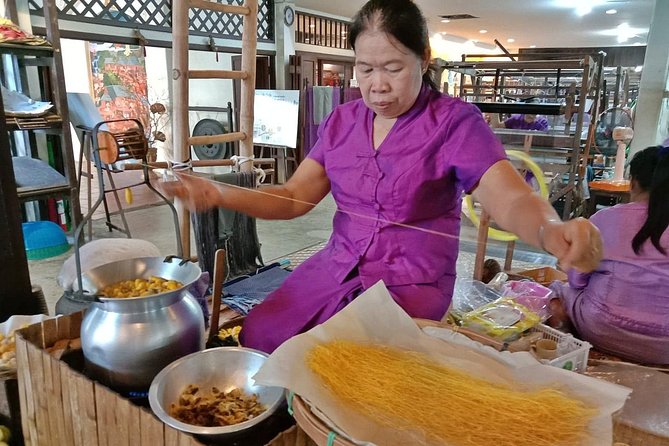
This is a practical, no-fuss half-day if you want more than a shopping stop. The class starts at 9:00 am, and you’ll get hotel pickup and drop-off via an air-conditioned vehicle. For Chiang Mai, that matters. Traffic and distance can turn a “quick activity” into a whole ordeal, so having someone handle the logistics is a big part of the value.
The group size is capped at 10 travelers, which usually changes the feel of a craft class. It’s less like a performance and more like a guided workshop where you can actually ask questions and try things without feeling rushed.
Also, the tour description notes it’s near public transportation. So if your pickup timing doesn’t work perfectly with your plans, you might find it easier to adapt. Still, since pickup is offered, I’d treat that as the default unless you’re already in the exact area.
Price-wise, $124.23 per person isn’t cheap, but it’s not just “paying to look.” You’re paying for instruction, workshop time, and materials that result in a product you can take home. When an activity includes lunch, transportation, and a finished souvenir, the price starts to make more sense than the typical “craft show” version of this kind of thing.
You can also read our reviews of more tours and experiences in Chiang Mai



What You Learn: Natural Tie-Dye, Spinning, and Cross Weaving
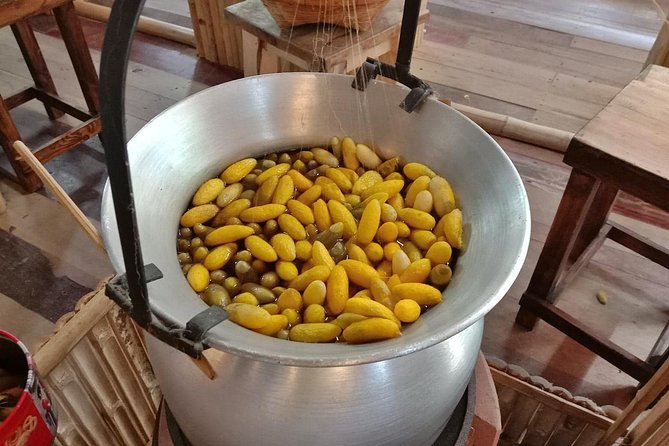
The heart of this class is the teaching, and it covers the core steps of silk textile production. You’ll learn about the complete textile process, with three big skill areas:
Natural tie-dye
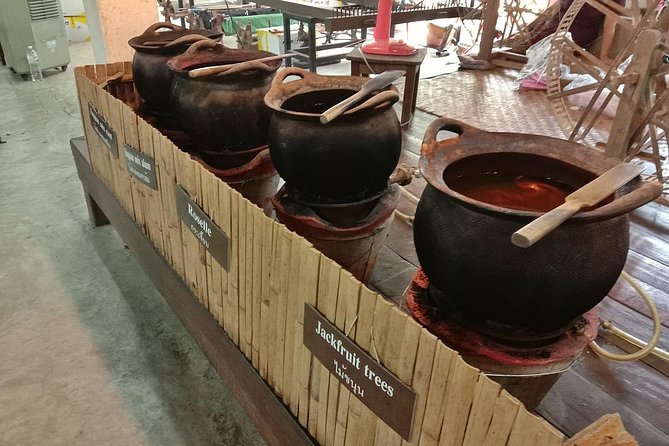
Tie-dye can look casual from afar, but it’s all about method. In class, you learn the basics of working with natural dyes and the tie-dye approach used in Thai silk production. It’s not just about making patterns—it’s about understanding the steps well enough to repeat them, even if your first attempt isn’t museum-perfect.
Silk thread spinning
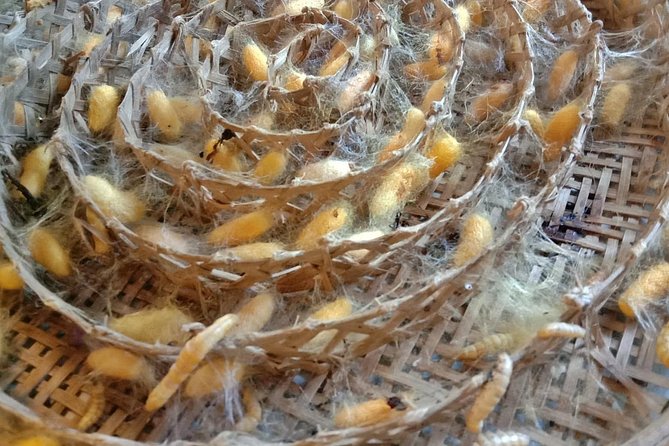
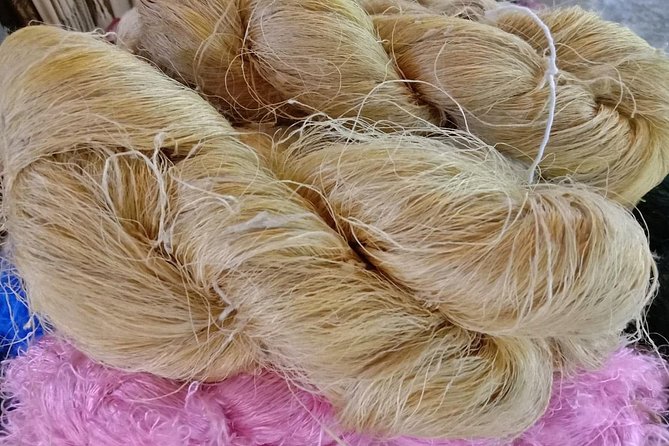
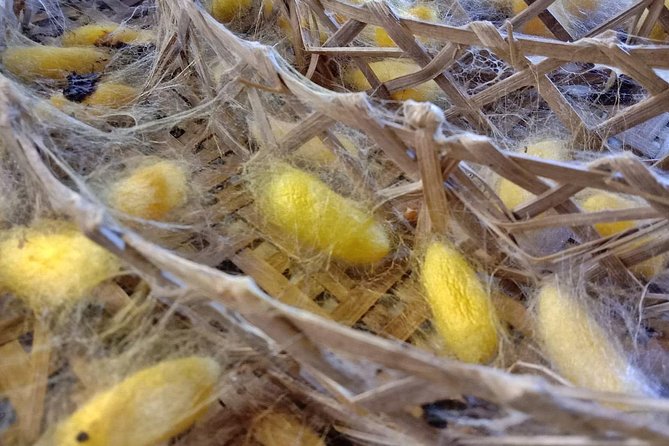
Silk spinning is where the craft turns from “cute” into “oh wow, that’s a skill.” You’ll get the basics of spinning silk thread, and that hands-on work is exactly what makes this class memorable. It also gives you an appreciation for why silk is such a valued fabric—there’s real work behind it, not just the final sheen.
Cross weaving
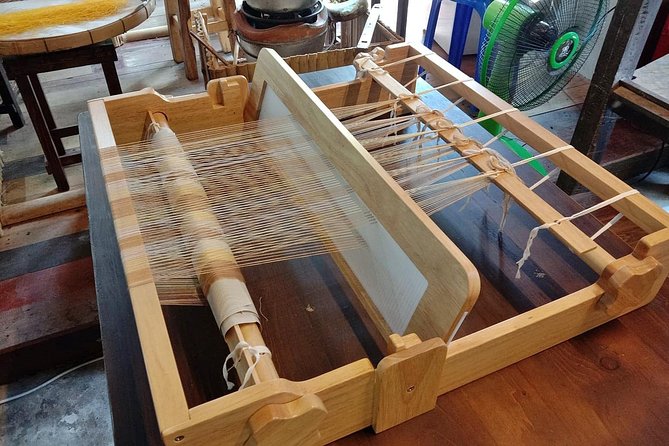
Cross weaving is the technique that turns thread into fabric. In the class, you’ll learn the foundations so you can create your own project. I like that you’re not only learning theory. You’re doing the movements and seeing how the method affects the result.
Even the best silk sellers can’t explain silk production as clearly as doing the steps yourself. You start noticing differences in how processes connect: dye affects how the final piece looks, spinning affects how the fabric handles, and weaving affects the structure.
From the high ratings, the class seems to hit that sweet spot: friendly instruction paired with actual DIY time. One review highlighted how the women demonstrating weaving and spinning were eager, showing techniques clearly and with a warm attitude. That’s a big deal in craft classes, because comfort makes learning faster.
The 6-Hour Rhythm: How the Workshop Likely Flows
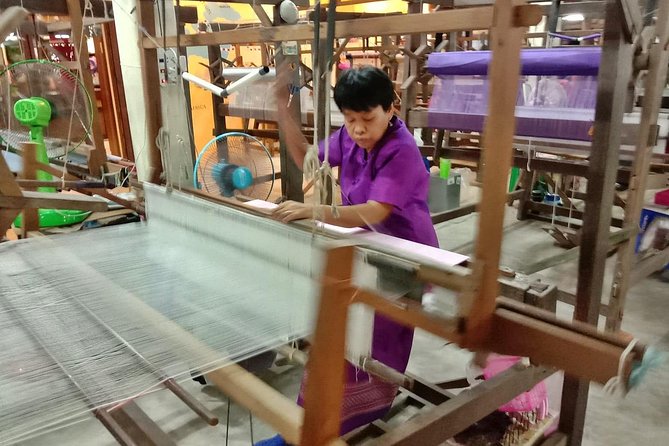
You should expect a schedule that moves in a logical sequence: learn the core methods, practice them, then create your own take-home souvenir. The total duration is about 6 hours, so it’s long enough to feel like real progress—not just a quick taste.
While the exact minute-by-minute itinerary isn’t spelled out, the structure is clear:
- You arrive and get the basics of the silk textile production process.
- You cover the main techniques: natural tie-dye, silk thread spinning, and cross weaving.
- Lunch is included, giving you a break before you switch fully into making mode.
- You make your own souvenir using what you’ve learned.
This sequencing is smart for first-timers. Learning works best when you can connect each step. If you only dye, you don’t understand the payoff. If you only weave, you miss how thread quality changes the fabric. By connecting tie-dye → spinning → weaving, the class gives you a complete “so that’s why it works” picture.
And because this is a small group, the pace can be more forgiving. If your hands need a couple tries, you’re not trapped in a fast-moving line where everyone gets the same one-minute demo. You can slow down and learn the method.
Lunch Included: When a Break Actually Helps
You get lunch included, and that’s more important than it sounds. A 9:00 am start plus a full production-learning day can wear people out. Lunch built into the experience helps you stay focused for the hands-on part instead of getting distracted by hunger and energy crashes.
In classes like this, the middle of the day often decides your mood. Eat well and you can enjoy the learning. Skip lunch and suddenly you’re rushing and making mistakes just to get it over with.
Since the tour includes lunch, you’re not juggling extra stops or hunting for a quick meal while you’re supposed to be learning. It’s also one less “personal expense” on your day, since the tour explicitly notes that personal expenses aren’t included.
Practical tip: hydrate in the morning. Even with air-conditioned transport, you’ll likely be at a workstation for a few hours, and Chiang Mai can still feel warm.
Your Handmade Souvenir: What You’ll Leave With

This is not a “watch and buy” situation. The experience is built around you making something. You’ll create a handmade silk souvenir during the small group class, and the included listing notes that you make your own product.
That matters because the souvenir isn’t just a nice marketing line. It’s a built-in way to measure what you learned. If you can create an item with the techniques taught—especially after practicing core steps like weaving—you’ll walk away with both a physical memory and a real sense of how the process works.
One review described it as fun and hands-on after learning about silk fabric production, with the shop being large and full of items. I take that to mean you get two experiences in one: instruction in a teaching space, plus the chance to see the broader operation and what different silk products look like.
Also, your take-home project gives you something practical to do with your time afterward. You can pack it, gift it, or keep it as a reminder without wondering whether you overpaid for a lesson you didn’t control.
When making a craft souvenir, be ready for “imperfect first attempts.” That’s normal. The goal here isn’t to create a flawless product the first day—it’s to learn the process and make something you can genuinely claim as your own.




Small Group Size and Friendly Teaching: The Real Value
The class runs with a maximum of 10 travelers, and the review feedback supports why that’s a big deal. When instructors can spread attention across a small number of people, you get clearer demonstrations and more time with your hands.
One review also pointed out that the women demonstrating weaving and spinning were eager and friendly. That combination—skill plus warmth—changes everything. Silk work has patience built into it. If the teaching feels stressed or rushed, you’ll feel it in your work. If the teaching feels supportive, you’ll actually enjoy the technique.
This is exactly the type of activity where group size influences your final satisfaction:
- In a large group, you might only get short instructions at each stage.
- In a small group, you can correct how you’re doing it and keep going.
I’d also note that this is booked on average 22 days in advance, which suggests demand. If you’re planning a specific timeframe in Chiang Mai, I’d try to lock your spot early rather than hoping a last-minute slot appears.
Price and Value: Is $124.23 a Good Deal?
At $124.23 per person, you’re paying for a lot more than a basic entry ticket. Here’s what’s included based on the information you’re given:
- Hotel pickup and drop-off
- Air-conditioned vehicle
- Lunch
- Instruction on multiple core silk-making techniques
- Your own handmade product to take home
- A group limited to 10 travelers
So the question isn’t just “Is it expensive?” It’s “Is it worth it compared to simpler classes or craft markets?” For a DIY souvenir with real skill-building time—and transport plus lunch included—this price is in the reasonable range.
If you already love crafts, this will feel like a fair trade because you’re paying for instruction and materials that end up as an item you own. If you’re only mildly curious, you might be tempted to treat it like an entertainment stop. But the structure is hands-on enough that you’ll likely come away with more than a quick “look what I did” photo.
Also, the class earns strong marks: a 4.6 rating with 90% recommended in the review summary. That doesn’t make it perfect, but it does suggest consistent quality for an activity of this type.
Who Should Book This Silk Class (and Who Might Not)
You’ll probably love this if:
- you want a hands-on experience, not just a viewing stop
- you’re curious about how silk production actually works
- you like learning processes you can explain later
- you want a souvenir that’s personal, not mass-produced
It may not be your match if:
- you hate structured start times (it begins at 9:00 am)
- you’re mainly shopping for textiles and don’t want the learning component
- you’re traveling with strict time limits, since it runs about 6 hours
- weather is a concern, because the experience requires good weather and can be rescheduled or refunded if it’s canceled
One more practical note: the class says most people can participate, which is reassuring if you’re not a “craft person.” Still, approach it with patience. Silk work is detailed.
Should You Book This Thai Silk Class with GoWithJoe?
If you want a Chiang Mai experience that feels real—learning how tie-dye, spinning, and weaving connect—this is a strong pick. The biggest reasons to book are the small group size, the full production approach, and the fact that you leave with a handmade item instead of only memories.
I’d book it if you enjoy working with your hands and you want an experience that’s more than “buy a scarf and move on.” With pickup, lunch, and a 10-person cap, it also does a good job respecting your time.
I’d think twice only if your schedule is tight or you don’t handle schedule changes well. Weather can affect it, and it’s set for a half-day block.
FAQ
How long is the Thai silk class in Chiang Mai?
It runs for about 6 hours.
What time does the experience start?
The start time is 9:00 am.
Is hotel pickup and drop-off included?
Yes. Hotel pickup and drop-off are included for ease.
Is lunch included in the price?
Yes. Lunch is included.
How many people are in the group?
The tour has a maximum of 10 travelers.
Will I make something to take home?
Yes. You’ll create a handmade silk souvenir and take your own product with you.
What happens if the weather is poor?
This experience requires good weather. If it’s canceled due to poor weather, you’ll be offered a different date or a full refund.