REVIEW · CHIANG MAI
Full-Day Chiang Rai Temples Tour from Chiang Mai with Hot Spring
Book on Viator →Operated by Chiang Mai Footsteps Travel · Bookable on Viator
Chiang Rai temples hit different when you see them in person. This full-day trip strings together Wat Rong Khun (White Temple), Wat Rong Seur Ten (Blue Temple), and a big third temple stop at Wat Huay Pla Kang, with a quick warm-up at Mae Khachan Hot Spring first.
I love the easy hotel pickup and drop-off, and I also love how the White Temple’s mirrored details and pond reflections go far beyond what you get from a screen. One drawback to plan for: the day runs long, and the time you actually spend at each stop can shift.
In This Review
- Key points before you go
- 7:00 am Chiang Mai pickup and the rhythm of an 11-hour day
- Mae Khachan Hot Spring: 15 minutes of steam and sulfur science
- Wat Rong Khun White Temple: why the mirrors feel almost unreal
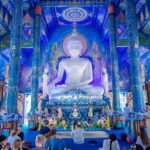
- Wat Rong Seur Ten Blue Temple: blue tones plus a tiger legend
- Wat Huay Pla Kang (Big Buddha) and Guan Yin: the viewpoint payoff
- Your guide matters: temple stories, Buddhism in plain language
- Price and value: what $52.63 buys you in real time
- The one scheduling warning I’d take seriously
- What to wear and bring for a long temple day (no guesswork)
- Who should book this Chiang Rai tour from Chiang Mai?
- Should you book this full-day Chiang Rai Temples Tour?
- FAQ
- What time does the tour start?
- How long is the tour?
- Does the tour include hotel pickup and drop-off?
- What’s the first stop before the temples?
- Is swimming allowed at Mae Khachan Hot Spring?
- Which temples are included?
- How much time do you spend at the temples?
- Are admission tickets included?
- How large is the group?
- What if the weather is bad?
Key points before you go
- Early 7:00 am start, ~11 hours total: you’ll need a real breakfast and comfy shoes.
- Mae Khachan Hot Spring (15 minutes): it’s for watching steam—not for swimming.
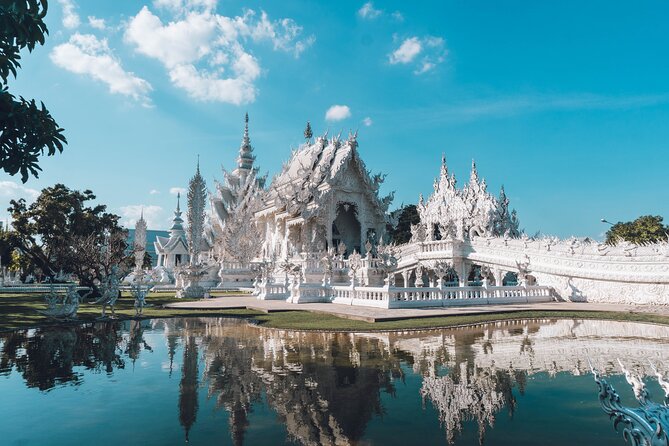
- Wat Rong Khun photos won’t prepare you: mirrored glass and white plaster feel brighter and sharper in real life.
- Wat Rong Seur Ten Blue Temple: expect striking blue tones and elaborate design details, plus a tiger-related legend tied to the older site.
- Wat Huay Pla Kang Big Buddha: Guan Yin statue plus countryside views from the temple area.
- Small group size (max 12): easier to manage and more personal than crowded bus tours.
7:00 am Chiang Mai pickup and the rhythm of an 11-hour day
This tour is timed for an early start—meeting at 7:00 am—so you can fit Chiang Rai’s key sights into one full day. Expect roughly 11 hours from start to finish, and plan around a long-but-doable schedule rather than a relaxed sightseeing stroll.
Group size is capped at 12 people, which matters. Smaller groups tend to mean fewer delays at entrances and a better flow from one temple stop to the next. In at least one experience, the van was described as comfortable, which is exactly what you want when you’re already planning for hours on the road.
Also note the practical stuff: you get a mobile ticket, and the tour offers hotel pickup and drop-off in Chiang Mai. That’s the difference between spending your day commuting on your own versus just showing up and letting someone else handle the logistics.
Who this suits best: if you have limited time in northern Thailand and you want the signature Chiang Rai temple sights without piecing together transport on your own, this makes a lot of sense.
You can also read our reviews of more tours and experiences in Chiang Mai



Mae Khachan Hot Spring: 15 minutes of steam and sulfur science
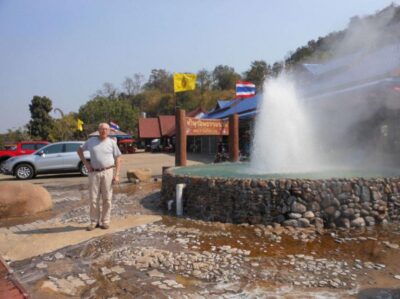
Before the temples, you’ll stop at Mae Khachan Hot Spring for about 15 minutes. This is a quick, atmospheric break—perfect if you like seeing how Thailand’s natural features show up in everyday life.
Here’s the important detail: it’s not a place for swimming. Instead, you’ll observe mineral-rich water and the steam rising nearby. That steam effect is what makes the stop feel like more than a drive-by photo stop. Even if you’re not there for relaxation, it sets the tone for the day: calm, scenic, and a little bit mysterious.
Because the stop is short, don’t treat it like a full nature excursion. It’s really a warm-up window to stretch your legs, take a couple of photos, and then shift gears into temple mode.
Wat Rong Khun White Temple: why the mirrors feel almost unreal
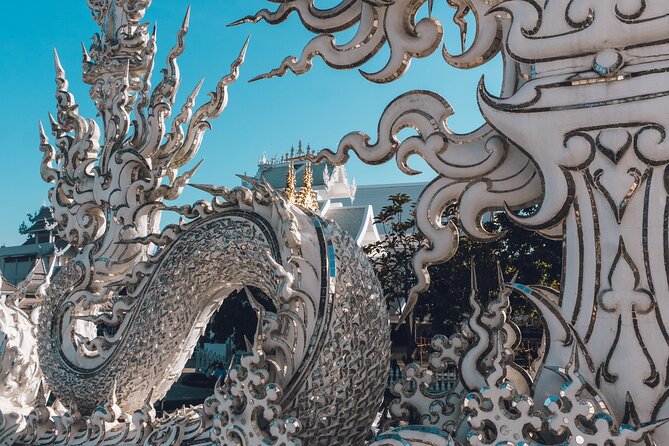
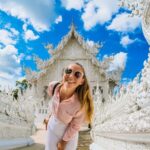
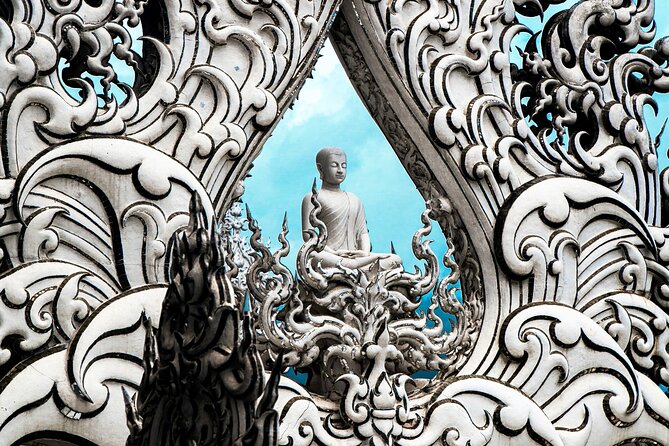
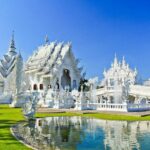
If you only know the White Temple from images, you’ll be surprised by how it lands in real life. Wat Rong Khun is known for white plaster and mirrored glass, and in person those surfaces catch light in a way that photos often flatten.
What I like about this stop for your experience is the contrast. The White Temple looks crisp and otherworldly, but the setting helps it feel peaceful rather than flashy. You’ll see it from viewpoints that include the surrounding pond area, and the reflections add a calm layer to all that sparkle.
From a practical standpoint, this is also one of the most time-sensitive stops. Give yourself permission to slow down. Walk around a bit. Find your angles. Expect to spend close to the 1-hour time slot and still want more.
One of the strongest bits of feedback tied to this temple is that pictures don’t do it justice. That’s not just hype—it’s the mirrored details and reflection effects that are hard to replicate on a phone camera.
Wat Rong Seur Ten Blue Temple: blue tones plus a tiger legend
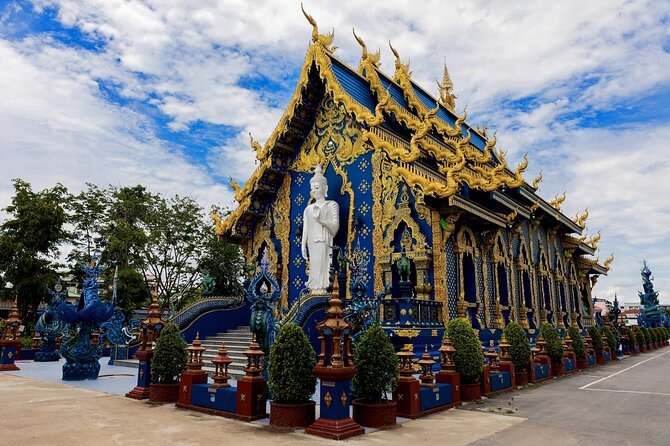
Next up is Wat Rong Seur Ten, commonly called the Blue Temple. You’ll get about 1 hour here, and it’s designed for people who enjoy seeing the same subject through different layers—color, detail work, and story.
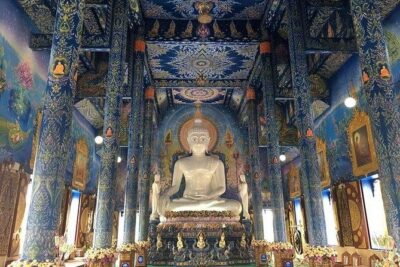
The defining look is the blue hues and the intricate design elements you notice as you move around. The temple’s style feels bold, but it’s still grounded in the way temples work: you’re meant to observe respectfully, read the visual symbolism, and take in the mood.
There’s also a legend tied to the site. Built on the area of an older temple, it’s connected to the belief that tigers once roamed there. That kind of local story changes how you look at the place. You stop thinking only in terms of architecture and start thinking about how memory and myth stick to a location.
Tip for your comfort: temples can have uneven ground, and you’ll likely do more walking than you expect. Comfortable shoes matter because the details invite you to keep moving.
Wat Huay Pla Kang (Big Buddha) and Guan Yin: the viewpoint payoff
After the Blue Temple, you’ll visit Wat Huay Pla Kang, sometimes labeled as the Big Buddha temple. This stop runs about 1 hour, and it’s a nice shift in feel from the stylized color drama of the earlier places.
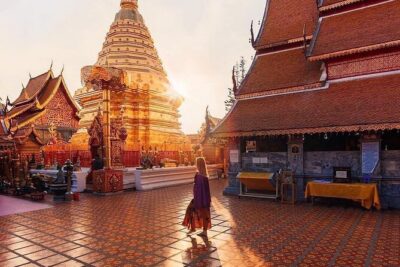
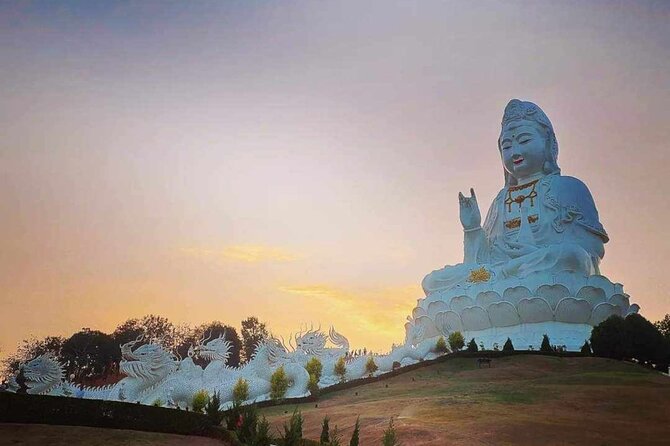
What you’re coming for here is the scale and the figure of Guan Yin, the Goddess of Mercy. A large statue like this tends to change the whole atmosphere: you look up, you pause, and your sense of the surrounding area expands.
You also get something practical and rewarding: panoramic views over the countryside from the temple area. That means this isn’t only a stop for buildings and statues. It’s a “see farther” moment in the day, which helps you refresh your brain between temples.
If your feet are getting tired, this is also a good stop for slow sightseeing. It’s less about squeezing in more photos and more about letting the view and statue settle your pacing.
You can also read our reviews of more tours and experiences in Chiang Mai




Your guide matters: temple stories, Buddhism in plain language
This is one of those tours where the guide can make the difference between seeing a list of landmarks and actually understanding why they’re built the way they are.
The tour includes an experienced guide, and one name that comes up is Goi. In feedback, Goi is described as a great communicator who explains Buddhism in general alongside temple details. That pairing is valuable. Temples in Thailand can look like pure art to a first-time visitor, but when someone connects the visual symbols to beliefs and everyday practice, your visit becomes more meaningful without getting heavy.
Also, a small-group format helps here. When you’re not packed shoulder-to-shoulder, it’s easier to ask quick questions and hear answers clearly as you move.
Price and value: what $52.63 buys you in real time
At $52.63 per person, the value is strongest when you factor in the parts that usually cost you time (and money) if you plan separately.
You’re getting:
- Hotel pickup and drop-off in Chiang Mai
- Admissions included for the scheduled stops (hot spring and each temple stop listed)
- A structured full-day route across multiple major sights
- A small group experience (max 12)
The admissions detail is important. Temples and ticketed sites can add up fast when you travel day-by-day. Here, at least for the stops listed, you’re told that admission tickets are included, which makes budgeting simpler.
You’re also paying for convenience. Doing this route on your own would likely require hiring a driver or arranging transport and entry fees while also trying to time each stop. This tour gives you a ready-made rhythm.
As a reference point for overall satisfaction, the tour has a 4.7 rating and 96% recommendation based on 48 reviews. That doesn’t guarantee your day will be identical, but it’s a strong signal that most people feel the route and organization work.
The one scheduling warning I’d take seriously
One downside shows up in a negative review, and it’s a pattern worth noting. The day can run differently than expected, including:
- Less time than advertised at temple sites
- The possibility of an extra stop (described as a village visit) that can change timing
This doesn’t mean the tour is poorly run. It means you should build in flexibility. If your plan is to spend extra time sketching, photographing, praying, or wandering slowly, don’t lock yourself into a strict expectation for each minute.
My practical advice: treat the “1 hour” temple blocks as targets, not promises. If you care most about the White Temple and the Blue Temple, focus your energy there and accept that the exact flow may shift.
What to wear and bring for a long temple day (no guesswork)
Nothing fancy is needed, but you do want to be comfortable and respectful. Since you’ll be walking around temple grounds and spending time outdoors, go with:
- Comfortable shoes for uneven walkways
- Sunscreen and a hat if weather is bright
- Water for the day (temple grounds can vary in what’s available)
Also remember you’re relying on good conditions. The experience calls for good weather, and if it’s canceled due to poor conditions, you’ll be offered a different date or a full refund.
Who should book this Chiang Rai tour from Chiang Mai?
Book it if:
- You want three major Chiang Rai temple stops in one day
- You value hotel pickup/drop-off so your day starts clean and simple
- You like guided explanations that connect art to meaning (including Buddhism basics)
- You’re okay with an early start and a long day
Skip it if:
- You need a very flexible schedule with long free time at each stop
- You hate the idea of timing changes and possible extra roadside stops
- You prefer slower travel with fewer transitions
It’s a great match for first-timers to Chiang Rai who want the famous sights, but still want a guide to help make sense of them.
Should you book this full-day Chiang Rai Temples Tour?
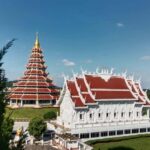
If you’re choosing between doing Chiang Rai temples solo or booking a structured day, I’d lean toward booking this. The mix of Wat Rong Khun and Wat Rong Seur Ten is the headline, and the added Wat Huay Pla Kang stop gives you a different type of payoff with the Guan Yin statue and countryside views.
Just go in with the right mindset: it’s a packed day with a tight sequence, and timing can shift a bit. If that feels manageable, the value is strong—especially with admission tickets included and the convenience of pickup and drop-off.
FAQ
What time does the tour start?
The meeting time is 7:00 am.
How long is the tour?
It runs for approximately 11 hours.
Does the tour include hotel pickup and drop-off?
Yes. Pickup and drop-off in Chiang Mai are offered.
What’s the first stop before the temples?
You’ll visit Mae Khachan Hot Spring first, for about 15 minutes, with an admission ticket included.
Is swimming allowed at Mae Khachan Hot Spring?
No. It’s described as a place to observe steam rising from mineral-rich water, not a swimming stop.
Which temples are included?
The tour includes Wat Rong Khun (White Temple), Wat Rong Seur Ten (Blue Temple), and Wat Huay Pla Kang.
How much time do you spend at the temples?
Each temple stop is listed for about 1 hour.
Are admission tickets included?
Yes. Admission tickets are included for the hot spring and the listed temple stops.
How large is the group?
The tour has a maximum of 12 travelers.
What if the weather is bad?
The experience requires good weather. If it’s canceled due to poor weather, you’ll be offered a different date or a full refund.