REVIEW · CHIANG MAI
Doi Inthanon Waterfall and Royal Project Chiang Mai
Book on Viator →Operated by Local Tours Center · Bookable on Viator
A long day of mountain views and waterfalls starts early. I like how this trip mixes serious nature with human-scale hilltribe culture in one smooth route. The main trade-off is that it’s a long day with lots of van time, and a few stops can feel short depending on timing.
Two things I especially like: you get an included Thai lunch (with normal, vegetarian, or vegan options) and you’ll have bottled water plus an A/C vehicle all day, which matters once you’re climbing and walking on uneven paths. A standout is the small group size (up to 9 travelers), which keeps the pace manageable and makes it easier for your guide to answer questions.
One possible drawback to keep in mind: entrance fees for Doi Inthanon and the Twin Royal Stupas are extra, so the day costs a bit more than the base price. Also, based on past experiences with different guides, the quality of interpretation can vary, from excellent storytelling to more limited explanations.
In This Review
- Key highlights worth planning around
- Why this Doi Inthanon day feels more focused than DIY
- The morning start: pickup, comfort, and how the day is paced
- Wachiratharn Falls: the waterfall stop that sets the tone
- Karen village visit and the Karen tea/coffee angle
- Hmong market and Royal Project products: why it’s more than shopping
- Lunch break: included Thai food and vegetarian/vegan options
- Ang Ka Nature Trail: the short walk that makes the day feel real
- The highest point finish: Twin Royal Stupas and summit views
- The optional longer hike: who it suits, and what to watch for
- Guides and group size: why small groups can be a game-changer
- Value check: $50.10 base price vs. entrance fees and real time
- What to pack and how to get the best day out of it
- Who should book this tour (and who should think twice)
- Final verdict: should you book it?
- FAQ
- What does the tour price include?
- What entrance fees are not included?
- How long is the Doi Inthanon and Royal Project Chiang Mai tour?
- Is hotel pickup included?
- How big is the group?
- Does the tour require good weather?
- Is there an option for a longer hike?
Key highlights worth planning around
- Wachiratharn (Diamond) Waterfall: big, impressive falls stop with a dedicated viewing window
- Ang Ka Nature Trail boardwalk: short walk through mossy rainforest under tall shade
- Hilltribe village stop + Karen tea/coffee culture: a look at daily life beyond the main tourist spots
- Royal Project stops and products: an easy way to connect Thailand’s mountain agriculture with what you see on the ground
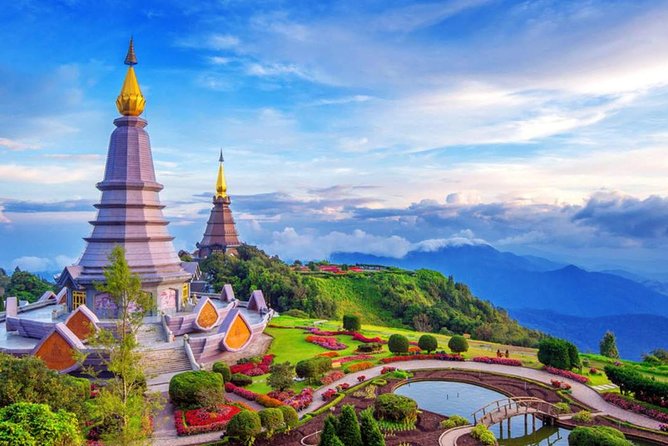
- Twin Royal Stupas viewpoint time: often a favorite finish—when they’re open and time is adequate
- Optional longer hike: if you want more than the basic walking, you may choose extra trail time
Why this Doi Inthanon day feels more focused than DIY
Doi Inthanon is the kind of place where “just go on your own” can turn into hours of logistics and last-minute ticket lines. This tour packages the big pieces into one route: the drive up into the national park zone, the waterfall and nature walk, the Karen and Hmong stops tied to mountain communities, and the summit-area viewpoints at the end of the day.
The best part is that you’re not doing the hardest work—finding the way, timing the stops, and coordinating transport. You’re also not stuck in a huge bus crowd. With a maximum of 9 travelers, you’re far more likely to get help at the moments that matter, like where to stand for photos, when to return to the van, and what to look for on the trail.
The ride itself is part of the deal. Chiang Mai to Doi Inthanon is roughly a two-hour drive, and you’ll spend additional time bouncing between roadside stops. If you’re the type who gets antsy in vehicles, plan to bring something to occupy you, because the day is built around road time.
You can also read our reviews of more tours and experiences in Chiang Mai.



The morning start: pickup, comfort, and how the day is paced
Your day begins with pickup from your central Chiang Mai hotel (within 2 km of the old city) in the 08:00–08:45 window. That early start is key because Doi Inthanon feels best when you’re not fighting peak crowds at every stop.
Transportation is typically a small air-conditioned vehicle, and the tour includes travel accident insurance, English-speaking guide, and bottled water. On a full day in cooler mountain air and then back into warmer weather, that bottled water detail is more useful than it sounds.
Pacing is usually the strength of this tour format. Many guides run a “we’ll be on time” structure with bathroom and snack breaks that don’t feel like an interruption. Still, the schedule can occasionally flex due to road conditions and site timing, so if you hate even small delays, be mentally ready for a day that isn’t perfectly clockwork.
Wachiratharn Falls: the waterfall stop that sets the tone
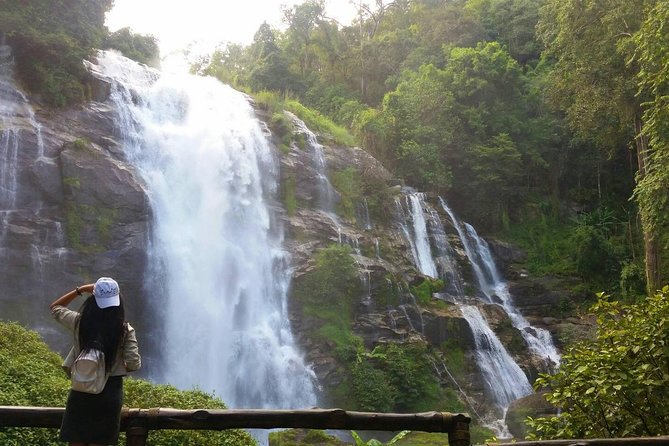
The day’s first big nature moment is Wachiratharn Falls, sometimes called the Diamond Waterfall. It’s positioned as one of the biggest waterfalls in the region, and the time here is built for viewing rather than rushing.
You’ll typically get about 30 minutes at the falls. That’s long enough to find a viewpoint, take a few photos, and step close enough to feel the mist when the flow is active. If you’re sensitive to slippery surfaces, stick to the areas you can walk confidently on—waterfall zones can be damp even when the weather looks clear.
The common thread from strong experiences with this tour is that the waterfall looks much more impressive in person than in pictures, and it’s often the moment people remember when they think about doing Doi Inthanon. Even when other parts of the day feel variable, Wachiratharn is usually the solid anchor.
Karen village visit and the Karen tea/coffee angle
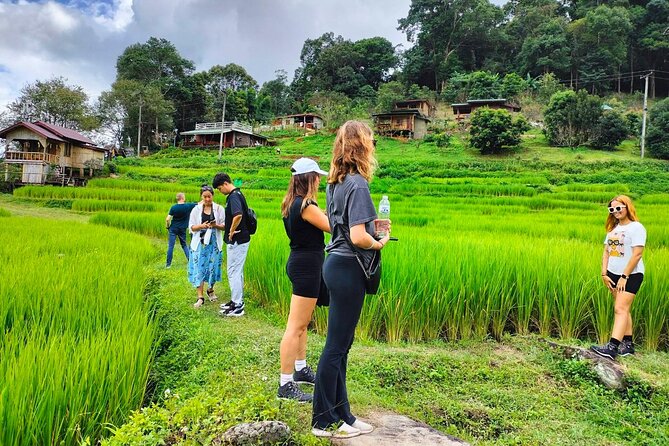
After the falls, you head into community time with a visit to a Karen hilltribe village. This is one of the best parts of the route because it slows the day down and gives you a glimpse of daily life in the mountains—how people live, work, and share culture at an easy-to-understand pace.
Some guides also bring in the story behind local hot drinks—there can be tastings like tea and coffee, and this can feel either like a genuine stop or a filler moment depending on how your guide frames it. In the better-run versions of the day, it feels like part of the culture lesson, not an awkward sales stop.
One practical note: village timing is also where footwear and weather matter. Expect uneven ground and walking on paths that aren’t designed for slick shoes. If you plan to do the optional longer hike (when available), bring footwear that can handle wet patches.
Hmong market and Royal Project products: why it’s more than shopping
Next up is a Hmong market, with attention on products connected to the Royal Projects. This is an interesting contrast to the wildlife and rainforest elements: instead of focusing on what’s wild, you’re seeing what mountain people grow, process, and sell—often with the practical angle of sustaining livelihoods in a tough environment.
This stop can be a hit if you like to connect the dots between ecology and agriculture. It can also be a letdown if you came for waterfalls and only waterfalls, because markets naturally shift attention toward browsing and purchasing.
If you’re trying to get value out of this stop without feeling pulled into buying, treat it as a “look and learn” window. You can learn what’s being produced and why it works in cooler, higher conditions, then move on when you’ve seen enough.




Lunch break: included Thai food and vegetarian/vegan options
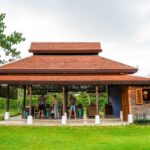
Lunch is included and you can choose normal, vegetarian, or vegan. Many days end up being about which lunch you got—sometimes it’s flavorful and satisfying; sometimes it’s more tourist-friendly.
What makes this lunch stop genuinely practical is that it removes decision fatigue. You don’t have to hunt for a place with acceptable hygiene, clear menu options, and service that fits your tour timing. Since the rest of the day is planned tightly around sights, having lunch handled for you is part of the value.
If you’re picky about Thai food style, you can help yourself by adjusting expectations: this is a scheduled day out, so the lunch is designed to please a wide range of tastes. Still, when the restaurant and kitchen match the quality bar, it’s one of the best comfort breaks of the day.
Ang Ka Nature Trail: the short walk that makes the day feel real
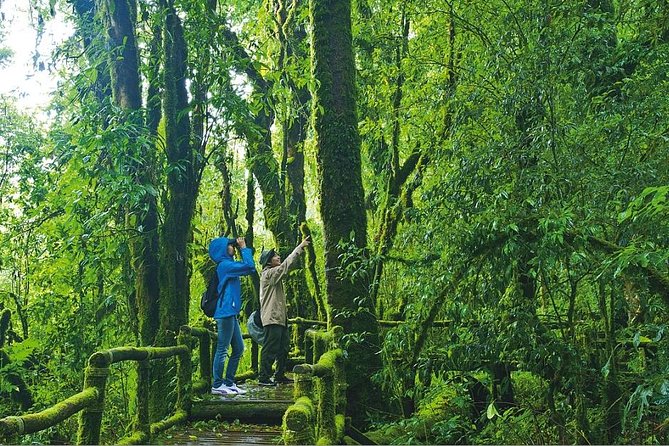
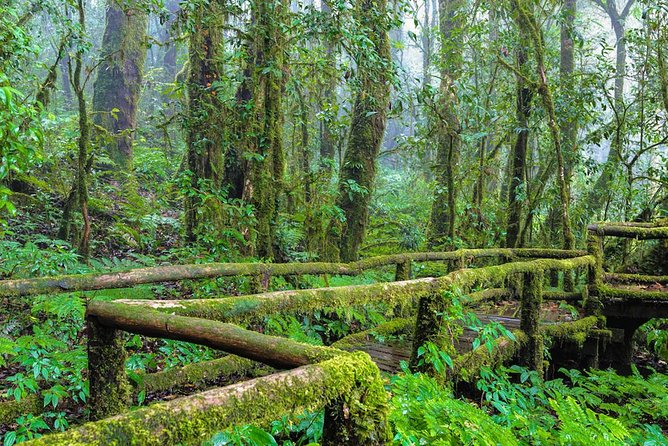
After lunch, you’ll continue toward the higher-elevation part of the route and stop at the Ang Ka Nature Trail. This is a short walk with a wooden boardwalk winding through a rainforest area. Expect mossy, shaded greenery and a damp, cool atmosphere under the canopy.
Time here is about 30 minutes, which is perfect if you want something “on foot” without turning the day into an all-day trek. The boardwalk also keeps you from trampling through the thick undergrowth and helps the route feel manageable for most people.
If you get a choice and want to slow down, use the boardwalk time to watch how the light changes in the trees. Even if you’re not a hardcore nature person, this is the portion of the day where you can breathe and actually feel like you’re inside the mountain environment, not just driving past it.
The highest point finish: Twin Royal Stupas and summit views
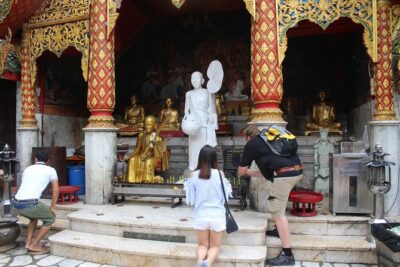
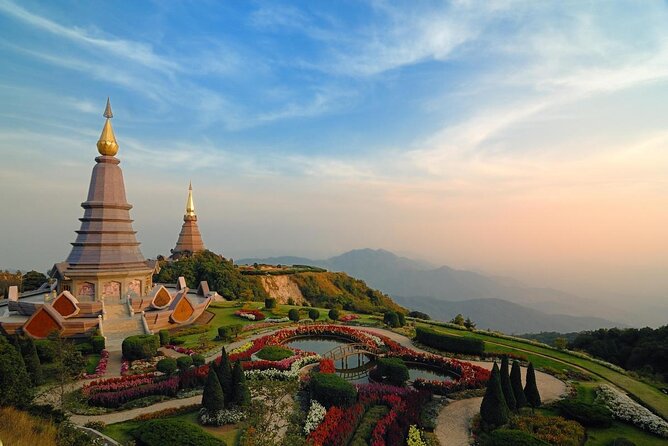
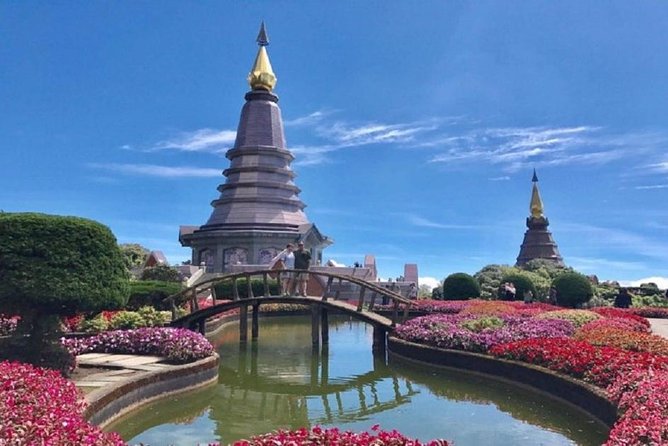
Your day’s closing highlight is the Twin Royal Stupas: Phra Maha Dhatu Nabha Metaneedol and Nabhapol Bhumisiri. These are two adjacent chedis on the main road near the summit area, and the design is meant to honor the Thai monarchy with meaning tied to land and air.
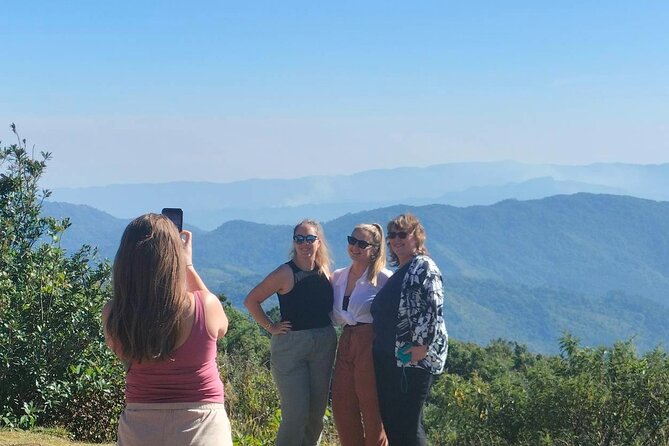
Your stop time is typically around 50 minutes, and when everything lines up, this is where people get the best payoff: gardens, wide viewpoint energy, and a sense of calm after the waterfall and forest walking. Some stronger days also include more time here, which makes a noticeable difference if you want to take in the full view rather than just snap photos and rush.
One caution from real-world experiences: site access can change due to official events. On a less perfect day, the pagodas can close partway through the schedule, shrinking what you can do there. If your priority is the summit viewpoints, keep that in mind and don’t assume you’ll always get the full viewing window.
The optional longer hike: who it suits, and what to watch for
There’s a private and longer hike option available, and some travelers choose an extended hike component tied to the Karen village portion. In practice, the hike described in past experiences sounds like a manageable add-on, but not a walk on a shopping mall floor.
If you opt for extra trail time, be aware of the likely conditions: downhill walking can mean slippery patches and stairs, and you’ll want good grip. If you have knee issues or low mobility, decide based on your comfort with downhill terrain rather than thinking about distance alone.
Also, bring a bit of practical humility: you’re in a rainforest environment where the ground can be damp even when the forecast looks fine. Wear shoes that handle wet surfaces and keep your pace steady.
Guides and group size: why small groups can be a game-changer
The quality of the guide can make or break a day like this. In the best examples, guides bring the sites to life with cultural context and practical coordination.
Names that have shown up in strong experiences include Ice (with driver Mr Bond), Mumu (often paired with driver Tik), Sherri, Piano, Puoy, and Ize. When they’re on top of their game, they don’t just point at things—they help you interpret what you’re seeing, from Lanna and Karen culture context to what matters about the national park.
That said, not every day delivers the same level of communication. Some people have experienced guides whose English was harder to follow, and a few described stops with less explanation than they wanted. If you know you care a lot about stories and history at each stop, you’ll do best by choosing the small-group version and showing patience if your guide’s style is more “wait here, then go” than “walk and narrate.”
Value check: $50.10 base price vs. entrance fees and real time
At $50.10 per person, the base price is reasonable for an 8–9 hour day when you factor in pickup, A/C transport, an English-speaking guide, bottled water, lunch, and insurance. You’re paying for convenience and organization, not just access.
But budget for the entrance fees that aren’t included:
- Doi Inthanon entrance: THB 300 per person
- Twin Royal Stupas entrance: THB 100 per person
So the true cost ends up being the base tour fee plus these add-ons. Still, it often remains good value because a DIY day to Doi Inthanon is hard to assemble without either private transport or a lot of legwork.
The other value question is time. This tour is designed to cover a lot of ground, which is great if it’s your first time in Chiang Mai and you want big highlights in one go. If you already know you want to linger in fewer places, a tour can feel a little rushed.
What to pack and how to get the best day out of it
You’ll be mixing rainforest air, waterfall mist, and hill paths. I’d pack with that in mind:
- Good shoes with grip (boardwalk edges and damp areas happen)
- Light rain layer or a compact poncho for waterfall spray
- Sunscreen and a hat even in forest zones (sun still hits during driving and summit areas)
- Small cash stash for things you might want to buy at markets
- If you do the longer hike: towels aren’t provided in the details you’ve been given, so come prepared like you’re hiking lightly
On the ground, use your guide’s timing. If someone says it’s time to move, it’s not a suggestion. The day is built around returning to the van before the schedule drifts.
Who should book this tour (and who should think twice)
This is a great fit if you:
- Want a first-time Chiang Mai day trip with major highlights
- Like nature plus culture in the same outing
- Appreciate small groups and a guided plan
- Want lunch and transport handled so you can focus on sightseeing
It may be less ideal if you:
- Hate long drives and van time
- Want a super flexible, self-paced day
- Are very sensitive to rushed stop lengths (some stops can feel short if timing runs tight)
- Need very detailed, continuous commentary at every stop (guide style can vary)
Final verdict: should you book it?
If you’re choosing between seeing Doi Inthanon as a “do-it-yourself challenge” versus a structured day with food, water, and transport solved for you, I’d lean toward booking this. The best versions deliver a strong mix: Wachiratharn Falls, a rainforest walk on the Ang Ka Nature Trail, community stops tied to mountain cultures and the Royal Projects, and a summit finish at the Twin Royal Stupas.
I’d book it with one smart expectation-setting step: entrance fees are extra, the day runs long, and the storytelling quality depends on your specific guide. If you’re okay with that, you’ll likely come home with the kind of day you can summarize in one sentence: waterfall, forest, villages, and views.
FAQ
What does the tour price include?
The tour includes bottled water, an air-conditioned vehicle, an English-speaking tour guide, travel accident insurance, and lunch (normal, vegetarian, or vegan).
What entrance fees are not included?
Entrance fees are not included for Doi Inthanon National Park (THB 300 per person) and the Twin Royal Stupas (THB 100 per person).
How long is the Doi Inthanon and Royal Project Chiang Mai tour?
It runs about 8 to 9 hours total.
Is hotel pickup included?
Yes. Pickup is offered from your central Chiang Mai hotel (not more than 2 km away from the old city) within the 08:00–08:45 window.
How big is the group?
The tour has a maximum group size of 9 travelers, which helps keep the day feeling more personal.
Does the tour require good weather?
Yes. The experience requires good weather. If it’s canceled due to poor weather, you’ll be offered a different date or a full refund.
Is there an option for a longer hike?
Yes. A private tour and longer hike option are available.