REVIEW · CHIANG MAI
Evening Thai cooking class
Book on Viator →Operated by Aromdii Cooking School · Bookable on Viator
Fresh basil and hot pans in Chiang Mai.
This evening Thai cooking class at Aromdii pairs a quick ingredient-hunt with hands-on lessons that actually make sense, from appetizers to desserts. I love the market shopping first (you pick produce and learn what spices and herbs do), and I also like the small-group setup that keeps the instructor close. You’ll leave with plates you made yourself, plus a downloadable recipe you can use later.
One thing to plan for: the kitchen has no aircon, and the eating area is just fans. If you’re sensitive to heat or humidity, go in with a cool head and expect a sweaty, real-food evening.
In This Review
- Key things to know before you go
- An easy Chiang Mai evening plan, starting at Kad Kom Market
- First stop: shopping at the local market for your exact menu
- Inside Aromdii: how the class flows (and why it helps)
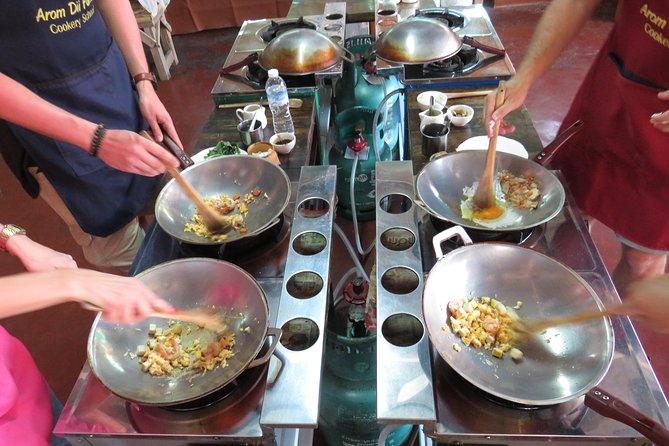
- Stir-fry starts the fun: Pad Thai, noodles, cashews
- Soups and appetizers: taming sour, balancing heat
- Curry paste from scratch: the skill that makes you feel confident
- Dessert finishes the meal: mango sticky rice and pumpkin coconut milk
- What’s included with the $27.58 price, and what you should compare
- Comfort, timing, and weather: plan for heat and get the most out of it
- Who this class is best for
- Should you book this Chiang Mai evening cooking class?
- FAQ
- What time does the Thai cooking class start in Chiang Mai?
- How long is the experience?
- Where do I meet for the class?
- How many people are in the class?
- Do I choose what I cook before the class starts?
- What dishes and categories will I cook?
- Is dinner included, and is alcohol included too?
- Is the kitchen air-conditioned?
Key things to know before you go
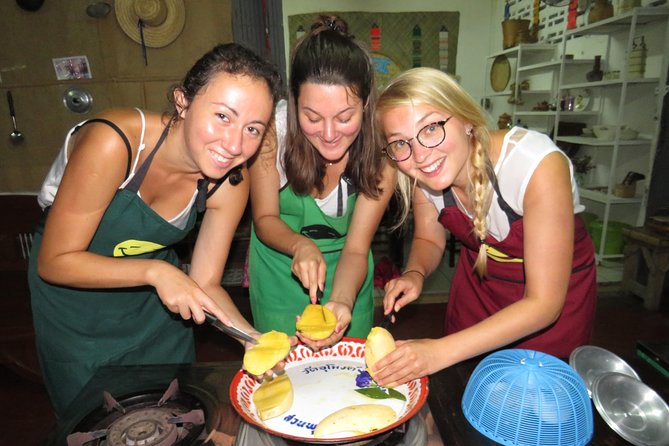
- Market tour plus real ingredient choices: you select your menus and then pick the matching ingredients.
- Small group (up to 8) means more hands-on help when something gets tricky.
- You make curry paste from scratch for green, red, massaman, and Khao Soi options.
- Dishes are organized by food type: stir-fry, soup/appetizers, then curry/dessert.
- Cooling is basic: no aircon, only fans in the kitchen and dining area.
An easy Chiang Mai evening plan, starting at Kad Kom Market
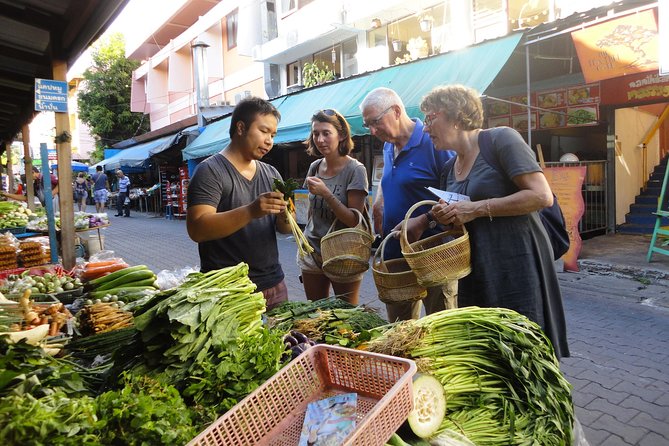
This class is built for travelers who want a full evening without the usual guesswork. You start around 3:30 pm and you’re typically done after about 4.5 hours, with the activity ending back at the meeting point. It’s a clean loop: meet, shop, cook, eat, head home.
The meeting point is Kad Kom Market (บ้านเลขที่19 3มบ เวียงทอง 1, Tambon Chang Khlan, อ.เมือง, Chiang Mai 50100). If you’re staying nearby, you can likely walk or use public transport, and the area is described as near public transportation. If you’re farther out, you might get pickup from select areas, and transportation is included if you’re not far from the school (within 3 km).
One practical tip: since the kitchen isn’t air-conditioned, plan your comfort like it’s dinner in summer. Light layers, a towel-sized mindset, and water awareness go a long way.
You can also read our reviews of more cooking classes in Chiang Mai

First stop: shopping at the local market for your exact menu
The market time is short on paper, but it’s the heart of why this class feels different from a recipe-only cooking demo. You’ll spend about 15–20 minutes shopping with the instructor, and the process starts with choosing your menus before the class begins. That matters because you’re not buying random ingredients for someone else’s dishes—you’re selecting the ones that match what you plan to cook.
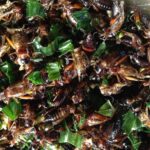
During the market walk, your instructor points out Thai veggies, spices, and herbs and ties them to the food you’ll make later. You’ll also have time to take photos and, if you want, buy some spices to take home. That’s a nice souvenir that’s actually useful.
What you’ll notice quickly: Thai cooking isn’t one flavor. It’s layers—sweet, sour, salty, and aromatic—built from ingredients that can look similar but behave differently. In a market setting, those differences become real. You start thinking like a cook, not just a diner.
If you’re visiting in hotter months, remember you’re walking around before you cook. For context, Chiang Mai’s seasons are typically described as: summer (March–June), rainy season (July–October), and winter (November–February). With no aircon in the kitchen, both summer heat and rainy-season humidity can make the cooking part feel warmer than you expect.
Inside Aromdii: how the class flows (and why it helps)
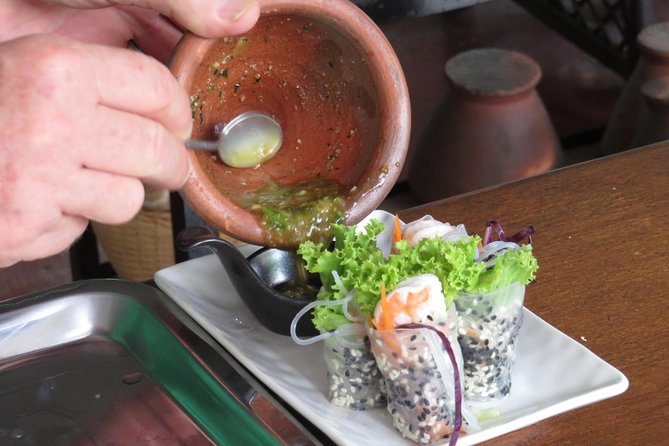
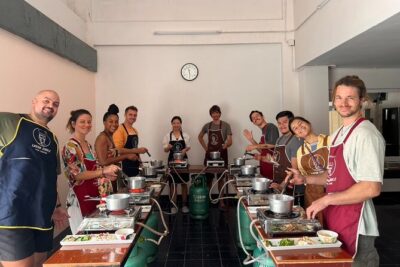
Once you’re at Aromdii Cookery School, the class runs in a simple rhythm that keeps it beginner-friendly. You’ll cook in a progression: stir-fry first, then soup and appetizers, and then dessert plus curry. The big bonus is that for the curry portion, you’ll make curry paste from scratch.
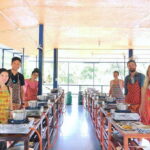
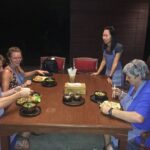
The kitchen setup is very real-world. There’s no aircon, and the eating room is described as having only fans. Translation: you’ll sweat a bit, you’ll smell spices intensely, and you’ll want to pace yourself. It’s not a dealbreaker, but it’s worth mentally preparing for.
Another reason the flow works: each section teaches a skill that you’ll use again. Stir-frying teaches heat control and quick timing. Soups and appetizers teach balance and texture. Curry paste teaches flavor building—how aromatics and spices combine into the base that everything else rides on.
And the class size—up to 8 travelers—isn’t just a comfort detail. It means you’re more likely to get help while your pan is still hot.
Stir-fry starts the fun: Pad Thai, noodles, cashews
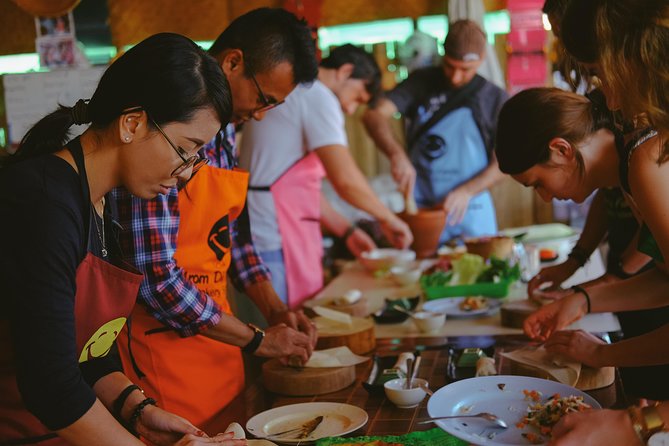
The class kicks off with stir fried dishes, and you get choice here. Options include:
- Pad Thai
- Fried Drunken noodles
- Pad See Ew
- Fried cashew nut
This is a good warm-up. Stir-fry is often where people either fall into the “too slow, too watery” trap or learn the fast rhythm that Thai food rewards. With step-by-step instruction, it’s easier to understand what changes when the pan is hot enough—when noodles cling instead of clump, when sauce turns glossy instead of heavy, when cashews become fragrant instead of scorched.
If Pad Thai is on the menu, pay attention to how the flavors are balanced rather than chasing one single taste. Thai stir-fries usually win through harmony: sour and sweet, salty and fragrant, plus heat if you choose it.
If you pick noodles like Pad See Ew or drunken noodles, you’ll learn that the difference isn’t just the sauce. It’s also the handling—how long you cook, when you add wet ingredients, and how you keep noodles from going soft in the wrong way.
Soups and appetizers: taming sour, balancing heat
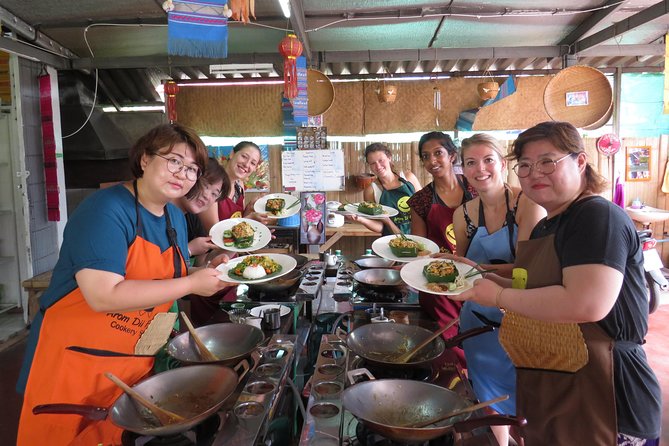
After stir-frying, you shift to soup & appetizer cooking. The soups listed offer a lot of variety, and you can end up making something mild and creamy or something tangy and bold.
Soup options include:
- Hot & Sour Prawns thick soup
- Coconut chicken
- Tom Yum Chicken
- Hot & Sour prawns clear soup
Then there are appetizer options:
- Papaya Salad
- Fresh spring rolls
- Fried spring rolls
- Mixed fruits salad
This is where Thai cooking turns from “technique” into “flavor math.” Hot-and-sour soups show you how sourness and heat work together instead of competing. Tom Yum leans into that classic Thai punch: fragrant herbs, citrusy tang, and a clean finish.
Papaya salad teaches restraint and timing. The ingredients start firm, then you learn how to make them tender enough while still keeping crunch. If you’ve ever tried making papaya salad at home and wondered why it tastes off, it’s usually because the balance isn’t right yet. This class design forces you to practice that balance.
Spring rolls (fresh and fried) are also useful training. Fresh rolls teach assembly and texture. Fried rolls teach how to manage oil and crispness so you get crunch instead of greasiness.
And yes, you’ll eat what you make. That’s the point. The payoff is immediate.
You can also read our reviews of more evening experiences in Chiang Mai




Curry paste from scratch: the skill that makes you feel confident
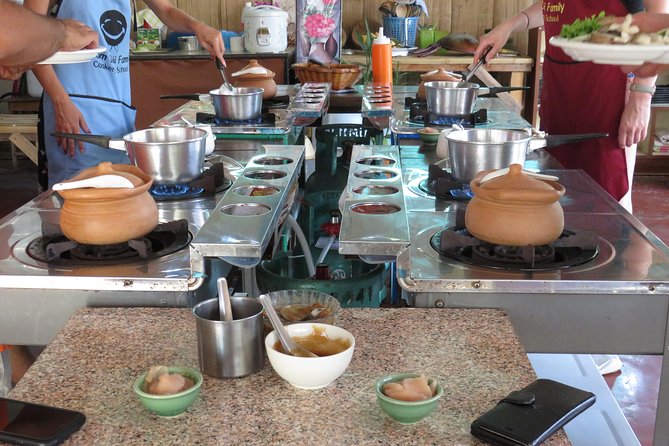
Then comes the part people usually talk about after. You’ll do curry + curry paste, and it’s stated clearly: you make the curry paste from scratch. That’s not a gimmick. It’s the core of why Thai curry can taste so different from jarred pastes.
Curry options include:
- Khao Soi (Chiangmai noodles)
- Green curry
- Massaman curry
- Red curry
What makes this section valuable is that you’re learning a base-building process. Once you understand how aromatics and spices get transformed into paste, you can later adjust heat, sourness, and richness more intelligently.
Khao Soi is especially interesting because it’s tied to Chiang Mai. If you choose it, you get to experience a local flavor identity instead of a generic Thai curry. The meal becomes more tied to place, not just to cuisine.
Green and red curries tend to feel lighter and more aromatic, while Massaman typically reads warmer and deeper. Even without over-technical talk, you can taste the difference in the base and the way ingredients are combined.
Pro tip for your enjoyment: during this section, slow down and watch what the instructor does with the paste. The moment you smell the aromatics really shift is when curry stops being ingredients and starts being flavor.
Dessert finishes the meal: mango sticky rice and pumpkin coconut milk
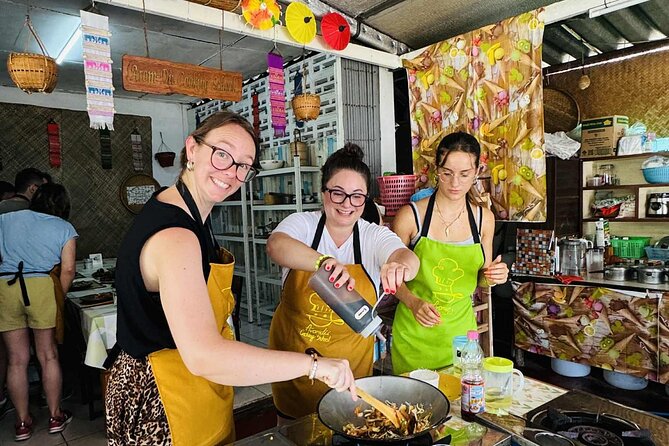
At the end, you’ll make dessert, and you get choice between:
- Mango sticky rice
- Pumpkin in coconut milk
Dessert in Thai cooking isn’t just sweet. It’s often sweet plus creamy, with coconut bringing body and richness. Mango sticky rice is the classic comfort move, and it’s also an easy way to check whether your understanding of texture is right. If the rice and coconut sauce balance is off at home, the dessert feels flat. Learning it in class gives you a better feel for thickness and sweetness.
Pumpkin in coconut milk teaches a similar lesson but with different timing. Pumpkin softens and releases flavor, and coconut rounds everything out. It’s the kind of dessert that makes you realize Thai sweetness doesn’t mean candy-like. It means mellow and fragrant.
This is also where the mood lifts. After cooking savory dishes, you get a softer, calmer finish that still tastes like you were doing something skill-based all along.
What’s included with the $27.58 price, and what you should compare
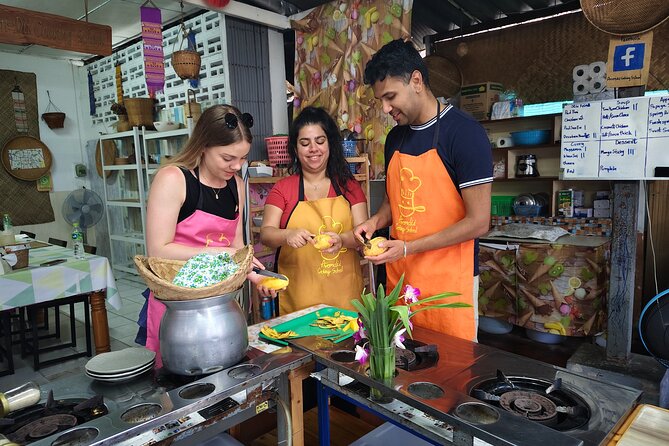
At $27.58 per person, this is priced like a budget-friendly activity, not a premium cooking workshop. The value comes from the combination of:
- Market time (you’re guided through ingredient choices)
- Hands-on cooking for multiple courses
- Dinner included
- Bottle water plus a welcome snack
- A recipe download you can use again
- Transportation if you’re within the stated short distance (up to 3 km) or in select pickup areas
One more real value point: step-by-step instruction and a max group size of 8 travelers. That’s the difference between a class where you watch and a class where you actually cook.
What’s not included is simple: beer or any alcohol isn’t part of the price. If you want a drink, plan to cover it separately.
If you’re comparing this against cooking classes elsewhere, the main thing to look at is how much time you spend cooking versus observing. This one is structured to keep you moving from station to station, then eating what you make.
Comfort, timing, and weather: plan for heat and get the most out of it
The biggest practical consideration is comfort. The class description states no aircon in the kitchen and only fans in the dining area. That doesn’t mean it’s unbearable, but it does mean you should treat it like an active evening in Chiang Mai humidity.
If you’re going in March–June, heat can be intense. If you’re going in the rainy months (July–October), the air can feel heavy even when the temperatures aren’t extreme. In November–February, it may feel more manageable, but kitchens can still be warm because you’re cooking.
Also, the experience notes that it depends on good weather. So if you’re the type who hates schedule changes, it’s worth booking with some flexibility. When outdoor conditions cause changes, you should expect an alternate date offer or a refund route rather than an outright shrug.
Who this class is best for
This is a great fit if you want:
- A hands-on way to understand Thai flavors without starting from scratch at home
- A short evening activity that doesn’t eat your whole day
- More interaction than the big-tour style classes
It also works well for couples and small groups because the course is structured and the instructor attention is easier with a small class. If you’re a beginner, the step-by-step approach and clear dish progression make it less intimidating.
If you already love cooking, you’ll still enjoy the market portion and curry paste instruction. Even seasoned cooks usually like seeing how Thai cooks build flavor from aromatics and spices in real time.
Should you book this Chiang Mai evening cooking class?
I think you should book it if your goal is to eat what you cook, learn a real process (especially curry paste from scratch), and get guided ingredient choices at a market. For the price, the combination of dinner, recipe download, and structured practice across multiple dishes is strong.
Skip it—or at least prepare—if you’re very heat-sensitive. The lack of air conditioning is real, and you’ll be working and eating in a warm kitchen setting. If that won’t bother you, this class is one of those straightforward Chiang Mai experiences that gives you something useful: cooking skills you can repeat, not just photos of plates.
FAQ
What time does the Thai cooking class start in Chiang Mai?
The class start time is 3:30 pm.
How long is the experience?
The duration is approximately 4 hours 30 minutes.
Where do I meet for the class?
You meet at Kad Kom Market at บ้านเลขที่19 3มบ เวียงทอง 1 Tambon Chang Khlan, อ.เมือง, Chang Wat Chiang Mai 50100, Thailand.
How many people are in the class?
The class has a maximum of 8 travelers.
Do I choose what I cook before the class starts?
Yes. Everyone chooses the menu items before the class begins, and your market shopping supports those choices.
What dishes and categories will I cook?
You’ll cook stir-fried dishes, soup and appetizers, and then curry (with curry paste from scratch) plus dessert. The menu options include dishes like Pad Thai, Tom Yum, Khao Soi, and mango sticky rice.
Is dinner included, and is alcohol included too?
Dinner is included, but beer or any alcohol is not included.
Is the kitchen air-conditioned?
No. The kitchen has no aircon, and the eating room has only fans.