REVIEW · CHIANG MAI
Chiang Mai: Evening Cooking Class and Local Market Visit
Book on GetYourGuide →Operated by Galangal Cooking Studio · Bookable on GetYourGuide
Your dinner starts at a market. This Chiang Mai evening class mixes a local ingredient hunt with hands-on cooking, so you leave with practical Thai skills and a meal you made yourself. I like the way the experience builds from shopping (market + organic garden) into a real cooking flow, and I also like how the instructors keep things organized and friendly. One thing to consider: you really should show up ready to eat, because Thai dinner timing is early and the portion size adds up fast.
I also like that your menu is flexible. You pick one dish from each main category (stir-fry, soup, appetizer, and a curry/curry-paste-focused course), and the kitchen is in an air-conditioned indoor setting with English guidance. If you have dietary needs, you’ll find options for vegetarian, vegan, halal, and gluten-free requests, plus help with allergies.
In This Review
- Key things that make this cooking class work
- How the evening flows: hotel pickup, market stroll, and organic garden
- Picking your menu: the stir-fry, soup, and appetizer choices
- The kitchen part: what you’ll cook (and why curry paste training is the key)
- Why the market and organic garden change how your cooking tastes
- Dietary needs and ingredient swaps: what’s supported
- Timing, group energy, and what to plan for
- Price and value: what $28 buys you in the real world
- Practical tips before you go
- Who should book this Chiang Mai cooking class
- Should you book it?
Key things that make this cooking class work
- Hotel pickup that’s central and simple: pickup covers much of the old city and nearby areas, with smooth door-to-door timing.
- Market + organic garden before you cook: you see ingredients up close, including how herbs and vegetables are grown.
- You choose your dishes: pick from options like Pad Thai, Tom Yum Kung, Som Tam, and curries such as Massaman or green curry.
- Curry paste taught as part of the process: you don’t just copy a finished dish.
- Air-conditioned indoor kitchen: you cook and dine comfortably, even in the evening heat.
- Recipe support you can use later: you receive a PDF recipe book so you can reproduce dishes at home.
How the evening flows: hotel pickup, market stroll, and organic garden
This is set up as a smooth, end-to-day experience that starts with hotel pickup in central Chiang Mai. Pickup runs roughly between 3:15 PM and 3:45 PM, and it can start a bit earlier depending on traffic. The driver may wait only up to five minutes after the scheduled time, so I’d make sure you’re ready in the lobby when they pull up.
The pickup covers a lot of convenient areas in and around the old city, Santitham, and along Huay Keaw Road, from Kad Suan Keaw to Maya Shopping Mall. It also includes some areas on Nimmandhaemin Road, Sirimongkrajan Road, Wat Ket Road, and parts of Chang Pheuk, Changklan, and Changmoi. If your hotel falls outside the covered zones, the team will let you know and you’ll need to make your own way to the cooking school or market using the address and arrival timing they provide.
Once you meet your guide, the first real “Thai food” moment is the market visit. You’ll look at fresh vegetables and ingredients the way locals do, not just a quick photo stop. Then you head to an organic garden where you can stroll and see how herbs and vegetables are cultivated. That garden part matters more than it sounds. It helps you understand what’s fresh, what’s aromatic, and why certain herbs show up in Thai cooking so often.
You can also read our reviews of more shopping tours in Chiang Mai

Picking your menu: the stir-fry, soup, and appetizer choices
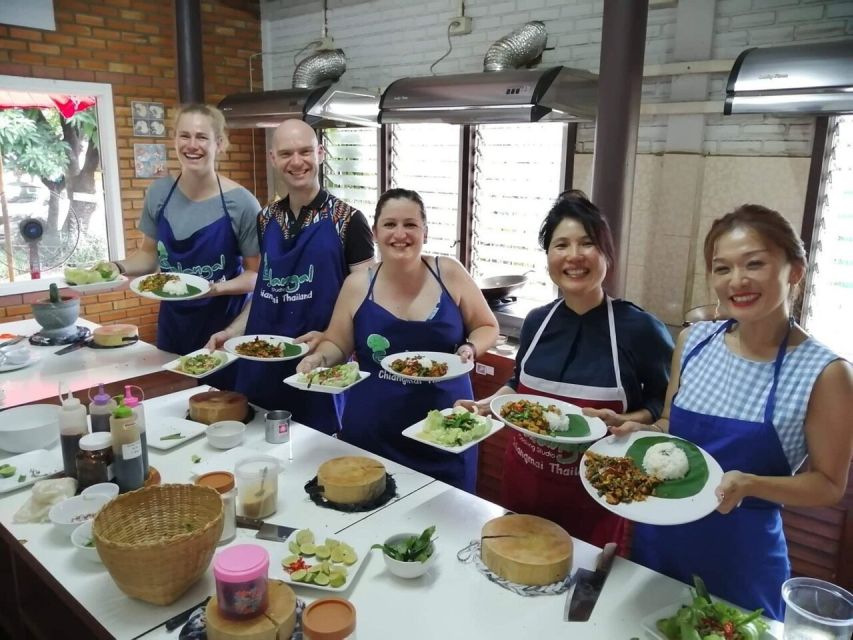
The class is designed so you can choose what you cook, instead of being locked into a fixed lineup. You select one dish from the stir-fry category, one soup, one appetizer, and then a curry option that also includes curry-paste instruction.
For stir-fried dishes, you might choose favorites like Pad Thai (fried noodles Thai style), Pad See Ew (stir-fried chicken with fresh noodles), or Kai Pad Med Mamuang Him Ma Pan (chicken cashew nut). If you want something with basil, Pad Kaphao Kai (minced chicken with holy basil) is in the list too. You’re not just picking by name here. The instructor can steer you toward what fits the flavor profile you want, and you’ll learn why the dish tastes the way it does.
Soup choices include classic hot-and-sour styles like Tom Yum Kung and Tom Zap Kai (hot and sour with chicken). If you prefer creamy, there’s Tom Kha Kai (chicken in coconut milk) and Tom Kha Je for vegetarian or vegan coconut-milk soup. This variety is one reason the menu feels worth it: you can build a meal that ranges from sharp and tangy to smooth and rich.
Appetizers round things out. You can choose Som Tam (papaya salad), Por Pia Thod (spring roll), Larb Kai (chicken salad), or Yam Woon Sen (glass noodle salad). This is a nice advantage for first-timers because these dishes teach you Thai technique fast: cutting, balancing spice, and understanding texture. You’ll taste your way through the meal at the end, so you’re not learning in theory.
The kitchen part: what you’ll cook (and why curry paste training is the key)
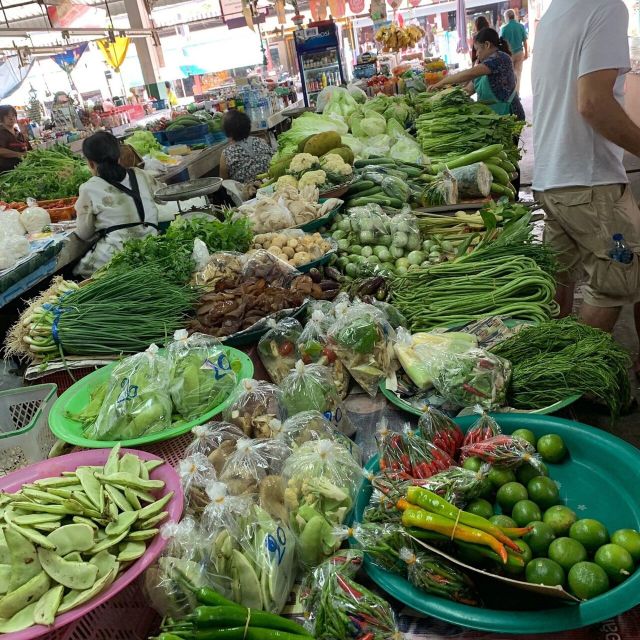
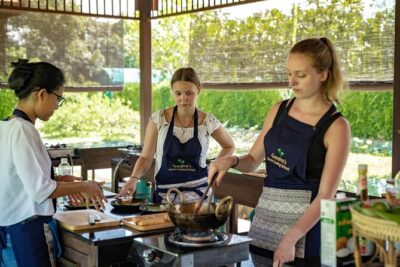
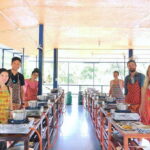
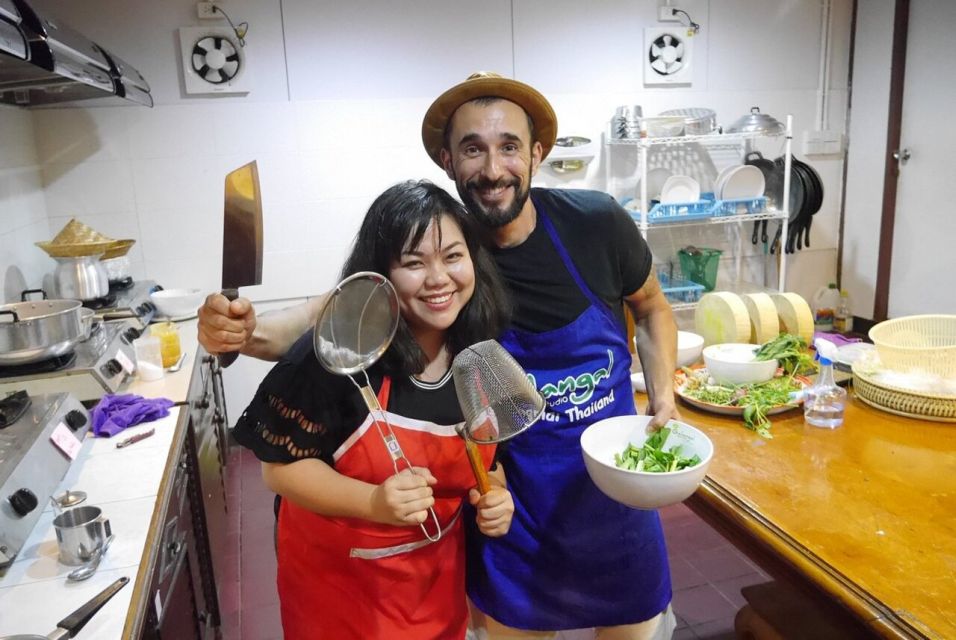
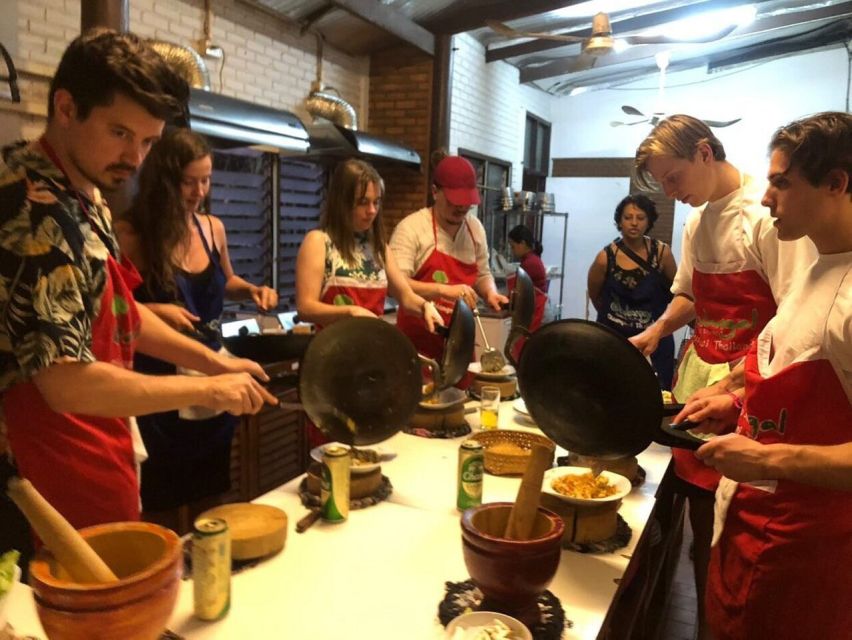
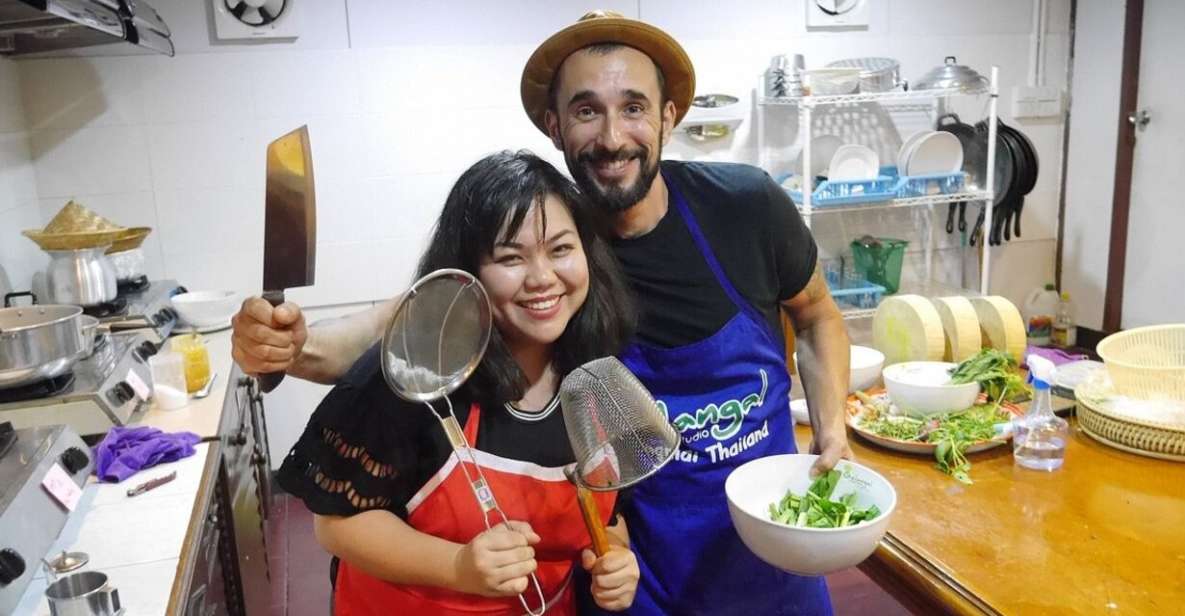
Cooking happens in an indoor kitchen with air conditioning and a dining room, which is a huge practical win for an evening session. You’re not hustling outside or working in a hot space, and that makes it easier to concentrate on technique.
You learn how to cook five Thai dishes in total: a stir-fry, a soup, an appetizer, a curry, and a curry paste. In practice, the curry-paste element is tied directly to the curry you choose, so you end up with a meal that feels complete instead of a set of unrelated recipes.
Here’s what the curry section gives you. Curry and curry-paste-focused options include Kaeng Massaman (Massaman curry), Kaeng Kieaw Wan Kai (green curry), Kaeng Panaeng Kai (Panang curry), and Kaeng Ped (red curry). You can also select Kaeng Karee (yellow curry) or Pad Prik Kaeng (dry red curry). There’s also Khao Soi (Chiang Mai noodle with chicken), which is a good choice if you want something regional and filling rather than purely curry-bowl style.
One of the best “value” aspects is that this isn’t just stirring and hoping. Curry paste is where Thai flavors get built: aromatics, spice, and balance. The curry-paste instruction gives you a foundation you can use later when you shop or cook on your own. It’s the difference between eating a great curry and actually understanding how to reproduce the taste.
Your instructor will guide you step-by-step in English. Many class experiences here are led by instructors like New, and the teaching style shows up in a consistent way: clear explanations, hands-on pacing, and plenty of attention to the ingredients. More than once, the class dynamic described is warm and upbeat, with a focus on keeping everyone moving and not getting lost.
Why the market and organic garden change how your cooking tastes
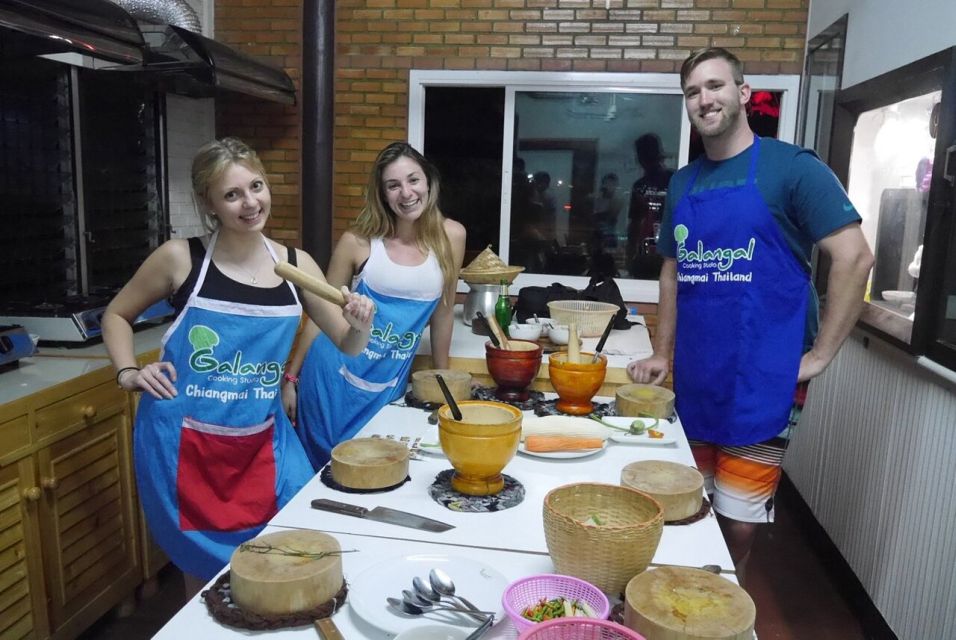
Most cooking classes give you recipes. This one gives you input. You pick ingredients in a market first, then walk through an organic garden where herbs and vegetables are grown. That sequence helps you connect what you’re buying with what you’re tasting.
When you see the ingredients before you cook, you start to notice details you’d otherwise miss. For example, you learn that certain herbs are not interchangeable just because they look similar. You also get a better sense of freshness and how that affects aroma, heat level, and the final balance of a dish.
This is especially useful in Thai cooking, where flavor balance comes from multiple components: sour, salty, sweet, spicy, and aromatic herbs. If you only follow steps without context, it’s easy to reproduce the process but not the taste. The market + garden part makes the taste make sense.
Dietary needs and ingredient swaps: what’s supported
If you have dietary limits, this class is built to handle them. The experience is available for vegan, vegetarian, halal, and gluten-free needs, and it specifically notes support for people who have allergies.
That matters because Thai cooking often relies on ingredients you may not expect. In a well-run class, you want your dish adjusted without turning it into a sad compromise. The structure here helps: you choose from menu categories, then the instructor can guide adaptations so you’re still cooking something that matches the dish style you picked.
Also, you’ll have water, tea, and coffee included during the session, which makes it easier to stay focused while you cook. And you should come with an empty stomach. Thai dinner commonly starts around 4 or 5 PM, and the class timing reflects that.
You can also read our reviews of more tours and experiences in Chiang Mai



Timing, group energy, and what to plan for
The class runs about five hours, designed as a “full evening” rather than a quick workshop. The scheduled window is listed as 4:00 PM to 8:30 PM for bigger groups (10–12 people) or larger. If the group is smaller, the class can finish earlier, which is helpful if you have dinner plans afterward.
One timing note: pickup can feel a little early compared with your expectations, mainly because of traffic and multiple pickup points. The upside is that the ride is included and door-to-door for many central hotels, so you don’t need to figure out taxis on a tight schedule.
Group size also affects your experience. A larger group generally means more coordination, but it also means you may learn from watching how other people are guided. Either way, the kitchen approach described is organized enough that first-time cooks usually feel comfortable.
Price and value: what $28 buys you in the real world
At about $28 per person for roughly five hours, the value comes from what’s included. You’re not paying only for recipes. The package includes hotel pickup and drop-off, ingredients and equipment, cooking instruction, and beverages (water, tea, coffee). You also get a recipe book in PDF format, which helps you bring the skill home.
That makes a big difference versus cheaper classes that only cover basic demonstration or only cover one dish. Here you cook multiple parts of a Thai meal: stir-fry, soup, appetizer, and curry/curry paste. By the end, you eat what you made together, which means the cost converts into an actual meal experience, not just a class.
And the transport quality is a strong point. The experience data includes an 86% perfect-score rate for transport, which lines up with what you’d want when you’re going to and from a cooking school in the evening.
Practical tips before you go
A few small choices will make your evening smoother:
- Come hungry. The class starts around dinner time, and you’ll be eating what you cook.
- Bring any personal medication you need. That’s the only stated required item.
- Wear something comfortable for kitchen work. Even though it’s indoors, you’ll be doing hands-on steps like mixing and prepping ingredients.
- Don’t plan on alcohol or smoking. Smoking indoors isn’t allowed, and alcohol or drugs aren’t allowed either.
- If you’re bringing a child or you plan to have an observer join, there’s a visitor fee for observers (adults and children have different rates). If that applies to you, check before booking so you’re not surprised.
If you have altitude sickness concerns, note that this activity is not suitable for people with altitude sickness. The session is designed for normal activity at low altitude, not a high-elevation plan.
Who should book this Chiang Mai cooking class
This is a great fit if you want more than a souvenir night out. You’ll like it if:
- you want to cook Thai food with a clear menu structure and real technique
- you care about learning ingredients and flavor building, not just following a recipe card
- you want an English-led class with helpful pacing and a friendly atmosphere
- you have dietary needs and want support rather than an awkward workaround
If you’re the type who likes to understand what’s in your food, the market and organic garden will feel like the “why” behind the dishes. And if you want a meal you can recreate at home, the PDF recipe book is a meaningful takeaway.
Should you book it?
Yes, if you’re in Chiang Mai and you want a hands-on evening that combines ingredient shopping, garden learning, and cooking with an English guide. The hotel pickup makes it low-stress, and the menu choice keeps it personal. The only real caution is timing and appetite: plan for an early dinner schedule, and come ready to eat.
If you’d prefer a very short class or you hate structured meal formats, you might find the five-hour, menu-choice flow less appealing. But for most people, it’s one of the most practical ways to learn Thai cooking in an evening without scrambling for transport or ingredients.