REVIEW · CHIANG MAI
Half day Best of Chiang Mai City by Tuk-Tuk Private tours
Book on Viator →Operated by Chiang Mai Local Tours · Bookable on Viator
A quick tuk-tuk loop sets the tone in Chiang Mai. This half-day Best of Chiang Mai tour strings together the old-city gates, big-name temples, and the busy Warorot Market—a smart way to map the city fast.
I particularly like the smooth, low-effort start: hotel pickup and drop-off by tuk-tuk plus an English-speaking guide who helps you understand what you’re seeing. I also like the stop choices, especially Wat Chedi Luang and Wat Srisuphan, where details make the temples feel specific and not just scenic.
One drawback to consider is comfort. Tuk-tuk rides are part of the charm, but the condition can vary, and at least one seat setup was described as worn and quite firm.
In This Review
- Key Things to Know Before You Go
- A Half-Day Chiang Mai Orientation That Actually Works
- Canal Ride and the Old City Gates: Chiang Mai Gate to Tha Pae Gate
- Wat Chedi Luang: Temple of the Big Stupa and the Emerald Buddha Link
- 3 Kings Monument: A Quick Landmark That Helps the Map Click
- Wat Srisuphan (Silver Temple): Silver-Coloured Details and Silversmith Traditions
- Warorot Market: Where Local Shopping Is the Main Event
- Timing: Morning or Afternoon Pickup and a Return Before You’re Tired
- What’s Included for $55: Hotel Convenience, Guide Help, and Transport
- Who Should Book This Tuk-Tuk Tour, and Who Might Skip It
- Should You Book This Half-Day Best of Chiang Mai Tour?
- FAQ
- How long is the Half Day Best of Chiang Mai City tour?
- How much does the tour cost?
- What time does the tour start?
- Does the tour include hotel pickup and drop-off?
- Which places are included in the tour?
- What’s included in the price?
- What is not included?
- What are the dress requirements?
- Is there free cancellation?
Key Things to Know Before You Go
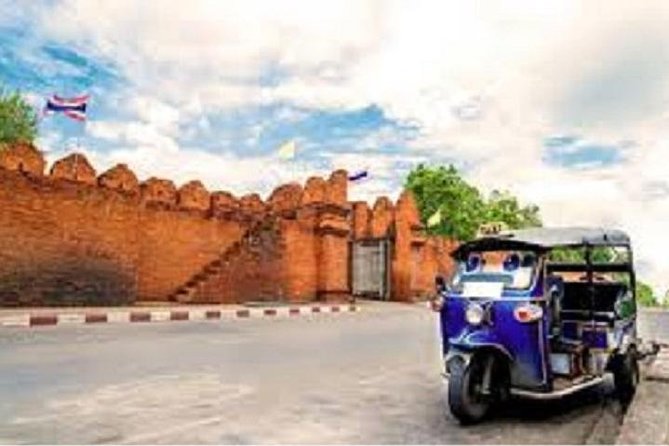
- Tuk-tuk pickup, then a focused 3-hour route through the old city
- Four temples plus one market for photos and souvenirs
- City-gate views at Chiang Mai Gate and Tha Pae Gate, with remnants of the old defenses
- Wat Chedi Luang’s earthquake story tied to what used to be in this temple
- Wat Srisuphan’s silver craftsmanship and its silversmith tradition
- Warorot Market pricing often lower than other shopping stops in Chiang Mai
A Half-Day Chiang Mai Orientation That Actually Works
If you’re in Chiang Mai for the first time, the hardest part is figuring out what to do next. This tour helps you get your bearings fast, without asking you to plan routes, decipher temple names, or haggle for directions.
The format is simple: you ride out in a private tuk-tuk, hop out for short temple and photo stops, then finish at Warorot Market. It’s a good match for travelers who want context more than a deep, slow day. You also get water and seasonal fruit during the trip, which takes the edge off the heat.
The biggest win for me is how the route mixes “big sights” with everyday city life. You see ancient gate remnants and major landmarks, then you’re in a local marketplace where people shop for produce, snacks, clothing, jewelry, and flowers.
You can also read our reviews of more city tours in Chiang Mai
Canal Ride and the Old City Gates: Chiang Mai Gate to Tha Pae Gate
The tour begins with a drive around the canal that surrounds Chiang Mai’s old city. That circular route matters because it gives you a mental map of the core area. It’s much easier to return later for a night market stroll when you’ve already seen how the old city boundaries work.
You’ll also stop at historic gates, including Chiang Mai Gate and Tha Pae Gate. These aren’t polished “look but don’t touch” stops. You’re there to see the remaining guard-wall traces—proof that this city was designed for defense long before tourism turned it into a must-see loop.
Practical tip: bring a camera plan. You’ll have short moments for photos at each gate, and the light can change quickly. Keep your phone or camera ready instead of digging it out when the tuk-tuk stops.
Wat Chedi Luang: Temple of the Big Stupa and the Emerald Buddha Link
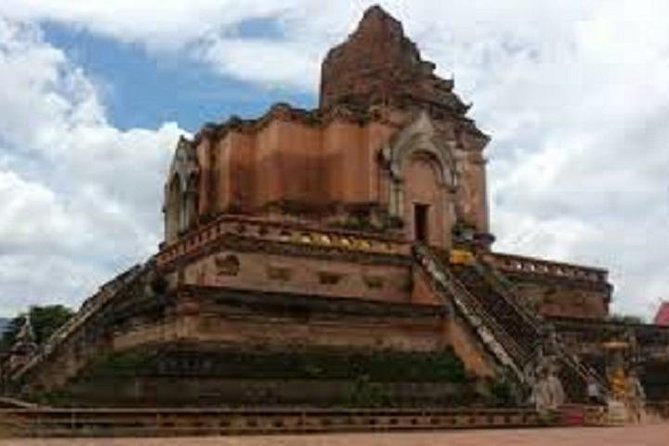
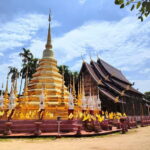
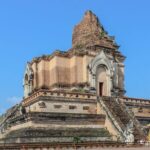
Next comes Wat Chedi Luang, one of Chiang Mai’s signature temples. The temple’s meaning is right in the name: it’s the Temple of the big stupa. You’ll see a site shaped by centuries of rebuilding, and it’s especially memorable because of what happened to the stupa in the 1500s.
Here’s the detail that makes the visit stick. Wat Chedi Luang was once home to the famous Emerald Buddha, which later ended up in Bangkok’s Grand Palace. Then, in 1545, an earthquake destroyed the top portion of the temple—about 30 meters. Even though repairs were made, you can still see damage along the lower edges.
What I like about this stop is that it gives you a story you can carry to other temples later. It’s not just architecture; it’s a reminder that Thai temple sites have always lived through real-world shocks—storms, earthquakes, and changing political centers.
Potential drawback: if you want a long, sit-down temple experience with time for wandering, you’ll likely feel the schedule is tight. This is a taste-and-photos tour, not a slow temple day.
3 Kings Monument: A Quick Landmark That Helps the Map Click
After Wat Chedi Luang, you’ll stop at the 3 Kings Monument. This is the kind of place that’s easy to miss if you’re walking alone, but it’s a helpful reference point for understanding where you are in the old city.
Even in a short stop, it serves a purpose. You get another photo angle, you break up the temple sequence, and you get a visual marker you can use later when you plan how to move around on your own.
Think of it as a waypoint. It makes the rest of the day less chaotic.
Wat Srisuphan (Silver Temple): Silver-Coloured Details and Silversmith Traditions
The tour’s silver moment is Wat Srisuphan, also connected with Wat Srisuphan Aram. This temple was founded in 1501 under King Mengrai and later renovated in 2004. The big draw is the temple’s silver-coloured building that catches the sunlight.
There’s also a specific technical detail that you might hear on-site: the Ubosot uses alloy and zinc-silver. That’s the sort of fact that makes the temple feel more than decorative. It tells you the material choices were part of the identity.
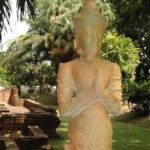
But the best part is the link to local craft. Wat Srisuphan is tied to Chiang Mai’s silversmith tradition and the workshop scene nearby. You may also see artisans working and learn how techniques are passed along through education at the Ancient Lanna Arts Study Centre (also known as Sala Sip Mu Lanna).
If you’re the type who likes to understand why a place looks the way it does, this stop delivers. You’re not just viewing; you’re learning the cultural reason behind the shine.
One more practical note: the silver-temple area can draw interest from people who want shopping. If you prefer quiet sightseeing, keep your focus on the temple details and craft demonstrations, not on sales talk.
You can also read our reviews of more private tours in Chiang Mai





Warorot Market: Where Local Shopping Is the Main Event
The final big stop is Warorot Market, and it’s a real switch from the temple calm. You’ll also get a view of where Chiang Mai’s Sunday Market and the famous Night Bazaar area are located, which helps you understand why this area is so busy.
Warorot is described as a vast market where local residents do their shopping. It’s not only souvenirs. You’re likely to see:
- fresh and dried fruit and vegetables
- fireworks and clothing
- fresh seafood
- jewelry and watches
- beauty supplies
- a flower market
Prices are often lower than you’ll find elsewhere in Chiang Mai, which is a big part of the value of this stop if you’re trying to stock up.
How to shop smart here:
- Use the market as a “price reality check,” then decide what’s worth taking back.
- Keep purchases simple during the tour. You’re only there for a limited window, so don’t plan on comparing every stall.
- If you want photos with your purchases, note that souvenir photo services are available to purchase, but not included.
The trade-off: markets can feel crowded, and there’s a lot of visual noise. If you prefer shopping in smaller, calmer lanes, you might not love the intensity.
Timing: Morning or Afternoon Pickup and a Return Before You’re Tired
This tour runs for about 3 hours, with an early departure and a later option. The schedule you’ll see offered starts with morning pickup around 8:30am, and there’s also an afternoon start around 12:30pm to 1:30pm. The return time is roughly 11:30am for the morning tour and 4:30pm for the afternoon tour.
That timing is useful. If you do the morning version, you’ll still have plenty of daylight for a second activity later—like a cooking class, a night market wander, or just temple exploring on your own. If you do the afternoon option, you can pair it with an evening food plan.
Also, since it’s a maximum of 10 travelers, the group stays small enough for the guide to keep things moving without turning it into a shuffle-fest.
What’s Included for $55: Hotel Convenience, Guide Help, and Transport
At $55, what you’re paying for is the bundle: tuk-tuk transport, pickup and drop-off, an English-speaking guide, plus drinking water and seasonal fruit. You also get accident travel insurance.
That doesn’t sound like a lot for a half day, especially if you’d otherwise need a driver plus navigation plus temple explanations. The value isn’t only in seeing the five stops. It’s in having someone route you through the city efficiently so you can spend your limited time actually looking instead of figuring out logistics.
Still, it’s worth tempering expectations. One caution I keep in mind is that some people feel this tour covers a lot but not enough variety for the full price comfort level—especially if they were hoping for more than four temple stops and one market in a short window.
Also, comfort can vary because tuk-tuks are open-air style rides. One ride experience was described as having a worn and hard seat. If you’re sensitive about vehicle comfort, it’s smart to ask about seat condition when you arrive.
Who Should Book This Tuk-Tuk Tour, and Who Might Skip It
This tour fits best if you:
- are new to Chiang Mai and want a fast orientation
- like a structured route where you don’t have to plan every hop
- want temple highlights plus one major market stop
- prefer small-group feel with pickup and drop-off
You might want a different plan if you:
- hate crowds or noise, especially in markets
- want longer time inside temples for slow wandering
- are expecting a wider range of stops beyond the listed temples and Warorot Market
Also, this tour has a dress code labeled formal. If you show up in shorts and a tank top, you might find it harder to feel comfortable inside temple areas. Plan clothing that looks respectful and covers up appropriately.
Should You Book This Half-Day Best of Chiang Mai Tour?
Yes, if you want a practical first-day orientation with standout temple stops and a real shopping finale. The route is tight in a good way, and the guide support makes the temple stories easier to follow—especially the details around Wat Chedi Luang and Wat Srisuphan.
If you’re more of a slow traveler, or you’re picky about vehicle comfort, you might do better with a longer private temple itinerary or a different market-focused plan. And if you’re hoping for lots of extra variety, keep in mind the half-day format is designed to hit key places, not everything.
My rule: book this when you want clarity for the rest of your trip. Skip it if you already know exactly what you want to do next.
FAQ
How long is the Half Day Best of Chiang Mai City tour?
The tour duration is about 3 hours.
How much does the tour cost?
The price listed is $55.
What time does the tour start?
There are two departure times offered. The morning pickup starts around 8:30am, and there is an afternoon option that’s described around 12:30pm or 1:30pm.
Does the tour include hotel pickup and drop-off?
Yes. Pickup and drop-off from your hotel or guesthouse is included, and it’s done by tuk-tuk.
Which places are included in the tour?
The tour includes four temples and one market, featuring Wat Chedi Luang, Wat Srisuphan, the 3 Kings Monument, historical gates in the old city area, and Warorot Market.
What’s included in the price?
Included items are hotel pickup and drop-off by tuk-tuk, an English-speaking tour guide, drinking water and seasonal fruits, and accident travel insurance.
What is not included?
Souvenir photos (if you choose them) and personal shopping are not included.
What are the dress requirements?
The tour lists a formal dress code.
Is there free cancellation?
Yes. Free cancellation is available up to 24 hours before the experience start time for a full refund.