REVIEW · CHIANG MAI
Mastering Chiang Mai Temples in Halfday – Visit 7 Temples
Book on Viator →Operated by joinusthai · Bookable on Viator
Seven temples, four hours, zero stress.
This kind of half-day plan is interesting because it turns a scary question—Which temples are the right ones?—into a simple, timed route across Chiang Mai’s most eye-catching Lanna-style sites, with pickup and a guide handling the moves. I like the speed here: you hit the key places without negotiating rides. I also like the way the guide experience can add context fast; one guide name that comes up often is Faan, praised for clear explanations and for taking photos while you’re there. The one drawback to know up front is that the schedule is tight, so each temple gets a short window.
You’ll be walking and looking for details, but you won’t have the slow, wandering pace some people want—especially at the shorter stops. If you love temple architecture but want deeper time in one place, you may feel a tiny rush. Still, for most first-timers, the value is in making sure you see the right variety of Chiang Mai’s temple styles without losing half a day to transport.
In This Review
- Key Things I’d Bank On Before You Go
- Why This Seven-Temple Route Works So Well in Chiang Mai
- Price and Value: What $93.71 Buys You (and Why It Usually Feels Fair)
- Getting Around: Pickup, Mobile Ticket, and a 9:00 AM Start
- Your Half-Day Temple Run: 7 Stops You Can Actually See
- Wat Phra Singh: Sacred Chiang Saen-Style Buddha and Songkran Water Rituals
- Wat Chedi Luang Varavihara: The Giant Chedi You’ll Keep Photographing
- Wat Phantao: Teakwood Ordination Hall (Wihan) Craft Details
- Wat Chiang Man: Oldest Temple Energy and Elephant-Shaped Buttresses
- Wat Lok Molee: Lanna Art in Stucco and Pagoda Form
- Wat Suan Dok: White Chedis and a Flower Garden Backstory
- Wat Phrathat Doi Kham: The 17-Meter Buddha on the Hilltop Finale
- Dress Code and Rain Plans That Keep the Day Smooth
- What the Guide Adds (and the One Thing to Wish For)
- Who This Tour Suits Best (and Who Might Prefer Slower Temple Time)
- Should You Book This Seven-Temple Tour?
- FAQ
- How long is the Chiang Mai temples tour?
- What time does the tour start?
- How many temples do you visit?
- Is pickup offered?
- Are temple admission tickets included?
- Does the tour run in rainy season?
- What dress code is required for temple visits?
- Is this a private tour?
- Can I cancel and get a full refund?
Key Things I’d Bank On Before You Go
- 7 temples in one half-day with a route that makes sense for getting bearings fast
- Mostly free temple entry, so you’re paying mainly for guide + transport rather than ticket costs
- A big finale at Wat Phrathat Doi Kham with a 17-meter sitting Buddha you can see from miles away
- Songkran culture at Wat Phra Singh, including the April 13–15 tradition of bathing the sacred image
- Rain-ready planning in May–October since the tour runs even in rainy days
- Private with your group so you’re not squeezed into a large crowd moving at someone else’s pace
Why This Seven-Temple Route Works So Well in Chiang Mai
Chiang Mai is a temple city in the real sense. You can find over 300 Buddhist temples in the area, and that’s the problem: once you start googling, your plan turns into homework. This tour solves that by picking a line-up that covers major styles and landmark features, without asking you to build a route from scratch.
You get a guide to help you understand what you’re looking at while you’re there, which matters more than it sounds. Temples in Chiang Mai aren’t just pretty buildings; they’re full of cues—materials, shapes, icons, and symbolic details—that make the place feel more personal once someone points them out.
You can also read our reviews of more tours and experiences in Chiang Mai.



Price and Value: What $93.71 Buys You (and Why It Usually Feels Fair)
At $93.71 per person for about four hours, you’re not just paying for “a ride.” You’re paying for three things that are hard to price separately once you’re on the ground: transportation, a guide doing the heavy lifting, and a route that prioritizes the temples most worth your time.
A big value piece is that most stops have free admission tickets. Only one stop notes admission as included (Wat Chedi Luang). When several of your major stops don’t charge entry, your money shifts toward the parts that actually cost real time and energy: getting there, staying on schedule, and making sure you don’t miss the most distinctive elements.
Another value piece is the time math. If you have limited days, you’ll often spend more time arranging transport than you do enjoying the temples. This tour cuts that down. The reviews also point to real-world savings on time and not having to chase separate transportation, which is exactly what you want.
Getting Around: Pickup, Mobile Ticket, and a 9:00 AM Start
This tour runs from 9:00 am for around four hours, and it offers pickup. That start time matters. It gets you to temple areas before the day gets too hot or too crowded, and it also helps keep all seven stops possible.
You’ll use a mobile ticket, which is a small thing until you’re standing in the sun figuring out paper vs. phone. And because this is set up as a private activity where only your group participates, you’re not competing with a bunch of strangers for the same photo angles or for the same slow spots.
In one of the feedback notes, people highlighted that the driver was punctual and the vehicle felt clean and modern. Even if you don’t care about the “bus comfort” part, punctuality makes the schedule feel calmer—and calmer means you enjoy more.
Your Half-Day Temple Run: 7 Stops You Can Actually See
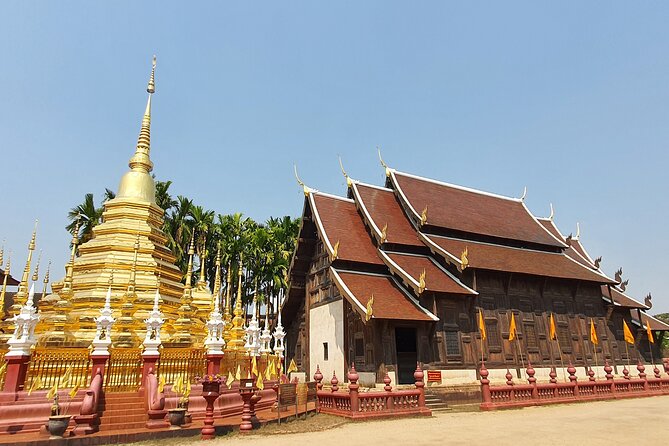
Here’s what makes this route work: each stop has a different “hook.” Some are about a sacred Buddha image, some are about giant pagodas, some are about teakwood architecture, and the finish is a mountain-top statement you can spot from far away.
The times are approximate, and the schedule can shift due to weather or other interruptions. In rainy season, you should treat flexibility as part of the deal.
Wat Phra Singh: Sacred Chiang Saen-Style Buddha and Songkran Water Rituals
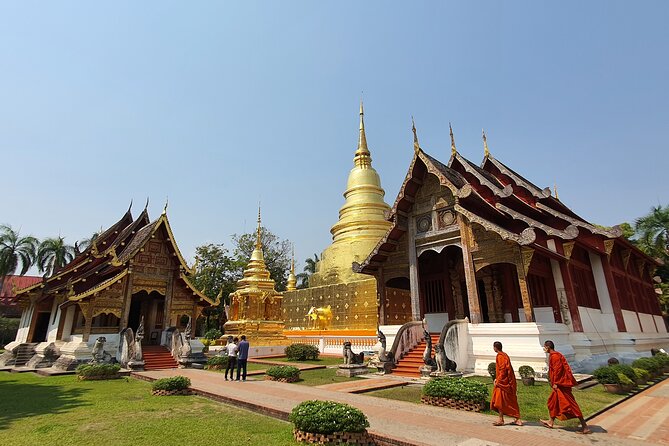
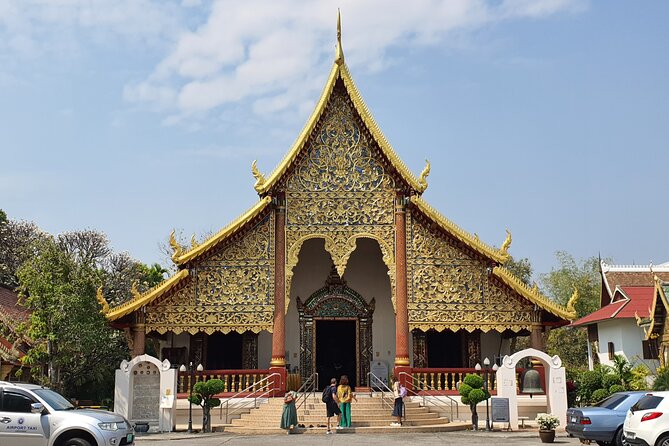
Wat Phra Singh is a favorite anchor stop because it’s tied to Chiang Mai’s most sacred “Chiang Saen-style” Buddha image. You’ll get time to see the temple’s look and understand why locals treat this place with special importance.
One cultural detail to keep in mind: during Songkran, April 13–15, this image is carried through a procession and locals bathe it with scented water. The belief is that this brings good luck. Even if you’re visiting outside those dates, knowing that tradition helps you read the temple with different eyes.
Don’t expect deep time here. You’ll have about 30 minutes, so use it to orient yourself and spot key decorative elements rather than trying to see everything.



Wat Chedi Luang Varavihara: The Giant Chedi You’ll Keep Photographing
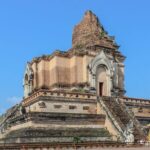
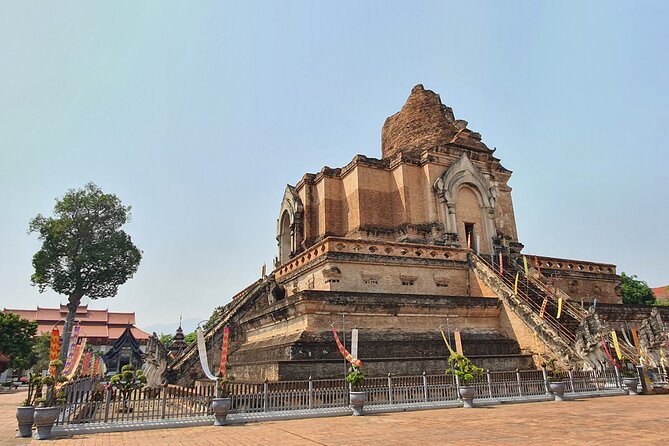
Wat Chedi Luang’s biggest feature is its massive chedi, and that’s the point. This site dominates the area, and it’s one of those temples where your brain keeps going back to the scale—how something so large can be both ancient and visually sharp.
You’ll have about 30 minutes here. Admission is noted as included, so you don’t have to think about a ticket step mid-route.
Photo tip: the chedi is the star. Don’t waste your early minutes hunting for side details first. Get a full-view angle, then come back for smaller textures if time allows.
Wat Phantao: Teakwood Ordination Hall (Wihan) Craft Details
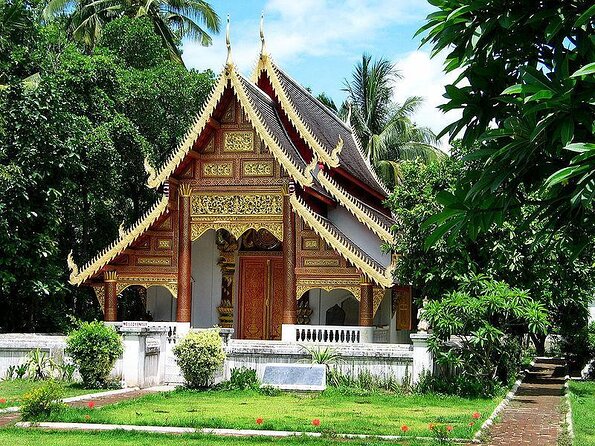
Wat Phantao is known for an exquisite Lanna-style ordination hall (Wihan) made of teakwood. This is a stop for people who like craftsmanship. Instead of one massive symbol, you’re looking at build quality and design.
Time here is short—about 10 minutes. That can feel rushed if you normally like slow museum-style viewing. So go in ready: glance wide to get the hall shape, then focus on the woodwork and structural details.
Best use of your time: arrive mentally with one goal—wood carving, layout, or the hall’s role in temple life—and let that guide what you look at.
Wat Chiang Man: Oldest Temple Energy and Elephant-Shaped Buttresses
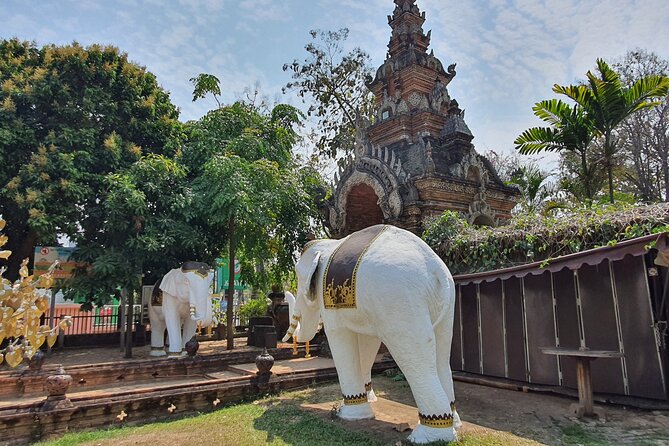
Wat Chiang Man is described as the oldest temple in Chiang Mai town, which makes it a good “origin” stop. It’s also famous for its Lanna-style chedi supported by rows of elephant-shaped buttresses.
This is one of the more fun visual ideas on the route, because elephants here aren’t a random decoration. They’re part of the structural support system you can actually read. You’ll have about 20 minutes.
Watch for the pattern. The repetition of elephant-shaped buttresses is what makes the site feel special. If you only look at one section, you miss the “system” feeling.
Wat Lok Molee: Lanna Art in Stucco and Pagoda Form
Wat Lok Molee is all about artistic surface and style. The pagoda and the stucco pattern are called out as a masterpiece of Lanna art.
Time is around 15 minutes, so you’ll likely work fast: notice the overall structure, then zoom in mentally on surface patterns. This stop rewards people who don’t only photograph wide shots, and it’s a nice break from the more “single huge object” temples.
If you hate rushing: take one minute to stand back and see the full form before you go close to details. That way, even if time runs out, you still get the main picture.
Wat Suan Dok: White Chedis and a Flower Garden Backstory
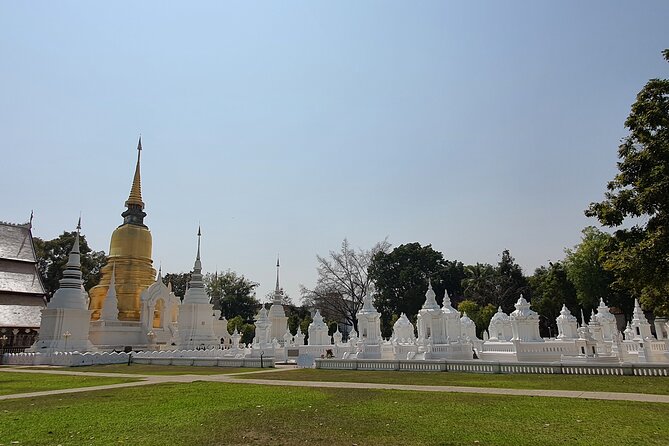
Wat Suan Dok is an old temple known for its large number of white chedis or pagodas. It also carries a name that points to its past: “flower garden temple.” The area was once used as a royal flower garden by the ruler of Chiang Mai.
This stop runs about 20 minutes. It’s a great place to slow your eyes down a little and connect the architecture to the idea of a carefully tended garden space.
Look for the repetition. The number of white chedis is part of the effect. Try not to treat it like one monument; treat it like a set.
Wat Phrathat Doi Kham: The 17-Meter Buddha on the Hilltop Finale
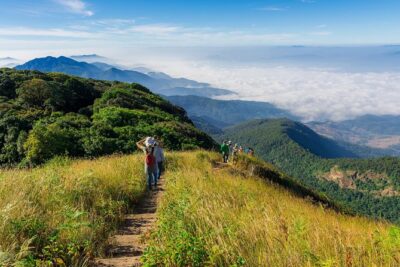
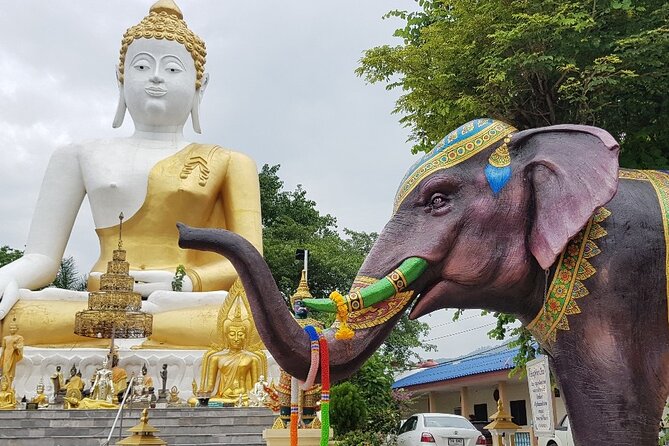
The final stop is Wat Phrathat Doi Kham, literally the Temple of the Golden Mountain. It sits on Doi Kham hill with mountain views around it, and the main reason people remember it is the enormous sitting Buddha image.
The Buddha is 17 meters high and uses the “Calling the Earth to witness” mudra. It’s also visible from miles away, which gives this place a sense of being a landmark, not just a temple you happen to pass.
You’ll have about 40 minutes here, which is the longest stop on the route. That longer time is smart, because hilltop sites tend to need buffer time—walking up, looking around, and settling into the view.
Reality check: you’re going from temple detail to big-sky view. If you rush through this part, you’ll miss why it’s the perfect ending.
Dress Code and Rain Plans That Keep the Day Smooth
Thai temples typically require respectful clothing, and this tour asks for shoulders and knees to be covered. Sandals or flip flops are allowed, so you don’t need fancy shoes—just something you can walk in comfortably.
In May to October, it’s rainy season, and the tour runs even on rainy days. Bring an umbrella or raincoat. Since the schedule is subject to change without notice due to weather, your best strategy is practical: dress for comfort first, worry about photos second.
Also, keep your phone ready with a screen-protecting case. It’s easy to drop it on wet steps, and you’ll want it for mobile tickets and quick photo checks.
What the Guide Adds (and the One Thing to Wish For)
The strongest theme from the experience is that you can get meaningful context without spending hours in one place. A guide helps connect the “what” to the “why,” so the temples stop feeling like random stops and start feeling like a story of style, belief, and local tradition.
In feedback, one guide name that comes up is Faan, praised for explaining a lot in the time available and doing lots of photos with the group. That’s not just friendly; it reduces your stress. You don’t have to ask strangers to take your picture, and you get photos that look like you were actually there, not just behind a railing.
The main drawback is simple: because it’s a fast route, you may want more guided explanation at each stop. This is especially true for short stops like Wat Phantao. If you’re the type who loves lingering for interpretive detail, you might feel the time squeeze.
Who This Tour Suits Best (and Who Might Prefer Slower Temple Time)
This is a smart choice if you:
- have only a short time in Chiang Mai and want to see major temples efficiently
- want a guide to help with temple basics and cultural context
- don’t want to spend your morning arranging transport multiple times
- like variety: sacred Buddha imagery, giant pagodas, teakwood architecture, and a hilltop ending
It may not be your best match if you:
- want hours in one temple to study details deeply
- hate rushing between locations
- prefer a highly flexible, no-schedule day
Still, for the majority of first-timers, the route is built for success: it gives you the landmarks and the Lanna-style highlights without turning your day into logistics.
Should You Book This Seven-Temple Tour?
If you’re trying to get value from a limited trip, I’d book it. The combination of pickup, a timed plan for seven key temples, and mostly free entry makes it feel efficient rather than expensive. You also end with Wat Phrathat Doi Kham, which gives the day a satisfying “wow” moment.
I’d especially consider it if you’re traveling with the kind of stress that comes from choices. Chiang Mai has too many temples to pick blindly. This tour narrows the field for you and keeps you moving at a pace that’s easy to enjoy.
FAQ
How long is the Chiang Mai temples tour?
It runs for about 4 hours.
What time does the tour start?
The start time is 9:00 am.
How many temples do you visit?
You visit 7 temples in total.
Is pickup offered?
Yes, pickup is offered.
Are temple admission tickets included?
For most stops, admission is free. Wat Chedi Luang Varavihara includes admission ticket.
Does the tour run in rainy season?
Yes. From May to October, the tour runs even on rainy days. Bring an umbrella or raincoat.
What dress code is required for temple visits?
You should have shoulders and knees covered. Sandals or flip flops are allowed.
Is this a private tour?
Yes. Only your group participates.
Can I cancel and get a full refund?
You can cancel up to 24 hours in advance for a full refund. If you cancel less than 24 hours before the start time, the amount paid won’t be refunded.