REVIEW · CHIANG MAI
No.1 Chiang Mai: 3-Hour Monk Trail Hike to Wat Doi Suthep & Palad
Book on Viator →Operated by Chiang Mai Mountain Biking & Kayaks · Bookable on Viator
One climb, two sides of Chiang Mai. You get a proper hike with Wat Phra That Doi Suthep payoff, not a quick drive-by. It’s built for small groups, and the guides (like Aidan and Danai) don’t just point the way.
Two things I really like: the pacing is walk-at-your-own-pace, and you’re not stuck in a crowded line heading up the mountain. One thing to think about: sections can be steep, and during fire season some routes may be partially closed through April 2025, which can change the exact path you take.
In This Review
- Key things to know before you tackle the Monk’s Trail
- The 3-hour Monk’s Trail: what that time box feels like
- Pickup, transport, and the small-group rhythm (9:30 am start)
- Stop 1 in practice: Doi Suthep-Pui National Park as your warm-up
- Stop 2 and 3: Wat Pha Lat Monk’s Trail and the calm of Wat Pha Lat
- Stop 4: Wat Phra That Doi Suthep and the panoramic payoff
- Fire-season closures through April 2025: how to stay flexible
- Lunch at altitude, plus water and hydration support
- Guides matter most: Aidan, Danai, and the plant-and-animal spotting
- Difficulty level: moderate fitness, steep moments, and who should go
- What’s included versus what you’ll want to bring
- Price and value: is $64.80 a fair deal?
- Should you book this Monk’s Trail hike to Wat Phra That Doi Suthep?
- FAQ
- How long is the Monk’s Trail hike?
- What time does the tour start in Chiang Mai?
- How big is the group?
- Is pickup included?
- What transport do you use?
- What’s included with the hike?
- Do I need to be moderately fit?
- What should I bring or prepare for check-in?
Key things to know before you tackle the Monk’s Trail
- Small-group limit of 15 keeps the hike feeling personal, especially on narrower parts of the trail
- Guides named Aidan and Danai focus on plants and wildlife, and they’re patient with different ability levels
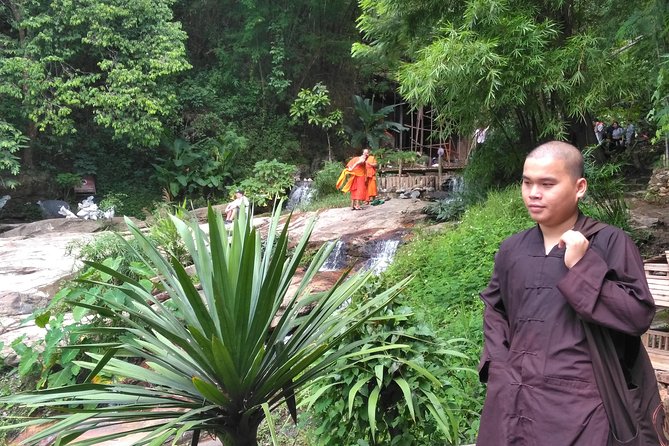
- Wat Pha Lat stop is a calmer breather where you can slow down and enjoy the quiet
- Wat Phra That Doi Suthep includes temple time after you earn the views
- A support truck follows along for safer storage of valuables and practical backup
The 3-hour Monk’s Trail: what that time box feels like
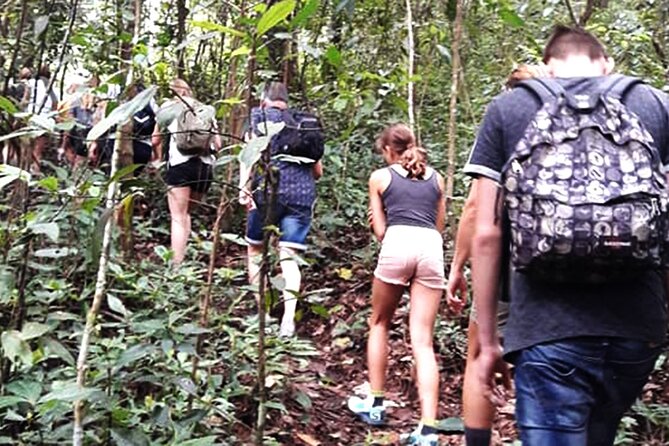
The tour is listed at about 3 hours of hiking time, and that usually means your biggest effort is the climb and the time around the key stops. The overall day can run longer when the route includes extra scenic breaks like a waterfall side trip, so don’t plan tight connections right after.
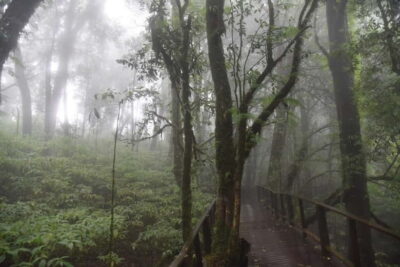
The Monk’s Trail itself is the star. You’re walking up through Doi Suthep-Pui National Park toward the temple area, and you’ll feel the height more than you think you will. Some sections are steeper than a casual stroll, but the key is that the group size stays small and you’re not forced into a fast parade. That matters because Chiang Mai heat can turn a “moderate” hike into a sweaty one if you rush.
You can also read our reviews of more hiking tours in Chiang Mai

Pickup, transport, and the small-group rhythm (9:30 am start)
You’ll start at 9:30 am, with pickup offered. The tour uses an air-conditioned van as the primary way up, and smaller group days may use 4×4 SUVs. Translation: you get the comfort of a motorized start, then you trade it for the mountain air once you hit the trail.
The group cap is 15 travelers, which is a big deal on a route like this. On busy temple days, big tour buses mean you’re hiking with dozens of strangers and stopping when the crowd stops. Here, you’re more likely to get clean spacing between photo moments.
Another practical win is that there’s a support truck following. It’s meant for secure storage of valuables while you hike, so you don’t have to carry everything you brought that morning. I like this setup because it reduces the constant thought of where your phone and passport documents are during climbs.
Stop 1 in practice: Doi Suthep-Pui National Park as your warm-up
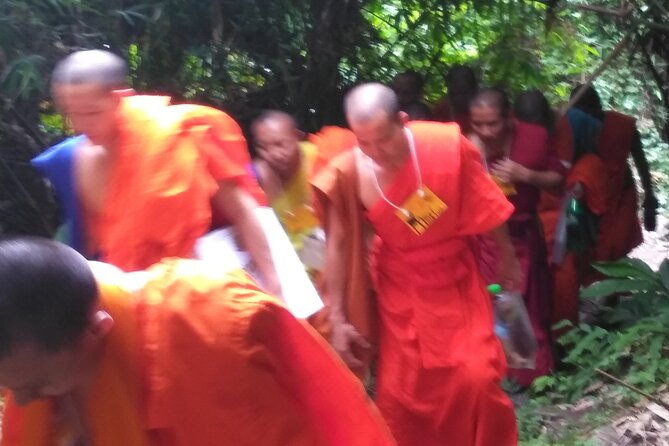
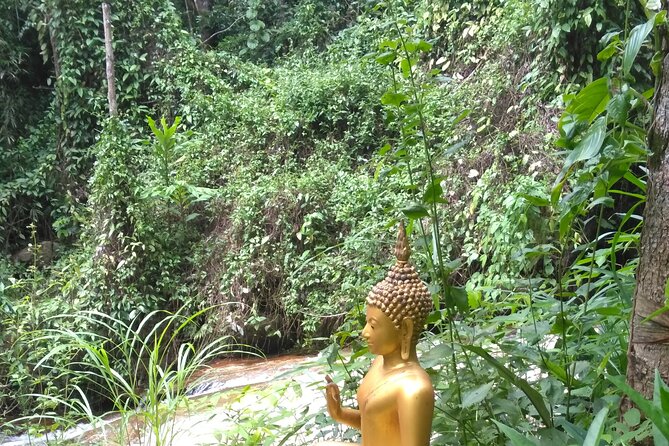
The day begins in Doi Suthep-Pui National Park. Even before you reach the more famous temple zone, the park setting matters. You’re not just walking to say you went; you’re moving through the kind of forested area where guide-led spotting can really change your experience.
The most consistent theme from guide-led hikes here is that you don’t just look down at your feet. Guides like Aidan and Danai pay attention to what’s around you—plants and animals—so the hike becomes more than exercise. It’s still work, but it’s work with context.
If you’re someone who likes nature details, this first section is where you’ll start feeling “oh, I’m glad I booked this.” If you want a faster, purely scenic route, you might find yourself pausing more than you planned. That’s not a bad thing; it just means the day isn’t a nonstop trek.
Stop 2 and 3: Wat Pha Lat Monk’s Trail and the calm of Wat Pha Lat
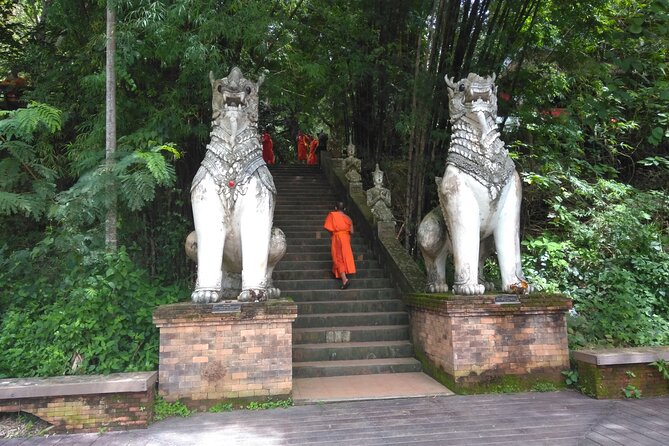
The itinerary brings you to Wat Pha Lat via the Monk’s Trail, then onward to the Wat Pha Lat area itself. This is where many people shift from “climb mode” to “slow down and look around” mode.
What makes Wat Pha Lat special in this plan is the vibe. The information and feedback point toward a more peaceful, nature-blended temple stop compared with the more famous Doi Suthep crowds. You’ll have a chance to take a breath, enjoy the quiet, and spend time in a setting that doesn’t feel like it’s designed for constant Instagram traffic.
Also, this is often a mental reset. If the earlier climb has you thinking about your legs, Wat Pha Lat gives you a moment to refocus. The guides can point out local plant life and small wildlife you might miss if you’re just trying to keep your pace.
Pro tip: bring patience for the whole day, but don’t rush Wat Pha Lat. If you keep moving too quickly, you’ll miss the slower part that makes the hike feel like an experience, not just a workout.
Stop 4: Wat Phra That Doi Suthep and the panoramic payoff
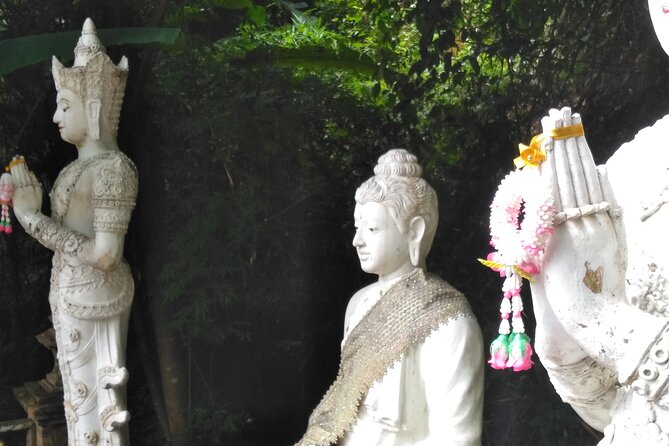
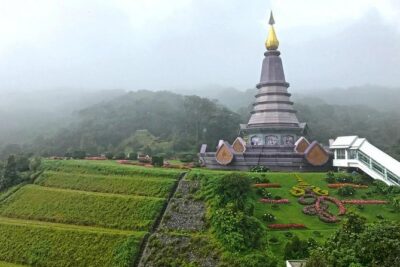
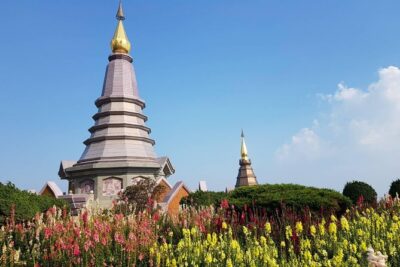
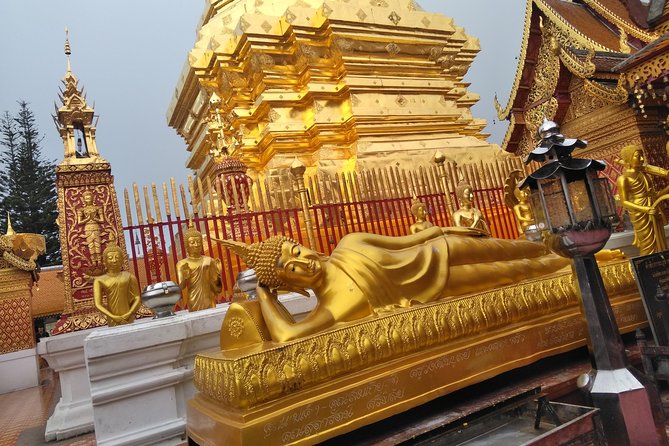
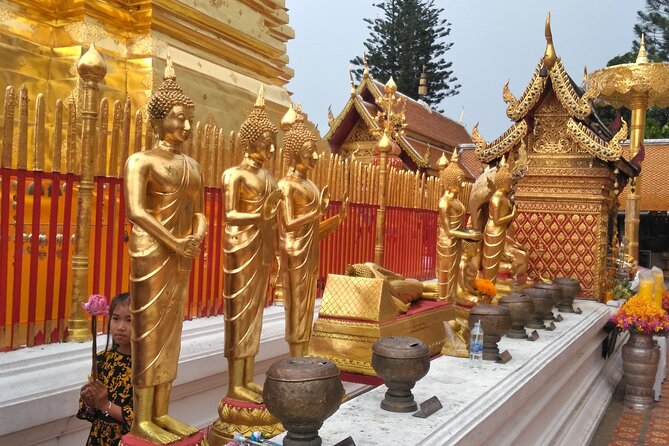
Finally, you reach Wat Phra That Doi Suthep. This is the famous destination perched high on the mountain. The value here is simple: you earn it with your legs, then you get to enjoy the views and the chance to explore the temple area.
The temple visit isn’t described as a quick pass. You should expect time to look around after the hike, not just arriving for a single photo and rushing out again. That matters because Wat Doi Suthep rewards unhurried wandering—details in the temple compound and the wider sightlines up high.
One advantage of this hike style is how you experience the timing. The route includes a section that can feel quieter, especially toward the later parts of the walk, when you’re not surrounded by everyone arriving at once by vehicle. If you care about getting a few minutes of space for photos and calm, this route setup helps.
You can also read our reviews of more tours and experiences in Chiang Mai


Fire-season closures through April 2025: how to stay flexible
Here’s the reality check: there may be partially closed park trails due to fire season through April 2025. The tour still runs with an incredible lineup, but the exact path may be adjusted.
That’s why I’d treat this like a flexible hike plan, not a guaranteed “exact same trail no matter what” promise. The upside is you’re still hiking in the area, still reaching the cultural temple highlight, and still getting nature time—just with routing tweaks.
How you can make this work for you:
- Pack mentally for a “plan A, plan B” day
- Move at your own pace so changes in elevation and timing don’t throw you off
- Ask your guide on the day what’s open and what’s closed, and follow their judgment on route priorities
If you’re visiting during the closure window, this flexibility is a big part of the tour’s value.
Lunch at altitude, plus water and hydration support
You’re not expected to hike hungry. The tour includes lunch with vegetarian and vegan options. That’s not a throwaway inclusion. On a mountain hike, food is part of recovery, and it helps you enjoy the temple stop instead of feeling drained.
You’ll also get hydration support. Water is available, and there’s a hydration-backpack provided for the excursion. If you’ve ever tried to juggle a bottle while climbing steep sections, you know why this matters. Carrying less increases comfort and safety.
In some versions of the day plan, additional scenic stops like a coffee plantation and Monthathan Waterfall round trip are mentioned as part of the experience. The overall timing can expand when these are added, and that’s consistent with comments about the day taking longer than the base 3-hour hike.
Bottom line: assume you’ll be out for a good chunk of time, not just a quick morning workout.
Guides matter most: Aidan, Danai, and the plant-and-animal spotting
This is one of those hikes where the guide can make or break the vibe. The information and feedback you’ve been given emphasize that the guides are friendly, fun to talk with, and genuinely attentive. Names you’ll commonly see here include Aidan and Danai.
What stands out is the way they teach without making it feel like class. Instead of just listing facts, they point out local plants and animals you might not notice on your own. On steep trails, this turns your mind off the burn for a bit and onto something interesting.
Another detail worth calling out: the guides are described as patient. That’s useful if your group includes a mix of experience levels or if kids are with you and need guidance on how to take the route step-by-step.
Difficulty level: moderate fitness, steep moments, and who should go
The tour asks for moderate physical fitness. The hiking is described as relatively easy for beginners in some places, but other sections can be tough and steep. That combo is what many “moderate” hikes actually mean in Chiang Mai: it’s not a technical climb, but your legs work.
If you:
- can handle hills for a couple hours,
- don’t mind walking uphill with breaks,
- and can keep your pace steady,
…you’ll likely be fine.
If you:
- struggle on steep grades,
- get winded quickly,
- or hate uneven footing,
…this may feel harder than the wording suggests. It’s still doable for many people, but it won’t feel casual.
Good to know: foldable hiking sticks are available upon request. Use them if you think your knees will complain later. They can turn the descent from “ugh” into “okay, I’ve got this.”
What’s included versus what you’ll want to bring
Included support is strong on paper. You get:
- professional mountain guides
- first aid and CPR-trained instructors
- water and hydration backpack
- lunch (vegetarian and vegan options)
- support truck with secure storage
- transport via air-conditioned van (or 4×4 SUVs for smaller group logistics)
- mobile ticket
- hiking sticks on request
What you should bring and plan for:
- comfortable footwear for uneven trail sections
- lightweight, breathable clothing for Chiang Mai’s conditions
- a daypack for essentials (since some items can be stored with the support truck)
There’s also mention of a pro-shop offering lite hiking shoes, hiking shorts, and jerseys if you need last-minute gear.
One extra item you might not think about until check-in: you’re asked to provide your passport number for insurance ID.
Price and value: is $64.80 a fair deal?
At $64.80 per person, this sits in the “good value for guided mountain time” category—especially because you’re paying for more than just walking.
You’re also paying for:
- small-group handling (max 15)
- mountain guides with first aid/CPR coverage
- transport up via van or 4×4
- hydration and lunch
- a support truck for storage
If you were to replicate this on your own, you’d spend time coordinating transport, hiring a guide for safe trail navigation, and figuring out food and water. Here, those pieces are handled, and you’re free to focus on the climb and the temple experience.
One caution: the day can include extra scenic stops depending on conditions like trail closures. That can affect how long you’re out and how the day flows, so treat it as a half-day to full-day commitment rather than a “back home fast” plan.
Also, this type of tour is booked in advance (on average about 27 days), so if your dates are fixed, it’s smart to reserve early.
Should you book this Monk’s Trail hike to Wat Phra That Doi Suthep?
I’d book it if you want a mix of exercise, nature time, and a real temple visit, all with the comfort of a small-group guide and safety support. The Wat Phra That Doi Suthep payoff is the obvious draw, but the real win is how the hike connects you to the setting along the way—especially with stops like Wat Pha Lat that feel calmer.
I’d think twice if you’re chasing only the quickest route to the temple, or if steep terrain is a big problem for you. This isn’t a wheelchair-friendly day or an all-flat walk kind of plan.
If you’re visiting during fire-season trail closures, this still has value because the experience is designed to keep going with adjustments, rather than simply canceling the mountain idea. Flexibility is the name of the game.
FAQ
How long is the Monk’s Trail hike?
The hike portion is about 3 hours (approx.).
What time does the tour start in Chiang Mai?
Start time is 9:30 am.
How big is the group?
The tour is limited to a maximum of 15 travelers.
Is pickup included?
Yes, pickup is offered (and you’ll coordinate your exact pickup details if your accommodation isn’t listed).
What transport do you use?
An air-conditioned van is the primary option, with 4×4 SUVs used for smaller groups.
What’s included with the hike?
Guided support, first aid/CPR-trained instructors, water and a hydration-backpack, lunch with vegetarian/vegan options, and a support truck for secure storage are included.
Do I need to be moderately fit?
Yes. The tour is for travelers with a moderate physical fitness level.
What should I bring or prepare for check-in?
You should provide your passport number at check-in for insurance ID. Also, you can request foldable hiking sticks, and a pro-shop may have basic hiking gear available.