REVIEW · CHIANG MAI
Chiang Mai: 3 Hour Old City and Temples Guided Walking Tour
Book on GetYourGuide →Operated by TripGuru Thailand · Bookable on GetYourGuide
Temple hopping in Chiang Mai is easy. Making it make sense takes a guide. This 3-hour Old City walking tour lines up three major stops so you get history, design details, and everyday Buddhism context without spending your whole day on the pavement.
I especially like the contrast between the temples: the huge presence of Wat Chedi Luang and the fine teak wood carvings at Wat Phan Tao. And I love that the final stop, Wat Phra Singh, gives you the kind of visuals you actually want to photograph, plus explanations that help it click rather than just pass by.
One consideration: the pace is still a walk, and some areas have strict dress rules—plan clothing that covers shoulders and knees, and expect you’ll take your shoes on and off more than once.
In This Review
- Key Highlights You’ll Notice Fast
- Old City Temples on Foot: Why This 3-Hour Walk Works
- Wat Chedi Luang: The Giant Stupa and Lanna-Style Detail
- Wat Phan Tao: Teak Wood Carvings That Feel Personal
- Wat Phra Singh: Mosaic Sanctuary, Lion Buddha, and the Best Photo Corners
- What the Guide Adds: Buddhism, Thai Beliefs, and Even Meditation Basics
- Price and Value: How $16 Stacks Up With Entrance Fees
- Timing, Heat, and Footwear: The Comfort Stuff That Matters
- Dress Code and Temple Etiquette: Cover Up Without Stress
- Who This Tour Fits Best (And Who Should Rethink It)
- Should You Book This Chiang Mai Old City Temples Walk?
- FAQ
- How long is the Chiang Mai Old City and Temples Guided Walking Tour?
- Where do I meet the guide for this walking tour?
- What temples are included on the route?
- Is the tour guided in English?
- Are temple entrance fees included in the tour price?
- What should I bring for the temples?
- Are there dress code requirements?
- Who is this tour not suitable for?
Key Highlights You’ll Notice Fast
- Wat Chedi Luang’s largest stupa in Chiang Mai and the Lanna-style details up close
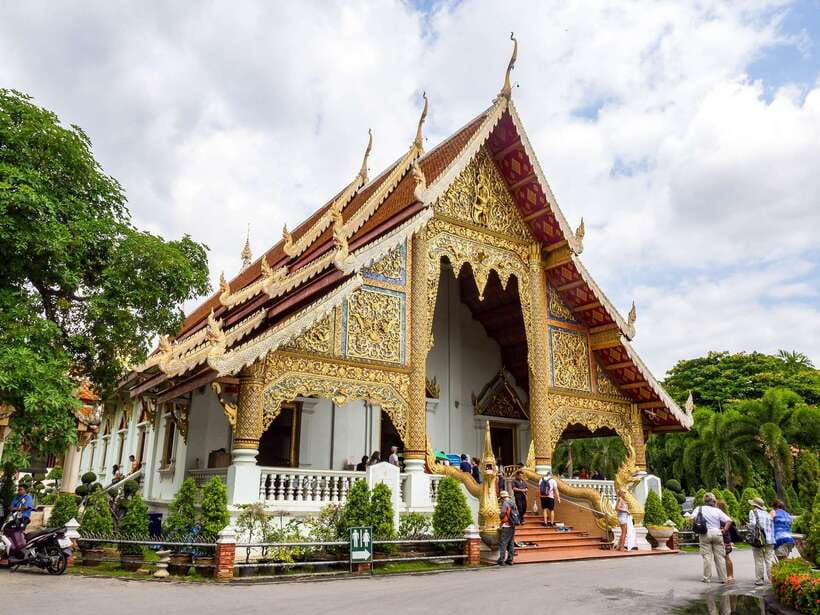
- Wat Phan Tao’s intricately carved teak wood that feels delicate even when the temple is smaller
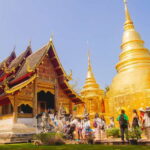
- Wat Phra Singh’s mosaic-decorated sanctuary, Lion Buddha statue, and gilded pagodas
- English live guiding that connects Buddhism, Thai beliefs, and what you’re seeing
- GSTC-certified, low-impact touring with carbon offsetting as part of how the experience is run
Old City Temples on Foot: Why This 3-Hour Walk Works
Three hours sounds short. In Chiang Mai’s Old City, that can be a good thing. You get to see the big names—Wat Chedi Luang, Wat Phan Tao, and Wat Phra Singh—while the tour stays tight enough that you aren’t just shuffling from one gate to another.
This is also a smart way to learn the city’s logic. Temples aren’t only pretty buildings. They’re built around belief, community life, and local history. On this walk, your guide helps you connect design choices (like carvings, murals, and sanctuary layouts) to what people in northern Thailand actually value and practice.
Another plus for your day: it’s built for active seeing, not long bus rides. You’ll be outside in the sun at times, but you won’t be stuck in one place forever. If you’re also trying to fit in markets or a night food crawl, this tour gives you a strong temple foundation without consuming the whole schedule.
You can also read our reviews of more walking tours in Chiang Mai

Wat Chedi Luang: The Giant Stupa and Lanna-Style Detail
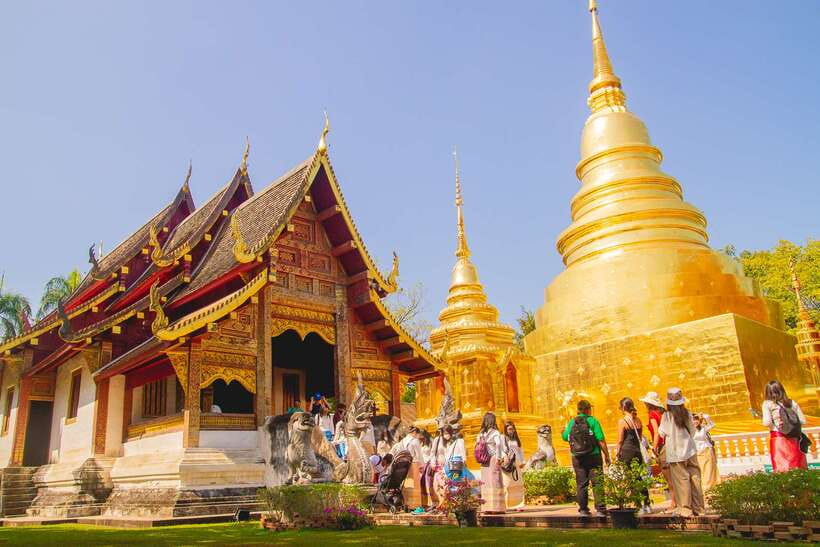
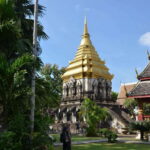
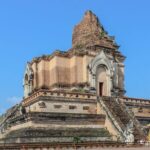
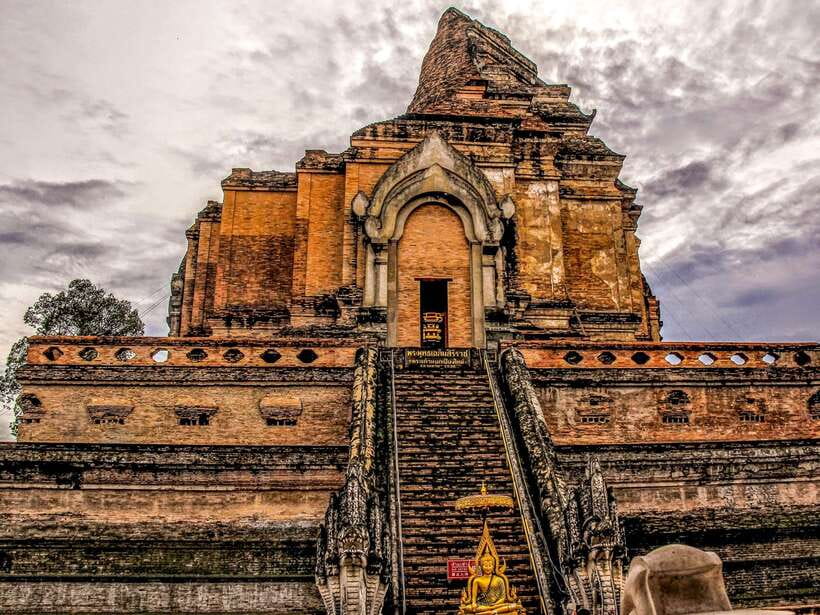
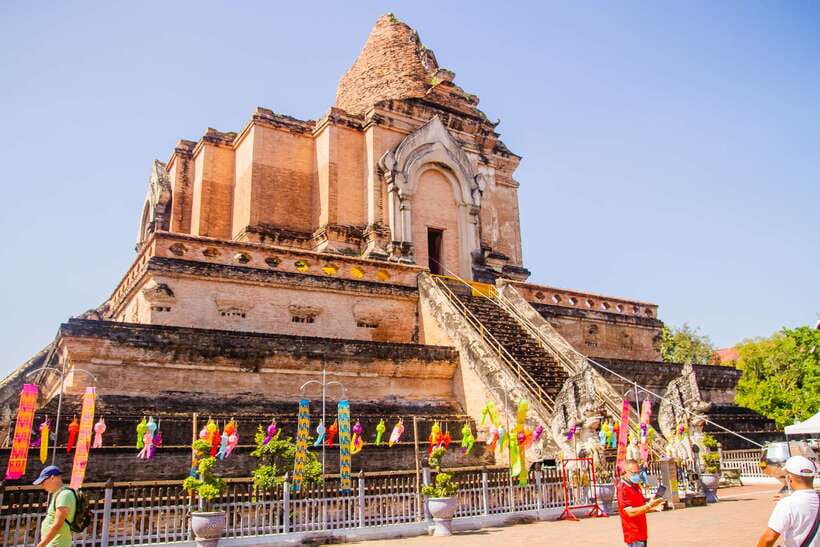
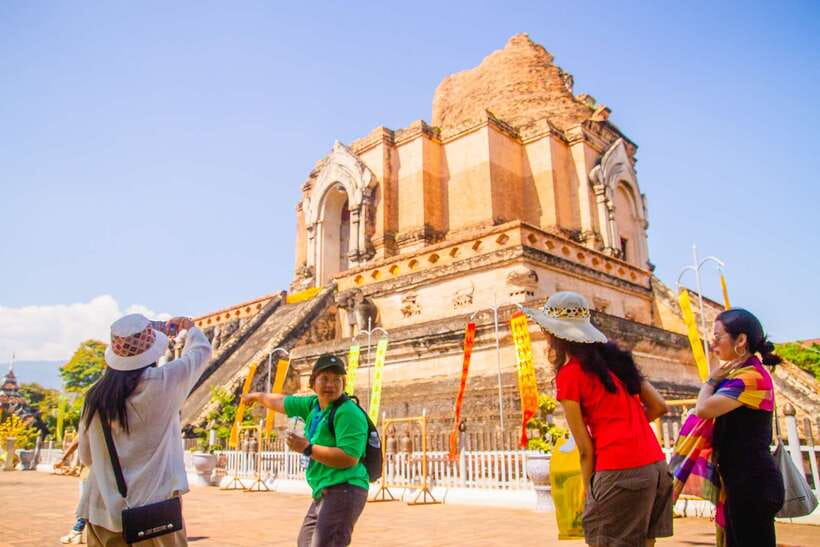
Your first major stop sets the tone. Wat Chedi Luang was built between the 14th and 15th centuries, and it’s famous for having the largest stupa in Chiang Mai. Even if you’ve seen other Thai temples before, this one feels monumental because the scale does the talking.
What I’d aim to notice here:
- The way the stupa anchors the compound, so your eye keeps returning to the same visual center.
- The Lanna-style design elements you can spot as you walk the area and slow down for a closer look.
The tour keeps you there long enough to do more than glance. You’re guided through the compound for about an hour, so you can ask questions while the buildings are still fresh in your mind. That matters because temple details can blur together if you rush.
A practical note: this is also the kind of place where you’ll likely pause for photos, but you’ll want to keep moving enough to avoid baking in the midday light.
Wat Phan Tao: Teak Wood Carvings That Feel Personal
After the scale of Chedi Luang, Wat Phan Tao plays a different role. It may seem smaller, but that’s exactly why it works on a walking tour. The smaller you go, the more your attention can land on the craft.
Here’s what makes Wat Phan Tao special: it features intricately carved teak wood facades. These aren’t the sort of decoration you appreciate from far away. You need to get close, and you need a guide to point out what to look for.
The temple also has a story connection you’ll hear about during your visit. It was once a throne hall for King Mahotara Prateth, before it became a house of prayer. That helps you understand why the woodwork and structure feel intentional, not random.
In terms of drawbacks, Wat Phan Tao is where your footwear routine becomes real. People often find they’re taking shoes off more than once in temple compounds. Bring easy-to-remove footwear, and plan for a little extra time as you follow whatever the site asks of you.
Wat Phra Singh: Mosaic Sanctuary, Lion Buddha, and the Best Photo Corners
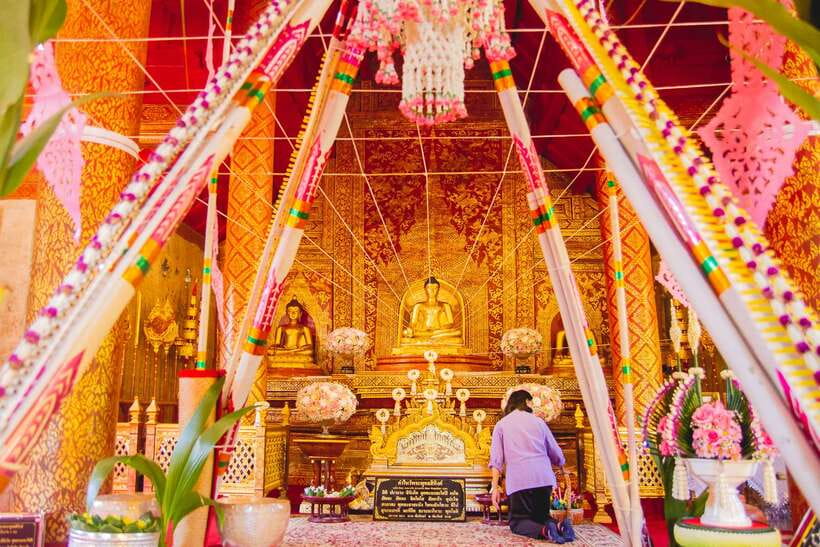
If you want the moment that makes your camera roll earn its keep, this is the stop. Wat Phra Singh is described as one of Chiang Mai’s finest temples, built in the 14th century. On the walk, it becomes the grand finale.
You get multiple visual anchors here:
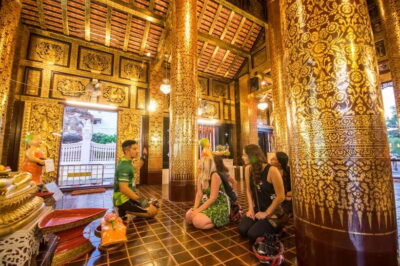
- A mosaic-decorated sanctuary that looks like it was made for close inspection
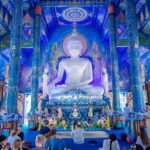
- A large Lion Buddha statue
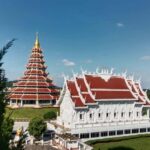
- Gilded pagodas that catch the light when the sun hits them
This temple also helps your learning stick. Earlier stops give you context—stupas, Lanna design, carved wood. Wat Phra Singh then shows you how lavish sacred spaces can be, and why the style feels so tied to devotion rather than just aesthetics.
The tour finishes at Wat Phra Singh Woramahawihan, so you’re not forced to backtrack across town afterward. For many people, that means you can transition directly into lunch, a café break, or an easy evening stroll.
What the Guide Adds: Buddhism, Thai Beliefs, and Even Meditation Basics
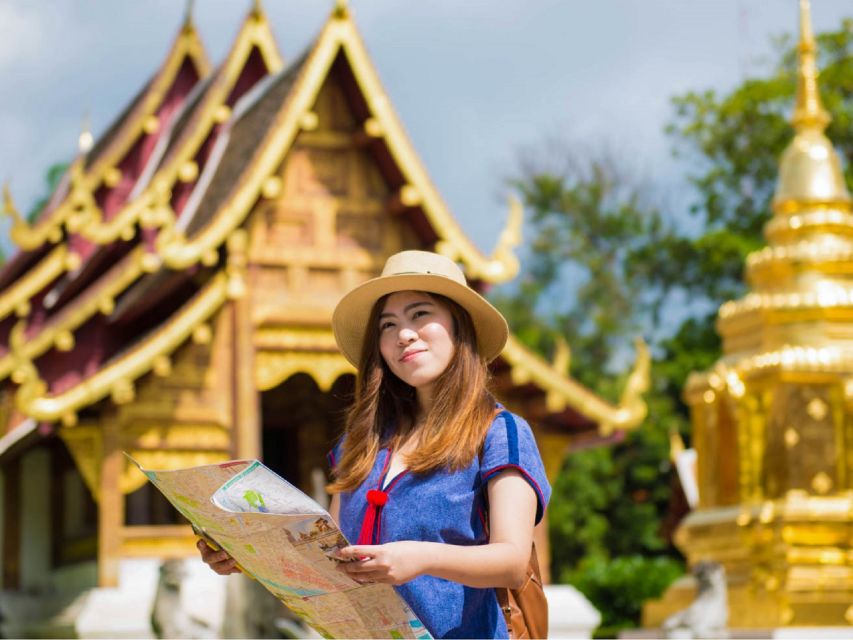
This tour’s value isn’t only the temples. It’s the way a guide turns the temples into meaning.
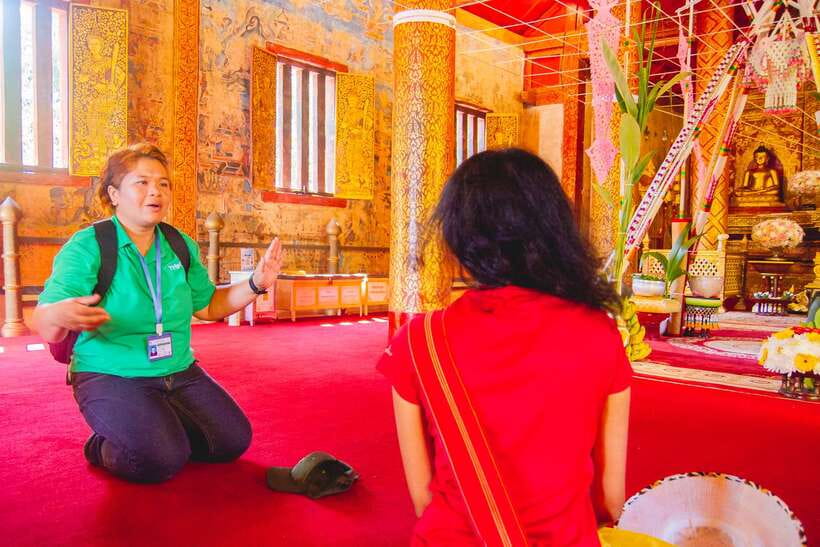
In past groups, guides have been praised for connecting Buddhism and different Thai beliefs to what you’re actually seeing on-site. Some guides also cover practical cultural points, like how languages show up in temple settings or how religious teachings translate into daily life.
A few guide examples you may run into (names shared by guests):
- Nana, who’s often noted for humor and clear explanations
- TomTam, frequently mentioned for strong temple history framing
- Boon, who has led groups through meditation at a temple stop
- Cookie (Narida), praised for making the history part easy to follow
You can’t guarantee the exact guide. But you can count on this tour being built around interpretation, not just a checklist of sights.
Also, your guide tends to keep things interactive. That’s helpful in Chiang Mai because the temples can prompt a lot of questions, like why certain shapes matter or why the layout is arranged the way it is. If you ask, expect answers that stay grounded in the real purpose of each place.
You can also read our reviews of more guided tours in Chiang Mai



Price and Value: How $16 Stacks Up With Entrance Fees
At $16 per person, this is an easy-value purchase if you care about context. You’re paying for:
- A local guide
- A walking format that organizes the route and keeps your time efficient
The big add-on cost is entrances. You’ll cover three separate fees:
- Wat Chedi Luang: 50 THB
- Wat Phan Tao: 20 THB
- Wat Pha Singh: 50 THB
That’s 120 THB total across the main temples listed for your route. The tour price doesn’t hide fees, which I like. It also means you can budget for temples and still know the tour itself is focused on guiding time and pacing.
There’s also an environmental angle built into the experience. It’s described as GSTC-certified and designed as a low-impact way of exploring, including carbon offsetting for every tour. You won’t be doing calculations mid-walk, but it’s good to know the operators treat sustainability as part of the product.
Timing, Heat, and Footwear: The Comfort Stuff That Matters
You’ll walk through the Old City, and you’ll be outside. Even in cooler months, Chiang Mai can feel warm, especially if you’re in sun pockets. That’s why bringing water is a smart move, even if the itinerary doesn’t mention a long break.
What I’d pack based on the tour’s own “bring” list:
- Comfortable shoes (and make them easy to slip off when needed)
- Sunglasses, hat, and sunscreen
- Insect repellent
- Cash for entrance fees
- A scarf handy for dress-code adjustments
The tour is listed as moderate fitness, which usually means you won’t be hiking up steep hills. Still, you should expect steady walking for a few hours. If your body hates sidewalks, pick footwear that helps.
Dress Code and Temple Etiquette: Cover Up Without Stress
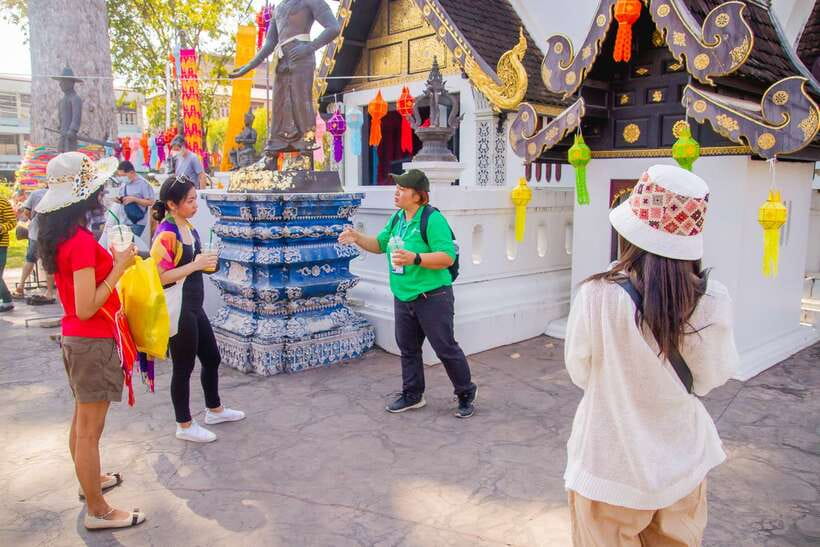
Temple dress rules can feel strict, and this tour notes that some sites enforce them. The key points:
- Avoid clothing that reveals shoulders, underarm, back, or knees
- Plan something light enough for Chiang Mai’s weather, but still respectful
A scarf can be a lifesaver if you end up with a shirt that’s a little too short or straps that feel too exposed. You’ll also want your shoes situation ready. Expect to remove footwear in temple areas, and make it easy enough that you’re not wrestling laces every stop.
If you’re thinking about shorts or a tank top, don’t. It’s not about being dramatic. It’s about staying comfortable and not losing time to clothing fixes on the spot.
Who This Tour Fits Best (And Who Should Rethink It)
This walking tour is best for people who want a structured temple experience without overplanning. It works well if you:
- Like learning basics about Buddhism and Thai beliefs while seeing famous sites
- Want a short Old City activity that still feels like more than sightseeing
- Prefer guided pacing over wandering randomly with only a map
The tour notes it’s not suitable for:
- Pregnant women
- People with mobility impairments
- People with heart problems
- People with respiratory issues
If any of those apply to you, it’s worth skipping this one and choosing a gentler option with fewer walking demands.
Also, if you hate sun and shoe-removal routines, you can still do it. Just show up prepared with the gear listed above and dress correctly from the start.
Should You Book This Chiang Mai Old City Temples Walk?
Yes—if you want three major temples in one efficient morning/afternoon with an English-speaking local guide who helps you understand the “why” behind the “wow.” The tour’s pricing is fair for the guiding time, and the entrance fees are clearly spelled out.
Skip it only if you can’t manage covered clothing and repeated footwear changes, or if your health needs make a moderate walking tour a bad idea. If you’re generally mobile and you enjoy learning on the ground, this is a strong way to start Chiang Mai’s Old City with the right context—and walk out seeing temples as living parts of culture, not just monuments.
FAQ
How long is the Chiang Mai Old City and Temples Guided Walking Tour?
The tour runs for 3 hours total.
Where do I meet the guide for this walking tour?
Meet at the entrance of Wat Chedi Luang. The guide will be holding a TripGuru sign.
What temples are included on the route?
You’ll visit Wat Chedi Luang, Wat Phan Tao, and Wat Phra Singh, with the tour finishing at Wat Phra Singh Woramahawihan.
Is the tour guided in English?
Yes. The tour includes a live English guide.
Are temple entrance fees included in the tour price?
No. Entrance fees are not included. The listed fees are 50 THB for Wat Chedi Luang, 20 THB for Wat Phan Tao, and 50 THB for Wat Pha Singh.
What should I bring for the temples?
Bring comfortable shoes, sunglasses, a hat, camera, sunscreen, insect repellent, cash, and a scarf.
Are there dress code requirements?
Yes. Some sights have strict dress codes. Clothes shouldn’t reveal shoulders, underarm, back, or knees.
Who is this tour not suitable for?
It’s not suitable for pregnant women, people with mobility impairments, people with heart problems, or people with respiratory issues.