REVIEW · CHIANG MAI
Traditional Northern Home Cooking Experience with Raunkaew Yanon Family
Book on Viator →Operated by Idaytrip · Bookable on Viator
You’ll cook in a real family home. This Northern Thailand cooking session feels personal, with family-style cooking and Lanna culture explained in plain, everyday terms. The only drawback to keep in mind: you’re heading out of central Chiang Mai to a Hangdong neighborhood, so it’s not a quick downtown add-on.
After pickup, you spend the afternoon getting oriented to how a Lanna family lives, from the structure of their teakwood home to fruit trees in the orchard and ingredients grown right at the house. You also get a practical focus on herbs and flavors, so it’s not just watching what someone else cooks. If you’re short on time or you want a strictly sightseeing-heavy schedule, plan accordingly.
In This Review
- Key reasons to go
- Door-to-door pickup to Hangdong, with a welcome that sets the tone
- Teakwood home and a rice barn with real-world context
- Orchard walk: fruit trees and the everyday side of Lanna life
- From backyard garden herbs to the cutting board
- Cooking and tasting Northern Thai flavors, lunch or dinner style
- Price and what you’re really paying for at $100.16 per person
- Logistics that matter: timing, group size, and your comfort level
- Who this is perfect for, and who might prefer something else
- Practical tips so you enjoy the day
- Should you book this Chiang Mai home cooking session?
- FAQ
- How long is the cooking experience in Chiang Mai?
- Is hotel pickup and drop-off included?
- Can I choose lunch or dinner?
- Is this a private tour?
- Is there a minimum number of people to book?
- What about dietary restrictions?
- What is the cancellation policy?
Key reasons to go
- A family-led home visit outside the usual tourist circuit, not a restaurant show
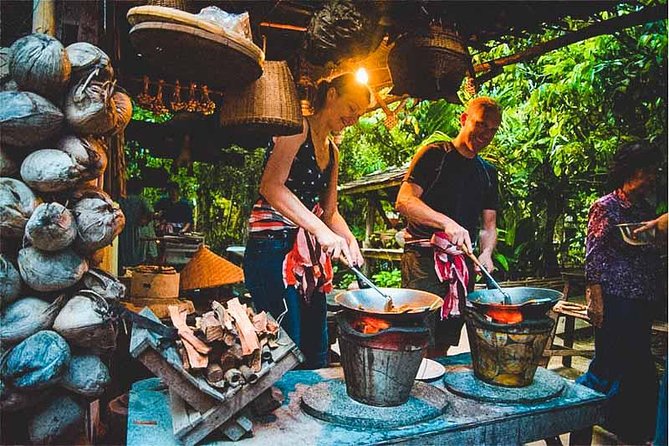
- Ingredient picking at the backyard garden, with herbs tied to what you’ll cook
- Lanna life context: why the house and rice barn look the way they do
- Lunch or dinner choice for a comfort-food meal timed to your day
- Door-to-door pickup and drop-off that keeps the outing stress-free
- Private group format (only your group), so questions don’t get squeezed out
Door-to-door pickup to Hangdong, with a welcome that sets the tone
The experience starts with hotel pickup in Chiang Mai and then a drive south out of the city. Your destination is Bandoo in the Hangdong district, where the family home sits in a setting that’s quieter than the usual center-of-town action.
Once you arrive, you’re greeted warmly with flowers and drinks. That little moment matters because it signals the right mood: this is meant to feel like you’ve been invited, not like you’ve been processed. After the welcome, the host guides you around the home and talks through local culture in a way that connects it back to what you’ll be doing later with food.
You’ll also be in a private format, meaning the group experience stays focused on your circle rather than blending into a larger classroom. That can be a big deal if you’re the kind of person who likes asking questions when something feels unfamiliar, like an ingredient name or why a flavor balance works the way it does.
You can also read our reviews of more cooking classes in Chiang Mai
Teakwood home and a rice barn with real-world context
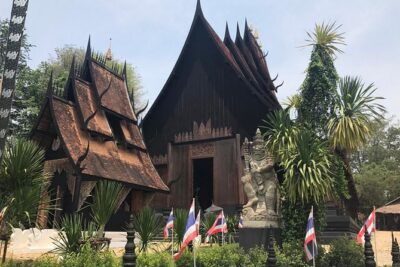
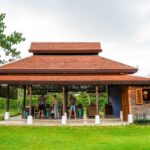
A major highlight here is the setting itself. The Raunkaew-Yanon family home is built from teak wood, and it’s the kind of older construction you don’t get to see much around Chiang Mai today. You also get to learn about a rice barn on the property, including the historical angle and the kind of practical information that makes it more than just a photo stop.
What I like about this part is that it gives you a framework. Northern Thai cooking isn’t only about spices; it’s tied to what a region grows, preserves, and eats across seasons. When you see the home, the orchard, and the storage space used by the family in everyday life, the food choices start making sense fast.
You’ll also hear the family story. The Raunkaew-Yanon family arrived in the area—possibly by elephant-back—about 150 years ago. That detail alone gives you a sense of deep roots, but the better value is that you’re not just hearing a legend. You’re getting the Lanna perspective on how tradition gets maintained over generations.
Orchard walk: fruit trees and the everyday side of Lanna life
Before you cook, you’ll take a walk in the family-owned orchard. The orchard has many types of fruit, and that matters because it puts ingredients in front of you before they ever hit the kitchen.
This is where you get more than “look at plants.” You’re building a mental map of how food shows up in daily life—what’s grown close by, what’s harvested, and how the family thinks about ingredients beyond the final dish.
If you’re the type who enjoys small cultural details, this is a good time to slow down. You can ask questions about what’s planted where, what gets used, and how the family relates the garden to cooking. Even if you don’t catch every word, you’ll still come away with a stronger sense of the rhythm of a home like this.
And yes, this is also the part that makes the later kitchen time feel grounded. When the herbs and produce show up for cooking, it’s no longer abstract.
From backyard garden herbs to the cutting board
One of the most practical features of this class is that you pick ingredients from the backyard garden for your cooking session. That turns the class from a performance into a process: you’re involved early, so you understand what’s fresh, what’s aromatic, and what flavors connect to the recipe.
The host also explains local herbs. That’s one of the big differences between a generic cooking class and this kind of home session. You’re not only learning a method, like how to slice or stir. You’re learning what the herb does to taste and why it belongs in Northern Thai cooking.
Northern Thailand flavors can be hard to replicate at home if you only learn the final dish. When you connect flavors back to the source—garden herbs grown nearby—you’re more likely to remember what to do when you’re cooking later.
Also, because you’re doing this in a real neighborhood setting, you’ll likely feel less like you’re following a script. You’re guided, but you’re also present in the environment where the ingredients come from. That’s the point: the recipe is taught as part of a living culture.
Cooking and tasting Northern Thai flavors, lunch or dinner style
Your cooking class includes a meal based on the session you choose—lunch or dinner. Either way, the focus stays on authentic local recipes and the real flavors of Northern Thailand that you don’t usually get in commercial cooking classes.
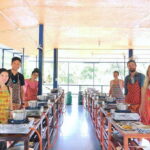
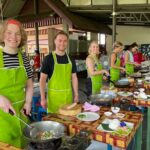
What you can expect during the kitchen time is a hands-on session, with you actively helping with the cooking steps. The goal isn’t just to make a dish; it’s to learn enough about the logic of the flavors that you can reproduce the style later.
A home setup also changes the pacing. Compared with large group classes, you usually get more room for small questions—like how strong a herb’s flavor should be, or what texture a key ingredient should reach. Even if your Thai vocabulary is basic, you can still learn by watching how the host adjusts during cooking.
At the end of the session, you taste what you made. This is where the earlier garden and herb context pays off, because the flavors feel less like mystery seasoning and more like a balanced, intentional style.


Price and what you’re really paying for at $100.16 per person
At $100.16 per person for about 4 hours, this isn’t a budget meal. But for what you get, it’s closer to a value-priced cultural experience than a standard cooking class.
Here’s what’s included that helps justify the cost:
- Hotel pickup and drop-off, so you’re not figuring out transport in a semi-local area
- A professional guide who keeps the experience moving and helps interpret the culture-to-cooking connection
- Local insurance
- The meal tied to your lunch or dinner choice
- A session built around ingredients from the property and explanations about local herbs and Lanna life
Two more things help you judge value. First, you’re not paying for a kitchen with strangers; you’re paying for a host family’s time and for access to their home setting—teakwood structure, orchard, rice barn, and garden picking. Second, the private group format means you’re less likely to get lost in the crowd.
Group discounts are available, so if you can plan with friends or family, the per-person value improves.
Logistics that matter: timing, group size, and your comfort level
This runs about 4 hours. That’s a sweet spot: long enough to shop for ingredients, learn the culture context, cook, and sit down to eat. It’s short enough that it doesn’t hijack your whole day.
It’s also designed for most people to participate, which is helpful if you’re traveling with mixed comfort levels around cooking. Still, remember it’s a home environment, not a restaurant kitchen. You’ll be moving around, and you’ll likely spend time outdoors during the orchard and garden ingredient parts.
Group size is handled in two ways:
- It’s private, so only your group participates.
- There’s a minimum of 2 people per booking.
If you’re traveling solo, you may need to join with someone or confirm that the booking can meet the minimum requirement through the provider.
Who this is perfect for, and who might prefer something else
I think this is ideal if you want:
- A cooking class that connects food to culture and everyday life
- A chance to learn from a family setting rather than a commercial studio
- A hands-on experience with herbs and fresh ingredients
- A smooth outing with pickup and drop-off that keeps the day from getting complicated
You might consider skipping (or at least pairing it with lighter sightseeing) if:
- You prefer city-center experiences with minimal travel time
- You want an instructor-led class focused only on cooking technique, with no cultural context
- You’re extremely time-constrained and need something quick
Practical tips so you enjoy the day
Since your time includes walking the orchard and gathering ingredients, I’d wear comfortable shoes and breathable clothes for Chiang Mai’s weather. If you have dietary needs, mention them at booking so the host can plan around it.
Also, choose lunch or dinner based on what fits your energy level. If you’ve had a heavy morning, lunch can keep the pace gentler. If your day is slow and you like a later meal, dinner might feel more relaxed.
Finally, treat this like a conversation as much as a class. Asking about herbs, how produce is used, and what the family considers essential is where the experience becomes memorable.
Should you book this Chiang Mai home cooking session?
Yes, if your goal is authentic Northern Thai flavors tied to how a Lanna family actually lives. The best part is the combination: you cook, but you also see the teakwood home, rice barn, fruit orchard, and garden ingredients that shape the food style.
Book it when you can commit to the full 4 hours and when you’ll value context, not just the final dish. If you’re the type who enjoys learning small, practical cultural details while you eat what you helped make, this is a strong choice.
FAQ
How long is the cooking experience in Chiang Mai?
The session runs about 4 hours.
Is hotel pickup and drop-off included?
Yes. Pickup and drop-off are included.
Can I choose lunch or dinner?
Yes. You can choose between a lunch session and a dinner session.
Is this a private tour?
It’s private. Only your group participates.
Is there a minimum number of people to book?
Yes. A minimum of 2 people per booking is required.
What about dietary restrictions?
You should advise any specific dietary requirements at the time of booking.
What is the cancellation policy?
Free cancellation is available. You can cancel up to 24 hours in advance for a full refund. If you cancel less than 24 hours before the start time, the amount you paid won’t be refunded.