REVIEW · CHIANG MAI
Chiang Mai : Traditional Lanna Bamboo Fan Weaving
Book on GetYourGuide →Operated by Baannoi Nornmuan · Bookable on GetYourGuide
Bamboo turns into calm in 90 minutes. In Chiang Mai, this workshop at Baannoi Nornmuan is a hands-on lesson in Lanna fan weaving, where you learn the craft steps and leave with a finished bamboo fan you made yourself. I love the way the session mixes technique with real people time, which makes it feel like a skill you can trust, not a rushed demo.
I also like the added comfort of a hosted, local-family setup. You’ll get cultural context while you work, plus a included drink, butterfly pea with lime and honey. One possible drawback: food and pick-up are not included, so plan to eat before (or bring your own snack strategy) and use local transport to get there.
In This Review
- Key points to know before you go
- Why Lanna bamboo fan weaving is a smart Chiang Mai craft day
- Getting to Baannoi Nornmuan near Wat Gate
- What happens in the 90-minute workshop step by step
- Learning the fan construction: how the wave-like motion comes together
- Cultural insights you can actually use (not just hear)
- The $22 price: what you get for the money
- Private group energy: when families and mixed groups work best
- Practical tips so you leave happy with your fan
- Should you book this Chiang Mai bamboo fan weaving workshop?
Key points to know before you go
- A take-home bamboo fan with a wave-like motion you can actually use
- Private group format with English/Thai instruction for more hands-on attention
- Drink included: butterfly pea with lime and honey
- You practice the craft, not just watch it, from bamboo prep to fan construction
- Cultural context built into the lesson, so your fan has a story behind it
- Meeting near Wat Gate (7/6 Rat-U-Thit rd. Soi 4, T. Wat gate, A.Muang Chiang Mai 50000)
Why Lanna bamboo fan weaving is a smart Chiang Mai craft day
If your Chiang Mai days are already packed with temples, markets, and rides across town, this kind of workshop is a great counterweight. It’s slow in the best way. You sit with bamboo, learn a real process, and watch your own work become something functional.
I like that you’re not just making a souvenir. You’re learning a technique tied to Lanna traditions—enough context that you’ll know what you did, not only what it looks like. And since it’s a fan, you end up with an everyday object that feels personal the second you hold it.
There’s also a practical perk: this is about 90 minutes, so it won’t hijack your whole afternoon. It fits nicely between other plans, or it can break up travel fatigue when you want something calmer than another stop-and-go schedule.
You can also read our reviews of more tours and experiences in Chiang Mai.



Getting to Baannoi Nornmuan near Wat Gate

The workshop location is listed at 7/6 Rat-U-Thit rd. Soi 4, T. Wat gate, A.Muang Chiang Mai 50000. That puts it in the Wat Gate area, which is handy because it’s easier to pair with other nearby activities than going far out of town.
Plan to arrive a few minutes early. Not because you’ll get extra stuff for free, but because bamboo work is physical—once you start, you’ll want your head and hands ready. Also, since pick-up is not included, you’ll want a smooth plan for getting there and back (grab a ride, use a local taxi route, or ask your hotel how to reach this exact address).
What happens in the 90-minute workshop step by step
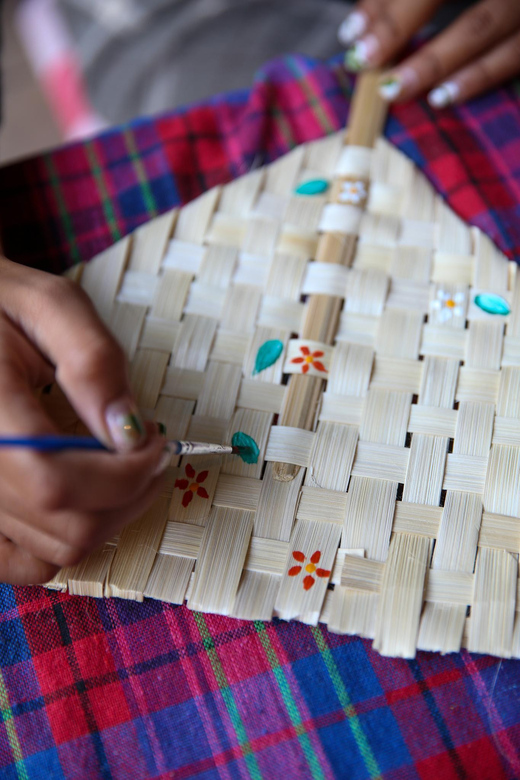
This is a structured class, not a wander-around craft fair. Here’s the flow you can expect:
1) Welcome and bamboo weaving introduction
You start with an overview of the history and significance of bamboo weaving in the Lanna context. The point isn’t to memorize facts. It’s to give your hands a reason for what you’re doing—why certain steps matter and what the finished fan is meant to do.
2) Techniques for building the fan
Next comes the practical instruction: how to weave the bamboo into a fan shape. The workshop focuses on creating that wave-like motion when the fan is finished. That’s a key detail because it means your work has a specific target, not just “make something pretty.”
3) Cultural insights as you work
Instead of leaving cultural context for a lecture at the end, you get it threaded through the process. This helps you make sense of the craft while you’re actively building your fan. It also makes questions easier if you’re trying to understand Thai names or weaving terms you don’t know yet.
4) Hands-on weaving and guided correction
Then you roll up your sleeves for the part that matters most: weaving. An instructor in English and Thai guides you through the steps. In a private group setup, the teaching style tends to be more personal, which is great if you’re slower with your hands, or if you’re doing this with family.
5) Wrap-up and take-home moment
At the end, you take pride in the finished bamboo fan you made. That take-home element is big value here because it turns your time into an object you can use in Thailand (and after you go home).
Learning the fan construction: how the wave-like motion comes together
Fans can look simple from a distance, but getting that right feel takes technique. What I like about this workshop is that it doesn’t treat the fan as a mystery box. You’re taught the steps that lead to the fan’s structure and movement.
You’ll practice the weaving in a way that supports the final form. The instructor emphasis on the wave-like motion matters because it’s a visible sign of craftsmanship. If the weaving is off, the fan won’t move the way it’s supposed to. So you’re not just making a flat piece—you’re building something with function.
This is also where a private setting helps. Even if you’re brand-new to crafting, you can get adjusted mid-process. If you’re traveling with kids, grandparents, or anyone who learns by watching your hands closely, this style usually makes the experience more comfortable.
Cultural insights you can actually use (not just hear)
The cultural portion here isn’t vague. You’ll get context around the role of bamboo weaving in the Lanna tradition and how it connects to functional craft as well as art.
Why that matters: when you understand the “why,” your finished fan feels more meaningful. It’s not only a handmade object; it becomes proof that you learned a traditional skill correctly. That’s a different kind of souvenir, and it’s the reason people choose this kind of workshop in the first place.
Also, the class is taught by an instructor who uses English and Thai, so you can ask direct questions. If language is a hurdle for you, you’ll likely find the process itself does a lot of the communication—your hands can follow along even when you’re still catching a few words.






The $22 price: what you get for the money
At $22 per person for about 90 minutes, this workshop has solid value because the price includes the essentials that make a crafting class worth it:
- Materials: bamboo
- Instructor guidance (English/Thai)
- A take-home creation (your finished fan)
- A drink included: butterfly pea with lime and honey
What’s not included is also important:
- Food is not included
- Pick-up car is not included
So think of the $22 as paying for the skill instruction, the tools/materials, and the finished object. If you’ve been doing paid temple tickets and tours all week, this becomes a nice change: you’re spending on an experience you carry home in your hands.
Private group energy: when families and mixed groups work best
This is a private group workshop, and that usually changes the vibe in a good way. You’re not competing for attention. You can go at the pace of your group and still get guidance.
The experience has a family-friendly feel too. In one example, a family group of six—grandparents, parents, and children—worked well because everyone had enough time and individual attention to make their own fans. That suggests the instruction supports mixed ages, at least in practice.
If you’re the type of traveler who likes learning crafts, talking with locals, and having something calm to do away from crowds, this is a strong fit. If you want a big sightseeing day packed with stops, this won’t replace that. It’s a skill workshop first.
Practical tips so you leave happy with your fan
A bamboo weaving session is pretty forgiving, but you’ll enjoy it more if you prepare for the basics:
- Wear comfortable clothes you don’t mind getting slightly fiber-dusty. Bamboo leaves little traces. It’s not a big deal, but plan for it.
- Expect hands-on work, so bring your best patience. If your first attempts look uneven, that’s normal.
- Take your time with the steps that affect motion. The wave-like look comes from technique, so don’t rush the parts that shape how the fan moves.
- Try the included drink. The butterfly pea with lime and honey is part of the hosted feel. Even if you’re not a tea person, it’s worth trying once during the workshop.
- If you’re traveling with someone who gets tired easily, a private format can help you pace the class without feeling left behind.
One more small thought: your goal is not to win a craft contest. Your goal is to learn the process well enough that your fan looks right and feels right in your hand. You’ll get there.
Should you book this Chiang Mai bamboo fan weaving workshop?
Book it if you want an authentic, hands-on Thai craft experience that’s short, calm, and meaningful. For the price, you’re paying for instructor time, bamboo materials, and a take-home fan—plus a drink. That combo makes it easy to justify, even on a tighter travel budget.
Skip it (or at least think twice) if you’re only looking for sightseeing or if you need food and transport included. Since there’s no pick-up and no meals, you’ll want to handle logistics yourself.
If you like learning practical skills and coming home with something you made, this is exactly the kind of Chiang Mai activity that gives you a story you can actually use every day.