REVIEW · CHIANG MAI
Chiang Mai – Doi Suthep Temple and Street Food Tour
Book on Viator →Operated by Chiang Mai Night Tours · Bookable on Viator
Sunset at Doi Suthep, then street food heaven. I like the way this tour stitches together Wat Phra That Doi Suthep views with a guided ride to two night markets, so you get temple context and dinner in one smooth 4-hour block. You’ll also love the street-food sampling format, with your guide taking you through roughly 6–8 dishes at Chang Phuak Gate and 5–7 more at Chiang Mai Gate.
One thing to consider: this tour isn’t designed for every diet. It’s not suitable for vegetarians, vegans, halal, or kosher, and some foods may contain common allergens, so you need to flag your needs when you book.
In This Review
- Quick hits: what makes this Chiang Mai tour feel worth it
- Sunset at Wat Phra That Doi Suthep: the view part that actually matters
- From Three Kings Monument to Doi Suthep: a simple, comfortable ride
- Stop 1: Wat Phra That Doi Suthep—how the guide changes what you notice
- Stop 2: Chang Phuak Gate (Elephant Gate) night market—your first big tasting
- Stop 3: Chiang Mai Gate Night Market—another tasting round (and a full belly)
- Price and value: why $48.74 can make sense here
- Food, spice, and allergies: how to plan so you feel safe
- Guides that lift the whole experience: Sunny, Coco, and the rest of the vibe
- Weather and timing: how to handle the sky’s mood
- Who this tour is best for (and who should skip it)
- Should you book this Chiang Mai street food and Doi Suthep tour?
- FAQ
- What time does the Chiang Mai Doi Suthep and street food tour run?
- Where do I meet, and where does the tour end?
- Does the tour include hotel pickup?
- How long is each main stop?
- What’s included in the price?
- Can they accommodate allergies?
Quick hits: what makes this Chiang Mai tour feel worth it
- Doi Suthep at sunset: you get the city view at the hour most people photograph, not during the harsh daytime heat.
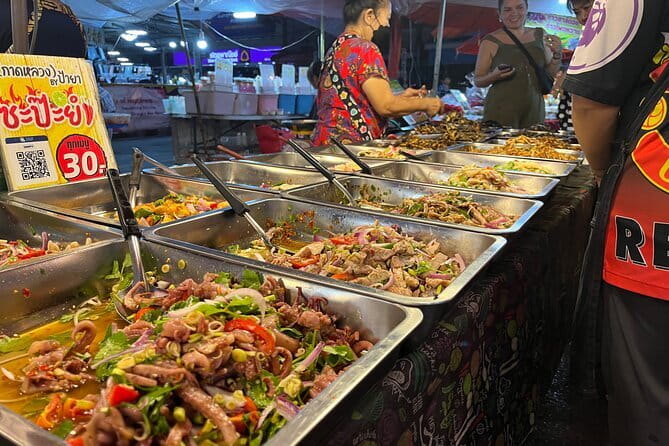
- Two major night markets, timed for eating: Chang Phuak Gate first, then Chiang Mai Gate for a second round of dishes.
- Small group size (max 8): you’re less likely to feel like a number in a crowd while you’re hunting for flavor.
- Dinner is the point: bottled water plus a range of street foods included, not just a quick “taste and go.”
- Guide support that changes the whole experience: English and Thai speaking guidance helps you order, pace, and understand what you’re eating.
- Allergy-aware when you plan ahead: they can adapt dishes for common allergens if you tell them early.
Sunset at Wat Phra That Doi Suthep: the view part that actually matters
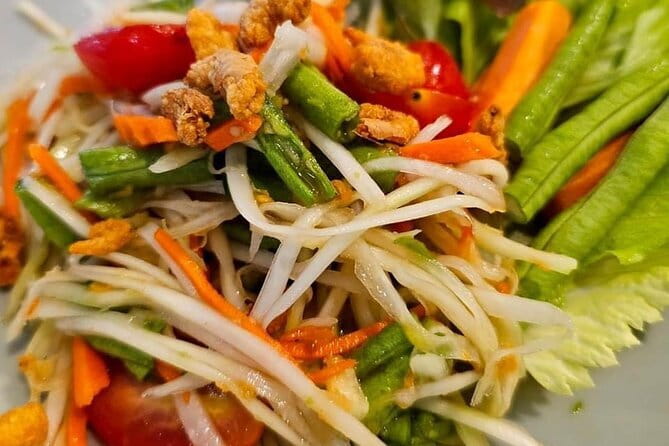
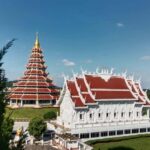
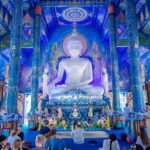
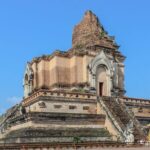
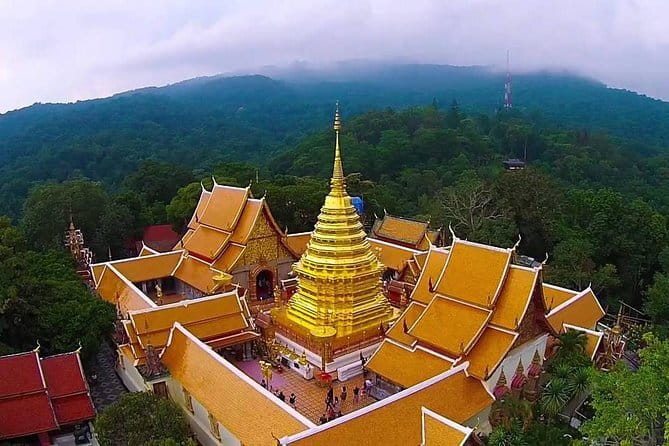
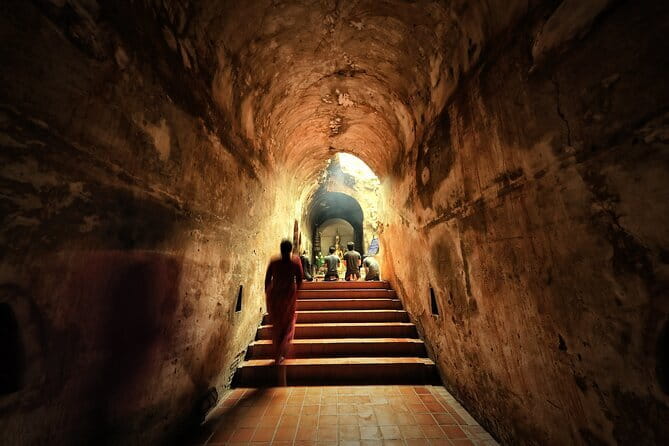
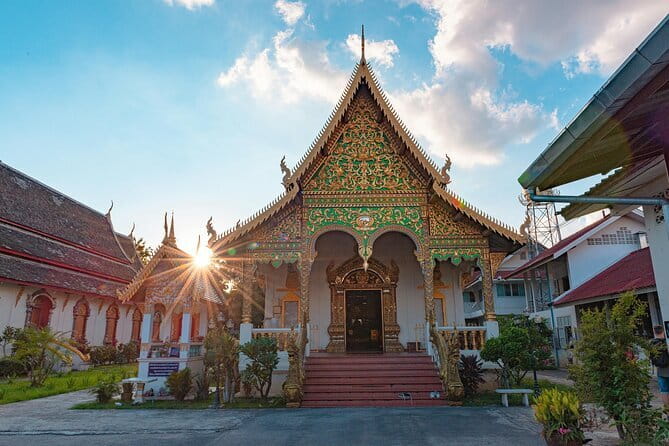
The best part of the evening starts at Wat Phra That Doi Suthep. This is Chiang Mai’s most famous hilltop temple, and the timing is built around what you want from it: a cooler, calmer climb (compared with mid-day) and a chance to see the city lights turn on in the distance.
You’ll spend about 40 minutes at the temple area, guided step-by-step through what you’re seeing. The goal isn’t just photos. You’ll learn some of the landmark’s history while you’re there, then have time to take in the views as the light changes. In the reviews, people repeatedly call out how impressive the scene is from up high—especially when the sunset cooperates.
A fair heads-up: sunset can be hit-or-miss with cloud cover. One guest noted clouds got in the way, but the city lights still looked great. So even if the sky isn’t perfect, you’re still going to get the “from-the-hill” perspective that makes Doi Suthep worth your time.
You can also read our reviews of more food & drink experiences in Chiang Mai

From Three Kings Monument to Doi Suthep: a simple, comfortable ride
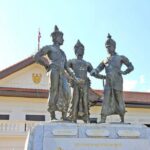
You meet at Three Kings Monument (right by Prapokklao Road), and the tour returns you to the same meeting point at the end. That makes it easy to fit into your evening plans without a confusing “drop you somewhere else” routine.
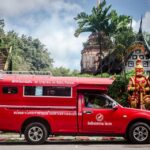
Pickup is offered, and the tour uses private transportation. Reviews mention clean SUVs and smooth transfers, which matters here because you’ll be moving between hilltop temple terrain and two markets in Old Town area streets. In other words: you want this part to be low-stress, and this format usually is.
The tour runs in the early evening window (the listed hours show 4:30 PM–5:30 PM, Monday through Sunday), and the full experience is about 4 hours. Plan to eat on an empty stomach, not on a stomach that’s already half full from your hotel snack run.
Stop 1: Wat Phra That Doi Suthep—how the guide changes what you notice
At Doi Suthep, the visit is short on purpose: about 40 minutes. That’s enough time to walk the key areas, understand what you’re looking at, and still have breathing room for photos and views.
What you’ll get from the guide is the difference between seeing a beautiful temple and actually knowing what’s going on. The tour is led by an in-person English and Thai speaking guide, so you can follow the story while you’re standing in the middle of it. In reviews, guides such as Sunny and Coco come up again and again for being friendly, professional, and good at making the time feel easy.
If you’re thinking like a budget traveler, this is also a smart choice: the temple fee is included, and your entry ticket is included as well. So you’re not juggling cash or missing the start because you’re hunting for the right booth.
Practical note: this part is clearly designed for an evening visit, when it’s cooler and not as quiet as you’d get at dawn, but still noticeably calmer than peak daytime. If you hate rushing through temples, this time frame should feel comfortable.
Stop 2: Chang Phuak Gate (Elephant Gate) night market—your first big tasting
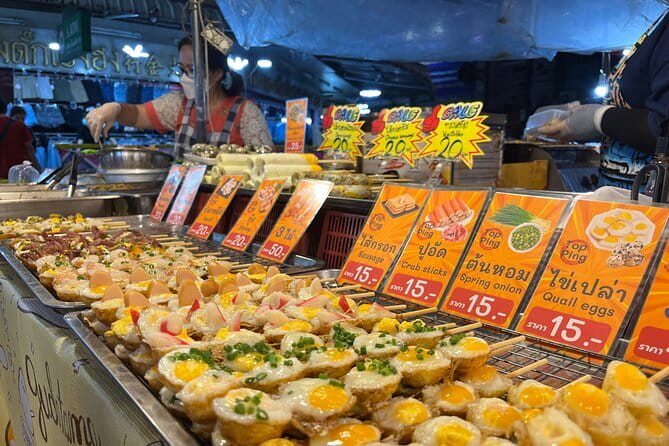
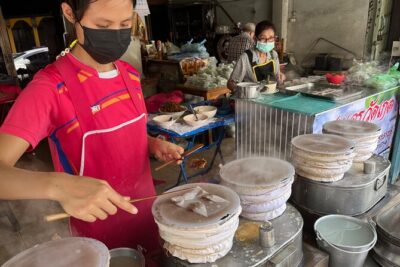
After Doi Suthep, you’ll head to Chang Phuak Gate, also known as the Elephant Gate. This is where your “let’s eat” portion begins in earnest.
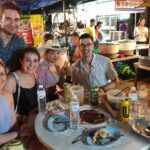
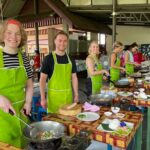
You’ll spend about 1 hour 30 minutes here, and you’ll sample around 6–8 street food dishes. The market component is important for a couple reasons:
First, street food is seasonal and regional. A guide helps you pick stalls that are actively cooking and serving, not just stalls that look pretty. Second, it’s hard to judge what something is based on Thai-only signage. With a bilingual guide, you’re not doing the guess-and-hope game all night.
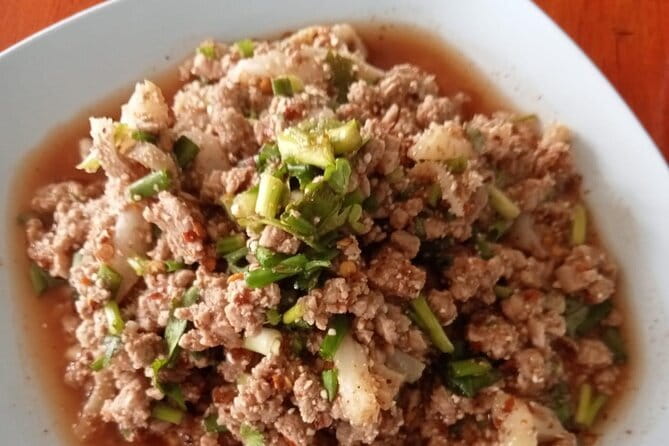
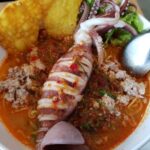
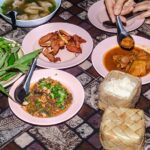
The included dinner style matters too. The tour doesn’t only focus on one category like noodles. Based on the menu details provided, you can expect variety such as:
- soups and salads
- dumplings and vegetable dishes
- curries
- rice-based and noodle-based foods
- coconut-based items
- fruit-based options
- egg-based dishes
- plus meat and seafood selections (with both pork- and chicken-based dishes listed)
Spice levels can vary depending on taste, and dishes can be adapted for allergens if you arranged that ahead of time.
One more practical angle: this stop is a great place to calibrate. If one dish is too spicy for you, you learn quickly which flavors suit you—so the second market feels more confident, not frantic.
Stop 3: Chiang Mai Gate Night Market—another tasting round (and a full belly)
Then comes Chiang Mai Gate Night Market, your second eating stop, also about 1 hour 30 minutes. Here you’ll eat roughly 5–7 different foods.
This is the payoff for booking a guided food tour instead of wandering on your own. By the time you reach Chiang Mai Gate, you’re already warmed up with the first market’s foods and pacing. Your guide keeps the flow moving, and you’re not spending half the night trying to figure out which stall to trust.
You can also expect the same range style of foods as the first market, including soups, curries, rice and noodle dishes, and coconut-based and egg-based items. The tour’s menu details list a lot of categories, and dishes may vary slightly depending on availability—this is normal for street markets, and it usually means you’re eating what’s actually best right now.
If you’re the type of traveler who likes to “sample lots without committing,” this structure is ideal. You get two distinct markets and enough dishes that you should leave with a real sense of Chiang Mai street food—not just a couple of random bites.
You can also read our reviews of more tours and experiences in Chiang Mai
Price and value: why $48.74 can make sense here
Let’s talk money with clear eyes. At $48.74 per person, you’re paying for a package that includes:
- Dinner (a range of local street food dishes)
- Bottled water
- Private transportation
- Insurance
- Temple fee
- Temple admission ticket at Wat Phra That Doi Suthep
- A guide in English and Thai (in person)
- A small group experience (maximum of 8 travelers)
For many visitors, the biggest hidden costs in Chiang Mai street food are transport and guide time. It’s one thing to buy a few skewers. It’s another to get guided access across two markets plus a timed temple stop, all without you having to negotiate rides and pick stalls.
Is it still a lot of eating for one evening? Yes. But that’s also what you’re paying for: dinner, not snacks. And because the food count is structured (6–8 dishes, then 5–7 more), it’s easier to estimate your night.
Also, reviews highlight strong value with comments like worth more than you paid and plenty of food. That lines up with the fact that the tour explicitly includes dinner rather than a token tasting.
Food, spice, and allergies: how to plan so you feel safe
This tour is designed for most people, with an important caveat: it’s not suitable for vegetarians, vegans, halal, or kosher based on the information provided. So if your diet is strict, you’ll likely need a different kind of tour.
For allergies, the tour does give you a way to participate safely—but only if you act early. Some dishes may contain nuts, dairy, shellfish, and gluten, and you’re asked to inform the provider when booking so dishes can be adapted.
Good news: the information provided says the tour is suitable for common allergens including gluten free, dairy free, and nut free. That doesn’t guarantee every single ingredient is perfect for every person, but it does mean there’s a process for adaptation, which is exactly what you want.
Spice level is also part of the planning. Dishes are made with varying spice levels according to taste, which suggests you can request what works for you through your guide during ordering.
My practical advice: when you book, list your allergens clearly and mention whether you need strict avoidance or just “less of it.” That’s the difference between feeling cautious and feeling confident.
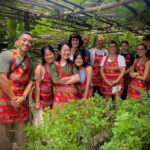
Guides that lift the whole experience: Sunny, Coco, and the rest of the vibe

What makes this tour stand out in the reviews isn’t just the locations—it’s how the guides run the night.
You’ll see names like Sunny and Coco repeatedly. Guests praise them for things like:
- smooth pickup and easy pacing between stops
- good English and clear explanations
- taking care of the group
- knowing how to move through markets efficiently
- helping you get pictures and temple context without feeling rushed
- even providing a reference handout (one review specifically notes this)
One review even describes Sunny as a kind of local connector, with everyone seemingly recognizing him. Whether that’s literal or just how it felt in the moment, the effect is the same: you’re not walking into markets alone.
If you want a food tour where the guide is more than background noise, this one seems to deliver.
Weather and timing: how to handle the sky’s mood
This experience requires good weather. If it’s canceled due to poor weather, you’ll either be offered another date or a full refund (as described in the policy).
But if you do go, keep expectations realistic. One guest described rainy weather and fog and still loved the temple drive and overall atmosphere. So even if conditions aren’t perfect, it can still be a memorable evening—especially because Doi Suthep and the markets are part of the experience either way.
Since Doi Suthep is cooler in the evening, you might also want a light layer. That’s not about luxury. It’s about comfort once the sun drops.
Who this tour is best for (and who should skip it)
This is a strong match if:
- you’re in Chiang Mai for a short stay and want temple + dinner in one outing
- you feel nervous ordering street food on your own
- you want a guided approach across two markets
- you like structured tastings rather than wandering randomly
- you want small-group attention (max 8)
You should probably skip or look for an alternative if:
- you’re vegetarian, vegan, or need halal or kosher options
- you have allergies that require very strict ingredient control and didn’t get adaptation confirmed
- you hate spicy food and don’t want to communicate spice preferences (the tour does mention varying spice levels, but you still need to speak up)
Should you book this Chiang Mai street food and Doi Suthep tour?
I’d book it if you want a practical night plan that feels local but still supported. It covers a classic Chiang Mai temple moment, then turns dinner into a tasting route through two markets. The included transport, the temple fee, the bilingual guide, and the dish count make the value feel fair—not a “pay for a snack and hope” situation.
The only reason not to book is fit: diet limits (no vegetarian/vegan/halal/kosher) and allergy planning. If your needs match what the tour can adapt for, it’s an easy yes.
If you’re celebrating a first trip to Chiang Mai, this tour is also a smart “get your bearings fast” style outing. You’ll leave knowing what to seek on your own during the rest of your trip.
FAQ
What time does the Chiang Mai Doi Suthep and street food tour run?
The listed opening hours are Monday through Sunday from 4:30 PM to 5:30 PM. The tour duration is about 4 hours.
Where do I meet, and where does the tour end?
You start at Three Kings Monument. This activity ends back at the same meeting point.
Does the tour include hotel pickup?
The tour information says pickup is offered, and it uses private transportation.
How long is each main stop?
Wat Phra That Doi Suthep is about 40 minutes. Chang Phuak Gate (Elephant Gate) is about 1 hour 30 minutes, and Chiang Mai Gate Night Market is about 1 hour 30 minutes.
What’s included in the price?
Included are dinner (street food dishes), bottled water, private transportation, insurance, temple fee, and an English and Thai speaking guide. The Doi Suthep admission ticket is included too.
Can they accommodate allergies?
Some foods may contain nuts, dairy, shellfish, and gluten. You should inform them when booking so dishes can be adapted. The tour states it can accommodate common allergens including gluten free, dairy free, and nut free, but it’s not suitable for vegetarians, vegans, halal, or kosher.