REVIEW · CHIANG MAI
4 highlights: Sticky Waterfall/Elephants/local market /Wat Banden
Book on Viator →Operated by Untouched Thailand · Bookable on Viator
Monks, waterfalls, and temple calm, in one morning. I like the early alms-giving moment because it shows daily Buddhist life in a direct, respectful way, with a guide who can explain what you’re seeing. I also love the sticky waterfall portion, where you walk through the falls and end up in that silly-fun, water-massage vibe. One heads-up: this is an early start, so Chiang Mai mornings can feel chilly and you’ll need to be ready for that pace.
The rest of the day is yours after the core program. You’ll also move with a small group (max 12) and get round-trip hotel transfer, which helps keep the day smooth and the vibe more personal. Guides you may meet on this route include Pon, Tu, Handsome Tom, and James, and many are described as having strong Buddhist and temple context to share.
In This Review
- Key highlights you’ll feel in your day
- A monk-morning start that actually makes sense
- Getting to the sites without the stress: hotel pickup and small-group pace
- Alms-giving and temple time: what to expect from the early routine
- Sticky waterfall: the walk, the water pressure, and the Thai-massage vibe
- The local market for insects: real street food culture, up close
- Elephant sanctuary visit: how to make the stop meaningful
- Wat Banden: Chiang Mai’s spiritual temple stop
- Lunch and the small extras that keep the day comfortable
- Elephants, temples, and waterfalls for $65: does it feel worth it?
- Who this tour suits best (and who should skip it)
- Should you book it? My straight answer
- FAQ
- How long is the tour, and is there free time afterward?
- What are the main stops on this experience?
- Is hotel pickup and drop-off included?
- How big is the group?
- What’s included in the price?
- What isn’t included?
- Do I get a ticket for entry?
- What’s the cancellation policy?
- Is the tour accessible for everyone?
Key highlights you’ll feel in your day
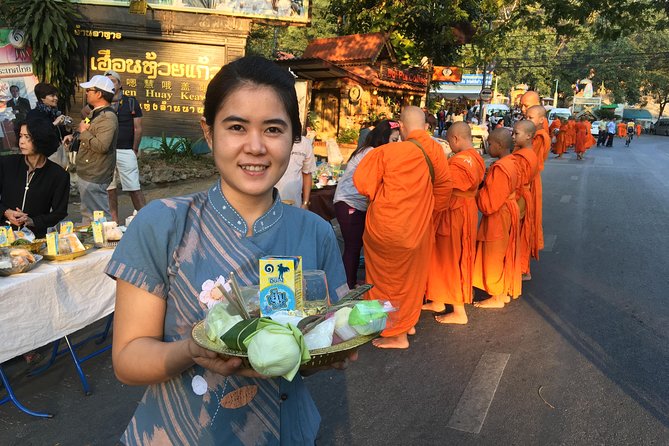
- Dawn alms-giving for a real look at monk routine (not just sightseeing photos).
- Sticky waterfall walking + waterfall Thai-massage-style fun with locals and visitors.
- Local market stop where you’ll see stalls selling bugs, worms, and insects.
- Elephant sanctuary visit as part of the same morning/temple circuit.
- Wat Banden (temple time) that’s celebrated as beautiful, with a spiritual focus.
A monk-morning start that actually makes sense
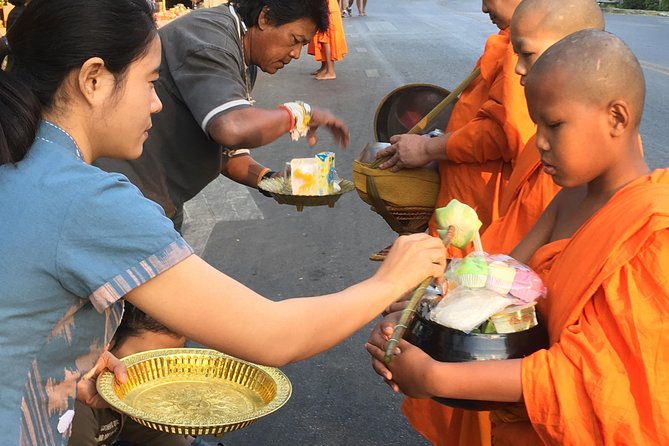
This tour is built around a simple idea: if you want to understand Buddhism in Chiang Mai, don’t just visit temples at mid-day when everything looks staged. You start early and join the flow of the day—first with the monk alms ritual, then with temples and cultural stops that explain what you’re seeing as you go.
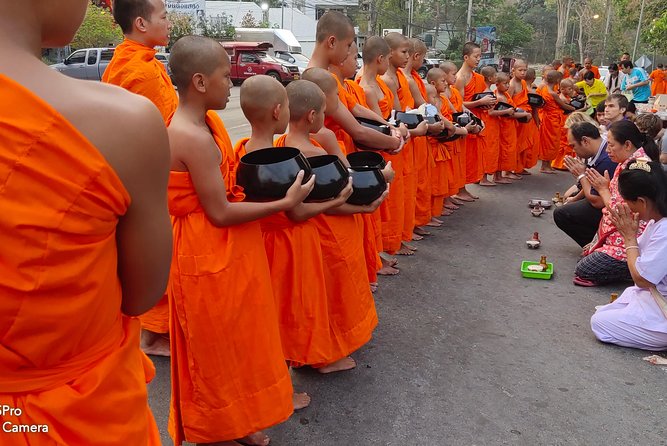
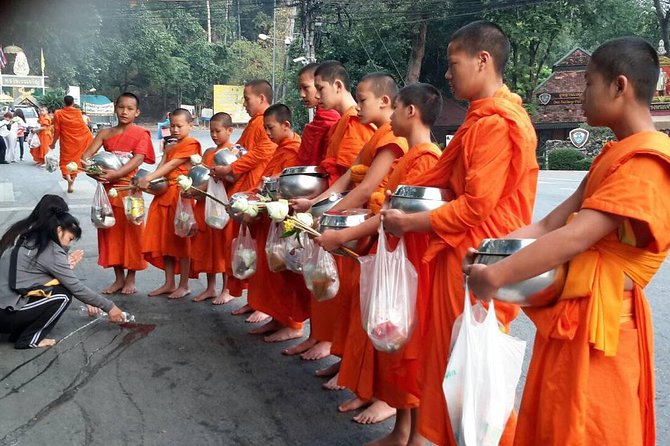
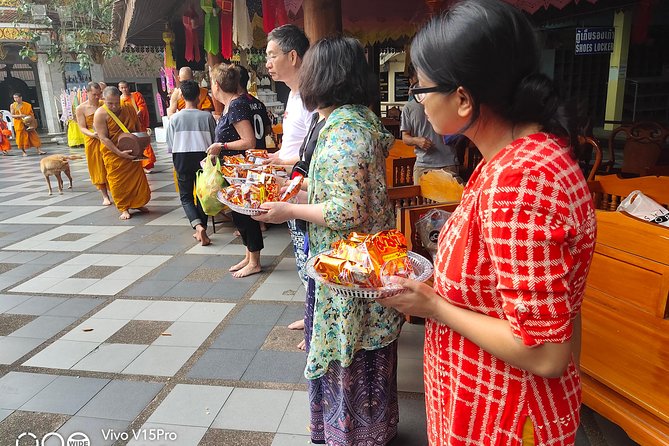
The alms-giving part is the heart of it. You’ll be up before the city fully wakes, and you’ll watch how people prepare offerings and how monks receive them. It’s not complicated, but it does ask for a respectful mindset. When a guide has a strong background (some guides on this program are described as having been monks themselves, like Tu and Handsome Tom), your questions get answered in plain English, and you waste less time guessing.
You also get the benefit of timing. Early temple hours often feel calmer, so you can pay attention without rushing. If you’re the type who likes meaning over checklists, this structure fits you.
You can also read our reviews of more shopping tours in Chiang Mai

Getting to the sites without the stress: hotel pickup and small-group pace
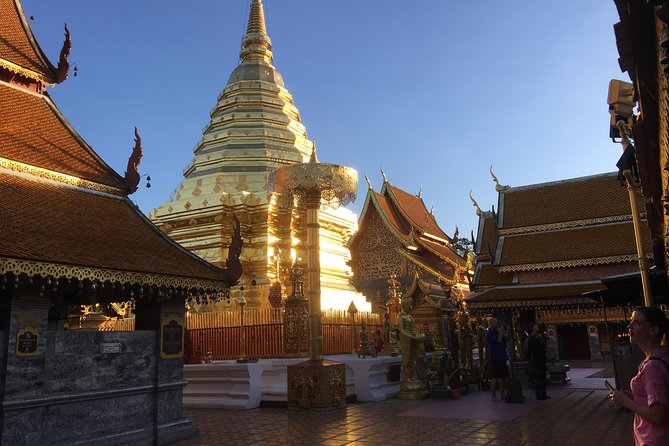
Logistics matter on tours like this, and the basics are handled for you. Round-trip hotel transfer is included, and the group size stays small—up to 12 people. That matters because the day mixes early rituals with active spots like waterfalls, where you don’t want to spend your time herding everyone through buses and parking lots.
You’ll also have a mobile ticket, which keeps things easy on arrival. The vehicle setup described in guide experiences tends to be comfortable and spacious, so the ride doesn’t feel like a cramped scramble before you’re out doing walking and temple time.
Duration is about 7.5 hours total, but the core tour is closer to around 5 hours. That means you’re not locked into one long, exhausting stretch of guided content. You get a real chunk of free time after, which is ideal if you want to grab your own lunch later, browse markets, or just rest.
Alms-giving and temple time: what to expect from the early routine
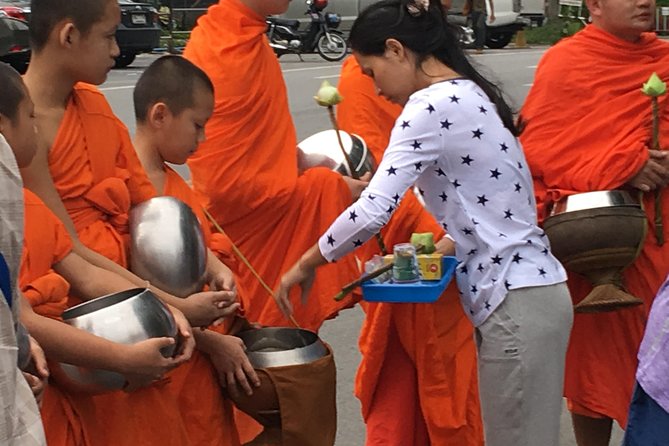
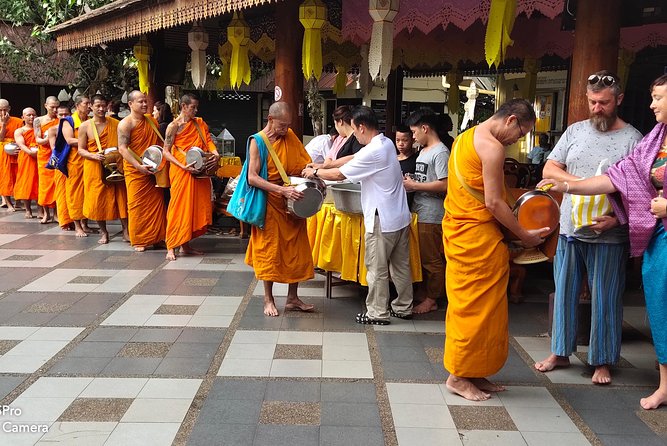
This is the part that turns the day from fun tourism into cultural understanding. You’ll experience Thai monastic life in the most direct way this tour allows: by participating in the alms-giving ritual at dawn, then continuing with temple visits.
A key practical point: early mornings in Chiang Mai can be cool. The tour has that “get going early” rhythm, so dress in layers you can peel off later. You’ll be outside, you’ll be walking, and you’ll want to feel comfortable from start to finish.
Temple stops are not presented as one famous building and done. Instead, you’ll see both well-known and quieter temples that you might miss if you were planning alone. The guide role is big here—because the temples aren’t just shapes and gold paint. You’re learning what parts of temple life mean, and why people come when they do.
Many guides connected with this program are described as very strong on temple history and Buddhist practice context, with clear English. Guides mentioned in experiences include Pon and James, and several people highlight that the guide didn’t rush. That’s important, because early tours can otherwise feel like a sprint.
Sticky waterfall: the walk, the water pressure, and the Thai-massage vibe
Now for the part where your day shifts gears. The sticky waterfall stop is built around play. You’ll arrive, then walk up and down through the falls. It’s not a “stand behind a railing” photo stop. The falls are the attraction.
The fun here is that you can get into the water and experience that waterfall flow up close. The description includes waterfall bathing and even something like Thai massage done in the waterfalls—basically, using the force of the water in a way that feels like a natural body massage. It’s a little chaotic, in the good way, and it often ends up being the most memorable physical experience of the morning.
Practical advice:
- Bring or use footwear that can handle wet surfaces.
- If you have a dry bag, use it on your phone/camera.
- Expect slippery rocks and plan to move slowly.
Also, this is a tour that couples temples and ritual with an active water stop. That mix is great if you like variety, but if you want a fully relaxed day, you might prefer a more purely temple-based itinerary.
The local market for insects: real street food culture, up close
One of the most striking stops is the local market where you’ll see stalls selling bugs, worms, and insects. This isn’t presented as a horror show. It’s part of everyday food culture and local commerce, and it gives you a snapshot of what people actually buy and how vendors operate.
Even if you don’t eat anything, it helps to go with curiosity rather than judgment. You’ll see how the market is set up, what’s for sale, and how normal the scene feels to the people working there. With a good guide, you’ll understand more than the visuals—like why this food exists in the first place and how it fits local diets.
If you’re squeamish about insects or strongly prefer not to see them at all, this stop could be tough. That said, the market portion is time-limited, and the rest of the day moves on to temples and waterfalls where the mood shifts.
You can also read our reviews of more tours and experiences in Chiang Mai



Elephant sanctuary visit: how to make the stop meaningful
The day includes an elephant sanctuary visit, which is one of the big reasons this tour gets recommended. An elephant stop can be powerful, but it’s also where your expectations matter.
The data you’re given here doesn’t spell out every operational detail of how the sanctuary works on a minute-by-minute basis, so the best way to get the most out of it is simple: ask your guide what the sanctuary focuses on. Even one or two quick questions—about the elephants’ care, routines, or what visitors should and shouldn’t do—can turn the experience from “seeing elephants” into understanding the role the sanctuary plays.
The good news: the tour doesn’t treat this as a random side stop. It’s woven into a bigger cultural morning, so you’re not just collecting animal photos. You’re still in the context of Chiang Mai’s religious life and local routines, which keeps the day coherent.
Wat Banden: Chiang Mai’s spiritual temple stop
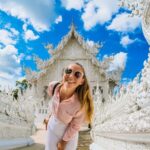
After lunch, the route continues to Wat Banden. This temple is described as beautiful, and compared to the White Temple in Chiang Rai. The difference is the focus: Wat Banden is built for spiritual Buddhist activities.
That matters, because the feel of a temple changes depending on how it’s used. You’re not just there for sightseeing. You’re visiting a place that supports religious practice, so the atmosphere is more about devotion and ceremony than tourist photo angles.
If you’ve only ever seen temples on a classic checklist, this is the kind of stop that helps you notice the human side of religion: people moving with purpose, not just posing. And with a guide, you’ll likely understand the spiritual activities happening there, which makes the whole visit click.
Lunch and the small extras that keep the day comfortable
Lunch is included, and it’s served in the local area with Thai food you can actually taste, not just a convenient tourist meal. That’s a big value point because food is often where tours quietly lose you money.
Drinking water is included too. Drinks aren’t included beyond that, and alcohol isn’t included (though it’s available to purchase). So plan to buy any extras you want separately.
What I’d bring:
- A change of clothes if you’re sensitive to getting wet
- A towel if you tend to feel uncomfortable when you’re damp
- Layers for that morning chill
- Cash or card for drinks you want later
Elephants, temples, and waterfalls for $65: does it feel worth it?
At $65 per person, this tour can feel like good value because the “hidden costs” are handled up front. You’re getting:
- Round-trip hotel transfers
- A local temple guide
- Transportation
- Lunch
- Drinking water
- Fuel surcharge
- Temple-related admissions tied to the stops
Once you add up what you’d pay for a driver, a guide, and lunch separately, the price starts to look fair—especially since the day includes active experiences like the sticky waterfall and a market stop, not just temple entry.
Also, the small group size (max 12) keeps the experience from feeling like mass transit. That matters for comfort, timing, and how much attention you get from your guide during the morning.
Who this tour suits best (and who should skip it)
This is a strong fit if you:
- Like early mornings when they add meaning
- Want temples explained by someone with real Buddhist context
- Enjoy hands-on experiences (waterfall walking and bathing)
- Want variety in one day: monks, market life, elephants, and Wat Banden
You might think twice if you:
- Hate early starts and cold mornings
- Dislike seeing insects or prefer not to visit insect markets
- Want a fully low-energy, rest-only day after booking
The tour works best when you’re open to a day with different moods—quiet ritual, active waterfall fun, and cultural stops in between.
Should you book it? My straight answer
I’d book this tour if you want a morning in Chiang Mai that feels like real life, not just temple hopping. The strongest reasons are the alms-giving plus temple context and the energetic balance of the sticky waterfall experience. The added stops—an insect market and an elephant sanctuary visit, then Wat Banden—make the day feel complete.
If you’re flexible, comfortable with a chilly start, and curious about local food culture (even if you never buy anything), you’ll probably leave with stories you actually remember.
One last tip: if you can, choose the early option. People describe those early starts as calmer at the temple level, and that usually means better focus and fewer time pressures.
FAQ
How long is the tour, and is there free time afterward?
The tour is about 7 hours 30 minutes total. The guided part is around 5 hours, and the rest of the day is free.
What are the main stops on this experience?
You can expect visits connected to the local market (selling bugs, worms, and insects), sticky waterfall activities, an elephant sanctuary stop, and Wat Banden.
Is hotel pickup and drop-off included?
Yes. Round-trip hotel transfers are provided.
How big is the group?
It’s a small group tour with a maximum of 12 people.
What’s included in the price?
Included items are fuel surcharge, drinking water, a local temple guide, transportation, pickup and drop-off at the meeting points, and lunch.
What isn’t included?
Drinks are not included, and alcoholic drinks are not included (they’re available to purchase).
Do I get a ticket for entry?
Yes. A mobile ticket is provided, and admission tickets are included for the relevant stop.
What’s the cancellation policy?
Free cancellation is available up to 24 hours in advance for a full refund.
Is the tour accessible for everyone?
Most travelers can participate, service animals are allowed, and the tour is near public transportation.
If you want, tell me your travel dates and whether you prefer the earliest start or a slightly later one, and I’ll help you decide what to pack and how to time the rest of your Chiang Mai day.