REVIEW · CHIANG MAI
Chiang Rai Tour: Hot Spring,White Temple, Golden Triangle, Yao
Book on Viator →Operated by Asia Advisor by Asni · Bookable on Viator
A day in Chiang Rai can feel like three trips stacked into one. You’ll hit Mae Khachan Hot Spring for Thai-style heat (including a chance to cook eggs) and then glide into the bright, brain-melting look of Wat Rong Khun. I like that the tour is built for real viewing time at each stop, not just photo stops, and I really appreciate the small group size and the guide-led pacing (I had Susi, and she made it fun and easy to follow). One thing to weigh: the day is long (around 12–14 hours) and the most interesting add-ons at the Golden Triangle area cost extra.
You’ll start early, get picked up from your hotel (mostly within the city center), and spend the day bouncing between Thailand’s northern landmarks and border-area viewpoints. The route concentrates on the big-name sights, but it also slows down enough that you’re not rushing through art, temples, and river views.
Below I’ll break down each part of the day, what’s worth planning around, and how this trip fits your style.
In This Review
- Key things I’d plan for
- From 7:00am pickup to a full day of north-Thai icons
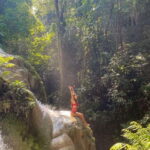
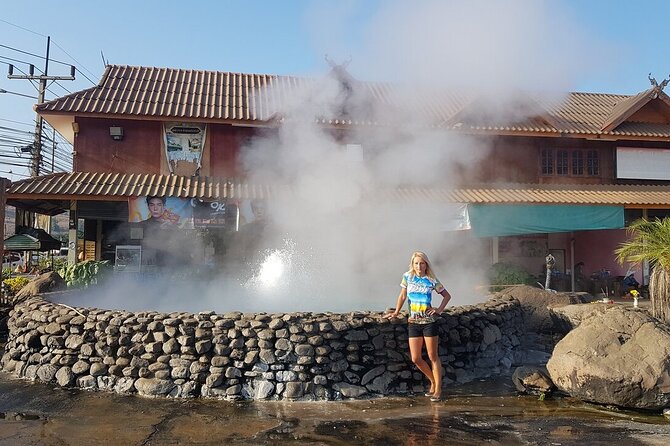
- Mae Khachan Hot Spring: the easiest first win
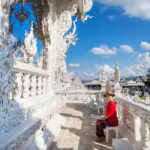
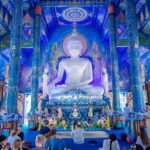
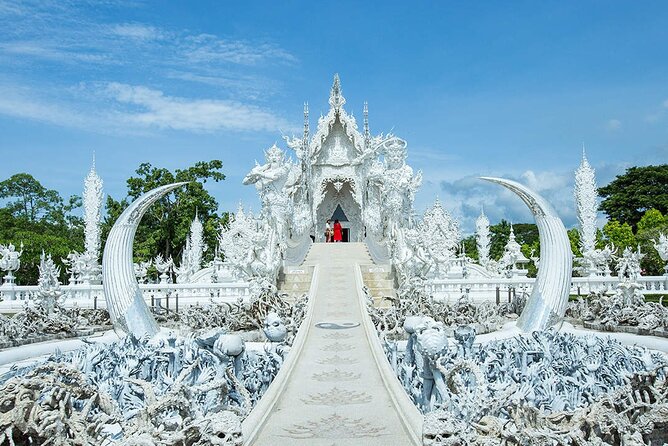
- Wat Rong Khun: White Temple’s glass detail is the whole point
- Golden Triangle & Chiang Saen: border geography with real river context
- Sop Ruak: the triangle “confluence moment” (plus optional boat time)
- Wat Prathat Phu Khao & a hill tribes village stop
- Optional Laos border visit: do you want the crossing feel?
- Lunch, pacing, and why a guide matters on this route
- Cost and value: what your money is really buying
- Getting there comfortably: shoes, passport, and heat management
- Should you book this Chiang Rai hot spring, White Temple, Golden Triangle, and Yao tour?
- FAQ
- FAQ
- How long is the Chiang Rai tour?
- Where do they pick me up in Chiang Mai?
- What’s included in the price?
- Do I need a passport?
- Are the boat ride and Laos border visit included?
- Do I pay for admission to the White Temple and hot spring?
- How big is the group?
- What should I wear?
Key things I’d plan for
- Mae Khachan Hot Spring heat: a stop with restroom and food options, plus egg-cooking using the hot-spring setup
- Wat Rong Khun (White Temple): glass-and-mural detail that rewards slower looking, not just quick photos
- Golden Triangle viewpoints: Thailand’s border geography, focused on the Mekong region and the Ruak–Mekong confluence
- Sop Ruak triangle perspective: optional boat ride across the river views (extra fee)
- Optional Laos border visit: short add-on (extra fee) if you want the feel of the crossing area
- Hill tribes village time: a guided cultural stop that also ties in temple viewing (Wat Prathat Phu Khao)
From 7:00am pickup to a full day of north-Thai icons
This tour starts with a 7:00am pickup, usually right from your Chiang Mai hotel if you’re in the city center pickup zone. If you’re outside that zone, you may pay a pickup surcharge on the day. Either way, your day is designed so you can start without wrestling with transfers.
It’s a long day on the calendar. The drive to Chiang Rai is roughly an hour each way before you begin the main run of stops, and the return trip can take around three hours. That means you should pack for comfort: water, sunscreen, and a way to cover up for temple visits.
You can also read our reviews of more tours and experiences in Chiang Mai


Mae Khachan Hot Spring: the easiest first win
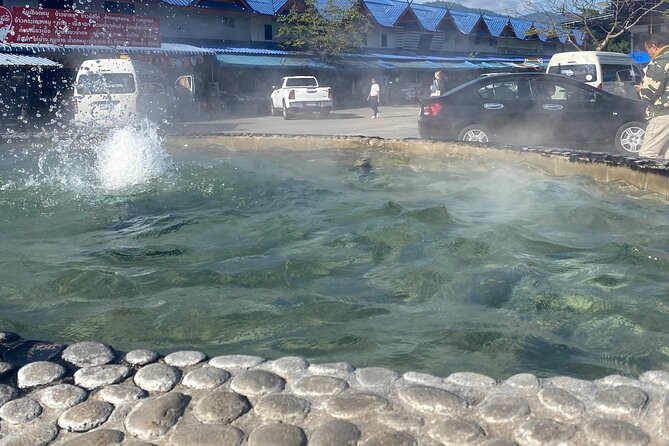
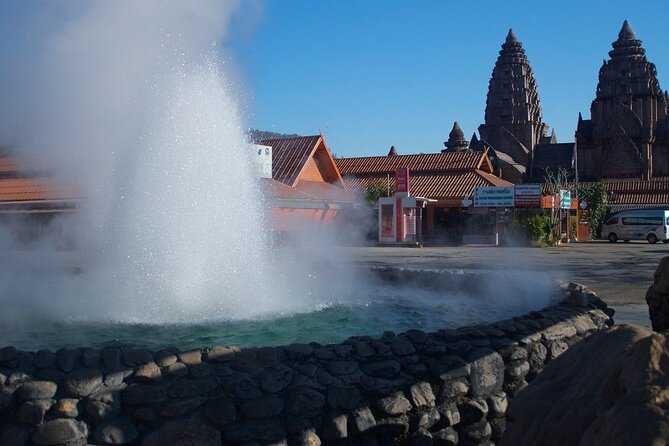
The first major stop is Mae Khachan Hot Spring, which works well as a warm-up for the day. The timing is practical: you arrive with enough energy to look around and not just endure the first stop.
A couple of small details make this stop feel more like a real break than a quick roadside stop. There are toilet and restaurant services on site, so you’re not stuck looking for facilities later. Admission is listed as free here, so you get that cost value early.
One of the most fun ideas at this hot spring area is cooking eggs using the hot-spring heat. That’s the kind of thing you’ll enjoy even if you’re not normally a “hot spring person,” because it’s simple, quick, and a very local-style activity. If you do it, plan to buy your eggs on-site and follow whatever instructions staff provide.
Possible drawback: this is still a hot outdoor stop. If you go in the dry season or a hot month, it can feel more intense than the temples later.
Wat Rong Khun: White Temple’s glass detail is the whole point
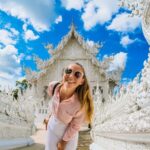
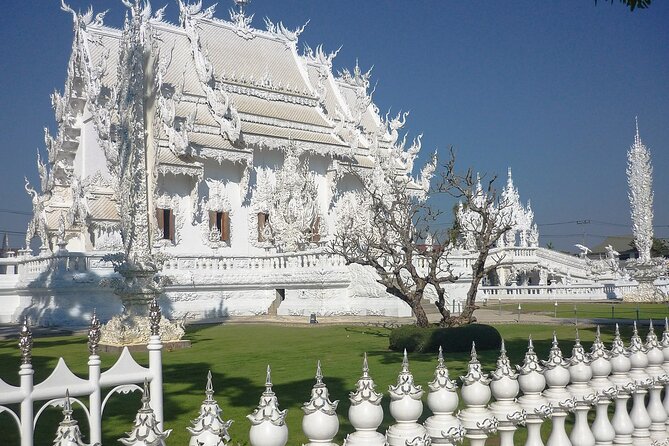
After the hot-spring break, you head to the White Temple: Wat Rong Khun. This is where the day gets visually dramatic. The temple is known for its white structures, plus glass-like decorative elements and sculptural details.
Admission is listed as free for this stop, which is a nice value boost in a day that includes multiple major sights. The best way to experience Wat Rong Khun is to slow down. The murals and the glass-adorned details are the appeal, not the fact that it is simply white.
Expect to spend about an hour here. That’s just about right if you want to walk the grounds, look at the main exterior views, and still have time to notice the smaller design elements. If you rush, you’ll miss what makes the White Temple worth the stop.
Small tip for your visit: wear shoes you can handle on uneven walkways, and keep your camera ready, but take a minute to look without it too. This temple reads like an art installation.
Golden Triangle & Chiang Saen: border geography with real river context
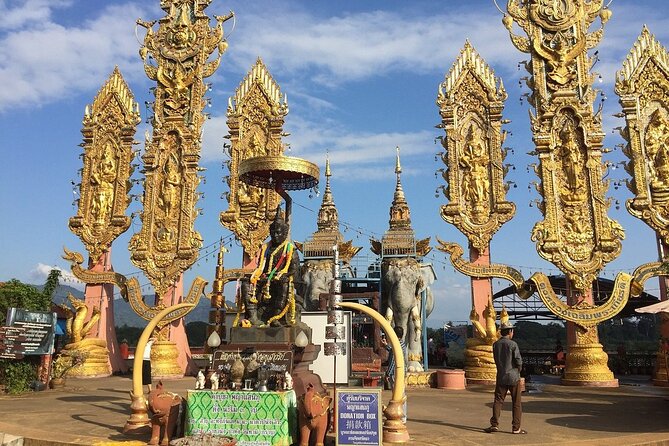
Next comes the Golden Triangle area, described as the frontier region where Thailand borders Myanmar and Laos, shaped by the Mekong River. This part of the tour is valuable because it gives you the “why it matters” of where you’re standing. It’s not only a postcard spot; it’s a real border landscape.
You get lunch break time in this region, and lunch is included. In practice, you’ll want to eat earlier rather than waiting until you’re starving, since your day is packed afterward.
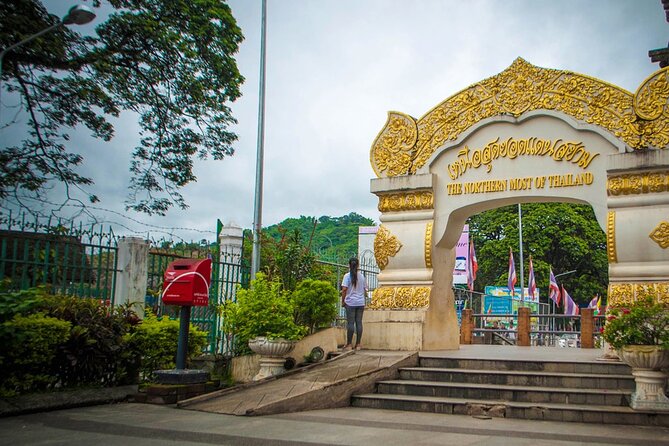
The itinerary also includes Chiang Saen, the northernmost region of Thailand in this route. Think of this as your second viewpoint anchor. You’re building a mental map: where the rivers meet, where the borders sit, and how the area became famous.
Admission for these stops is listed as free, which helps the tour feel like a lot for the price.
Possible drawback: the Golden Triangle area can feel crowded at peak times. The tour’s group format helps you move along with a guide, but you may still deal with other visitors near viewpoints.
Sop Ruak: the triangle “confluence moment” (plus optional boat time)
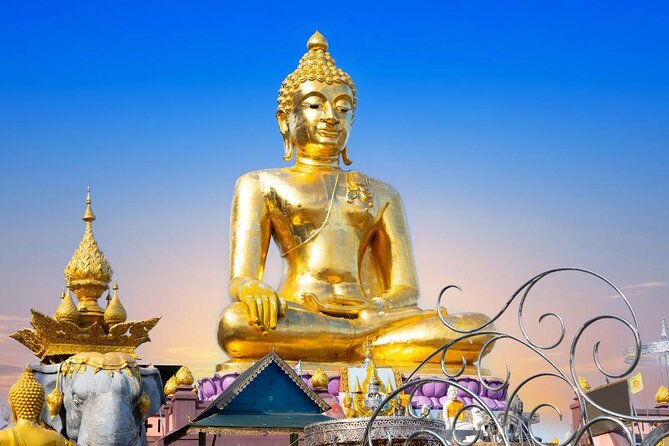
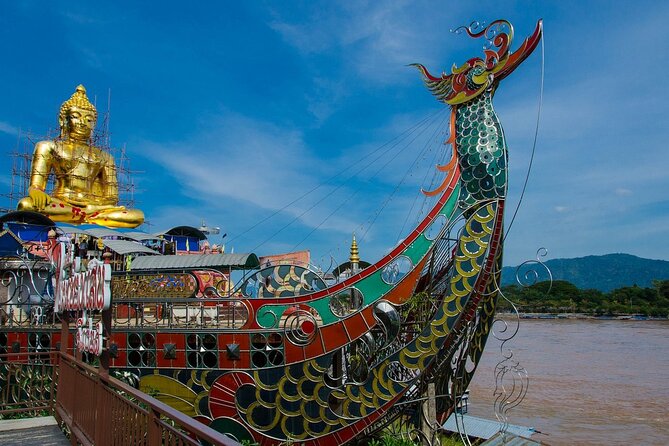
After Chiang Saen, the tour focuses on Sop Ruak, the point centered on the triangle viewpoint created by Burma (Myanmar), Laos, and Thailand at the confluence of the Ruak and Mekong Rivers. This is where the story becomes spatial: you can actually look out and understand the geography instead of just hearing it.
You’ll get views over the Mae Khong River (as described in the tour information). It’s the kind of scene where you can stand and watch the river for a while and still feel like you’re seeing something new as the angle changes.
Here’s where you’ll see optional paid add-ons:
- A boat ride is available for an extra 300 THB (listed as optional). The boat time is described as around 20 minutes and is meant to give a different look at the river and the border area.
If you like viewpoints, the boat is often worth considering because it changes how the triangle is framed. If you don’t love boats or you’re keeping costs down, skip it and use the time for on-land views and photos.


Wat Prathat Phu Khao & a hill tribes village stop
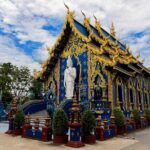
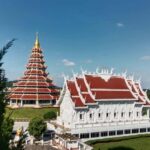
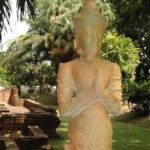
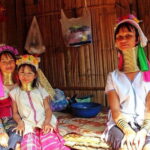
One of the stronger parts of the day is the cultural segment. After Sop Ruak, you’ll visit Wat Prathat Phu Khao and then head to a hill tribes village area for more guided time.
This is where the tour becomes more than temples and viewpoints. Even if you keep expectations realistic, it’s a chance to see how northern Thai cultures live beyond the main city sights.
The tour title also includes Yao, so you can expect the hill-tribe focus to connect with that community theme during the village portion. The exact emphasis can vary depending on the village program you visit, but you’re not just ticking off a landmark—you’re being given context by your guide.
Possible drawback: village visits are often short. It’s enough time to learn basics and understand daily life, but not enough for deep, time-intensive cultural experiences.
Optional Laos border visit: do you want the crossing feel?
The tour includes an optional Laos border visit described as about 35–40 minutes, with an extra 300 THB cost. You’ll also need a current valid passport on the day of travel, which is a key requirement for any border-related portion.
If you’ve been curious about what Laos feels like from the border area, this is the cleanest add-on. If you prefer to keep the day simple, you can skip it and just focus on the Thai side stops.
Lunch, pacing, and why a guide matters on this route
Lunch is included, and in one of the experiences I’ve seen described for this tour style, it’s been a buffet-style meal. That format usually helps on long days because you can eat quickly, choose what works for you, and get back on the road without drama.
The pacing is one of the tour’s strengths. Having an English-speaking driver-guide matters a lot here because you’re moving through regions with different rules, different crowds, and different “how to look” moments. I had Susi, and the trip felt fun because she explained what I was seeing instead of only naming places. That keeps you from feeling like you’re stuck inside a schedule.
Also, the group cap is up to 10 travelers. That’s big enough to meet people, but small enough that your guide can still manage timing and answer questions without the whole day turning into cattle-car logistics.
Cost and value: what your money is really buying
At about $101.07 per person for a roughly 12–14 hour day, the price looks reasonable if you use the inclusions.
What you’re getting includes:
- Hotel pickup and drop-off within the city center zone (city-center area pickup is free; farther pickups may cost extra)
- Air-conditioned minivan transport
- English-speaking driver-guide
- Lunch
- Listed admission for key stops (Mae Khachan Hot Spring and Wat Rong Khun are listed as free; Golden Triangle, Chiang Saen, and other listed viewing elements are included)
Then there are add-ons you can choose:
- Boat ride at Sop Ruak area: 300 THB
- Laos border optional segment: 300 THB
So the value depends on your add-on interest. If you take both optional items, your budget rises a bit. If you keep it to the included sights, you’ll likely feel like you got a lot of big-name stops with minimal hassle.
My practical take: This is a good value for people who want a guided “greatest hits” day without driving themselves, and who don’t mind spending a full day away from Chiang Mai.
Getting there comfortably: shoes, passport, and heat management
This tour is about walking and viewing, not intense hiking. You’ll want comfortable walking shoes since temples and viewpoints can have uneven surfaces and crowded areas.
Bring a current valid passport since the optional Laos border visit depends on it.
Also, expect heat. The hot spring comes early and outdoor viewing continues through the Golden Triangle area. If you’re sensitive to sun, pack sunscreen and a hat.
Finally, since there’s a short window for extras, plan mentally: decide early whether you want the boat ride and whether you’re actually up for the Laos border visit.
Should you book this Chiang Rai hot spring, White Temple, Golden Triangle, and Yao tour?
Book it if you want:
- A single-day, guided overview of Chiang Rai’s top sights
- Time with a guide who helps you understand what you’re seeing
- A small group day (up to 10 travelers) with fewer moving parts
- Included transport, lunch, and key admissions, which reduces decision fatigue
Skip it or consider a different style tour if:
- You strongly dislike long travel days with early starts
- You only want one or two stops and would rather stay flexible
- You don’t want any border-area complexity at all (even though the Laos segment is optional, the passport requirement still matters)
If you’re the kind of traveler who enjoys a well-paced checklist with real context, this tour is an efficient way to get the best of northern Thailand in one shot.
FAQ
FAQ
How long is the Chiang Rai tour?
It runs for about 14 hours approximately, with pick-up at 7:00am and return to Chiang Mai around 20:00–21:00.
Where do they pick me up in Chiang Mai?
There’s free door-to-door pickup in the city center area within a 3 km radius, including spots like the Night Bazaar and nearby central areas. You can also join at McDonald’s at Chiang Mai Night Bazaar. Pickup outside that zone may cost extra.
What’s included in the price?
Included are an English speaking driver guide, hotel pick-up and drop-off, air-conditioned minivan transport, and lunch. Entrance fees for the listed main stops are included (as stated in the itinerary).
Do I need a passport?
Yes. A current valid passport is required on the day of travel, especially because there is an optional Laos border visit.
Are the boat ride and Laos border visit included?
No. The boat ride at the Sop Ruak area and the optional Laos border visit both have extra fees of 300 THB each.
Do I pay for admission to the White Temple and hot spring?
Admission for Mae Khachan Hot Spring and Wat Rong Khun (White Temple) is listed as free in the itinerary.
How big is the group?
The tour has a maximum of 10 travelers.
What should I wear?
Wear comfortable walking shoes. The day includes walking around temples and viewpoints.