REVIEW · CHIANG MAI
Cooking Evening Class Chiang Mai Visit Organic Garden and Market
Book on Viator →Operated by Siam Garden Cooking School · Bookable on Viator
Your dinner starts at the market. This Chiang Mai evening class strings together a local market, an organic garden, and then a real cooking session where you choose your own menu for six dishes.
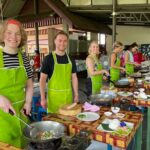
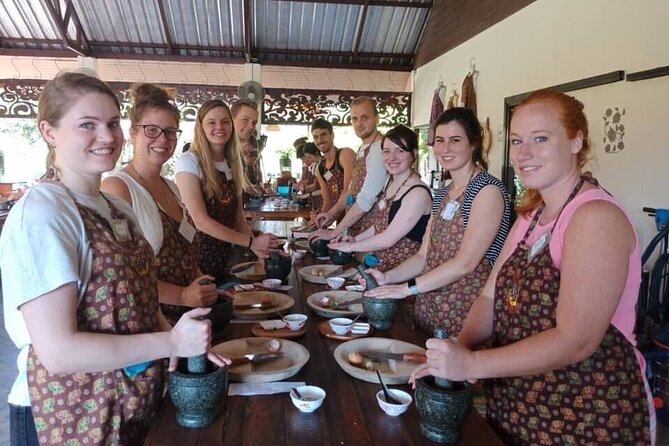
I like how the format is built for action, not watching. You get one person per wok and make curry paste in a mortar, so everyone is cooking instead of waiting.
One thing to consider: the school runs efficiently with ingredients that are partly prepped ahead, so serious home cooks may wish for more technique practice and longer chopping time.
In This Review
- Key things I’d circle before you go
- Market First: Finding Thai Flavors Before the Stove
- Organic Garden Stop: Why the Herbs Matter
- Siam Garden Kitchen: Six Dishes in One Evening (and Yes, You’ll Cook)
- Your Menu Picks: From Curry Paste to Mango Sticky Rice
- Dining Setup: Air-Conditioned Comfort or Garden Air
- Spice Control and Dietary Options That Don’t Kill Flavor
- Price and Value: Why This Feels Cheap for What You Get
- Logistics That Matter: Timing, Group Size, and the Drive
- Who Should Book This Class (and Who Might Skip It)
- Should You Book This Chiang Mai Cooking Class?
- FAQ
- How long is the Cooking Evening Class in Chiang Mai?
- Is hotel pickup included?
- What stops are included besides the cooking class?
- How many dishes will I cook?
- Can I choose a vegetarian, vegan, or gluten-free menu?
- Can I control the spice level?
- Where will we eat the food we cook?
- What do I get for recipes after the class?
- What if weather is poor?
- Can infants or non-cooking visitors join?
Key things I’d circle before you go
- Market + garden first: You learn what’s in Thai cooking before you start cooking it.
- Six dishes, your own choices: Appetizer, curry paste, curry, stir-fried dish, soup, and dessert are all on the menu.
- Hands-on tools per person: One person per wok, and curry paste made per person in a mortar.
- Spice is your call: You can go mild or spicy.
- Two ways to eat: Air-conditioned Thai-style dining room or an open-air pavilion by the garden.
- You leave with recipes: A full-color online recipe book plus online photo albums.
Market First: Finding Thai Flavors Before the Stove
The afternoon starts with a hotel pickup in Chiang Mai Old Town (transport from and to the hotel is included there). Then you head out to the local market, which is where Thai cooking makes sense fast: you see the ingredients as ingredients, not as mystery pantry items.
This market stop is practical. Your guide points out the things that drive flavor in Thai food—common herbs, produce, aromatics, and staples you’ll later use in the dishes. One nice detail from past sessions is that teachers don’t just say what something is. They also explain how herbs in Thailand differ from what many people find back home, which helps you cook with confidence later.
Tip for you: go curious, not hungry. You’ll be tasting and looking, but you’ll still want your appetite for the cooking school meal.
You can also read our reviews of more shopping tours in Chiang Mai


Organic Garden Stop: Why the Herbs Matter
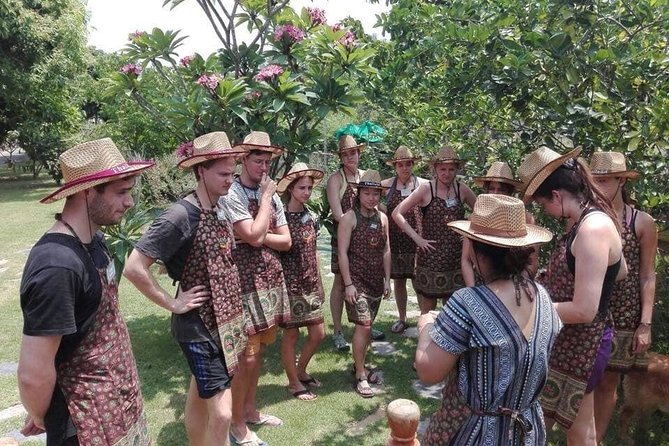
After the market, you move to the cooking school area and then visit their organic garden. The point here isn’t a long nature walk. It’s ingredient education in a setting that feels calm and green—plus you get a clearer idea of what you’re eating and why it tastes the way it does.
In the herb garden area, the staff also tends to connect the plant to the dish. That’s where it clicks: Thai cooking is often about layering flavors with fresh herbs, not just spices. If you’re the type who likes learning what to buy (and how to substitute), this stop is genuinely useful.
One small bonus mentioned by guests: there can be resident dogs around the garden, which adds a playful touch without turning it into a circus.
Siam Garden Kitchen: Six Dishes in One Evening (and Yes, You’ll Cook)

This is a 4.5-hour class built to get you cooking quickly. The schedule has a bit of flexibility depending on your group, but it generally runs from late afternoon into early evening. When you arrive at the school, you’ll start the cooking portion with English-speaking instruction.
Here’s the structure that makes the class work:
- You choose one item for each of six dish categories: appetizer, curry paste, curry, stir-fried dish, soup, and dessert.
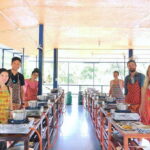
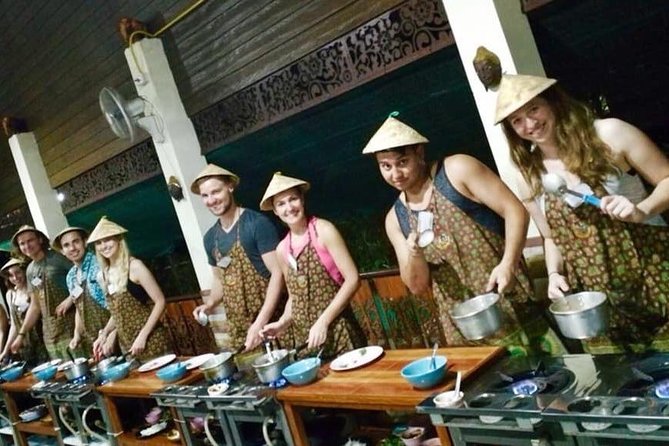
- You cook at your own station: one person per wok, plus curry paste is made one person per mortar.
- The school supports meat, vegetarian, vegan, and gluten-free menus. You need to select the menu when you sign up or on the day of the class.
So instead of everyone making the same thing, you’re personalizing your plate while still following a guided flow. That keeps it fun, and it also means you’re more likely to end up with dishes you actually want to eat again later.
Cooking is also set up for different comfort levels. Even if you’ve never cooked Thai food at home, the class is designed to move step-by-step while staying efficient for the group. You still get hands-on time; you just don’t get a “knife-classes-all-day” experience.
Your Menu Picks: From Curry Paste to Mango Sticky Rice
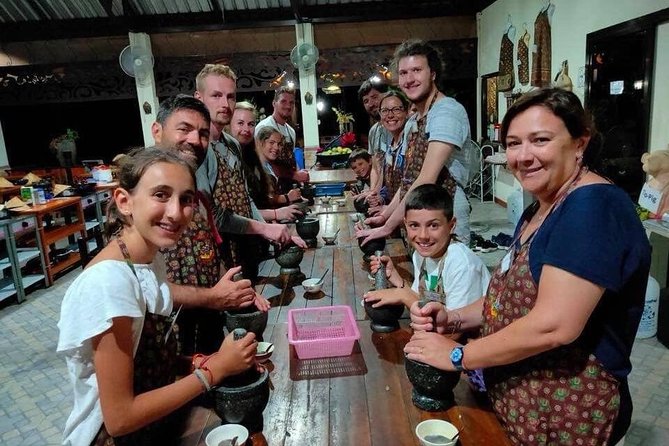
The highlight for many people is the range. You don’t just learn one dish. You learn how Thai flavors connect across the meal.
A few specifics to know:
- Curry paste is part of the learning, not just store-bought shortcuts. You’ll grind it using the mortar method at your station.
- There’s a focus on Thai-style curry and soup flavors, with choices that fit different dietary needs.
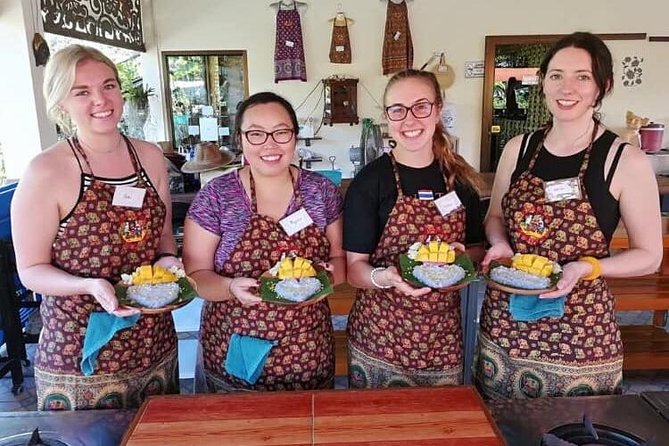
- For dessert, you’ll learn to cook glutinous rice for sticky rice with mango. If you’ve ever wondered why Thai mango sticky rice tastes different from what you can buy elsewhere, this is the kind of step that matters.
From the class experience, the staff often keeps the tone light and upbeat. Names that come up often include Gift as a lead host/cooking master, with additional friendly help from instructors like Fon/Fonnie, plus team members such as Mint, Dao, and Ploy. If you’re hoping for a class where people are actually engaged with you (not just reciting directions), this team style is a big part of what makes the evening feel warm.
Dining Setup: Air-Conditioned Comfort or Garden Air
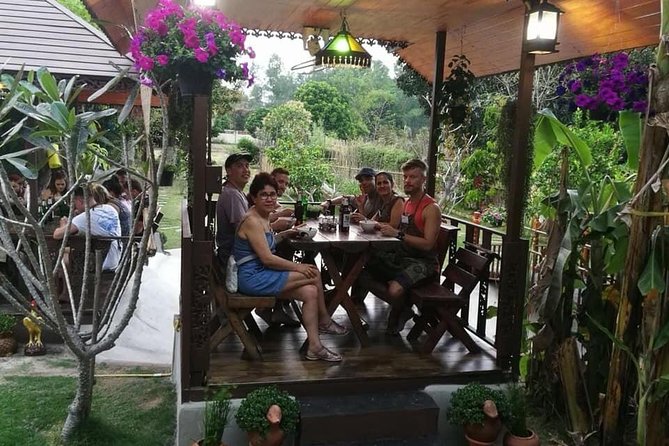
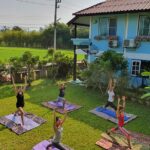
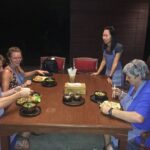
When you’re done cooking, you eat what you made—no packing up required unless you want leftovers. You can eat in an air-conditioned Thai-style dining room, or you can dine open-air in a garden pavilion.
This is more than a small detail. Thailand heat can make the second half of an activity tiring. Having the choice means you can match your mood: cool and comfortable for the indoor route, or relaxed and scenic outside if you feel like lingering.
Either way, you’ll be full by the end. Six dishes add up fast, and part of the value here is that you don’t just “learn” and then leave hungry. You actually get a full meal out of the effort.
You can also read our reviews of more tours and experiences in Chiang Mai



Spice Control and Dietary Options That Don’t Kill Flavor
Thai cooking is famous for spice, but this class gives you control. You can make your food spicy or mild, which is a smart approach if you’re traveling with a mix of heat tolerance.
Dietary needs are also handled. The school offers selectable menu options, including vegetarian, vegan, and gluten-free, and they’ll accommodate people with allergies based on the options available. The key here is you don’t just get an “odd swap.” Your choices are integrated into the six-dish structure, so the meal still feels like a complete Thai menu.
If you’re cooking gluten-free or vegan, your best move is simple: tell staff clearly during selection so you don’t end up with last-minute changes.
Price and Value: Why This Feels Cheap for What You Get
At about $13 per person, this class is priced for real value. The big reason it feels like a bargain is that you’re getting the whole package:
- pickup in Chiang Mai Old Town
- market and organic garden visits
- ingredients included
- English-speaking instructor support
- one person per wok and mortar learning for curry paste
- food you cook and eat
- a full-color online recipe book and online photo albums
- free Wi-Fi
Many cooking classes cost more because you pay for brand or atmosphere. Here, the focus is on practical food learning. And because you cook six dishes instead of one or two, you leave with a “what to cook next time” plan, not just one recipe.
Do note: one guest mentioned efficiency prep can mean some ingredients are pre-made. That’s normal for an evening class with multiple dishes and a shared schedule. If you’re expecting a slow, restaurant-style apprenticeship, you might find it too fast. But if you want results—plus real flavor—you’re in the right place.
Logistics That Matter: Timing, Group Size, and the Drive

The class runs in the evening window, starting around 2:30 pm pickup and ending around 7:30 pm. That timing works well if you want to see Chiang Mai during the day, then do something hands-on later.
Group size is kept small, with a maximum of 15 travelers. In a smaller group, it’s easier for instructors to check in and keep the rhythm. The experience is designed to be interactive without falling apart.
One caution: transportation time can vary depending on where you’re staying. Even with pickup included within Old Town, you might have a bit of a ride before the market and school. It’s worth factoring in if you’re sensitive to travel time.
Who Should Book This Class (and Who Might Skip It)
This cooking evening class is ideal for:
- first-time Thai food learners who want a solid base
- travelers who like hands-on activities with clear structure
- people who want a full meal at the end, not just a demo
- anyone who wants recipe support via a full-color online book
You might think twice if:
- you want long, technical instruction on knife skills and cooking methods
- you’re an experienced home cook looking for a very “hands on from scratch” session
- you expect zero pre-prep at all (the school needs efficiency for six dishes)
The sweet spot is someone who wants to learn Thai flavors quickly, cook multiple dishes, and go home with recipes that actually match what you ate.
Should You Book This Chiang Mai Cooking Class?
Yes, if you want the best kind of travel souvenir: dinner knowledge you can repeat. For the price, the class gives you a full flow—from market to garden to cooking to eating—with your own stations and six dishes. The teaching style (with names like Gift and helpers like Fon/Fonnie, Mint, Dao, and Ploy) tends to keep the mood friendly, and that matters when you’re learning by doing.
If you’re an advanced cook who lives for technique drills, you might want a different kind of course. But for most travelers, this is one of the smarter ways to spend an evening in Chiang Mai: learn Thai ingredients in context, cook what you see, then eat it while it’s fresh.
FAQ
How long is the Cooking Evening Class in Chiang Mai?
The class runs for about 4 hours 30 minutes, and it typically starts with pickup around 2:30 pm and ends around 7:30 pm.
Is hotel pickup included?
Yes. Transport from and to the hotel is included in Chiang Mai Old Town, and pickup is offered.
What stops are included besides the cooking class?
You’ll visit a local market and an organic garden before cooking.
How many dishes will I cook?
You’ll cook six dishes: one appetizer, one curry paste, one curry, one stir-fried dish, one soup, and one dessert.
Can I choose a vegetarian, vegan, or gluten-free menu?
Yes. Options for meat, vegetarian, vegan, and gluten-free menus are available, and you should inform the staff during menu selection on the day of the class.
Can I control the spice level?
Yes. You can make your food spicy or mild.
Where will we eat the food we cook?
You can eat in an air-conditioned Thai-styled dining room or eat open-air in a pavilion by the garden.
What do I get for recipes after the class?
You receive a full-color online recipe book, plus online photo albums.
What if weather is poor?
The experience requires good weather. If it’s canceled due to poor weather, you’ll be offered a different date or a full refund.
Can infants or non-cooking visitors join?
The note says visitor and infant is not available. Non-participant visitors’ fees (for those accompanying someone) are not included.