REVIEW · CHIANG MAI
Morning Cooking Class in Traditional Pavilion with Beautiful Garden – Chiang Mai
Book on Viator →Operated by Oh-Hoo · Bookable on Viator
That first spoonful starts with a market plan. This morning class in Chiang Mai mixes a market browse, organic farm chores, and hands-on Thai cooking in tranquil garden pavilions. You shop for the flavors, harvest ingredients, and then cook three dishes with step-by-step help in a small group.
I like two things most. First, you get real ingredient context before you cook, starting with how to pick and use key Thai staples at the local market. Second, the farm part is hands-on, including learning about Thai herbs and veggies and doing activities like harvesting mushrooms and collecting chicken eggs.
One drawback to consider: pickup can be offered, and there’s at least one report of a missed transfer. If you’re counting on pickup, I’d plan to be able to reach Tha Phae Gate on your own just in case.
In This Review
- Key points to know before you go
- From Tha Phae Gate to a Garden Pavilion: how the morning flows
- The local market stop: learning what makes Thai food taste right
- Organic farm time: mushrooms, eggs, herbs, and the real work of flavor
- Cooking your way through Tom Yum, Pad Thai, and curry choices
- Why the station setup and pavilion setting matter
- Food you eat on the clock: soups, stir-fry, curry, and mango sticky rice
- Price and value: is $50.50 worth four hours of market and cooking?
- A practical drawback: pickup issues and how to protect your schedule
- Should you book this Chiang Mai morning cooking class?
- FAQ
- Where is the meeting point for the cooking class?
- What time does the class start and how long does it last?
- Is pickup included?
- What dishes will I cook?
- How big is the group?
- What happens if the weather is bad?
Key points to know before you go
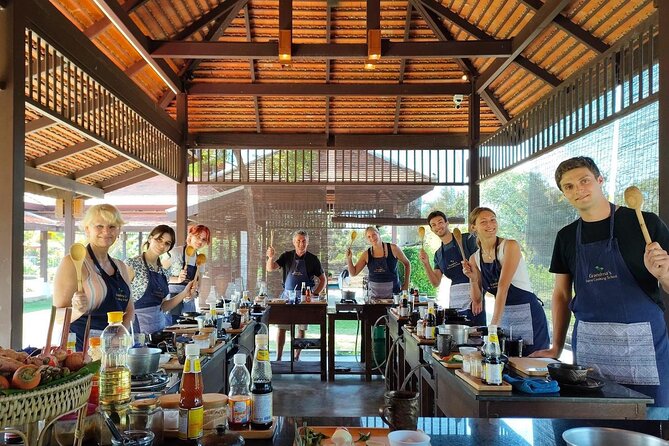
- Small group (max 8) with an individual cooking station, so you’re not stuck watching
- Market + organic farm ingredients first, then cooking, so flavors make sense
- Three cooked dishes plus dessert served, with options from Tom Yam, Tom Kha, Pad Thai, green curry, red curry
- Thai-style pavilions in a garden setting, which keeps the morning calm even when you’re busy cooking
- Menu can change by season and ingredient availability, so expect some flexibility
- Good weather matters for this experience to run
From Tha Phae Gate to a Garden Pavilion: how the morning flows
The tour starts at 9:00 am at Tha Phae Gate on Tha Phae Road, and it ends back at the meeting point. It runs about four hours, which is just enough time to shop, work the farm a bit, and cook without feeling like you lost your whole day.
If pickup is offered for your booking, it can be convenient—especially if you’re staying a bit farther out. Still, the meeting point is not optional in practice, so I’d treat Tha Phae Gate as your backup anchor. The class description says it ends back where it started, so you can plan the rest of your day without guessing.
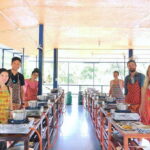
The group size is capped at 8 travelers, which is a big deal for a cooking class. With that setup, you get your own station and you can ask questions while you cook, instead of shouting across a kitchen to be heard.
You can also read our reviews of more cooking classes in Chiang Mai
The local market stop: learning what makes Thai food taste right
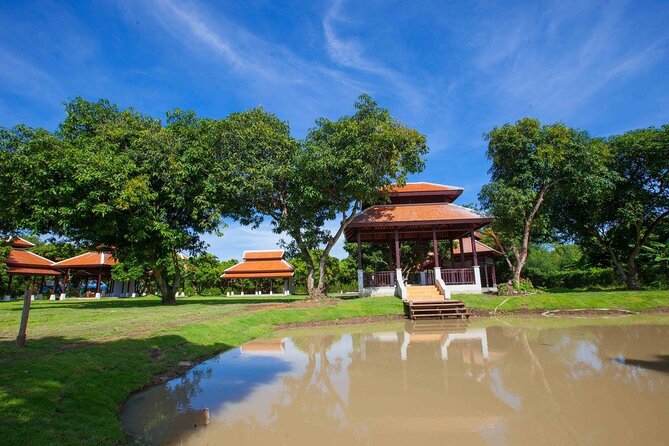
The morning begins with a local market visit, guided by instructors who explain basic ingredients used in Thai cuisine. This is where you learn more than names on a list. You get tips on how to select ingredients, which makes the recipes feel practical instead of mysterious.
What I like about this part is the cause-and-effect: when you later cook something like Tom Yam or green curry, you’ll know what role the aromatics play and why certain ingredients matter more than others. The instructors also introduce the ingredients you’ll see again at the farm, so you start building a mental map of the flavors.
If you’re the type who normally eats Thai food and thinks, I like it, but why, this market step helps you answer that for yourself. You don’t need to be a food expert to benefit. The class is structured for regular people who just want better results in their own kitchen later.
Organic farm time: mushrooms, eggs, herbs, and the real work of flavor
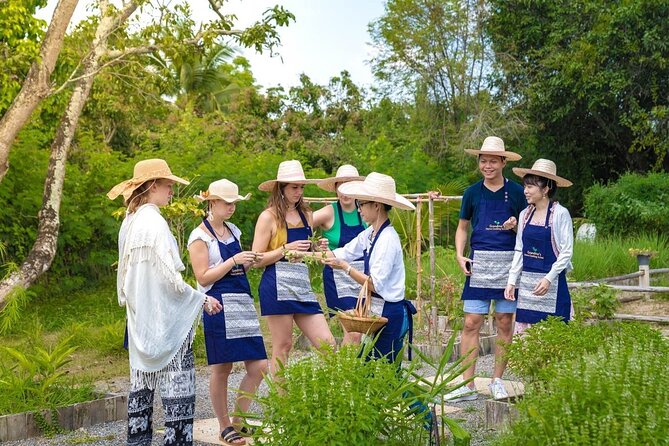
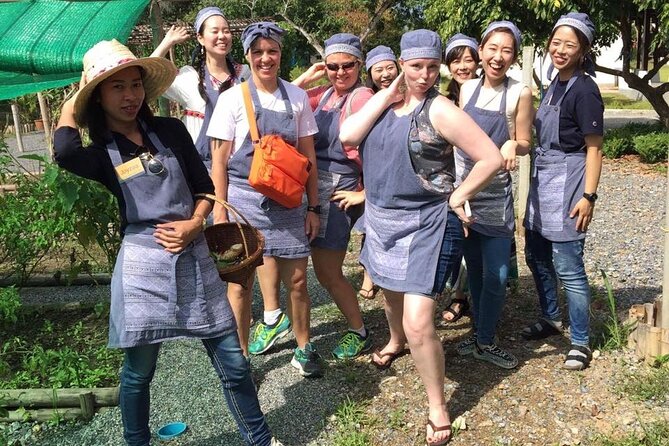
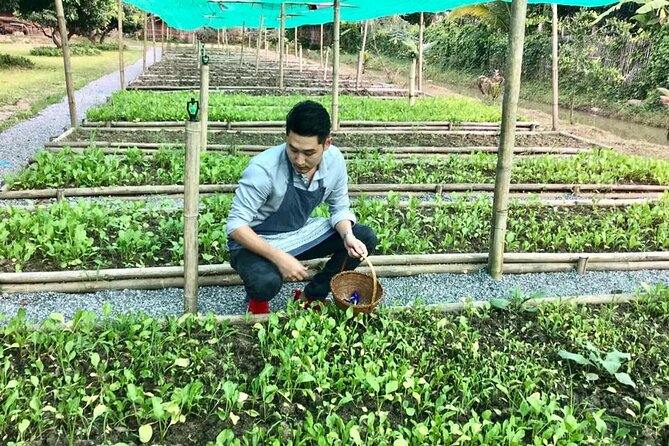
After the market, you head to the organic farm, where the day shifts from shopping to doing. The farm portion is focused on Thai herbs and vegetables, and you’ll also get a taste of small-scale farming life.
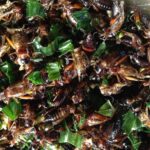
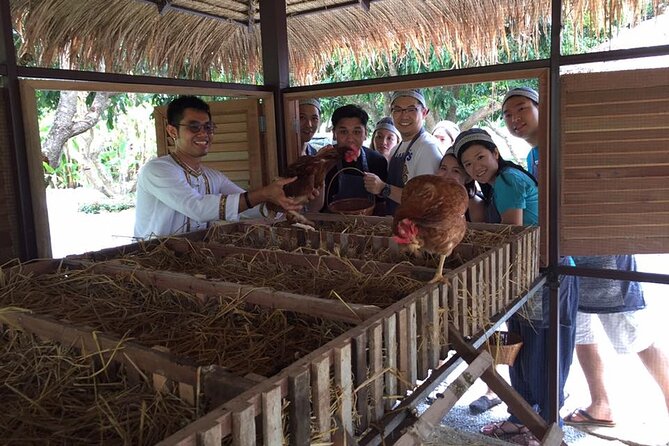
Expect activities like harvesting mushrooms and collecting chicken eggs. That hands-on time matters because it slows you down. You notice textures, smells, and the difference between a fresh ingredient and one that’s been sitting around too long.
You’ll also spend time learning about herbs and veggies used in Thai cooking. Even if you can’t remember every plant name, you’ll remember what the instructors point out: how herbs add fragrance, how certain greens affect balance, and how veg contributes to body and freshness in dishes like curries and soups.
The cooking itself happens in Thai-style pavilions with a garden setting, and that shift helps. One minute you’re working outside, the next you’re back in a calmer space where it’s easier to focus on technique.
Cooking your way through Tom Yum, Pad Thai, and curry choices
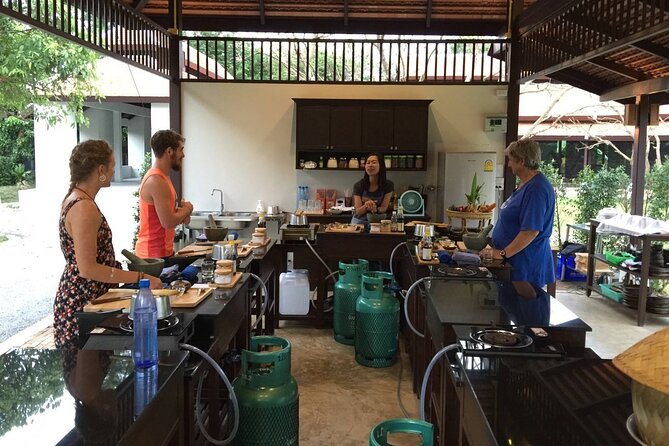
This is the heart of the experience: you cook three dishes. The class uses a step-by-step method where instructors demonstrate first, and then you cook your chosen recipes.
The specific dishes you can end up cooking include options such as Tom Yam (hot and sour soup), Tom Kha (coconut soup), Pad Thai (stir-fried rice noodles), green curry, and red curry. The menu is subject to change depending on season and ingredient availability, so if one option isn’t available that day, you’ll adapt based on what’s offered.
How the selection works in plain terms: you choose from categories that include appetizer, stir-fry, soup, curry, and dessert. In any case, the class states you’ll cook three dishes—one in the soup area, one stir-fry, and one curry—and dessert is served (often listed as mango sticky rice).
Here’s what I think you’ll enjoy most about the way it’s set up. Because you’re cooking, not just tasting, you’ll learn technique: timing, heat control, and how Thai flavors come together. For example, in dishes like Tom Yam or curry, it’s not only about ingredients—it’s also about when they go in and how long they cook.
Also, because it’s a small group with individual stations, you can actually practice. Even if you’re a novice in the kitchen, you’re not waiting your turn in line the whole time.
Why the station setup and pavilion setting matter
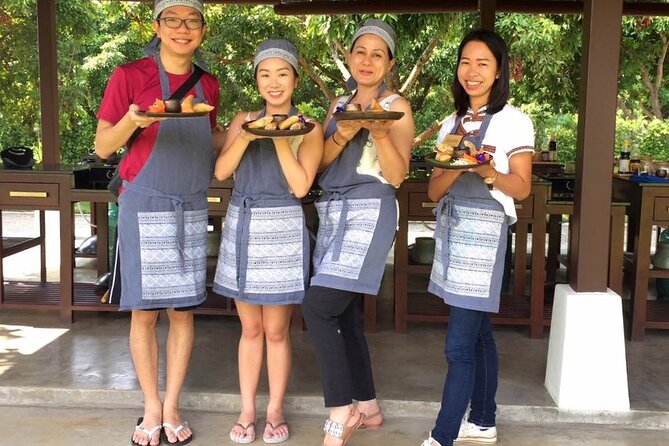
Many cooking classes look fun, but the setup determines whether you learn or just go through motions. Here, the details help.
Each participant gets an individual cooking station, which keeps the pace moving and gives you hands-on time rather than constant observation. And with a maximum of 8 travelers, you’re more likely to get personal feedback during the cook, especially if you’re unsure about a step.
The setting is also part of the value. You cook in Thai-style pavilions surrounded by a garden. One review described the farm and area as aesthetic and clean, which matches the overall feel you want in the middle of a hands-on morning. A comfortable space makes it easier to pay attention to the instructions.
If your goal is to leave with both a full stomach and skills you can repeat at home, this kind of pacing helps a lot.
You can also read our reviews of more tours and experiences in Chiang Mai

Food you eat on the clock: soups, stir-fry, curry, and mango sticky rice
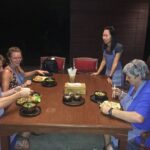
You’re not just cooking and then sending it off. The class is built around eating as part of the experience, so you’ll enjoy what you make.
Expect the class to cover famous Thai dishes such as Tom Yam and Tom Kha for soups, Pad Thai for stir-fry, and green or red curry for curry. Dessert is served, and mango sticky rice is specifically mentioned as the dessert option.
One smart thing about the menu design is that it covers different flavor styles: sour and spicy in Tom Yam, creamy and fragrant in coconut-based Tom Kha, savory-sweet in Pad Thai, and bold, herb-forward flavors in curry. That mix gives you a rounded Thai cooking foundation instead of repeating one flavor profile over and over.
And because you cook three dishes, you’ll walk away with more than recipes. You’ll have a feel for how Thai food balances: sour, sweet, salty, spicy—plus the way herbs and aromatics shift everything.
Price and value: is $50.50 worth four hours of market and cooking?
At $50.50 per person for about 4 hours, this class is priced like a serious half-day experience, not a quick snack-and-demo. You’re paying for multiple components:
- Market visit with ingredient guidance
- Organic farm activities (including harvesting mushrooms and collecting eggs)
- Hands-on cooking at your own station
- Cooking instruction step-by-step
- Dessert served
For many travelers, the value comes from the combination. If you only cooked, you might miss the ingredient “why.” If you only visited a farm, you might miss the technique and recipes. This tour ties both together, and the small group size keeps the learning practical.
Where the value can wobble is if you were expecting a long list of dishes. You cook three mains, and dessert is served. That’s still satisfying, but it’s not a full banquet with endless courses.
Who should book: people who want a morning activity that actually teaches cooking, food lovers who enjoy markets, and travelers who like hands-on experiences more than sitting in a classroom. It’s also a good fit if you’re staying in Chiang Mai for a few days and want one structured cultural-food morning.
A practical drawback: pickup issues and how to protect your schedule
One review report flagged a missed pickup, with the guest waiting about an hour before getting a taxi arranged. That’s not the norm you want, so here’s the practical way to protect yourself:
- Confirm the pickup details before your morning.
- If pickup is offered, still plan to arrive at Tha Phae Gate on time.
- Keep your patience for travel—then keep your options open.
If you’re the kind of person who gets stressed by last-minute uncertainty, this is the one thing you should plan around. The rest of the experience—market learning, farm activities, and the cooking itself—reads strong.
Should you book this Chiang Mai morning cooking class?
I’d book it if you want more than tasting Thai food. The market-to-farm-to-cooking flow helps you understand what you’re eating, and the small group with individual stations makes it hands-on instead of performative.
I’d skip or adjust your expectations if pickup reliability would ruin your day. If you’re fine meeting at Tha Phae Gate and treating pickup as a bonus, you’ll likely feel the value fast—especially once you’re standing over your own stove making soup, stir-fry, and curry.
FAQ
Where is the meeting point for the cooking class?
The meeting point is Tha Phae Gate on Tha Phae Road, Chang Khlan, Mueang Chiang Mai, Chiang Mai 50200, Thailand. The tour ends back at the meeting point.
What time does the class start and how long does it last?
It starts at 9:00 am and lasts about 4 hours.
Is pickup included?
Pickup is offered, and the experience description notes pickup availability. You’ll receive confirmation at booking, and you’ll have a mobile ticket.
What dishes will I cook?
You will cook three dishes, selected from options that include Tom Yam, Tom Kha, Pad Thai, green curry, and red curry, plus dessert served (mango sticky rice is listed as the dessert option). The menu can change based on season and ingredient availability.
How big is the group?
The experience has a maximum of 8 travelers.
What happens if the weather is bad?
This experience requires good weather. If it’s canceled due to poor weather, you’ll be offered a different date or a full refund.