REVIEW · CHIANG MAI
Chiang Mai: Nighttime City Highlights by EV Tram
Book on GetYourGuide →Operated by Touring Center · Bookable on GetYourGuide
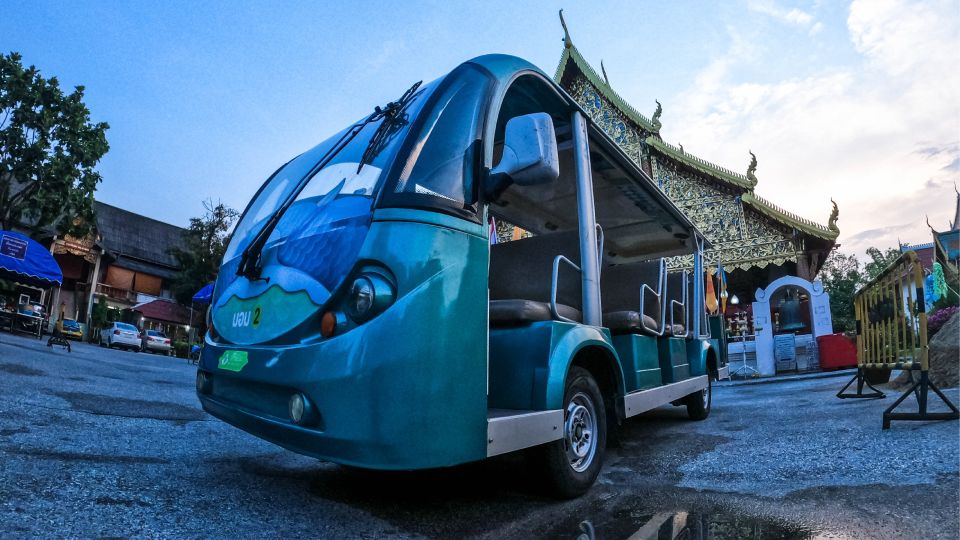
Gliding through Chiang Mai at night sounds like magic. This 2-hour EV tram tour links temples, city gates, and market stops after dark, with an English-speaking guide giving you context as you roll around the old city area.
I love how the ride keeps you comfortable and moving without a long stretch of walking, especially when the evening crowds and traffic get real. I also like the food stop at Chiang Mai Gate Market, where you can try local snacks and get the story behind what you’re eating. One consideration: a few temple stops are brief photo stops or pass-bys, so this is best for a guided overview, not a slow, deep temple day.
In This Review
- Key things to notice before you go
- Why the Electric Tram Makes Chiang Mai Nights Easier
- Starting at Three Kings Monument: Your 6:00 PM Launch Pad
- Moat, Temples, and Gates: How the Tour Shows the City Without Exhausting You
- Wat Lok Moli: When “Old” Becomes Personal
- Wat Pa Pao: A Guided Visit You Can Feel in the Details
- Wat Nong Kham: The Burmese-Shan Temple Style Moment
- Warorot Market and Tha Phae Gate: The In-Between Energy
- Chiang Mai Gate Market: Street Food Snacks With Context
- Wat Chedi Luang and Wat Phra Singh Woramahawihan: Seeing the Big Names Briefly
- Price Check: Is $27 Worth It for a Two-Hour Night Ride?
- Who This Tour Fits Best (And Who Might Want Another Plan)
- Should You Book the Chiang Mai Night Tram Tour?
- FAQ
- What time does the Chiang Mai night tram tour start and finish?
- Where is the meeting point?
- How long is the tour?
- What language is the tour guide?
- What’s included in the price?
- Is hotel pickup and drop-off included?
- Is cancellation free?
Key things to notice before you go
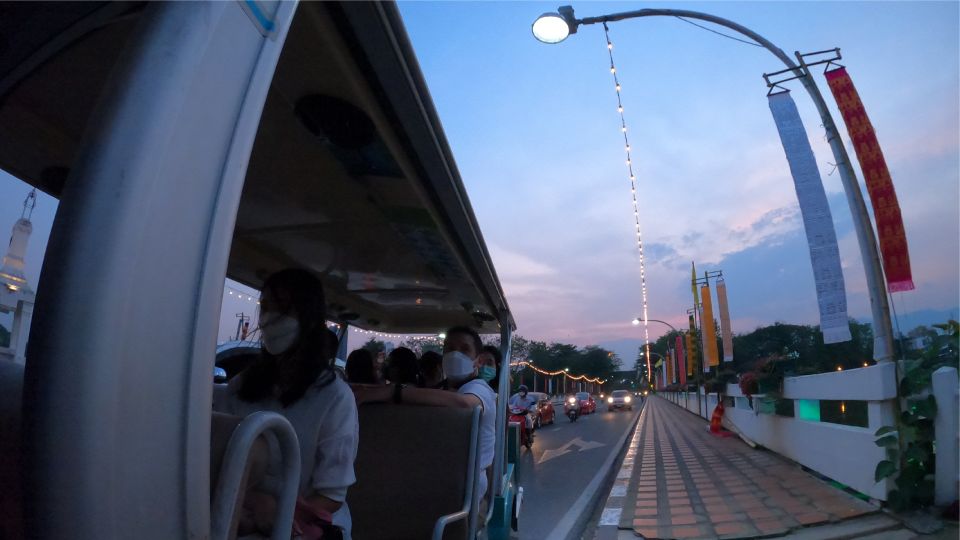
- All-electric tram at night: open-air feel, and you spend more time seeing than getting tired
- English guide with story: you’ll get explanations you’d never guess just by looking
- Old-city route by moat and gates: the evening flow makes the geography easier to understand
- Wat Lok Moli and Wat Nong Kham: two standout temples with very different vibes
- Chiang Mai Gate Market snacks: a guided street-food moment, not just random wandering
- Wat Chedi Luang scale: even quick stops help you grasp why this place matters
Why the Electric Tram Makes Chiang Mai Nights Easier
Chiang Mai at night can feel like two things at once: beautiful and slightly chaotic. The best part of doing it by EV tram is that you get the beauty without the constant stop-start walking.
The tram runs quietly and smoothly enough that you can relax, listen, and look around. You’re not stuck in a full-quiet bus either—you’re outside-looking-in for the key sights, so the evening atmosphere still reaches you.
This tour also makes sense if you’re new to the city. Instead of trying to map temples and markets one by one, you’re guided along the old-city circuit, so you start to recognize landmarks fast.
You can also read our reviews of more city tours in Chiang Mai
Starting at Three Kings Monument: Your 6:00 PM Launch Pad
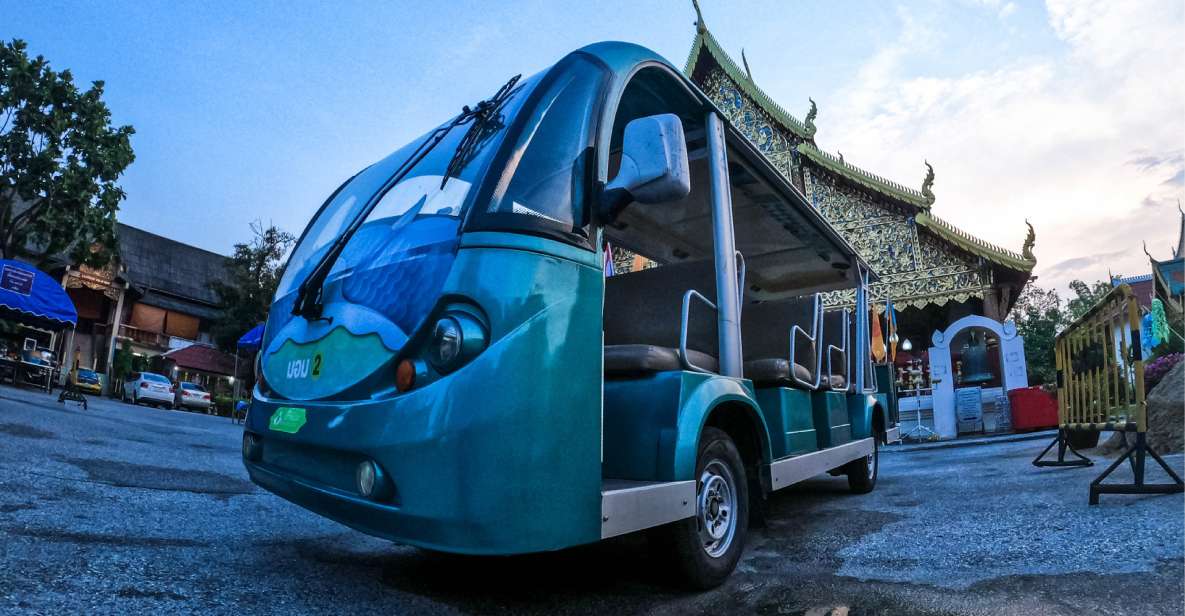
The tour meets at Three Kings Monument (พระบรมราชานุสาวรีย์สามกษัตริย์). You’ll meet a guide in a white shirt with the Touring Center logo, then get a short orientation and a brief setup for what you’ll see later around the moat area and city gates.
That first stretch matters more than it sounds. Chiang Mai’s old-city layout can be confusing if you arrive cold. Getting a quick narrative about how the city grew and how the gates and temples connect helps everything click once the tram starts moving.
You’ll also start early enough that you’re not rushing through darkness at the very end. The tour window runs about 6:00–8:00 PM, which is long enough to feel like you did something, but short enough that you won’t lose the whole evening.
Moat, Temples, and Gates: How the Tour Shows the City Without Exhausting You
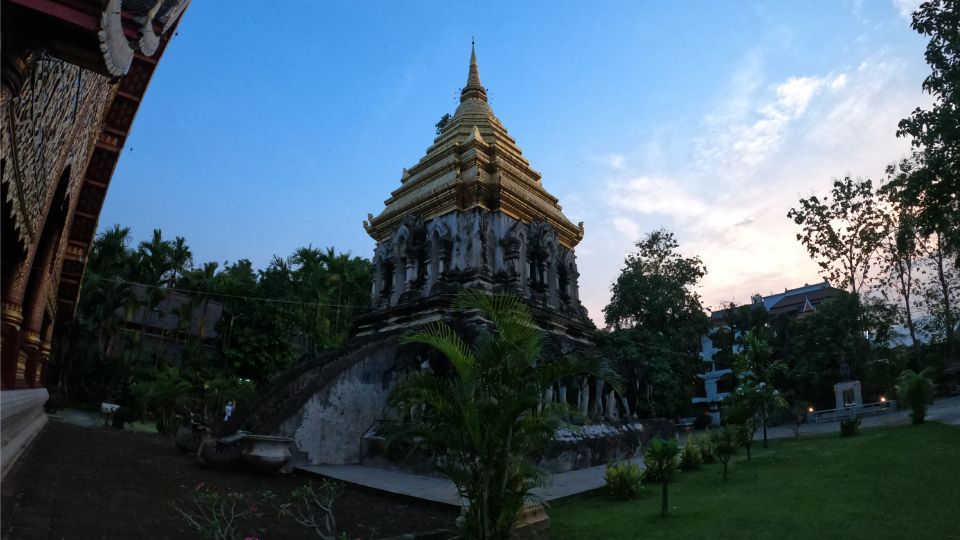
Once you board, the route takes you around the moat and through key areas near the city gates. Along the way, you’ll be shown a string of temple-related sights and city highlights, with a mix of short photo stops and pass-by views.
Here’s the practical way to think about this section: you’re collecting “I recognize that now” moments. You’ll catch views of places like Wat Chiang Man (a brief stop for photos and orientation) and other temple structures as you move through the city.
If you’re the type who hates sitting through long explanations in one spot, this style is a good match. The guide’s stories run alongside the motion, so you’re constantly connecting the words to what you can actually see outside.
The trade-off is time. A few stops are intentionally quick. If your goal is to spend 45 minutes inside each temple, you’ll likely prefer a separate daytime temple plan later.
Wat Lok Moli: When “Old” Becomes Personal
One of the major temple stops is Wat Lok Moli. This is described as one of the older temples in Chiang Mai, and the tour gives it the kind of time that lets you notice details rather than just snap photos and rush off.
Expect a photo stop plus a guided tour and sightseeing time (about 25 minutes). That time is what makes the difference. Instead of only seeing the exterior, you get guided context—what the temple is, why it’s significant, and what to look for as you move through the space.
This is also where the tour’s pacing starts to shine. You’ve been riding and scanning for a while; now you slow down. If you want one temple stop to feel most “alive” on the itinerary, it’s this one.
Wat Pa Pao: A Guided Visit You Can Feel in the Details
After Wat Lok Moli, you’ll go to Wat Pa Pao, with about 15 minutes for visiting and a guided tour/sightseeing session.
This stop is shorter than Wat Lok Moli, but it serves a different purpose: variety. You’re not just ticking boxes for famous names. You’re seeing how temple life and design language show up across different places in the old city area.
Because the tour includes guided time here, you’ll get more than a surface look. You can ask questions in the moment, and the guide can point out what might be easy to miss on your own.




Wat Nong Kham: The Burmese-Shan Temple Style Moment
Another standout is Wat Nong Kham. The special draw is its Buddhist temple style described as Burmese-Shan. On the itinerary you’ll have a photo stop/pass-by moment here, so it’s not a long spend.
Still, this brief moment can be genuinely useful because it gives you contrast. Chiang Mai’s temples often share certain Buddhist themes, but details in style and influence can be different depending on history and region. The guide’s explanation helps you understand what you’re looking at rather than just noticing that it looks different.
If you like architecture and cultural cross-influences, this is one of the stops that makes the tour feel more than just a ride-through.
Warorot Market and Tha Phae Gate: The In-Between Energy
You’ll pass by Warorot Market and Tha Phae Gate as part of the city circuit. These aren’t the main timed stops, but they add texture.
Warorot Market is associated here with the local market and street-food scene, and the guide’s commentary helps you connect what you’re seeing to how Chiang Mai eats and lives. Tha Phae Gate is another old-city anchor, and even a pass-by gives you a sense of the area’s rhythm.
I like these in-between moments because they reduce the “temple tourism” feel. The evening doesn’t stay locked inside sacred spaces—it blends into the city’s everyday life.
Chiang Mai Gate Market: Street Food Snacks With Context
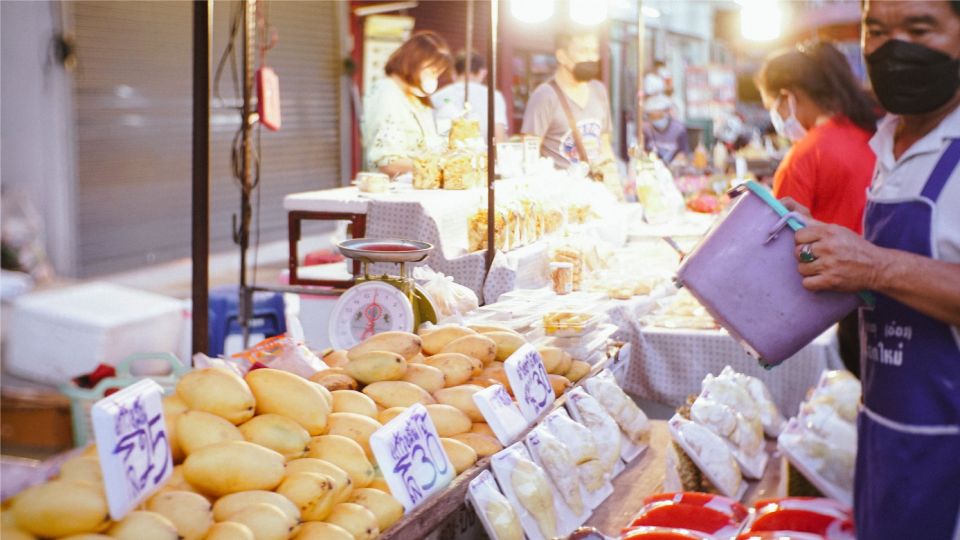
The most food-focused stop is Chiang Mai Gate Market, with about 25 minutes for visiting, street food time, sightseeing, and local snacks.
This is where the tour earns its value for me. If you walk into a market hungry but unsure what’s safe or worth it, you can waste time. With a guide, you’re more likely to try the foods that make sense for first-timers.
It’s also described as one of the best street-food spots for locals and tourists, which is useful because it signals this isn’t random vendor chaos. You’re guided to the part of the market experience that feels friendly and doable.
One practical tip: go in with the mindset of sampling, not stuffing. The tour includes drinking water and some snack, and the snack portion at the market fits a quick “try a few things” approach. If you’re the kind of eater who wants a full meal, you’ll still likely end the tour hungry enough to continue on your own after.
If you see it on carts, mango sticky rice is a dessert people often call out as a highlight in this part of Chiang Mai, so keep an eye out.
Wat Chedi Luang and Wat Phra Singh Woramahawihan: Seeing the Big Names Briefly
Two of the last major visual anchors come in quick photo stops/pass-bys:
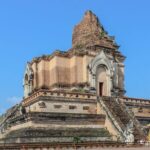
- Wat Chedi Luang (about 10 minutes): described as enormous and important for major city and religious ceremonies
- Wat Phra Singh Woramahawihan: another major temple stop for photos/orientation
Even though these are shorter, they still matter because they give you scale and landmark recognition. For example, Wat Chedi Luang’s size and ceremonial importance are hard to fully grasp without a guide’s framing, especially when you’re standing outside for a limited time.
By the time you reach these stops, you’ll already understand the route logic—moat, gates, temples—and these places start to feel like pieces of a bigger city story, not just single attractions.
Price Check: Is $27 Worth It for a Two-Hour Night Ride?
For $27 per person and 2 hours, what you’re buying is more than transport. You’re buying:
- the tram ride (rather than hopping in tuk-tuks or walking everywhere)
- a professional English-speaking guide
- admission fees and activities as mentioned
- drinking water and some snack
- travel accident insurance
When I think about value in Chiang Mai, I focus on two things: avoiding wasted time and getting correct context. This tour is designed to do both. You’re not spending your first night stuck in indecision or trying to work out temple significance on your own.
Also, doing it at night means you’re getting a different side of Chiang Mai than daytime sightseeing. If you only have one night for an overview, the timing fits.
Who This Tour Fits Best (And Who Might Want Another Plan)
This is a strong choice for:
- First-time visitors who want the lay of the land fast
- People who don’t want to walk temple-to-temple in the dark
- Families who need an easier pace; the tram keeps everyone together without long stretches on foot
- Anyone who likes learning through stories, not just reading signage
It may be less ideal if you want:
- long, uninterrupted temple time at multiple sites
- a deep photography-focused route where you linger for light and angles
- a full meal outing; the market stop is snacks, not a sit-down dinner
If your travel style is “see a lot, understand a bit,” this tour hits that sweet spot.
Should You Book the Chiang Mai Night Tram Tour?
I’d book it if you’re in Chiang Mai for just a short stay and want a guided overview that doesn’t drain your energy. The EV tram is a smart way to keep the evening enjoyable, and the guide’s explanations help you understand what you’re looking at—especially at Wat Lok Moli, Wat Nong Kham, and the Chiang Mai Gate Market food stop.
I’d also book it early in your trip. Getting your bearings on the old-city circuit on day one makes the rest of your days easier. After this tour, you’ll know which temples you want to revisit for longer and where the market energy feels right.
If you want a slow, fully immersive temple day, you might do better with a daytime temple itinerary instead. But for a two-hour night plan that mixes views, stories, and snacks, this is a very practical way to spend your evening.
FAQ
What time does the Chiang Mai night tram tour start and finish?
You meet at the Three Kings Monument at 6:00 PM, and the tour drops you back around 8:00 PM.
Where is the meeting point?
The meeting point is Three Kings Monument (พระบรมราชานุสาวรีย์สามกษัตริย์). Look for the guide wearing a white shirt with the Touring Center’s logo.
How long is the tour?
The tour lasts 2 hours.
What language is the tour guide?
The tour includes a live English-speaking tour guide.
What’s included in the price?
The price includes the tram, a professional English-speaking guide, admission fees and activities as mentioned, drinking water and some snack, and travel accident insurance.
Is hotel pickup and drop-off included?
No. Hotel pickup and drop-off are not included.
Is cancellation free?
Yes. You can cancel up to 24 hours in advance for a full refund.