REVIEW · CHIANG MAI
Chiang Mai: Historic Temples and City Guided Walking Tour
Book on GetYourGuide →Operated by Beyond Experience · Bookable on GetYourGuide
Old City temples, explained on your feet. This 3-hour guided walking tour stitches together Chiang Mai’s key sights with stories of Lanna architecture, royal ties, and Buddhist symbolism you can actually see.
I especially like the small group setup (up to 10), because it keeps the pace comfortable and makes questions easy. The other thing I like is how the route hits the most interesting temple details fast, from Wat Phan Tao’s teak structure to Wat Chedi Luang’s ruined chedi and the Buddha inside.
One consideration: the tour cost is low, but temple entrance tickets for Wat Phra Singh and Wat Chedi Luang are extra (50 THB each). And since it’s mostly walking, it may not suit back problems or pregnancy.
In This Review
- Key things I’d circle before you go
- Getting your bearings at Wat Chiang Man (built 1296)
- Three Kings Monument: the Old City’s center of gravity
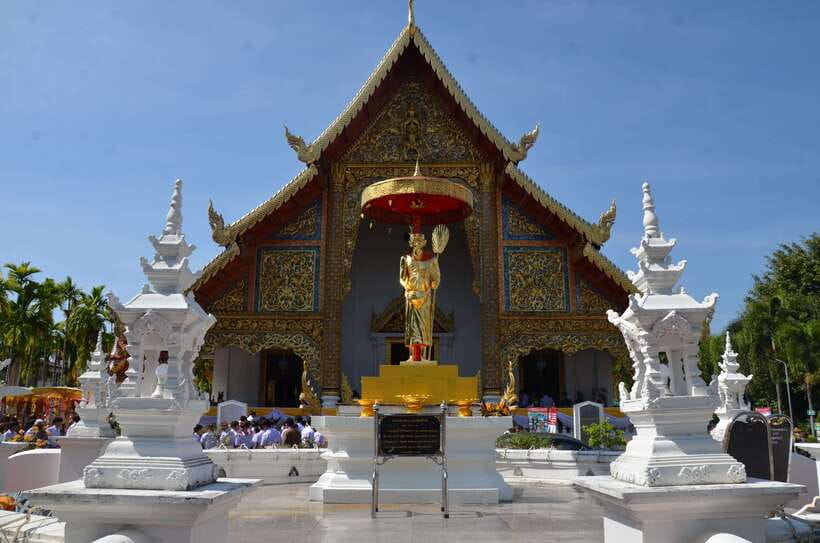
- Wat Phra Singh: where Lanna temple style shows its best side
- Wat Phan Tao: the teak wooden viharn you can’t fake
- Wat Chedi Luang: ruined chedi scale and a Buddha inside
- Pace and group size: why up to 10 people matters
- Price vs. what you actually get for $21
- What to bring (and what to leave behind)
- The guides: you’ll feel the difference in the storytelling
- Who this tour suits best
- Should you book this Chiang Mai temples walking tour?
- FAQ
- What is the duration of the Chiang Mai historic temples walking tour?
- How much does the tour cost?
- What’s included in the price?
- Are temple entrance tickets included?
- Where do I meet the guide?
- Is the tour in English?
- What is the group size?
- What should I bring for the tour?
- What dress code rules should I follow?
- Is this tour refundable if my plans change?
Key things I’d circle before you go
- Wat Chiang Man first: start at the oldest temple in the city (built 1296), so the whole Old City makes more sense
- Classic Lanna architecture at Wat Phra Singh: one of the finest examples in Thailand
- Wat Phan Tao’s teak-only wooden hall: a rare temple experience where the material is the feature
- Wat Chedi Luang’s standing Buddha and chedi ruins: you get scale and symbolism in one stop
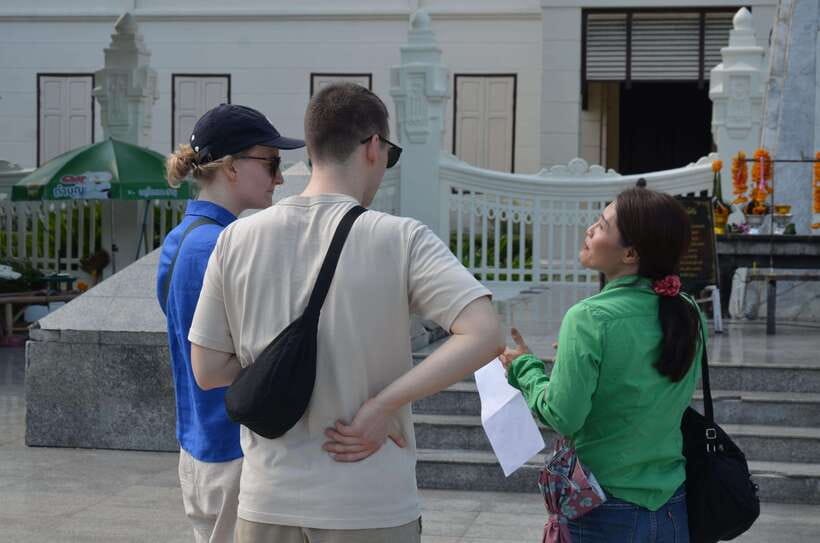
- Up to 10 people, guided in English: easier questions, less rushing, calmer roads
- Low-impact walking route: a practical way to see more while keeping your footprint light
Getting your bearings at Wat Chiang Man (built 1296)
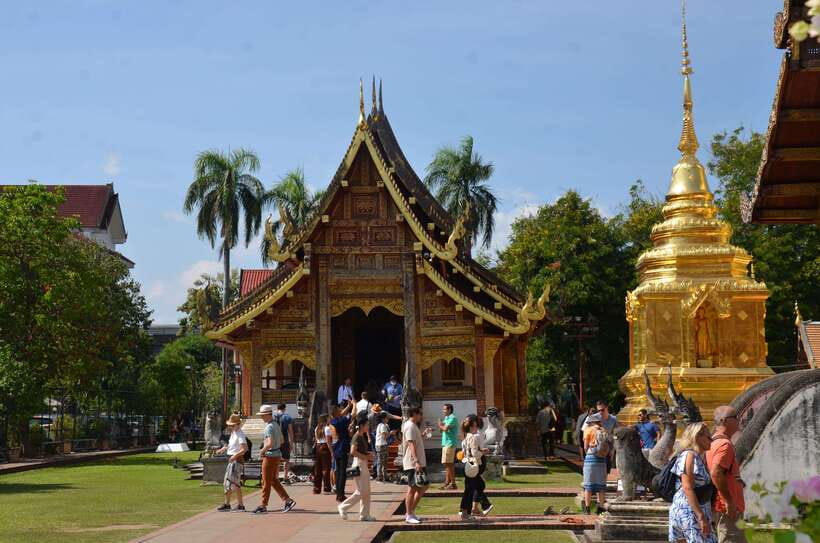
If you’re new to Chiang Mai, starting at Wat Chiang Man is the smart move. This is the city’s oldest temple, built in 1296, and it sets the tone for everything you’ll see later. It’s not just a pretty opening photo moment. It’s a reference point for Chiang Mai’s identity—part religion, part local power center, and part heritage that shaped where people built and lived.
Expect a guided visit and time to take photos, then a bit of orientation. That first stretch matters because temple layouts can feel confusing if you don’t have a story for what you’re looking at. Once you understand what the structures represent, the rest of the Old City turns from random stops into a coherent timeline.
Dress code is casual, but don’t show up in shorts. You’ll want shoulders and knees covered when you enter temple areas.
You can also read our reviews of more walking tours in Chiang Mai

Three Kings Monument: the Old City’s center of gravity
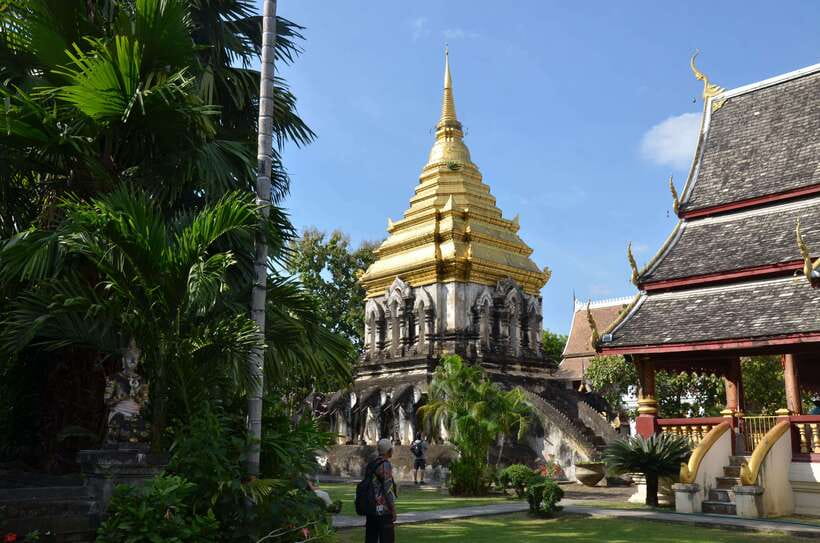
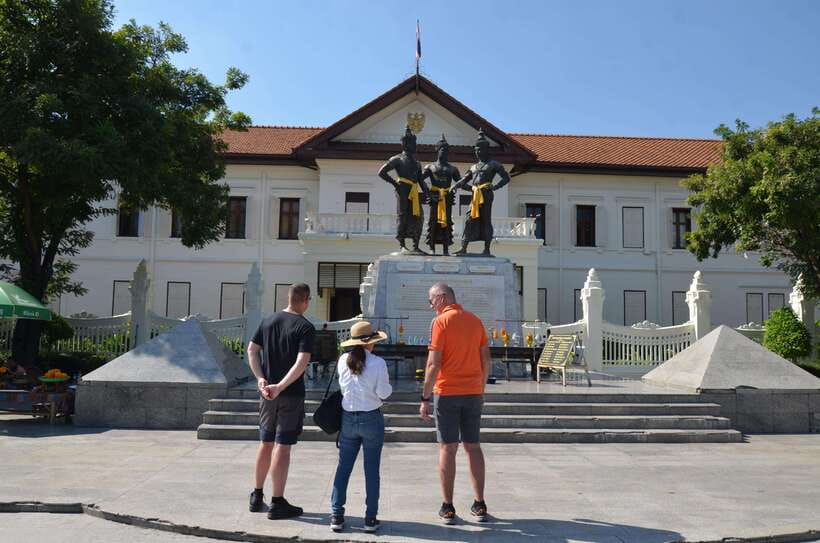
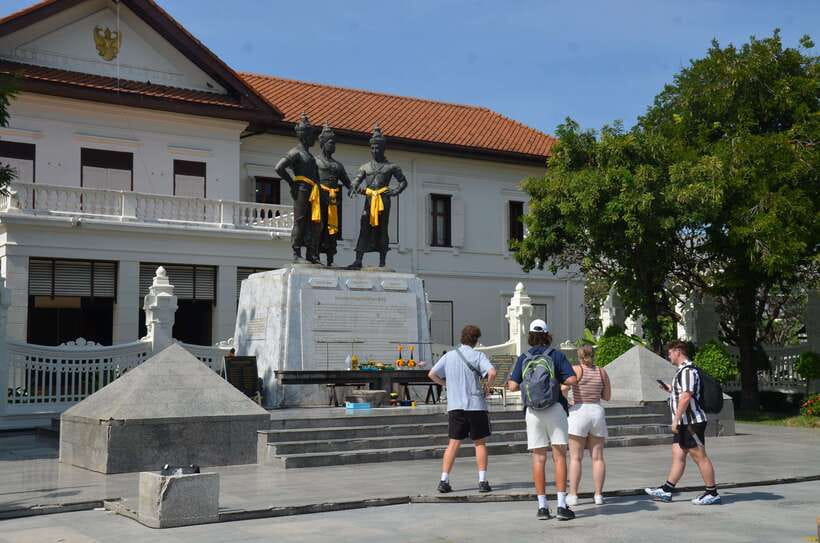
From Wat Chiang Man, you’ll head toward the Three Kings Monument—a big open square right in the walled old town area. This stop works well as a reset. After the temple atmosphere, the monument gives you a clearer sense of the neighborhood grid and how the old city functions.
Your guide will connect the location to Chiang Mai’s past and the kind of legacy people built into public spaces. Even if you’re not a monument person, it helps you “read” the map. After this, the route feels less like wandering and more like moving through a designed story.
This part also tends to be shorter—more of a quick orientation moment than a long temple visit—so it keeps the tour from feeling like a nonstop checklist.
Wat Phra Singh: where Lanna temple style shows its best side
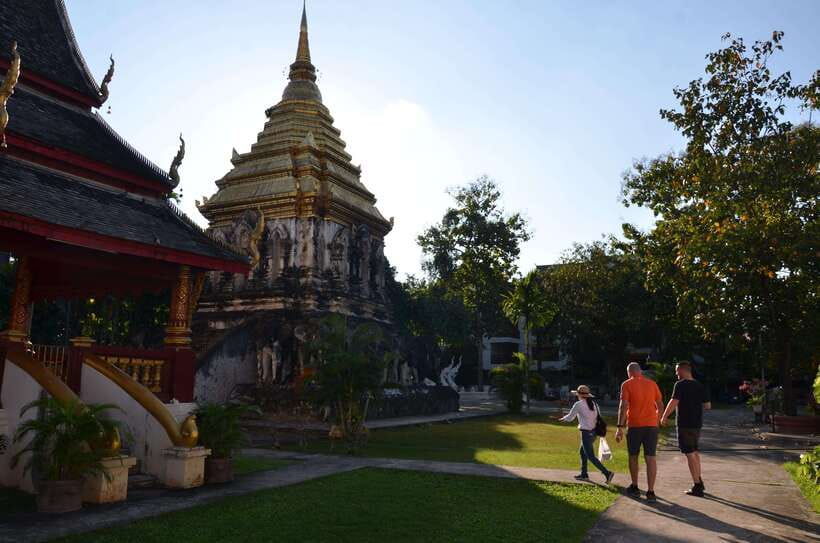
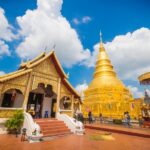
Next comes Wat Phra Singh, and it’s the kind of temple that rewards slowing down. This is described as one of the finest examples of classic Lanna-style architecture in Thailand, and you can see why. Lanna architecture has a distinct look: strong structural forms, ornate details, and a style that feels built to last. The guide’s explanations help you notice features you’d normally walk past—like how certain elements communicate spiritual meaning and royal prestige.
Plan on photo stops and a longer guided segment here. Also, this is one of the places where entrance costs apply: Wat Phra Singh tickets are 50 THB extra. It’s not a deal-breaker, but it’s worth preparing cash so you don’t lose time.
If your goal is to understand what makes Chiang Mai’s temples different from Bangkok-style sights, Wat Phra Singh is one of the clearest comparisons on the route.
Wat Phan Tao: the teak wooden viharn you can’t fake
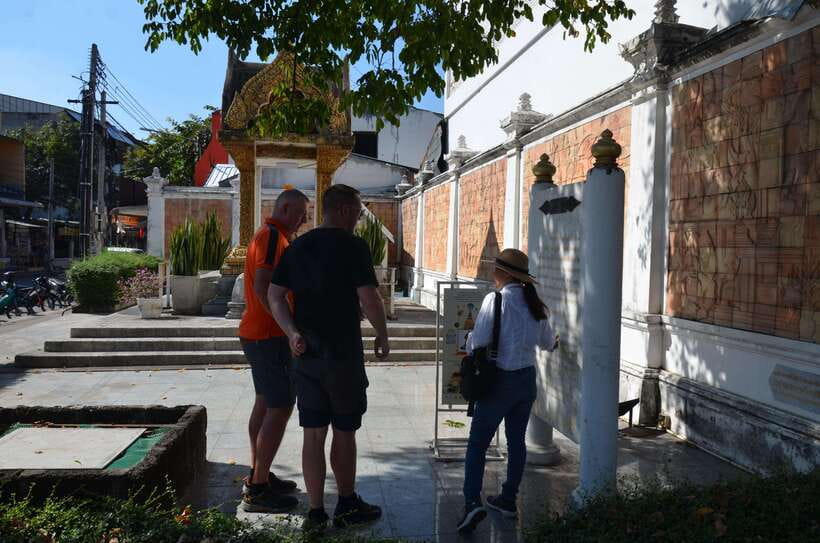
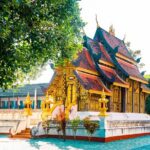
Then you hit one of the most memorable stops on the tour: Wat Phan Tao, famous for its wooden ordination hall (viharn) made almost entirely of teak wood.
What makes this special isn’t just that it’s old. It’s that the material is the point. Teak is strong, dense, and naturally suited to show craftsmanship. When you stand inside (or near) a structure like this, you start to feel how the local culture shaped building style—not just what they worshipped.
Your guide will also connect the hall to Chiang Mai’s rulers, including the fact that the building was originally part of a royal palace. That royal-to-religious transition is one of the themes that pops up again and again in historic Thai cities, and Wat Phan Tao gives you a tangible example.
This stop can be brief compared to others, but it’s the one where you’ll likely stop taking photos and start looking. The main hall includes an enormous teak throne that once belonged to Chiang Mai’s rulers. Even if you don’t know what every carved detail means, the scale and the woodwork do the teaching.
Practical note: keep your hat and sunscreen handy. Walking plus open courtyards can add up.
Wat Chedi Luang: ruined chedi scale and a Buddha inside
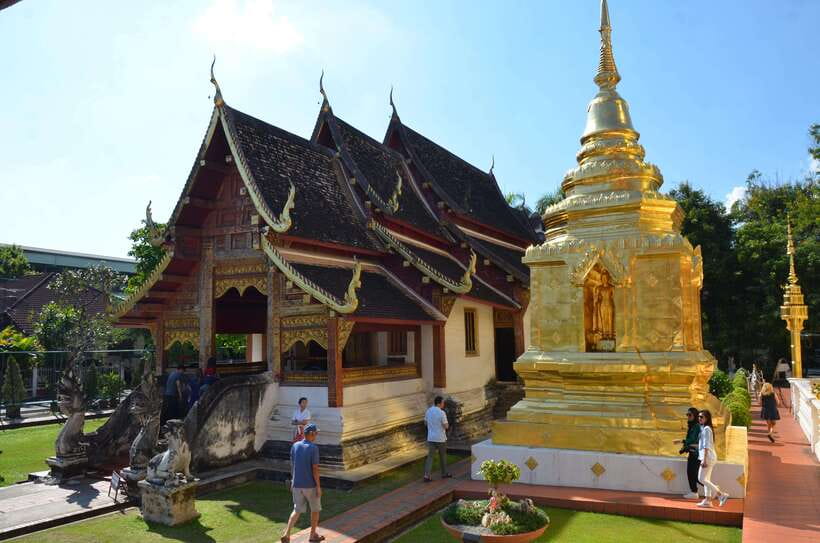
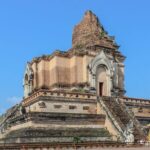
The final major temple on the route is Wat Chedi Luang, and it has a dramatic effect even before the explanations. You’ll spend time at the ruined chedi, which by itself is impressive—partly because ruins still communicate size and intent.
And then there’s the best reason to end here: a standing Buddha inside the main prayer hall. This combination—ruins outside, sacred figure within—creates an emotional arc that makes the Old City feel alive instead of like a museum.
Like Wat Phra Singh, entrance applies here. Wat Chedi Luang tickets are 50 THB extra. If you plan to pay smoothly, bring cash.
Also, expect this to be the second-longest guided segment. It’s the place where context helps most: your guide will connect the chedi’s meaning to the religious history of the region, and you’ll likely leave with a better instinct for why Chiang Mai built the way it did.
You can also read our reviews of more guided tours in Chiang Mai

Pace and group size: why up to 10 people matters
This tour’s format is one of its best values. A small group—limited to 10 participants—changes the entire experience. In a big group, you tend to get pushed toward photos and rushed through questions. With a smaller group, you can actually hear the guide and ask follow-ups without holding everyone back.
Pacing also matters because temple walking involves small friction points: uneven surfaces, stairs, and time spent standing in shaded spots. A good guide keeps the day moving without making it feel like a race.
The tour typically runs around 3 hours, which is long enough to cover the major highlights but short enough that it doesn’t eat your whole afternoon. It’s a great first “anchor activity” after you arrive, and it’s useful even if you’re planning to return to one temple later on your own.
Price vs. what you actually get for $21
At $21 per person for about 3 hours, this tour is priced like a smart introduction, not a luxury add-on. You get a local guide and a bottle of water, and the route covers multiple anchor temples inside the Old City area.
The only real financial catch is that two temple entrances are extra: 50 THB for Wat Phra Singh and 50 THB for Wat Chedi Luang. If you add those in, you’re still usually paying less than you would for a private guide experience—especially if you value the explanations and not just the sightseeing photos.
So here’s the value equation I’d use:
- If you want context and better “why it matters” answers, the $21 makes sense.
- If you mainly want to wander independently with no guidance, you might spend less by going solo.
- But if it’s your first time in Chiang Mai’s Old City, guidance tends to save you confusion time—and confusion is expensive when your schedule is tight.
What to bring (and what to leave behind)
The experience is straightforward, but you’ll be happier if you pack for comfort and temple rules.
Bring:
- Comfortable shoes (you’ll be on foot for the duration)
- Hat, sunscreen, and umbrella
- Cash for the paid temple entrances
- Comfortable clothes and a scarf (helpful for covering shoulders)
Don’t bring:
- Shorts, short skirts, or sleeveless shirts (shoulders and knees must be covered in temple areas)
- Luggage or large bags
Also consider weather. July to mid-October is rainy season, so plan for wet sidewalks and sudden downpours. An umbrella or raincoat is the difference between enjoying the walk and counting minutes indoors.
One more practical note from real-world touring style: some guides are attentive about comfort needs like rest stops, especially when the group includes older visitors. It’s a small detail, but it affects how smooth the day feels.
The guides: you’ll feel the difference in the storytelling
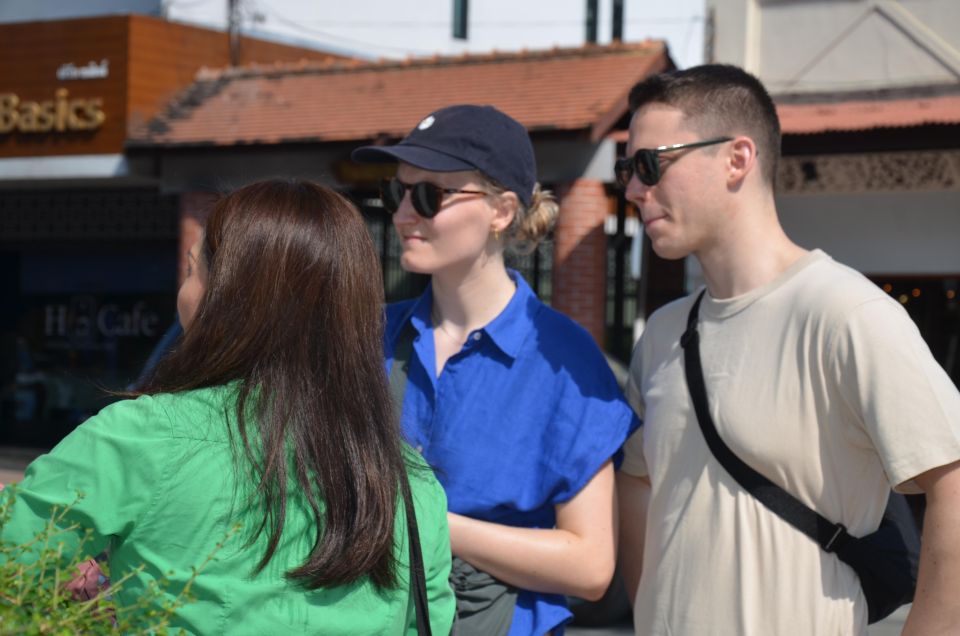
Even without knowing which guide you’ll get, the tour has a clear pattern in the kind of teaching it delivers. Names that show up often include Jen, Pun, Danny, John, and Jackie—and the common thread is a friendly, patient way of explaining what you’re looking at.
The guide approach matters because these are not generic temple facts. You’re learning what Lanna architecture signals, why a teak ordination hall is meaningful, and what it means that a chedi is both ruined and still powerful.
You’ll likely notice the tour includes time for photo stops, but it doesn’t treat photos as the whole event. The most praised guides balance pacing, explanations, and room for questions—so you don’t leave with a pile of images and no understanding.
Who this tour suits best
This one fits best if you’re:
- Visiting Chiang Mai for the first time and want an Old City orientation
- Interested in temple architecture, not just temple names
- Prefer walking over hopping between sights by car
- Booking English-language guidance with a small group feel
It may not suit you if:
- You’re pregnant or have back problems, since it’s a walking route with temple stairs and uneven sections
- You want a fully self-paced experience with no guidance
Should you book this Chiang Mai temples walking tour?
If you’re asking whether this is worth your time, my answer is yes—with a couple conditions.
Book it if you want:
- A tight 3-hour introduction that connects multiple temples instead of visiting them like isolated snapshots
- Clear guidance for understanding Lanna style and the specific features at Wat Phra Singh, Wat Phan Tao teak hall, and Wat Chedi Luang
- A small-group pace that’s comfortable and question-friendly
Skip it if:
- You don’t want to pay extra for temple tickets
- You struggle with walking or you’re in a situation where temple stairs and uneven surfaces are a problem
FAQ
What is the duration of the Chiang Mai historic temples walking tour?
The tour lasts 3 hours.
How much does the tour cost?
It’s listed at $21 per person.
What’s included in the price?
You get a local guide and a bottle of water.
Are temple entrance tickets included?
No. Wat Phra Singh and Wat Chedi Luang each require an entrance ticket of 50 THB.
Where do I meet the guide?
Meet at Wat Chiang Man and look for the Beyond Experience sign.
Is the tour in English?
Yes, the live guide offers English.
What is the group size?
It’s a small group limited to 10 participants.
What should I bring for the tour?
Bring comfortable shoes, a hat, an umbrella, sunscreen, comfortable clothes, cash, and a scarf.
What dress code rules should I follow?
Casual is fine, but you must cover shoulders and knees when entering temples. Shorts, short skirts, and sleeveless shirts are not allowed. Large bags or luggage aren’t allowed either.
Is this tour refundable if my plans change?
You can cancel up to 24 hours in advance for a full refund.
If you want, tell me your travel dates and what you’re most excited to see (Lanna architecture, teak wood, or big chedi ruins), and I’ll suggest the best time window in the day to match your pace.