REVIEW · CHIANG MAI
Chiang Mai Temples & City
Book on Viator →Operated by Bravo Indochina Tours · Bookable on Viator
Six wats, one strong Chiang Mai storyline. This full-day tour strings together some of the north’s best-known Buddhist temples, with a guide to help you read the details instead of just taking photos. I especially like the hotel pickup and drop-off, since it keeps the morning easy and gives you more time inside the temples.
What really sold me on the day is the big highlight: Wat Phra That Doi Suthep. You’ll climb to the hilltop (yes, there are lots of steps) and get sweeping city views that make the effort feel worth it. One consideration: the walking adds up, and the 306-step climb at Doi Suthep can be tough if you’re not used to stairs in warm weather.
In This Review
- Key Highlights You’ll Feel in the Day
- How the 10-Hour Route and Small Group Shape the Value
- Stop 1: Wat Phra That Doi Suthep and Its 306 Steps
- Stop 2: Wat Chet Yot’s 7-Spire Stupa
- Stop 3: Wat Suan Dok and the White Chedis
- Old City Stops: Wat Phra Singh, Chedi Luang, and Wat Chiang Man
- Wat Phra Singh: one of the old city’s most attractive temples
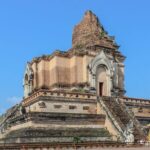
- Wat Chedi Luang Varavihara: the massive chedi
- Wat Chiang Man: oldest in Chiang Mai, dating to 1296
- What This Tour Gets Right (and Where to Adjust)
- Tips to Make the Day Feel Easier
- Should You Book This Chiang Mai Temples & City Tour?
- FAQ
- What’s the duration of the Chiang Mai Temples & City tour?
- Are hotel pickup and drop-off included?
- How many temples are visited?
- Are entrance tickets included?
- Is there an English-speaking guide?
- What’s the cancellation policy?
Key Highlights You’ll Feel in the Day
- Hotel pickup and return keeps the whole route stress-free.
- Wat Phra That Doi Suthep delivers far-reaching views plus a Buddha relic.
- Small group size (max 9) makes the pace feel more personal.
- 6 major temples in one run saves you from planning separate rides and tickets.
- Entrance fees and bottled water included means fewer “wait, what’s extra?” moments.
- Guides like Yukki and drivers like Mr Bank are specifically praised for keeping things smooth.
How the 10-Hour Route and Small Group Shape the Value
This is a 10-hour full-day tour starting around 8:30am with pickup from your hotel and ending with drop-off back to your lodging. The big advantage here is focus: you’re not bouncing all over town for random stops. Instead, the route is built around six well-known Wats, so you can keep context as you move from site to site.
Price is $122.06 per person, and what makes that feel reasonable is what’s actually included. You get private transportation, an English speaking guide, entrance fees for the listed temples, and bottled water. Tips and travel insurance aren’t included, and alcohol isn’t included either, so plan for those as separate line items—but you won’t be hit with additional entry fees for the main sights on the schedule.
Small group size matters more than people think. With a max of 9 travelers, you’re less likely to get lost in a crowd of strangers at each Wat, and you can usually hear explanations without shouting. Also, it’s the kind of tour that works best when you’re not trying to squeeze in extra plans right before or after—this is a full day, not a quick sampler.
One more practical note: this experience requires good weather. If conditions are poor, you’ll be offered a different date or a full refund. That means I’d book it when you have a little flexibility built into your Chiang Mai schedule.
You can also read our reviews of more city tours in Chiang Mai
Stop 1: Wat Phra That Doi Suthep and Its 306 Steps
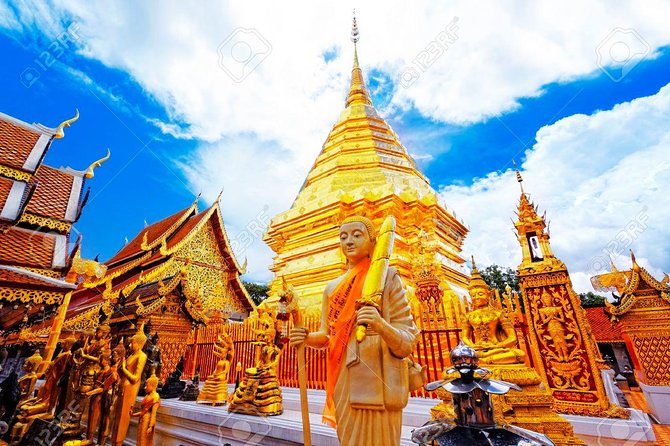
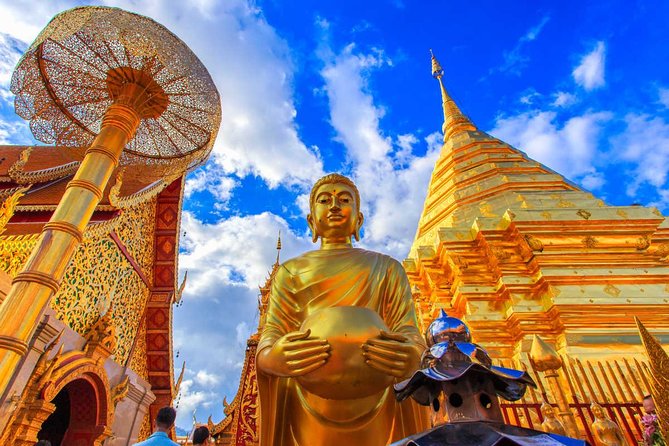
Your day begins at Wat Phra That Doi Suthep, the most famous temple in northern Thailand, sitting on a hill. The tour time block is about two hours, which is just enough to see the main areas without feeling rushed, especially if your guide is good at pacing.
The climb is part of the experience: you’ll reach the temple by 306 steps. In hot, humid weather, that can feel longer than it sounds on paper, so I’d plan your energy accordingly. If you’re comfortable with walking but not with steep stairs, take it slow. Use the railings if available and pause whenever you need a breather.
What makes Doi Suthep more than a “pretty temple” stop is the combination of views and meaning. The tour includes the fact that the temple holds a holy relic of Buddha, and the hilltop setting gives you far-reaching city views. Standing there after the climb helps everything click—you see why this spot became a major spiritual destination.
Stop 2: Wat Chet Yot’s 7-Spire Stupa
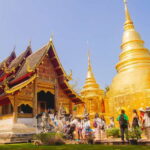
Next up is Wat Chet Yot (also known as Wat Chet Yod). You’ll head there around 10:30am, with about one hour on-site. This is the kind of temple stop I like when I want variety: the architecture and layout feel distinctive compared with the larger, more famous sites.
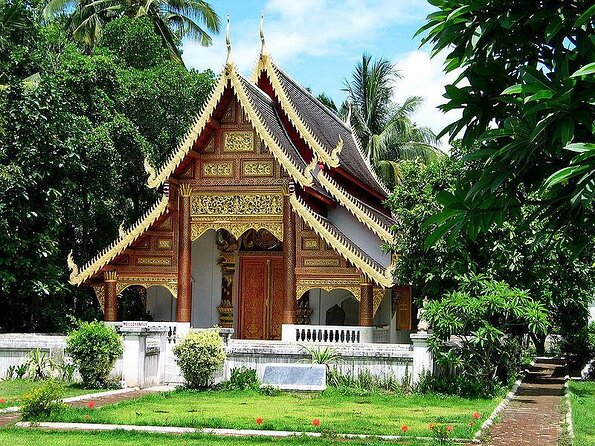
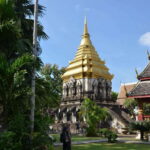
Wat Chet Yot is described as a Lanna-style temple complex, and it’s closely tied to a striking feature: a 7-spire stupa. That number matters visually—once you spot it, it becomes an anchor for how you look at the whole structure. With a guide, you’ll get more from that hour than you would trying to “guess the story” by yourself.
One thing to watch for is time pressure. Since the schedule allocates only about an hour here, you’ll want to set yourself up to enjoy the details quickly—look up at the stupa, scan the surrounding architecture, and only then wander deeper if you still have energy. If you tend to slow down at every photo, this is the stop where you’ll feel the clock most.
Stop 3: Wat Suan Dok and the White Chedis
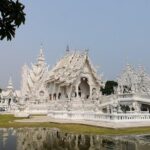
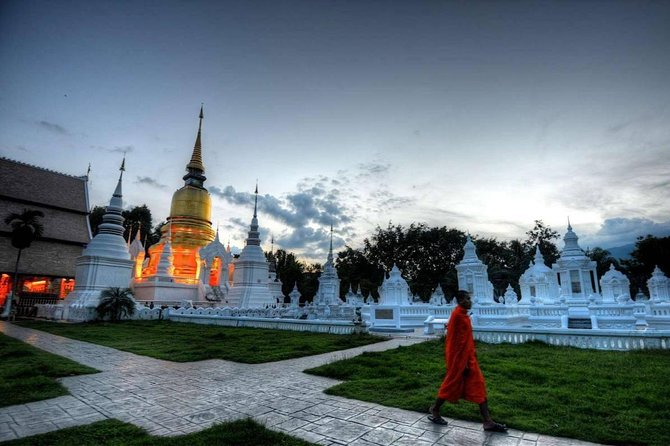
After Chet Yot, the tour moves to Wat Suan Dok at about 11:30am, with around two hours here. This temple is located just west of the old walled part of Chiang Mai, and it’s known for its many white chedis (pagodas). The “white” is the key visual cue—you’ll see the grounds in a different light than at the other temples.
Wat Suan Dok literally means flower garden temple, and that name helps explain the atmosphere. Even if you’re not thinking about the literal meaning, the gardens and ceremonial spaces tend to create a calmer feel than the bigger, louder landmarks. This is a good stop to slow down a bit, take in smaller details, and just let your eyes adjust.
The guide time here is generous enough for you to see multiple features without rushing. If you like temple grounds—enclosures, stupas, and the way different areas relate to each other—this two-hour slot is a strong fit.
Old City Stops: Wat Phra Singh, Chedi Luang, and Wat Chiang Man
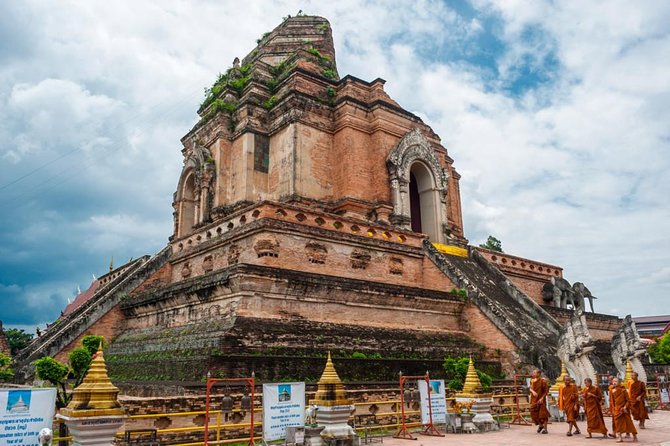
By the early afternoon, the tour shifts into the heart of Chiang Mai’s old-city temple zone. You’ll visit three major sites across the next blocks: Wat Phra Singh, Wat Chedi Luang Varavihara, and Wat Chiang Man. Together, they give you a layered view of the city’s spiritual and historical identity.






Wat Phra Singh: one of the old city’s most attractive temples
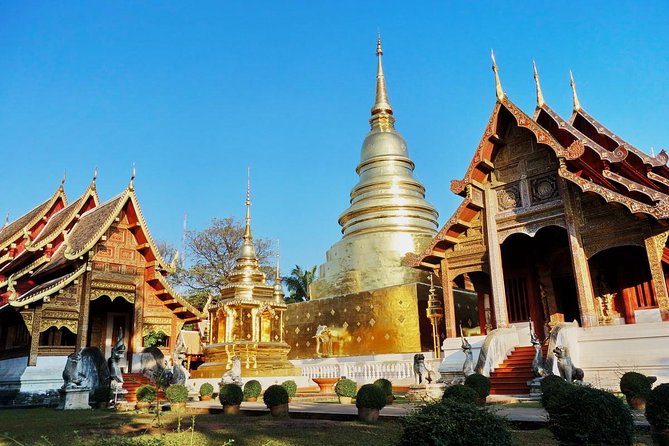
Around 1:00pm, you’ll stop at Wat Phra Singh, one of the most attractive temples within the walled old city. Your time here is about one hour. This is a good pace: you get enough time to appreciate key features, but you won’t get temple fatigue before Chedi Luang and Chiang Man.
Since the tour includes an English guide and entrance fees, the value is in interpretation—knowing what you’re looking at and why it’s important. In practical terms, this is where you’ll start recognizing patterns in Lanna temple design: layout, ornamentation, and how key spaces are emphasized.
Wat Chedi Luang Varavihara: the massive chedi
At about 2:00pm, you’ll reach Wat Chedi Luang Varavihara, with around one hour on-site. The highlight is the massive chedi (pagoda) that dominates the area. That scale is the point. It changes how you experience the space—your attention is pulled upward and outward, and the ground-level view can make the structure feel even larger.
The temple is tied to royal patronage: it was ordered by King Saen Muang Ma to enshrine the ashes (the tour info notes ashes, without extra detail). Even if you’re not focused on the specific story, it’s helpful to know that the monument wasn’t built only for decoration—it’s tied to reverence and memory.
One caution: if you’re sensitive to heat, this is the hour when you’ll likely feel it most. Consider taking short shade breaks where available and letting your guide know if you need a slower pace.
Wat Chiang Man: oldest in Chiang Mai, dating to 1296
Later, around 3:00pm, the tour heads to Wat Chiang Man, the oldest temple in Chiang Mai. The timeline here is powerful: it dates back to 1296, when the city was founded, and it’s connected to King Mengrai and the move to establish Chiang Mai as the capital of the Lanna Kingdom.
You’ll have about two hours for this stop, which is a smart allocation for a temple with this kind of age and significance. Older temples can feel “similar” at first if you don’t have context, so that extra time matters. It gives you room to notice details you might otherwise miss—textures, carvings, and the way the temple’s parts relate to one another.
What This Tour Gets Right (and Where to Adjust)
This tour earns its high satisfaction by doing a few things consistently well.
First, it keeps you moving but not rushed. The schedule gives a sensible mix: two-hour and one-hour stops, so you alternate between bigger climbs/attention-heavy sites and shorter visits that still let you see what matters. Second, it removes logistics. Entrance fees for the listed temples are included, bottled water is provided, and the guide handles the explanations in English.
The other win is pacing through variety. You get:
- a hilltop icon (Doi Suthep),
- a more architectural temple (Chet Yot),
- a grounds-and-stupa temple (Suan Dok),
- and three old-city powerhouses (Phra Singh, Chedi Luang, Chiang Man).
Where you might need to adjust is physical comfort and expectations. This isn’t a sit-and-watch tour. Between walking between sites and the main stair climb at Doi Suthep, you should plan for a day that asks something of your legs. Comfortable footwear is not optional here.
Also, meals aren’t listed as included. Because the itinerary is packed, you’ll likely end up grabbing food on your own between temple stops. Build in a little flexibility if you’re the type who likes a long lunch.
Tips to Make the Day Feel Easier
If you want this day to feel smooth, here are a few practical moves based on how the tour is structured.
- Wear shoes you trust. You’ll be on temple grounds and stairs, especially at Doi Suthep.
- Go slow on the 306 steps. It’s better to pace yourself than to sprint and regret it halfway.
- Stay hydrated. Bottled water is included, but don’t save it all for later.
- Have one small goal per stop. For example, at Chet Yot focus on the 7-spire stupa. At Suan Dok focus on the white chedis. This helps you enjoy each site instead of trying to memorize everything.
- Think about the weather. Because the experience depends on good conditions, bring a plan for heat or sudden changes.
And if your guide is someone like Yukki, you’ll likely appreciate the way the day is explained and kept running smoothly. The route is the backbone, but the guide is what makes the details connect. The same goes for drivers like Mr Bank, who are praised for keeping transfers efficient.
Should You Book This Chiang Mai Temples & City Tour?
I think you should book it if you want a high-value temple day without the hassle of arranging transport and tickets for six different sites. The inclusion of hotel pickup/drop-off, entrance fees, and an English speaking guide means you’re paying for convenience and context, not just transportation.
You might skip it if you prefer to travel at your own pace and spend lots of time lingering in one place. The schedule is tight enough that you’ll feel the structure, especially at stops that get about one hour. It’s also best for travelers who are comfortable with a major stair climb at Wat Phra That Doi Suthep.
If your goal is to see the strongest Chiang Mai temple highlights in one day, this tour is a solid choice.
FAQ
What’s the duration of the Chiang Mai Temples & City tour?
It runs for about 10 hours.
Are hotel pickup and drop-off included?
Yes. The tour includes hotel pick-up and drop-off.
How many temples are visited?
You’ll visit 6 temples during the tour.
Are entrance tickets included?
Yes. Entrance fees for the mentioned visits are included, along with bottled water.
Is there an English-speaking guide?
Yes, the tour includes an English speaking guide (other languages may require a supplement).
What’s the cancellation policy?
Free cancellation is available. You can cancel up to 24 hours in advance of the experience for a full refund, and cancellations within 24 hours are not refunded.