REVIEW · CHIANG MAI
Doi Suthep and Wat Umong Night Tour From Chiang Mai
Book on Viator →Operated by Oh-Hoo · Bookable on Viator
Chiang Mai glows after dark. This night temple tour pairs two very different sights: Wat Umong’s forest tunnel temple and Wat Phrathat Doi Suthep’s golden pagoda sitting above the city. It’s a simple plan with hotel pickup, so you spend your energy looking up and walking slowly, not figuring out transport.
I also like how the experience is built around what you can actually enjoy at night: explained temple meaning, no admission chaos, and time to take in the atmosphere without rushing between stops. One thing to keep in mind is that Chiang Mai traffic can slow the minivan ride, so expect some time in the car before you reach the views—and plan for the 306 steps at Doi Suthep (the funicular is there if you’d rather not climb them).
In This Review
- Key points to know before you go
- A 4 p.m. start that makes night temples feel worth it
- Wat Umong at night: walking into the tunnel temple
- Wat Phrathat Doi Suthep after dark: 306 steps, Naga serpent, and gold details
- Stairs or funicular
- What you see at the top
- The minivan reality: how the car time affects your evening
- Price and value: what $24.95 gets you (and why it matters)
- Who this tour is best for (and who should think twice)
- Should you book this Doi Suthep and Wat Umong Night Tour?
- FAQ
- What time does the tour start?
- How long is the tour?
- Which temples are included?
- Is hotel pickup and drop-off included?
- Are admission tickets included?
- How big is the group?
- Do I have to climb the full staircase at Doi Suthep?
- What should I wear?
- What if the weather is bad?
- Is mobile ticketing used?
Key points to know before you go
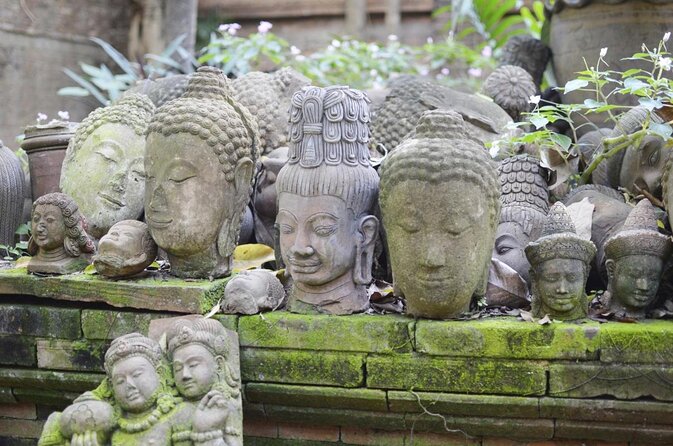
- Two temples, same evening: Wat Umong tunnel setting and Wat Phrathat Doi Suthep on a tight 4-hour loop
- Night lighting changes everything: you get the temples’ glow and the mountain-top city view
- Admission fees handled: tickets are included so you’re not stopping to pay
- Stairs vs funicular: 306 steps are classic, but there’s an alternative if mobility is an issue
- Small group size: capped at 15, which keeps questions and pacing more relaxed
A 4 p.m. start that makes night temples feel worth it
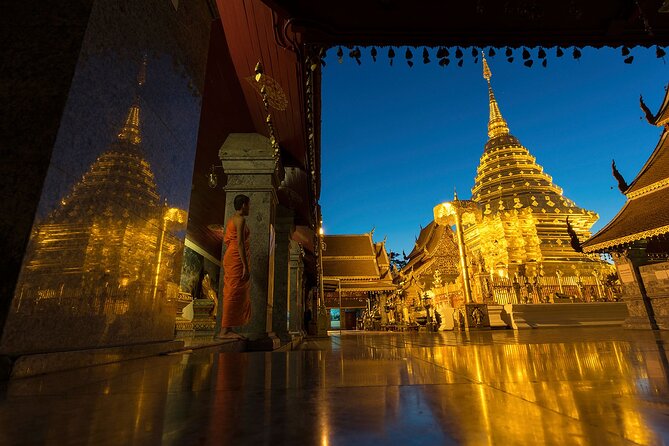
Starting at 4:00 pm is a smart move. You reach Wat Umong while the light is fading, then head toward Doi Suthep as the city starts to darken and lights begin to pop on the mountain. That timing matters, because these are not just “see it and leave” temples. At night, the details stand out in a different way: candle-like lighting, gold surfaces looking warmer, and the sense that the site is less about crowds and more about stillness.
The format is also practical. You get round-trip hotel transfers, and the operator runs it as a joint tour—pickup in order—so you’ll wait a bit while the minivan gathers everyone. That’s normal for a group plan, but it also means you should build in patience and keep your phone ready.
Finally, the whole tour stays focused. You’re not hopping across half the province. You’re doing two locations and actually getting time inside and around each one.
You can also read our reviews of more evening experiences in Chiang Mai



Wat Umong at night: walking into the tunnel temple
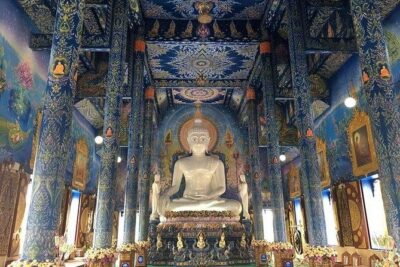
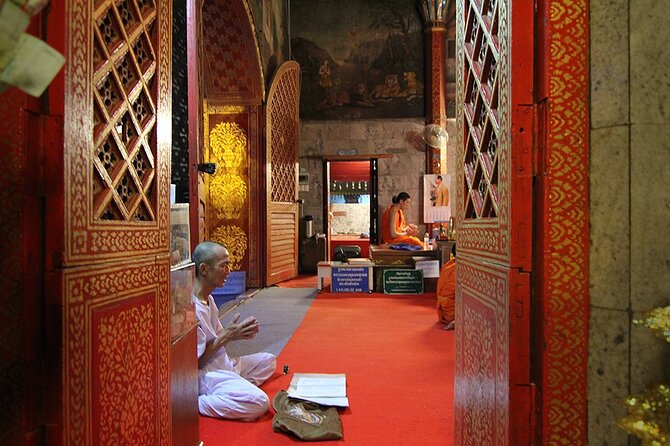
Wat Umong is a different mood from the usual Chiang Mai temple photo you see online. Instead of a standard courtyard-and-main-hall setup, this one is known for its tunnel temple feel, built in a forest setting. The big experience here is entering the tunnels and seeing the Buddha imagery inside the stone corridors.
What you’ll appreciate, even if you’re not deeply into temple architecture, is the way the space changes your pace. In an open temple you look around quickly. In a tunnel, your body naturally slows down—your eyes follow light, shadow, and the forms carved into the stone. It’s quiet, and the atmosphere feels more secluded than most temple visits.
The tour gives you help to make sense of what you’re seeing. Your guide explains the temple’s significance, including that this site dates back to 1297. Whether you view Buddhism as your own faith or you’re simply admiring another culture, the tunnel setting works. It makes the history and symbolism feel physical, not abstract.
Expect about two hours here, which is helpful because tunnel temples don’t reward rushing. You need time to look, step back to take in the overall layout, and listen when your guide explains what to notice.
Practical note: you’ll want to wear clothing that fits temple dress rules (modest is the standard), since you’re going inside and moving around in a historic religious space.
Wat Phrathat Doi Suthep after dark: 306 steps, Naga serpent, and gold details
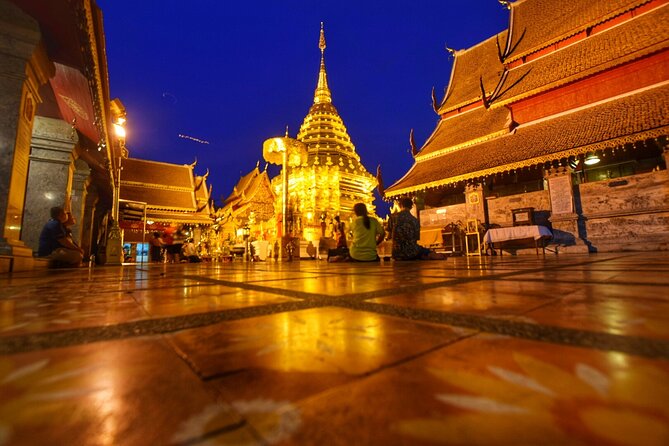
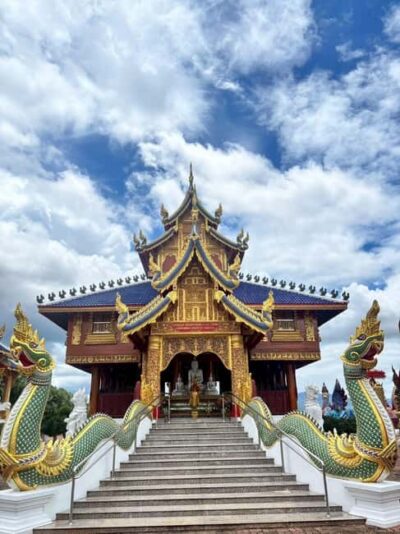
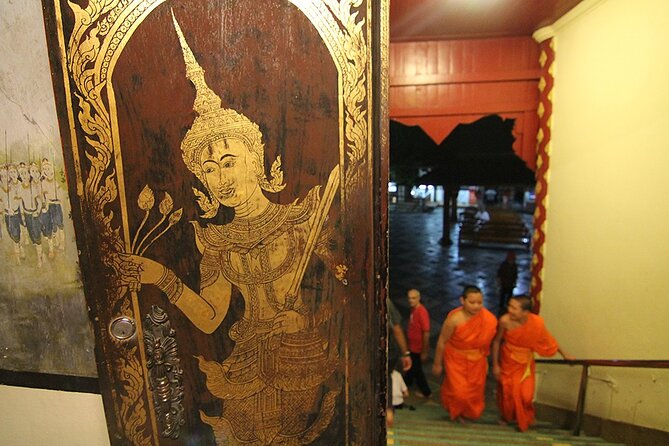
Doi Suthep is the headline for good reason. After Wat Umong, you’ll ride into the rolling hills around Chiang Mai for the mountain stop. Then comes the approach: the famous 306 steps, decorated with the Naga (dragon-headed serpent) motif that runs along the staircase.
This part is where you’ll feel the difference between a guided night visit and a random self-guided stop. When you’re climbing at night with explanation in your ear, the details feel purposeful. The steps aren’t just steps. They’re part of the temple’s story, and the serpent imagery is built into that experience from the moment you start up.
Stairs or funicular
If you’re less steady on your feet, you don’t have to force the full climb. There is a funicular railway option to reach the temple area. That flexibility is valuable on a night tour, because you may be tired from the day or dealing with stairs you’d rather not manage after dark.
What you see at the top
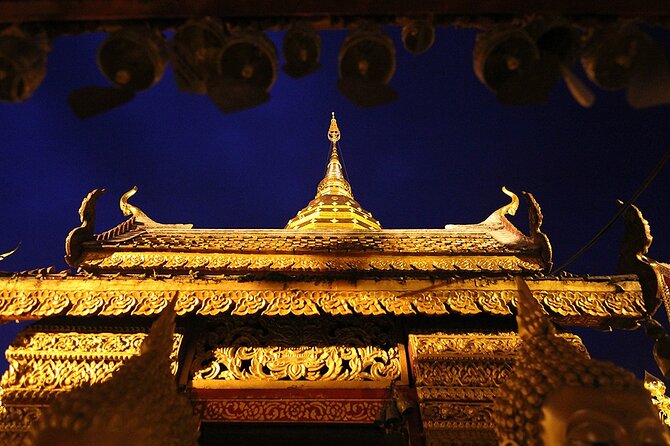
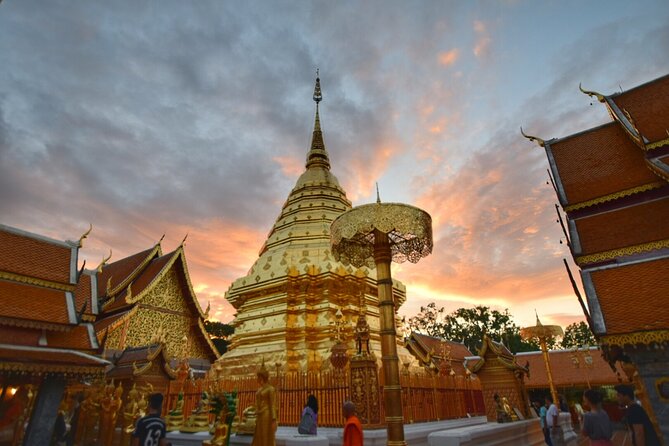
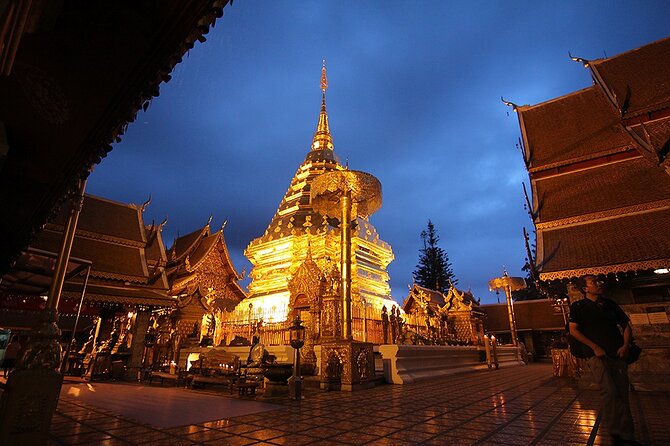
At Doi Suthep, the view is a major part of the reward. From the mountain you get a night city view that’s tough to recreate from street level. And the main shrine area gives you the visual payoff: a Lanna-style golden pagoda covered with engraved gold plates, flanked by four ornamental umbrellas.
This isn’t just one shiny object. The umbrellas, the gold surfaces, and the night lighting combine into a look that feels almost ceremonial. It also helps that the tour is timed for evening: at night, the pagoda reads warmer, and the surroundings feel quieter.
Plan on about two hours here. That’s enough time to climb or take the funicular, take photos without feeling frantic, and still have time to ask questions before you head back down.






The minivan reality: how the car time affects your evening
Even the best night temples can’t escape the one variable you can’t control: Chiang Mai traffic. One review noted that busy traffic meant more time in the car, and that’s the main trade-off with this kind of evening plan. You’re paying for convenience (pickup, admissions included, guided timing), but you’re not buying control over roads and congestion.
So I’d go in with the right expectations:
- Expect some downtime in the minivan between stops.
- Use it as the buffer so you don’t feel rushed once you arrive at the temple gates.
- Bring a small layer if you tend to get chilly outside at night.
The good news is that the schedule still works. The tour keeps you to two temple stops, each with meaningful time on site, so your evening isn’t just “ride, look, leave.”
If you prefer a slower pace and want minimal car time, you might compare this to a self-guided plan later in the evening. But if you want the city logistics solved for you, this group format is a solid trade.
Price and value: what $24.95 gets you (and why it matters)
At $24.95 per person, this tour hits a sweet spot for a guided night temple experience in Chiang Mai. Here’s the value math that matters in real life:
- Hotel pickup and return transfers are included. That alone can wipe out the headache of finding transport at night.
- Admission fees are handled, so you’re not standing around paying on the spot or juggling small bills mid-tour.
- You get two major temples in one evening with a guide explaining significance.
That last part is important. Temples are easier to enjoy when someone points out what you’re supposed to notice: the tunnel design at Wat Umong, the staircase and Naga symbolism at Doi Suthep, and the cultural meaning behind what’s in front of you. You don’t need a long lecture. You just need the right context so your photos and observations feel connected.
It’s also a small group—maximum 15 travelers—which keeps the experience from feeling like a factory line. And because the tour is only around four hours total, you’re not giving up a full evening.
So yes, the price is budget-friendly—but the bigger win is that it’s organized. You arrive ready to see, not ready to figure things out.
Who this tour is best for (and who should think twice)
This is a great fit if you want:
- A night temple plan that feels focused and not exhausting
- Hotel pickup because evening navigation is not your favorite sport
- Included admissions and a guide explanation that helps you understand what you’re looking at
You might especially enjoy it if Doi Suthep is on your must-see list and you’d like to experience it with the mountain atmosphere and city lights rather than daytime heat.
The main “think twice” factor is physical pacing and comfort. If stairs are hard for you, remember that Doi Suthep has a funicular alternative, which helps. Still, there’s walking involved at both stops, and you’ll want to feel comfortable moving around religious sites after dark.
Also, if you hate any amount of car time during traffic, you may find the minivan leg frustrating. The tour uses a group route, so timing depends on how smoothly pickups and travel go.
Should you book this Doi Suthep and Wat Umong Night Tour?
I’d book it if you want a tidy, affordable way to see two of Chiang Mai’s standout temples with a guide and without paying admissions along the way. The Wat Umong tunnel setting at night is unusual enough to feel memorable, and Doi Suthep’s staircase approach plus the night city view is exactly the kind of payoff you hope for when you choose an evening tour.
Pass, or at least consider alternatives, if you’re very sensitive to travel delays in traffic or you’d rather spend more time at one temple than split your evening between two.
If you’re the type who likes having someone handle the logistics while you focus on the sights, this is a smart buy.
FAQ
What time does the tour start?
The tour starts at 4:00 pm.
How long is the tour?
It runs for about 4 hours.
Which temples are included?
You visit Wat Umong and Wat Phrathat Doi Suthep.
Is hotel pickup and drop-off included?
Yes. The tour includes round-trip transfers from hotels, and it’s run as a joint tour with pickup in order.
Are admission tickets included?
Yes. Admission fees are taken care of, and admission tickets are included so you don’t pay on the spot.
How big is the group?
The tour has a maximum of 15 travelers.
Do I have to climb the full staircase at Doi Suthep?
You can use the funicular railway if you are less steady on your feet, though the classic approach is the 306 steps.
What should I wear?
Wear modest clothing suitable for visiting temples.
What if the weather is bad?
The tour requires good weather. If it’s canceled due to poor weather, you’ll be offered a different date or a full refund.
Is mobile ticketing used?
Yes. The tour uses a mobile ticket.