REVIEW · CHIANG MAI
Private Program Discovery Chiang Mai – Half/Full day / Night tour
Book on Viator →Operated by InnViaggi Asia Co. Ltd. · Bookable on Viator
Chiang Mai temples plus markets can feel like a lot. This private program turns it into a logical route, guided by your own English, German, French, Italian, or Spanish-speaking guide.
I like that you get a private van or public transfer depending on your plan, so you’re not stuck with one rigid itinerary. I also like the balance of classic old-city temples and the night market scene, which helps the day feel real, not just photo stops.
One key thing to consider: temple entrance fees and meals aren’t included, so your final cost will depend on which stops you pick and whether you buy lunch/drinks during the day.
In This Review
- Key highlights to plan around
- Private Program Discovery Chiang Mai: what you’re really buying
- How the guide and transport choice changes your day
- Half-day, full-day, or night: how to choose your best mix
- Wat Chedi Luang Varavihara: where the skyline story starts
- Wat Phra Singh: the active monastery feel
- Wat Phra That Doi Suthep: plan for the long, scenic portion
- The old-city set: Wat Suan Dok, Wat Phan Tao, Wat Phan On
- Wat Suan Dok (about 1 hour)
- Wat Phan Tao (about 1 hour)
- Wat Phan On (about 1 hour)
- Night Bazaar vs Tha Pae Walking Street: two different evening styles
- Night Bazaar (about 4 hours, recommended Monday–Friday)
- Tha Pae Walking Street (about 5 hours, weekend market)
- Language-specific guides: why it matters more than you think
- Price and value: what $98.91 really covers
- The one drawback to watch: extra costs plus non-flex refunds
- Who this tour is best for (and who should think twice)
- Should you book Private Program Discovery Chiang Mai?
- FAQ
- How long is the Private Program Discovery Chiang Mai tour?
- What does the tour price include?
- Are temple entrance fees included?
- What about lunch and drinks?
- Do I get pickup in Chiang Mai?
- What languages are the guides available in?
- What are the night market recommendations by day?
- Is this tour private or shared?
- What’s required on the day of travel?
Key highlights to plan around
- Private guide + private group means you set the pace and can ask questions as you walk.
- Van vs public transport lets you choose comfort or local flavor without losing the structure of a route.
- Doi Suthep time is built into the program (about 3 hours), so plan for a longer hilltop stop.
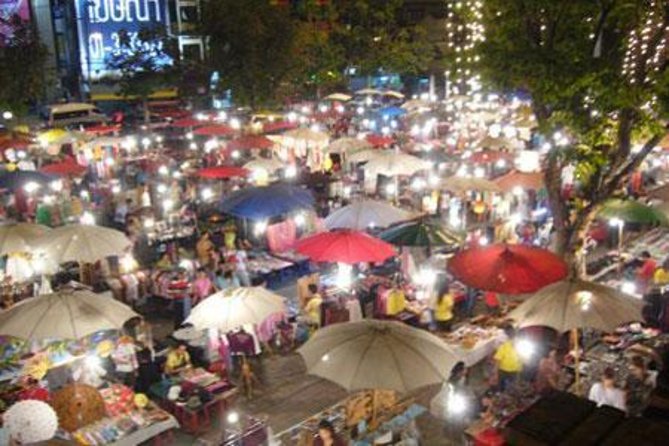
- Night Bazaar works best on Monday–Friday for that evening market rhythm.
- Tha Pae Walking Street is for weekend energy, right in the main center area.
- Smart casual dress code helps you move between temple grounds and evening markets without fuss.
Private Program Discovery Chiang Mai: what you’re really buying
This is a private Chiang Mai program built for travelers who don’t want the usual one-size-fits-all temple circuit. You’re paying for three things that matter in Chiang Mai: a guide who can steer the route, transport that matches your comfort level, and a schedule that can fit a half day or stretch out to a full day or night.
Because it’s private, the biggest benefit is not just convenience. It’s clarity. You can look at the same temples you’d see on any tour, but with context you can actually use: why the buildings look the way they do, what you should notice while you’re there, and how to sequence stops so you’re not bouncing around the city wasting time.
That flexibility is also why your choices matter. The itinerary list includes several temples plus two major evening market options, so you’ll want to decide what you care about most: calm temple time, hilltop viewpoints, or shopping and street food atmosphere.
You can also read our reviews of more private tours in Chiang Mai



How the guide and transport choice changes your day
The program offers pickup and uses either a private van or public transport, depending on what you choose for your day. Practically, that means:
- If you’re trying to cover more sites in less time, the van will help you keep momentum.
- If you want to keep costs steadier or prefer local transit, public transfer can fit well.
- Either way, the guide is the one doing the navigation and the timing, so you’re not guessing where you should go next.
This matters in Chiang Mai because travel time can quietly eat your schedule. A route that looks short on a map can turn into a long day if you’re moving slowly between hill and lowland areas. With this setup, you’re buying back time and mental energy.
Also, you’re not limited by group logistics like waiting for strangers. Your private group means fewer delays, especially when you want to pause for photos or ask questions in the moment.
Half-day, full-day, or night: how to choose your best mix
The tour runs about 4 to 8 hours depending on the option you pick, and the stops listed can be combined to match your pace. Here’s the useful way to think about it:
- Half day (temple focus): You can concentrate on several old-city wats and keep the evening free for your own plans.
- Full day (temples + hilltop): If you add Doi Suthep, expect the day to feel longer because the hilltop temple stop is substantial.
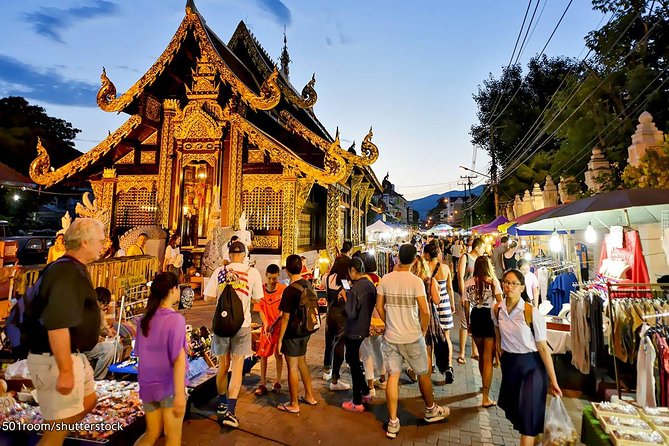
- Night program (markets): The program includes evening time for Night Bazaar and Tha Pae Walking Street, which changes the vibe depending on the day of week.
One hint from the schedule: Night Bazaar is recommended Monday–Friday, while Tha Pae Walking Street is described as the weekend market. If you care about market energy and variety, line your night option up with the day you’re actually in Chiang Mai.
Wat Chedi Luang Varavihara: where the skyline story starts

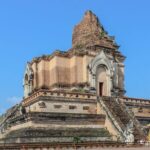
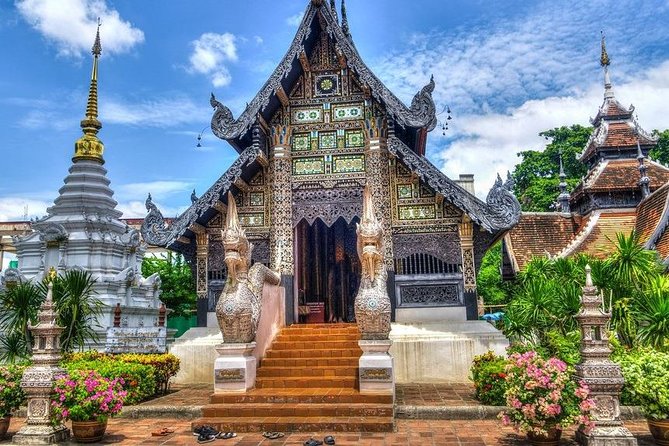
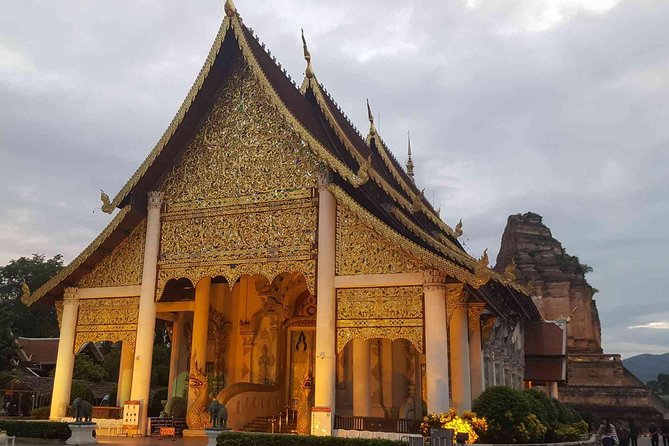
Your day often begins at Wat Chedi Luang Varavihara, known for its massive chedi (pagoda). The time window listed is about 1 hour, which is enough to walk the grounds, take in the scale, and get oriented for the rest of the old-city temples.
What I like about starting here is that it sets the tone for Lanna-era Chiang Mai. When you see the size and layout of the chedi, the later temples make more sense. You start noticing patterns rather than treating each site like a standalone postcard.
Practical note: temple entrances aren’t included, so budget for that extra cost when you’re planning your day.
Wat Phra Singh: the active monastery feel
Next on the list is Wat Phra Singh, also known as the monastery of the Lion Buddha. This stop is listed for about 1 hour.
This is one of those places where you’ll feel the difference between a museum stop and a living temple. The program description notes it’s an active temple with hundreds of monks and novices living there, so even if your route is busy, you’ll usually sense a calm routine in the background.
If you’re the type who likes to observe respectfully (rather than only snapping photos), this is a strong stop. You’ll likely enjoy it more if you slow down just a bit inside the grounds.
Again, plan on temple admission being an extra expense.
You can also read our reviews of more evening experiences in Chiang Mai





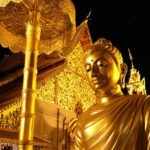
Wat Phra That Doi Suthep: plan for the long, scenic portion
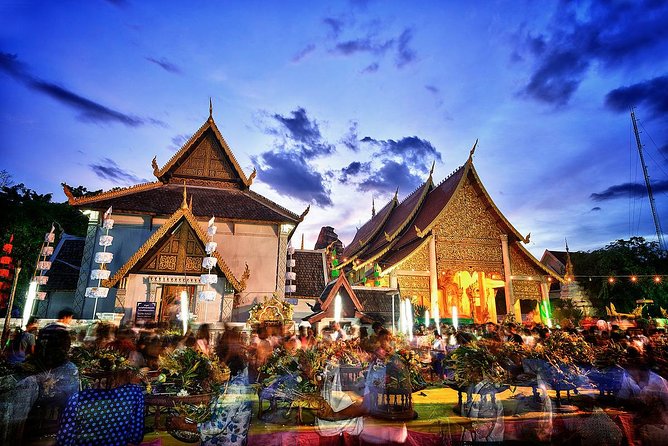
The program’s biggest block is Wat Phra That Doi Suthep, with about 3 hours listed. This is the hilltop temple most people connect with Chiang Mai, and the program description highlights it as a Theravada Buddhist wat in Chiang Mai Province.
This stop is valuable for two reasons. First, it’s a major cultural landmark, not a quick photo stop. Second, it changes the pace of your day. Old-city temples give you one kind of view of Chiang Mai. Doi Suthep gives you another.
What to consider: because it takes longer, it can crowd the rest of your plan if you’re also trying to do markets the same night. If you choose a night-market-heavy schedule, you might want to be selective about how many other temples you add.
The old-city set: Wat Suan Dok, Wat Phan Tao, Wat Phan On
After Doi Suthep, or as part of a temple-heavy half day, the program includes three more old-city wats:
Wat Suan Dok (about 1 hour)
Wat Suan Dok is described as built in the late 14th century and known for historical structures, including a principal pagoda and whitewashed mausoleums. This is a great place to look closely at details because the structures give you a sense of how Chiang Mai commemorates people and power.
Wat Phan Tao (about 1 hour)
Wat Phan Tao is listed as one of the older temples in the walled center, with structures likely built toward the end of the 14th century. It’s a good stop if you want variety in architecture and don’t want every temple to feel identical.
Wat Phan On (about 1 hour)
Wat Phan On is smaller and built in 1501 during the reign of Lanna King Mueang Kaeo. It’s often a nice counterbalance: when you’ve seen bigger chedis earlier, a smaller complex can feel more manageable and personal.
The practical point with these three stops is that each one helps you build a more complete picture of the old city. If you only have time for one or two, I’d choose based on your interest in scale (Suan Dok), age cues (Phan Tao), or the feel of a smaller complex (Phan On).
Night Bazaar vs Tha Pae Walking Street: two different evening styles
The program turns to evening with two market options. Both are listed as free admission.
Night Bazaar (about 4 hours, recommended Monday–Friday)
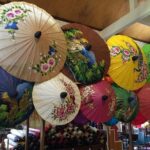
Night Bazaar is designed for a steady evening stroll. It’s listed as about 4 hours, so it’s not a quick detour. If you like browsing handmade goods and watching the flow of the night, it can work well as a relaxed finish to a temple day.
Tha Pae Walking Street (about 5 hours, weekend market)
Tha Pae Walking Street is described as a weekend market that stays in the main center road. This one also has a longer window listed (about 5 hours), and it’s paired nicely with the old-city temples because the description notes you can also visit temples like Wat Phan On, Wat Phan Tao, and Wat Chedi Luang around the same evening area.
If you want a more energetic market vibe, Tha Pae on the weekend is the logical pick. If you prefer a smoother midweek market pace, Night Bazaar is the better match.
Language-specific guides: why it matters more than you think
The tour includes a private guide available in English, German, French, Italian, or Spanish. That’s not just a comfort perk. In temple settings, wording changes everything. You want to understand what you’re looking at: the purpose of the buildings, the meaning behind names, and what’s worth noticing before you move on.
Some groups have been matched with an Italian-speaking guide named Edo, and others have mentioned a guide named EMME as a standout. If language comfort is important to you, it’s worth checking that your preferred language is listed for your booking.
Also, because this is private, you can ask your guide to slow down when you hit something confusing. That’s how you leave with real understanding instead of a checklist.
Price and value: what $98.91 really covers
The price listed is $98.91 per person and the duration is about 4 to 8 hours. Averages show it’s often booked around 42 days in advance, which is a helpful clue: if you want a certain transport style or guide language, earlier planning can give you more choice.
What’s included:
- Driver and guide
- Car/van plus fuel surcharge
- Public transport (if that’s the plan for your route)
- Pickup offered
- Mobile ticket
- Group discounts (when applicable)
What’s not included:
- Lunch and drinks
- Temple entrance fees
So the value equation is pretty clear. You’re paying for organization, a guide, and transport. You’re not paying for your meals or admissions. If you’re the type who eats out anyway and buys snacks while walking around Chiang Mai, the extra cost may feel normal. If you prefer to have a strict all-in budget, you’ll want to account for admissions and a meal.
The one drawback to watch: extra costs plus non-flex refunds
The biggest day-to-day issue is the same for all the temple stops: admission tickets aren’t included. Add lunch and drinks, and your cash out might surprise you if you’re budgeting only from the base price.
There’s also a planning reality: this experience is listed as non-refundable and cannot be changed for any reason. That means you should book only when your dates are locked.
Who this tour is best for (and who should think twice)
This program is a great fit if you:
- Want a private Chiang Mai day without the stress of planning transport between sites
- Care about understanding temples, not just checking them off
- Like mixing sightseeing with evening markets
- Travel as a couple or small group, since the program requires a minimum of 2 people per booking
You might think twice if:
- You dislike “pay-as-you-go” temple admissions and prefer tours that bundle everything
- Your schedule might change, since the refund/change policy is strict
- You’re expecting a fixed, museum-style route with no flexibility. This one is built to adapt to your plan.
Should you book Private Program Discovery Chiang Mai?
If you’re deciding between a standard group tour and a private day, this is the more practical choice for most couples and small groups. You get a real guide, a sensible route, and the option to end with markets that match your day of week.
My call: book it if you want temples with context and a night market finish, and you’re comfortable paying for temple tickets and your own meals. Skip it if you need a fully all-in package price or your travel dates aren’t stable yet.
If you do book, do two simple things: confirm your guide language is what you want, and plan a clear expectation for lunch and temple admissions so there are no money surprises mid-day.
FAQ
How long is the Private Program Discovery Chiang Mai tour?
It runs about 4 to 8 hours, depending on the option you choose.
What does the tour price include?
It includes the driver, guide, car or van, fuel surcharge, and public transport (when used as part of your program). It also includes a mobile ticket.
Are temple entrance fees included?
No. The program lists admission tickets as not included for the temples.
What about lunch and drinks?
Lunch and drinks are not included.
Do I get pickup in Chiang Mai?
Yes, pickup is offered.
What languages are the guides available in?
The guide is available in English, German, French, Italian, and Spanish.
What are the night market recommendations by day?
Night Bazaar is recommended Monday through Friday. Tha Pae Walking Street is described as a weekend market.
Is this tour private or shared?
It’s private. Only your group participates.
What’s required on the day of travel?
A current valid passport is required on the day of travel, and the dress code is smart casual.