REVIEW · CHIANG MAI
Chiang Mai : Cook in Farm, Market tour & Go by a Local Train
Book on GetYourGuide →Operated by Chiang Mai Smart Cook · Bookable on GetYourGuide
A local market, an organic herb garden, and a Thai train. That mix is why this trip feels more like a day with locals than just another Chiang Mai cooking class. I especially like the farm-to-table setup (you’re using what grows nearby) and the hands-on way you pick your own menu. One consideration: part of the appeal is the train ride, so if you mainly want a pure cooking workshop, you may feel the total price is higher than simpler classes.
What also works for me is the teaching style. In past sessions, English instructors such as Cat or Mac guided cooking with patience, and other guide pairs like Shisha and Poppy were mentioned for making the garden-and-food side feel personal. You’ll also leave with an online PDF recipe book, so the dishes don’t vanish the moment you get home.
The day runs about 5 hours and starts with hotel pickup. Then it shifts into countryside mode: Lamphun old-city market sights, a local train stretch, and a small-village kitchen-herb garden where the food story starts at the source.
In This Review
- Key highlights worth your attention
- Why the Lamphun Train Ride Changes the Whole Day
- Lamphun Market Stop: Where You Learn What Matters
- The Small Village Herb Garden: Farm-to-Table at Ground Level
- Menu Design: Choose Your Favorites, Then Learn the Rules
- Cooking and Tasting: What You Actually Take Home
- Price and Time: Is $57 Worth It?
- What to Expect from the 5-Hour Schedule
- Practical Tips Before You Go
- Should You Book This Chiang Mai Cook in Farm, Market Tour & Go by a Local Train?
- FAQ
- What is the duration of the experience?
- Where does the tour take place?
- How much does it cost?
- Is hotel pickup included?
- What language is the instruction?
- What’s included in the price?
- Is alcohol included?
- What should I bring?
- Do I need a passport for the train?
- Who is this experience not suitable for?
Key highlights worth your attention
- Lamphun old-city market stop: shop for ingredients tied to the dishes you’ll cook
- Organic kitchen herb garden: herbs and greens grown for Thai cooking, not just show
- Menu design before cooking: you choose favorites, then the instructor helps you shape them
- Local Thai train ride: countryside views and an authentic travel moment built into the schedule
- Online PDF recipe book: your cooking guide continues after you leave Chiang Mai
Why the Lamphun Train Ride Changes the Whole Day
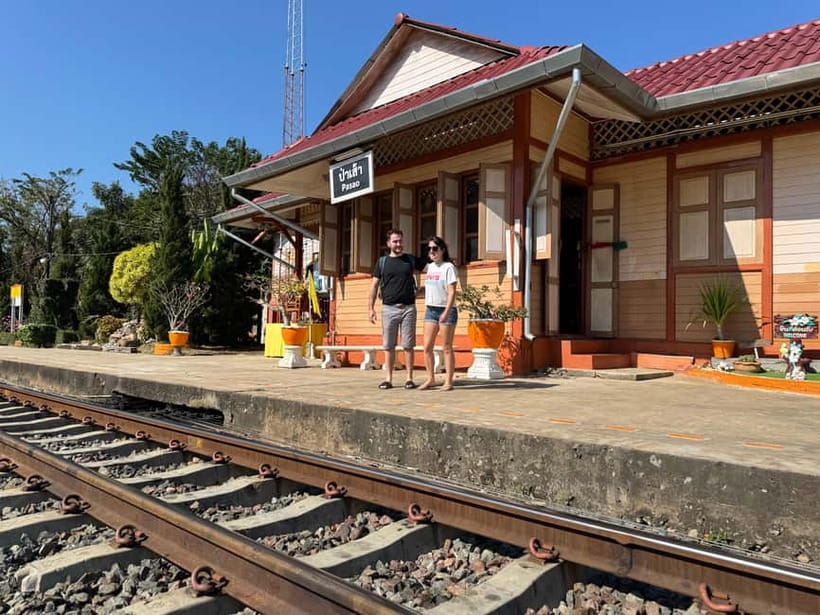
The day’s pacing matters, and the local train segment is a big reason. After pickup, you head toward Lamphun, and you’ll take a traditional train ride for roughly 20–30 minutes. It’s short enough to stay pleasant in a 5-hour window, but long enough to break up the day so you don’t feel stuck in one activity after another.
This is also where you get a more grounded sense of Northern Thailand. You’re not just seeing countryside from a road; you’re moving through it like residents do. One review tip to keep in mind: if you’re planning to use the train as part of your travel documents, bring your passport. The tour details don’t explicitly say it’s required, but a past participant strongly recommended it for train travel.
Practical thought: if you’re expecting a long sightseeing train journey, adjust your expectations. Here the train is a supporting character, not the main event. The real payoff is how the ride sets up the rest of the day: market-to-garden-to-kitchen, in a compact loop.
You can also read our reviews of more shopping tours in Chiang Mai

Lamphun Market Stop: Where You Learn What Matters
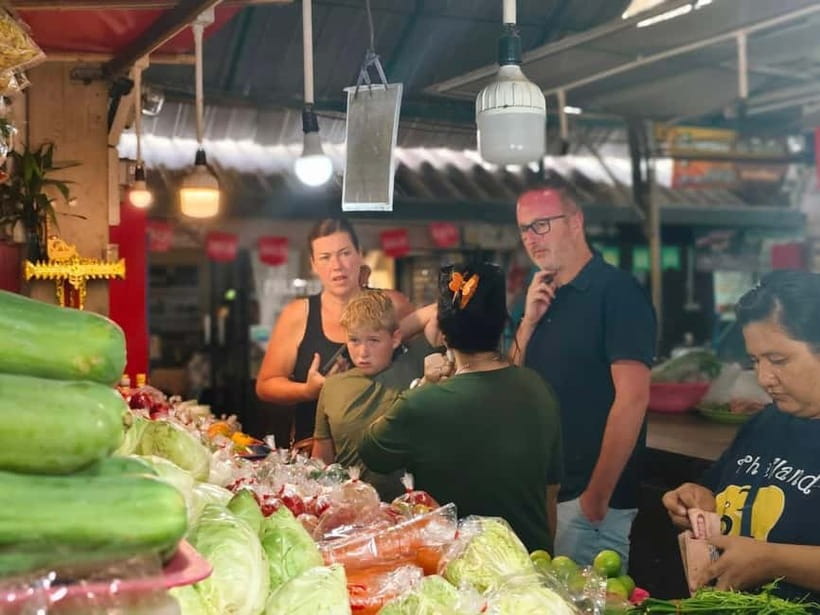
The itinerary includes a stop at a local and among the oldest markets in Lamphun’s old city area. This isn’t just a “look and take photos” moment. You’ll have time to shop for ingredients that connect directly to what you’ll cook later.
For me, market stops are where a Thai cooking class becomes useful, not just entertaining. Thailand’s flavor comes from the details: specific herbs, the right balance of sour-salty-sweet-spicy, and the way aromatics are used. When you see the ingredients in context—especially herbs and greens—you start to understand why Thai food tastes layered instead of one-note.
You also get a history-and-stops component during the same stretch. The schedule includes sightseeing at the Chama Dhevi monument, described as tied to Lamphun’s status as an old and historically famous Northern city. If you like adding small cultural pauses into your food days, this helps the market feel like part of a real place.
A small caution: markets can mean humidity, lots of walking, and vendor calls. Wear comfortable clothes and expect to move more than you’d do in a studio kitchen. If you’re the type who wants a perfectly seated experience, this part may feel a bit active.
The Small Village Herb Garden: Farm-to-Table at Ground Level
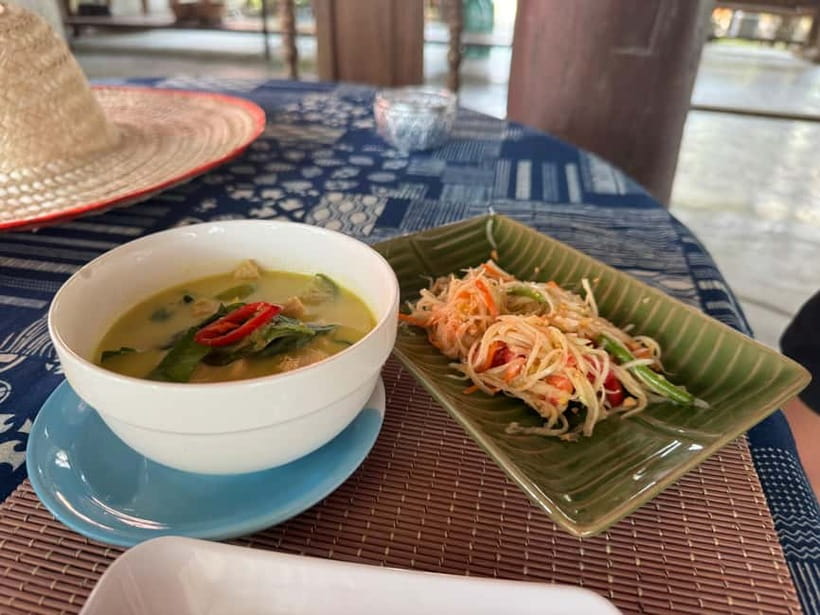
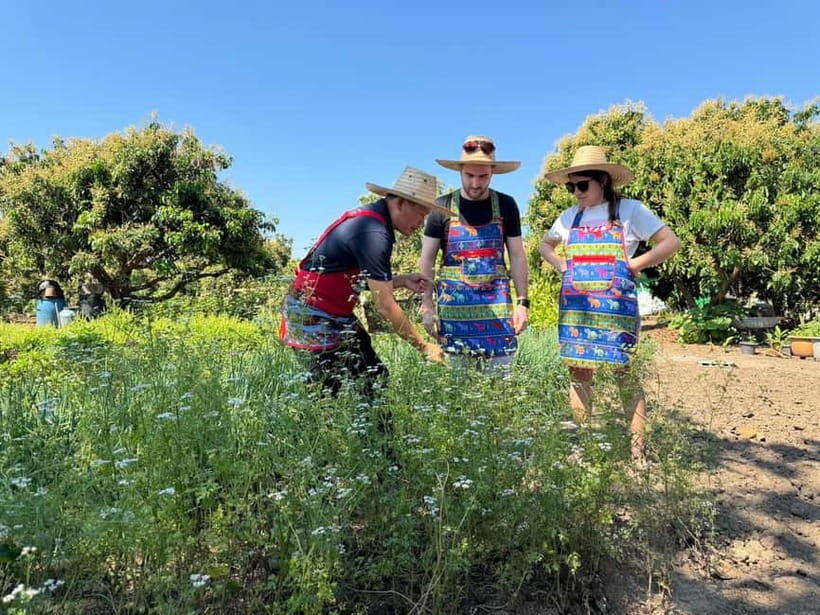
After the market and transport segment, you head to a small village where the focus turns to the growing side. Your hosts grow their own organic kitchen herbs, spices, and ingredients for Thai cooking. This is the kind of farm-to-table that makes sense because you’re not being shown a distant “farm experience.” You’re cooking with food that’s been grown for the kitchen right there.
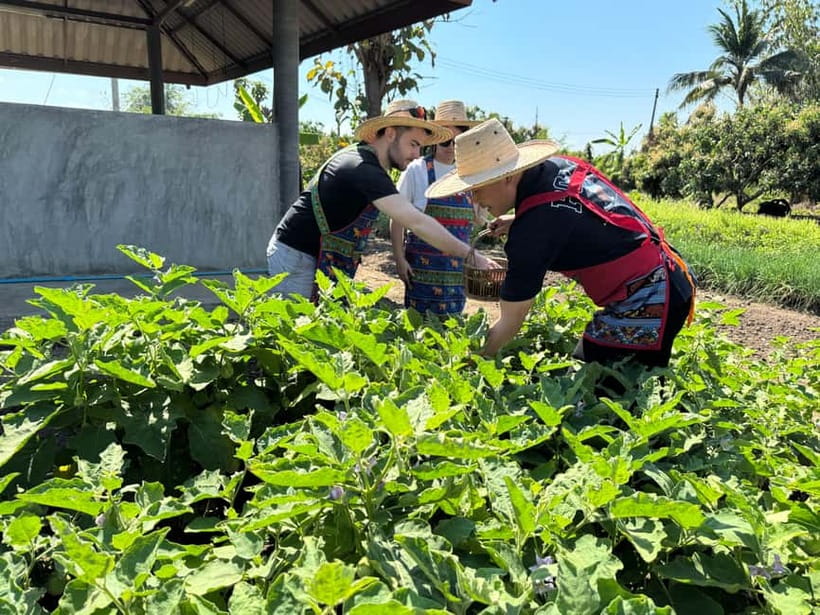
In the garden, you’ll learn about fruits, vegetables, and herbs grown for everyday cooking. Past reviews specifically call out the instructors’ knowledge of what’s growing and how to use it. You may also collect fresh herbs and greens to prepare your dishes, which is one of those moments that feels small but changes how you taste. When you’ve handled the ingredient first, it’s easier to notice flavor and aroma during cooking.
There’s also a welcoming break built in. Before cooking, you’ll get a welcome drink and snacks while you design your menus. That matters more than you might think—food days can get rushed, and this gives you a steady rhythm. You’re not thrown straight into chopping the moment you arrive.
Think about your comfort level with outdoor steps. Even if the garden itself isn’t extreme hiking, you’ll likely stand, walk, and move around in a countryside setting. Bring light layers if you’re sensitive to sun or heat, and wear shoes you don’t mind getting slightly dusty.
Menu Design: Choose Your Favorites, Then Learn the Rules
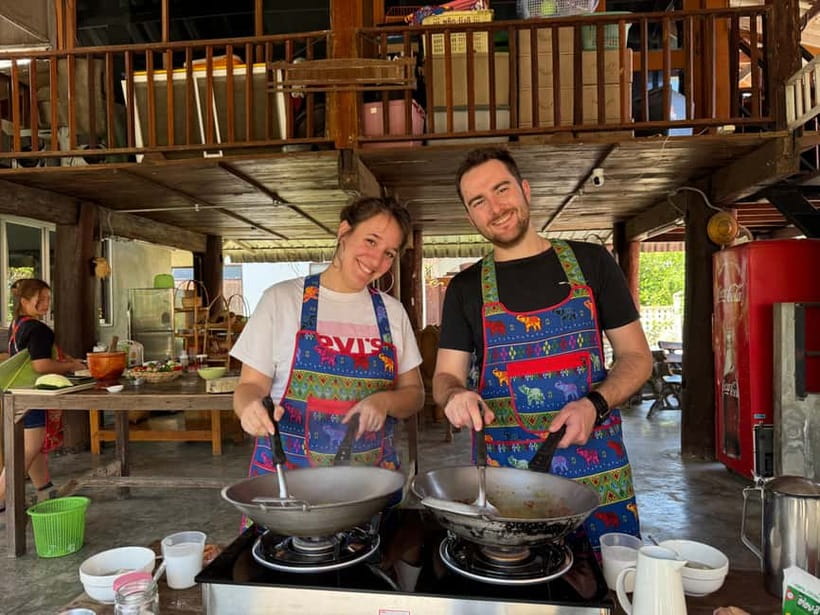
One of the best parts of this experience is that it’s not one fixed menu. You’ll design your own favorite menus before you cook. That means you can steer the day toward dishes you actually want to eat, whether you prefer something herb-forward, more balanced-and-light, or richer-flavored.
Then the instructor helps you make it work. Past participants mention that their guides explained the complexity of Thai cooking and the importance of balance—how sweetness, sourness, salt, and spice need to fit together instead of fighting. Even if you’ve cooked before, Thai flavor logic can be a little different from what you’re used to. The teaching style described across reviews emphasizes patience and clear demonstration, so you’re not left guessing at the stove.
This is also where guide names come up. Reviews mention instructors like Cat and Mac, and guide pairs Shisha and Poppy, all described as supportive and skilled in their explanation of garden produce and cooking choices. You may not have the exact same teacher, but the consistent theme is that the class is structured for real learning, not just following steps.
If you’re traveling as a couple or small group, menu choice can be surprisingly practical. You’ll talk about preferences, then cook dishes that match. That often leads to a better meal at the end—because it’s your selection, not someone else’s default program.
Cooking and Tasting: What You Actually Take Home
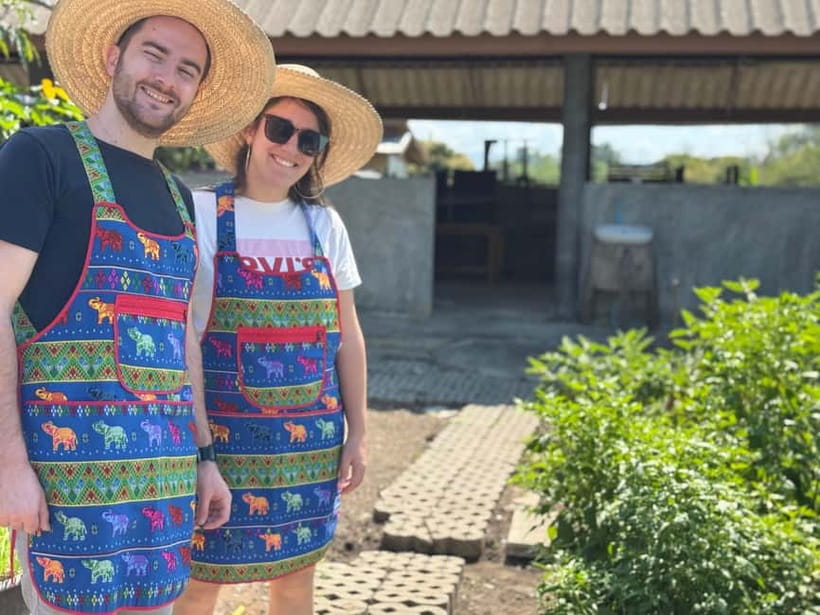
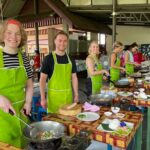
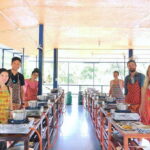
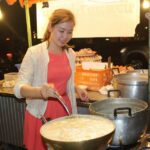
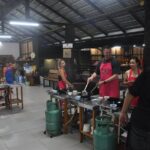
Once you’ve collected herbs and chosen your menu, you move into the cooking portion. This is hands-on Thai cooking with ingredient support included. In the package, all cooking ingredients are included, along with drinking water—so you’re not constantly worrying about what’s missing.
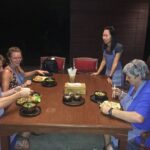
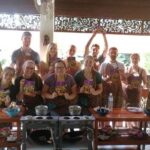
The tasting is part of the day’s payoff. You’ll eat the dishes you prepared, which lets you immediately connect instruction to results. If something tastes off during cooking, you can usually adjust in real time because you’re still in the learning moment, not back home troubleshooting from memory.
And the documentation is built in. You’ll receive an authentic Thai recipe book online in PDF version for everyone in the group. This is a big deal for value. Cooking classes often end with a great meal and a few handwritten scraps. Here, the PDF helps you repeat the flavors later, assuming you cook again soon.
One practical consideration: no alcohol is included. If you enjoy a beer or cocktail with your cooking class, plan to skip it on this tour. You can still have a fun day without it, but if alcohol is part of your routine, factor that into your plans afterward.
You can also read our reviews of more tours and experiences in Chiang Mai


Price and Time: Is $57 Worth It?
At $57 per person for about 5 hours, you’re paying for more than a cookbook-style cooking workshop. The value comes from the combined elements that many other classes split up: hotel pickup with round-trip transportation, a market ingredient tour, access to the organic farm/garden experience, cooking ingredients, drinking water, an online recipe book, and a local train ticket.
That’s why this tour can feel like a full cultural day rather than a kitchen-only session. The market and farm components help you understand Thai flavor sourcing, and the train ride adds context and scenery without consuming your whole day.
Still, balance your expectations. One review noted that the train element can make the class cost higher compared to cooking-only options, and they felt the train portion didn’t feel like a full round-trip scenic ride. Based on the tour description, you should expect the train to be integrated into the schedule but not necessarily long enough to replace a dedicated rail sightseeing trip.
Who gets the best value?
- Food lovers who want ingredient sourcing and garden learning, not just cooking steps
- Travelers who enjoy adding cultural context (market + monument + train) into food days
- Couples or small groups who want a flexible menu and a shared meal experience
If you’re only interested in learning to cook and you don’t care about market or farm context, look at simpler cooking classes first. But if you want Thai cooking tied to where the flavors start, this package makes sense.
What to Expect from the 5-Hour Schedule
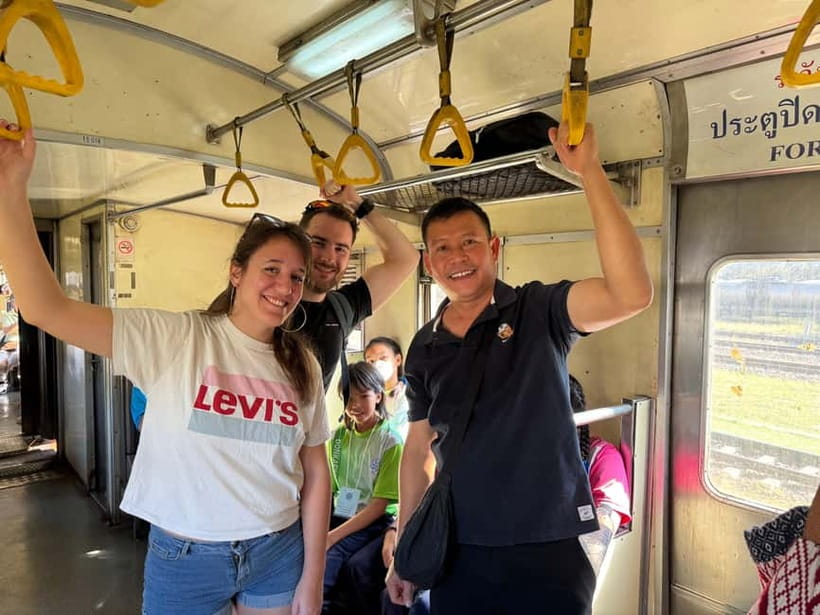
This is a tight schedule with multiple transitions, so it helps to know the flow.
You’ll be picked up from your hotel, and you should wait in the lobby about 20 minutes before the start time. After pickup, you travel toward Lamphun, then you include the local train portion. From the train station area, the plan includes the local oldest market in the old city and time for ingredient shopping plus a sightseeing stop at the Chama Dhevi monument.
Then the day shifts to the small countryside village where your hosts grow their organic kitchen herbs and spices. You’ll receive welcome drink and snacks while you plan menus, then you go to collect fresh herbs and greens for cooking. Finally, you cook, eat, and use the provided online PDF recipe book afterward.
The upside of this structure is momentum. You’re never waiting around for hours without doing something. The tradeoff is that it’s not a slow, “wander at your own pace” day. If you like a calm schedule, you’ll still enjoy it, but you’ll be more active than you might expect from a standard class.
Practical Tips Before You Go
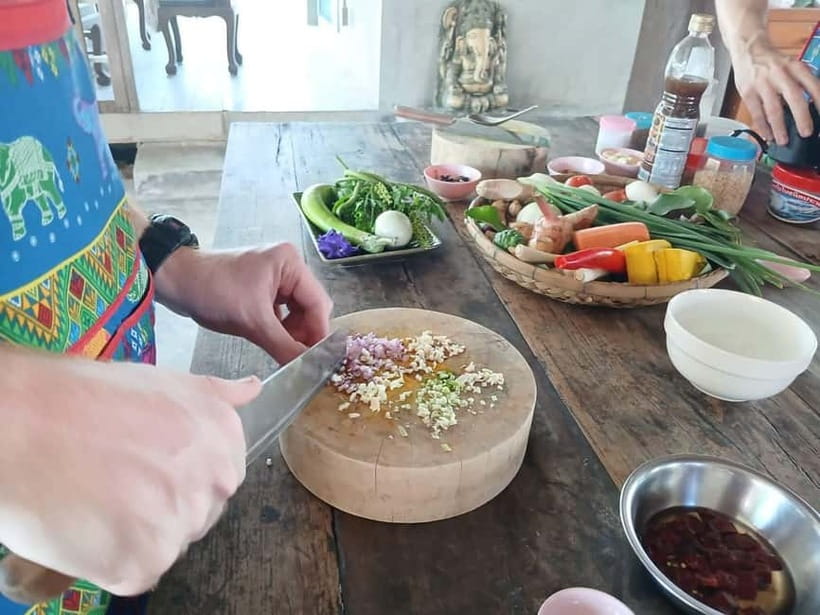
- Wear comfortable clothes: you’ll be walking through market areas and spending time outdoors at the farm/garden.
- Bring your passport: a past participant specifically advised it for train travel. The official tour details don’t spell out a passport rule, but it’s an easy safeguard.
- Skip alcohol and drugs: alcohol and drugs aren’t allowed.
- Know the age fit: not suitable for children under 5; also not suitable for people over 95.
- Expect an English-speaking instructor: the course language is English, and guides mentioned in reviews have supported guests throughout pickup, train ride, market stop, garden time, and cooking.
- Group energy matters: menu design is part of the process, so you’ll likely spend time discussing preferences with the guide and partner/group.
One last tip: plan your appetite. By the time you get to the cooking and tasting, you’ll want to be ready to eat what you make, not full from a late lunch.
Should You Book This Chiang Mai Cook in Farm, Market Tour & Go by a Local Train?
I’d book this if you want Thai cooking to come with context: ingredient shopping in a real market, herbs and greens pulled from an organic garden, and a local train ride that turns the day into more than just a kitchen class. The strong point is how the pieces connect, and past reviews consistently praise the hands-on learning and the patience of instructors like Cat and Mac, as well as guides such as Shisha and Poppy for garden knowledge.
Skip or compare if your top priority is a long, relaxed cooking session only. This experience packs a lot into 5 hours, and the train element is part of why the price is higher than some simpler alternatives.
If you’re the type who likes learning as you eat—how flavors are built, where herbs come from, and how Thai cooking balances taste—you’ll likely find this a satisfying, practical day in Northern Thailand.
FAQ
What is the duration of the experience?
It lasts 5 hours.
Where does the tour take place?
It’s in Chiang Mai Province, with activities that include Lamphun and a local train ride.
How much does it cost?
The price is $57 per person.
Is hotel pickup included?
Yes, pickup from your hotel is included, and you’ll be asked to wait in the lobby about 20 minutes before the start time.
What language is the instruction?
The instructor provides the experience in English.
What’s included in the price?
Included are round-trip transportation between your hotel and the activities, the local market tour, all cooking ingredients, drinking water, an online PDF recipe book, and a local train ticket.
Is alcohol included?
No. Beer and alcohol are not included.
What should I bring?
Wear comfortable clothes.
Do I need a passport for the train?
One past participant advised bringing a passport for the train. The provided tour details don’t explicitly confirm a passport requirement, so it’s smart to check with the operator if you’re unsure.
Who is this experience not suitable for?
It’s not suitable for children under 5 years old and people over 95 years old.