REVIEW · CHIANG MAI
Chiang Mai Scavenger Hunt and Sights Self-Guided Tour
Book on Viator →Operated by Explorial · Bookable on Viator
A smartphone turns Chiang Mai into a game. This self-guided walking tour is part sightseeing, part puzzle hunt, where clues on your phone route you between landmark spots and temple stops at your pace. You’ll earn points as you solve questions and complete playful photo challenges.
Two things I like right away: the way the app gives you hints plus a map so you can find your way without stress, and the fact that you’re not just looking at sights—you’re stopping to answer questions pulled from what you see in the area. One thing to consider is that the tour format is lightweight: if you want heavier background on every place, you may wish there were more stops or more explanation.
In This Review
- Key highlights worth your attention
- Smartphone scavenger hunt meets Chiang Mai temples
- What “self-guided” really means here
- What you’ll do at each stop (and why it works)
- The point system changes your pace
- Itinerary walkthrough: from Three Kings Monument to Tha Phae Gate
- Stop 1: Three Kings Monument
- Stop 2: Wat Inthakin Saude Muang (listed as Wat Muang)
- Stop 3: Tha Phae Gate
- Timing, distance, and how to pace yourself
- Price and value: why $9.21 can be a smart use of time
- Who this tour suits best (and who might prefer something else)
- Practicalities: start point, transport, and what to bring
- App mindset: you’re scanning, not just reading
- The small drawbacks to think about before you book
- Should you book the Chiang Mai scavenger hunt?
- FAQ
- How long is the Chiang Mai scavenger hunt and sights self-guided tour?
- Is this tour fully self-guided or do I meet a guide?
- Where does the tour start and end?
- What do I do during the scavenger hunt?
- What languages is the tour available in?
- Can I cancel for a full refund?
Key highlights worth your attention

- Riddles that guide your route between major landmarks and temples, not just one big loop
- Questions tied to what you can actually see on signs, pictures, and site details
- Photo tasks that reward creativity with points while you’re walking
- No strict time limit, with an average tour time of about 1–2 hours
- Private for your group—handy for families or friends who want control of timing
Smartphone scavenger hunt meets Chiang Mai temples

If you like exploring at street level, but you also want a reason to keep moving (and a game to break the monotony of walking), this tour fits well. It’s built around a simple idea: you go sight to sight, and at each one you do a quick set of tasks on your phone. That turns a normal walk into something with momentum.
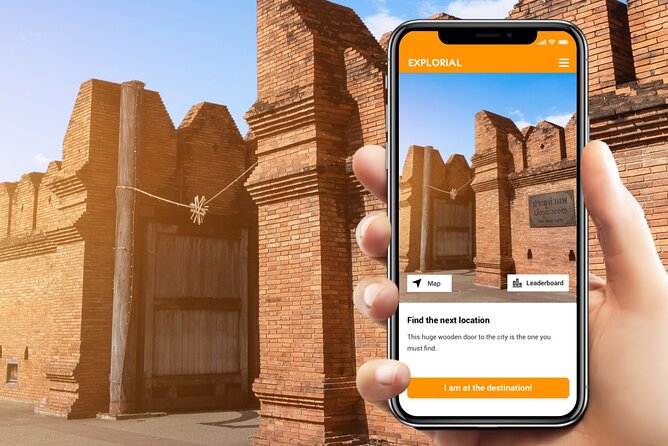
You also get a practical navigation assist. After purchase, you receive an access code for the Explorial-App, then you start at the meeting point and use the app’s map function to move between stops. The tour is listed as available basically all day (open hours shown from midnight to 11:30 PM), so timing is flexible.
And it’s designed to be low-pressure. You’re not stuck in a rigid schedule. The tour isn’t limited in time, and most people average about 1–2 hours. If you want to linger, you can. If you want to hurry, you can too—just stay aware you’re solving puzzles along the way.
You can also read our reviews of more guided tours in Chiang Mai


What “self-guided” really means here
This is not a guided lecture with a human leader. The “guide” is the app: hints, directions, and tasks. That’s great if you prefer independence. It also means the experience is only as good as how much you engage with the clues.
If you’re the type who likes to ask lots of questions on the spot, you might feel the missing layer of depth. Still, many people enjoy the tradeoff because it keeps you moving and creates a reason to notice details you’d normally glide past.
What you’ll do at each stop (and why it works)
The tour mixes three main actions, each one pushing you to look at Chiang Mai more actively.
First, you find sights using hints. The app helps you get there, so you spend less time second-guessing turns and more time at the places themselves. This matters in Chiang Mai’s older core area, where walking routes can be a bit of a maze if you’re only relying on memory.
Second, you solve questions once you arrive. The answers are typically hidden in what’s around you—like signs and pictures. That turns passive sightseeing into active learning. You’re not reading a guidebook page later; you’re scanning a site in the moment.
Third, you do photo tasks. These can be simple or creative, but the goal is the same: you’re rewarded with points for completing the challenge. It’s a fun way to break the “temple fatigue” that can happen when you’re seeing one sacred space after another.
The point system changes your pace
The scoring element is small, but it has a big effect on how you walk. You’re likely to slow down when you would normally keep strolling. You’ll also check details you might otherwise ignore. One review summed up the experience as a guide that helps you explore on your own, and that’s exactly how it feels: like a game layer on top of real streets and real sights.
Itinerary walkthrough: from Three Kings Monument to Tha Phae Gate
You’ll hit three main stops, and the loop ends back at the meeting point.






Stop 1: Three Kings Monument
You start at the Three Kings Monument, which is a smart choice for a starting point. It’s a major landmark area that makes it easier to get your bearings before you start solving your first set of clues.
At this first stop, your job is less about wandering and more about catching the flow of the format. Use the app’s hint system to locate the right spot, then answer the questions it asks. Since many answers are tied to things visible on site, this is where you’ll get your first “aha” moment: you can’t just glance and move on—you have to look.
Possible drawback: since it’s the first stop, you might spend extra time figuring out how the app wants you to interact. Once you’re through, the rhythm usually clicks.
Stop 2: Wat Inthakin Saude Muang (listed as Wat Muang)
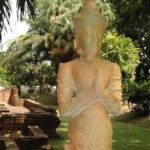
Next up is Wat Inthakin Saude Muang, also shown simply as Wat Muang. This is your temple stop, and it’s where the “learning through observation” part becomes more satisfying.
Plan on approaching it like you would any temple visit: take your time, behave respectfully, and be mindful about what’s appropriate to photograph or where you stand to read the site clues. Then let the app pull you into the details. The questions are designed so the answers are somewhere you can see, often via information placed around the area.
If you’ve ever visited a temple and wished you had a reason to notice more than just the main building, this part can help. You’re guided to look for text or visuals that you’d normally skip.
Watch-outs: the tour is walking-based. Temple areas can mean uneven ground and short walking detours, so wear shoes you’ll be happy in for a couple of hours.
Stop 3: Tha Phae Gate
You finish at Tha Phae Gate. This stop is more of a landmark-and-street-energy experience than a quiet interior visit, which helps the tour feel balanced. After the temple, you get a different kind of sight to work with: a gateway area that’s often easier to navigate and visually scan.
Just like earlier, the app guides you and asks you to answer questions that are meant to be found on or around the site. If you like photo tasks, this is also a good place for it, since gate areas can give you more natural angles and background context.
Small tip: since this is the final stop and you end back at the meeting point, keep an eye on how much time you’re taking at each stop. The tour is flexible, but you’ll enjoy it more if you don’t run out of steam right at the end.
Timing, distance, and how to pace yourself
The experience is listed at about 2 hours (approx.), with an average of 1–2 hours. But the key detail is that it isn’t limited in time. You can slow down, pause for photos, or take a break without the tour instantly feeling rushed.
That flexibility matters in Chiang Mai because weather and street conditions can change quickly. If the heat is heavy, you can step into shade and work through your next clue. If you find yourself near a small storefront you want to browse, you can. The app keeps you on track without dragging you along.
One practical note: the itinerary is short (three stops). That’s not a flaw—it’s often what makes the experience good value. You still get multiple moments of “find and solve,” without turning it into a marathon.
Price and value: why $9.21 can be a smart use of time
At $9.21 per person, this is inexpensive enough that it can work as a low-commitment first day plan. For new visitors, a self-guided game format can help you learn basic layout and landmark locations without paying for a guided walking tour.
The private-group angle also supports value. It’s described as private, meaning only your group participates. That’s a big deal if you’re traveling with friends or family and don’t want to merge into a larger group with different walking speeds.
Is it “cheap” because it’s basic? Not exactly. You’re paying for a structured route plus an app-based puzzle layer, not for a guide’s continuous commentary. If your ideal tour includes lots of detailed history at each stop, you may still want a separate guided temple or museum visit later. But if your goal is to see key sights and make the walk more fun, this price point is hard to ignore.
Who this tour suits best (and who might prefer something else)
This works particularly well if you:
- want a fun first-visit activity to major landmarks
- like solving puzzles and learning through quick questions
- prefer controlling your own pace instead of matching a group
- want a straightforward city introduction that doesn’t require advanced navigation skills
It also tends to be a good fit for groups. One review highlighted it as an excellent group activity—easy to organize and good value for little money. Since it’s private for your group, you can coordinate without waiting for strangers.
You might choose a different option if you:
- want a deeper, spoken explanation at every site
- dislike phone-based tasks and prefer conversation-driven tours
- want a longer itinerary with more than three main stops
Practicalities: start point, transport, and what to bring

The tour starts and ends at 71 Mun Mueang Rd, Tambon Phra Sing, Amphoe Mueang Chiang Mai, Chang Wat Chiang Mai 50200, Thailand. Having a single start/end point makes it easier to plan the rest of your day, especially if you’re already near the city center.
It’s listed as near public transportation, which helps if you’re joining from elsewhere in town. Service animals are allowed, and most people can participate.
What should you bring?
- comfortable walking shoes (you’re doing a city walk)
- a charged phone and a stable internet connection if possible
- water, especially if you’re doing it midday
- a respectful mindset for temple areas
App mindset: you’re scanning, not just reading
Because questions are often answered from what’s around you (signs and pictures), the best strategy is to slow down when you arrive. Look up. Look around. Then check the app.
If you rush, you’ll miss the clue source and it’ll feel harder than it is.
The small drawbacks to think about before you book

Here’s the honest tradeoff. This experience is designed to be quick, game-like, and self-paced. That means:
- you may want more learning content than the short Q-and-point format provides
- the number of locations can feel limited if you’re hoping for a long “temples and museums all day” route
- you’re relying on the app interface to do the heavy lifting
One review noted the value felt okay but wished there were more learning content and spots. That’s the most common “this isn’t for me” angle: if you want a deeper narrative, add a separate guided stop later.
Should you book the Chiang Mai scavenger hunt?
Book it if you want an easy win: a fun way to cover key sights, walk at your pace, and learn through short questions instead of lectures. The price is low, the structure keeps you moving, and the mix of monuments, temple space, and a gateway landmark helps you see different sides of Chiang Mai in a single outing.
Skip it (or pair it with something else) if your top priority is detailed history and guided storytelling. With only three main stops, you’ll likely want another experience afterward if you crave more depth.
If you’re a first-time visitor, this is a smart way to get your bearings fast while still enjoying the city as more than a checklist.
FAQ
How long is the Chiang Mai scavenger hunt and sights self-guided tour?
The duration is listed as about 2 hours (approx.). It also notes an average tour time of around 1–2 hours, and the experience is not limited in time, so you can go at your own pace.
Is this tour fully self-guided or do I meet a guide?
It’s self-guided. After you buy the ticket, you get an access code to use in the Explorial-App. You’ll follow the hints and directions on your phone and complete tasks at each stop.
Where does the tour start and end?
It starts at 71 Mun Mueang Rd, Tambon Phra Sing, Amphoe Mueang Chiang Mai, Chang Wat Chiang Mai 50200, Thailand and ends back at the same meeting point.
What do I do during the scavenger hunt?
At each stop, you’ll find sights using hints and the app map function. Then you’ll answer questions related to what’s at the location, and you may also complete photo tasks for points.
What languages is the tour available in?
The tour is available in English and German.
Can I cancel for a full refund?
Yes. Free cancellation is available. You can cancel up to 24 hours in advance for a full refund.
If you want, tell me when you’re visiting (and whether you prefer morning heat or afternoon wandering), and I’ll suggest a simple day flow that pairs well with this scavenger hunt.