REVIEW · CHIANG MAI
Colors of Chiang Mai Guided Bicycle Tour
Book on GetYourGuide →Operated by Recreational Bangkok Biking · Bookable on GetYourGuide
Quiet roads in Chiang Mai still surprise me. This half-day bike tour pairs quiet green roads with time riding near the Ping River, then adds temple stops and Wiang Kum Kam ruins. What I like most is the countryside feeling outside the city and the way your guide explains Buddhism in real, human terms. One consideration: the route can shift with the season, since rice fields and fruit orchards are not always in bloom.
The ride is designed for comfort and breathing room: you’re looking at about 20–25 km over roughly 270 minutes, with snack and meal breaks built in. You’ll get a bicycle and helmet, plus water or soft drinks during the excursion, and the guide handles the pacing so you’re not fighting the route.
This is also a good fit for solo travelers, with English-speaking guidance and private or small-group options. Just note the tour requires a minimum of 2 participants to run, so if you book solo on a quiet day, you may need to be flexible.
In This Review
- Key highlights worth knowing before you pedal
- A half-day ride built around 20–25 km of real Chiang Mai
- Quiet green roads and village life just outside the city walls
- Temple stop: Buddhism explained without the foggy tour-speak
- Ping River riding, then a market snack that tastes like the region
- Wiang Kum Kam: King Mengrai’s old capital ruins on two wheels
- Khao Soy Kai and village crafts: the culture payoff you’ll remember
- Safety on mixed roads: clear signals and a guide who prevents panic
- Price and value: what $38 includes, and why it feels fair
- Who should book this Chiang Mai cycling tour (and who might not love it)
- Should you book Colors of Chiang Mai?
- FAQ
- How long is the cycling tour?
- How far will I cycle?
- What’s included in the price?
- What language is the guide?
- Do I need to bring my own bike?
- Is the tour suitable for solo travelers?
- Where do I meet the guide?
- What will I eat during the tour?
- Does the itinerary always stay exactly the same?
- What is the cancellation policy?
Key highlights worth knowing before you pedal
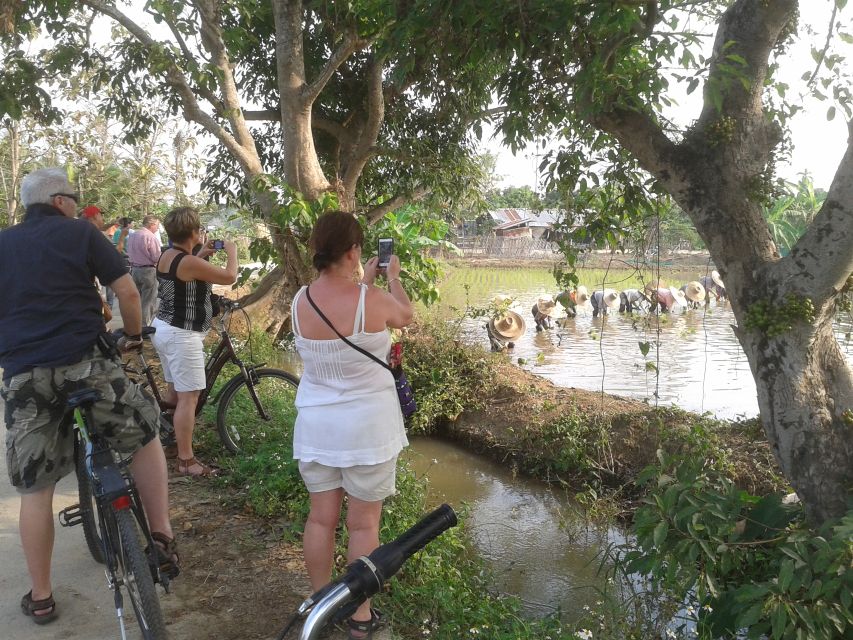
- Quiet countryside roads: most of the ride stays on calmer land lanes rather than major traffic corridors
- Ping River time: a change of scenery and atmosphere as you roll along the river area
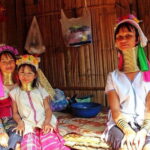
- Village culture stops: you can see women from a local village making traditional Thai products
- Temple guidance with context: your guide can explain what you’re seeing and the Buddhist traditions behind it
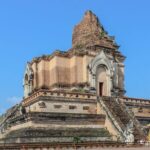
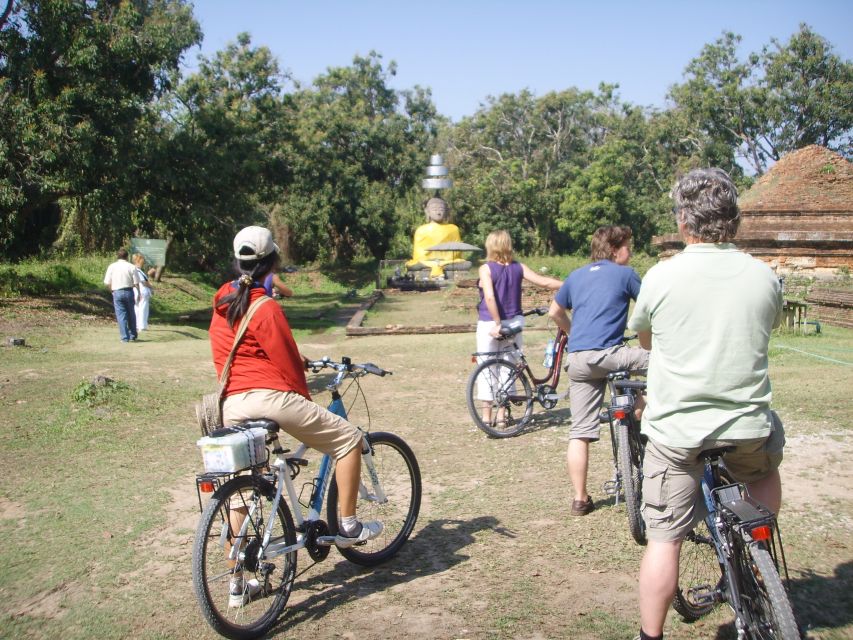
- Wiang Kum Kam ruins + a 700-year-old chedi: big history in a rideable format
- Food included: fresh fruit/snacks along the way and Khao Soy Kai (Chiang Mai-style) during the tour
A half-day ride built around 20–25 km of real Chiang Mai
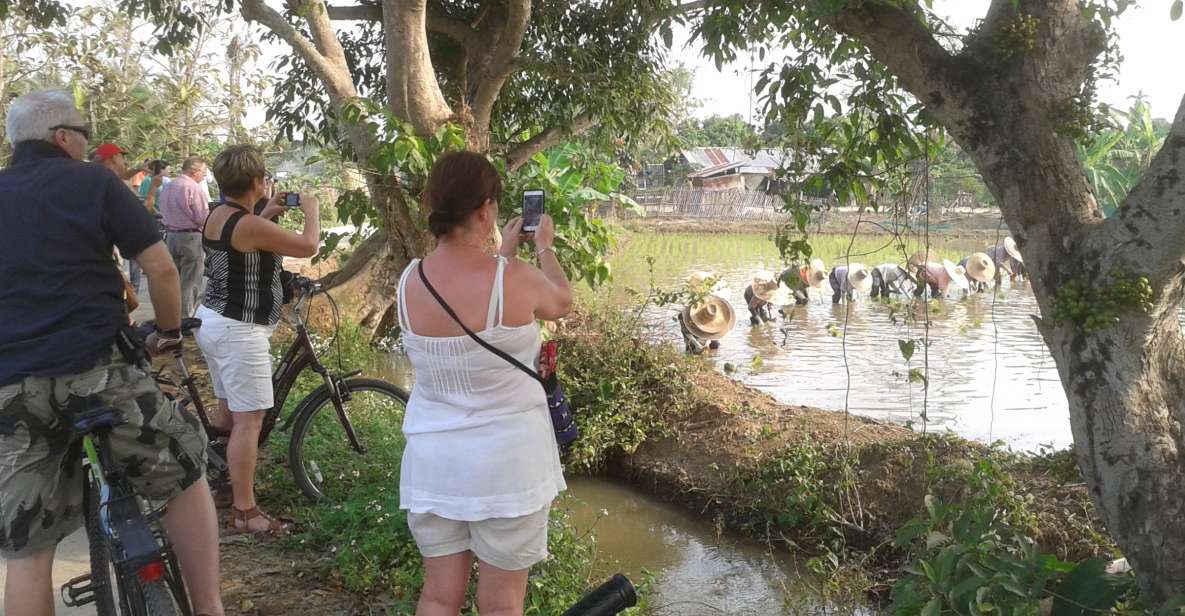
This tour is short enough that you don’t feel trapped by a full-day schedule, but long enough to feel like you actually left the city. The distance is listed at 20–25 km, and multiple guides keep it around a 3 to 4 hour cycling block when conditions allow.
What makes this work for non-race cyclists is the structure. You’re not just pedaling in a straight line. You get stops for viewpoints, temple learning, market breaks, and that included Thai meal. So your time is spread between movement and context, not constant saddle time.
You can also read our reviews of more guided tours in Chiang Mai
Quiet green roads and village life just outside the city walls
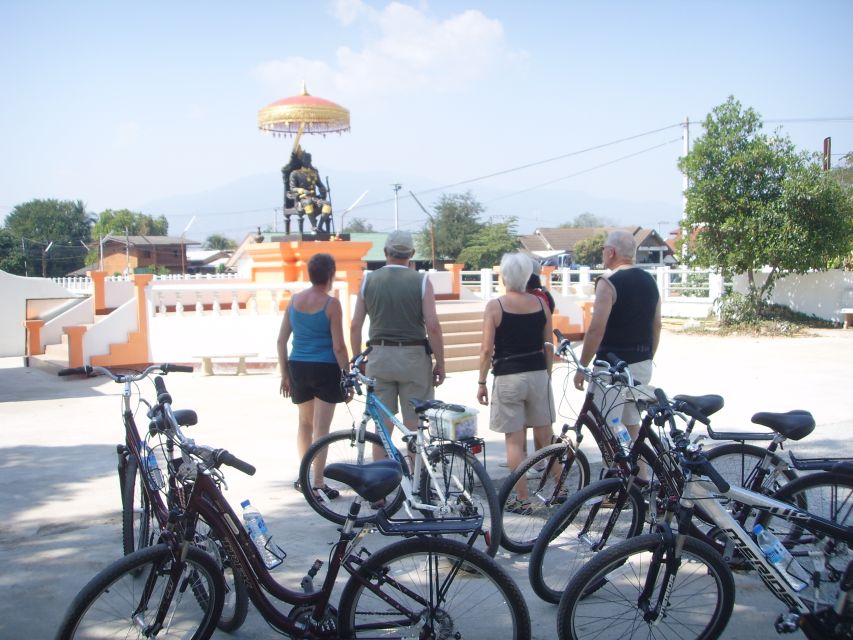
The core experience is the shift from Chiang Mai’s tourist center to the everyday rhythms nearby. The route is planned for quiet and green land roads, where you pass through local communities instead of sticking to the fastest main streets.
Expect to see a lot of what makes northern Thailand feel seasonal and agricultural. The plan includes rice fields and fruit orchards, but here’s the honest part: Thailand is not Instagram wallpaper year-round. The operator explicitly notes that itineraries may change when crops aren’t in bloom, so the scenery can be different depending on when you go.
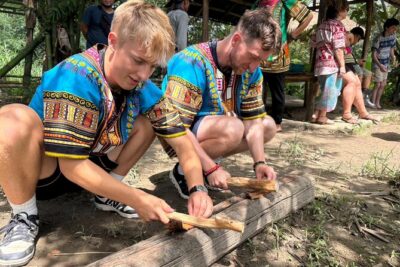
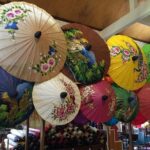
Along the way, you may also encounter cultural work you don’t normally see on a city-only day. One of the tour highlights is time with women from a local village making Thai traditional products. It’s one of those moments that’s easy to overlook if you only spend time in markets, because you’re seeing craft-making as a living routine, not a staged souvenir stop.
Temple stop: Buddhism explained without the foggy tour-speak
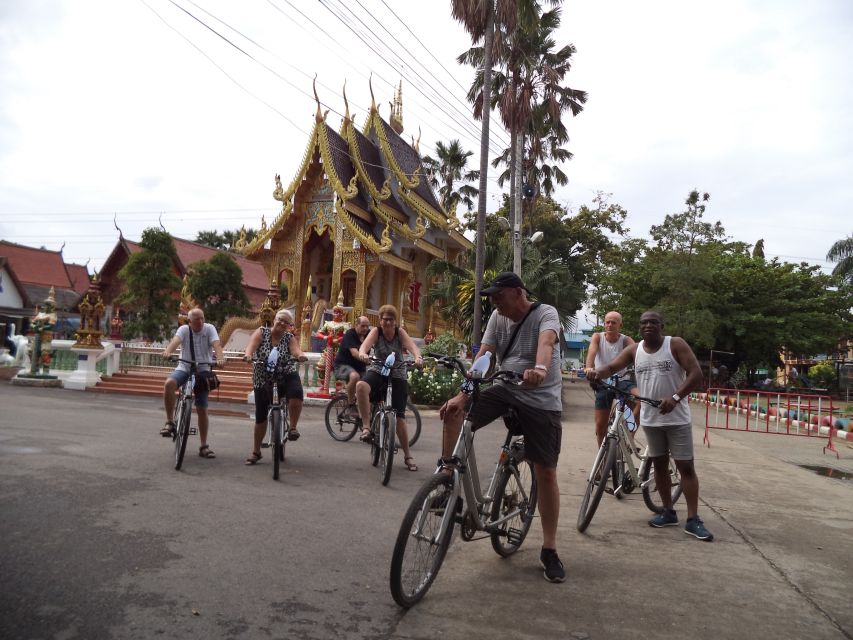
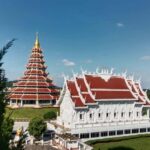
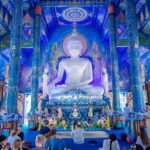
You’ll stop at a local temple, and your guide can tell you what you’re looking at and how it connects to Buddhism. This is not about memorizing dates. It’s about learning the basics so the temple stops don’t feel like you’re staring at buildings with zero context.
One detail that stands out from real guide experiences: some guides have deep personal familiarity with temple life. Wit, for example, has been described as a former monk and shares personal experience during temple visits. Other guides also tend to answer questions patiently, including what symbols mean and what people are doing when they’re there.
A practical tip: bring your curiosity. If you want to know why people do certain actions in a temple setting, this is the part where the tour is most likely to answer it in plain language.
Ping River riding, then a market snack that tastes like the region
Riding along the Ping River is a real mood shift. Instead of only passing homes and fields, you get a visible sense of the water-and-trade geography that shapes Chiang Mai life. It also gives you a natural break from the “road sounds” of city traffic.
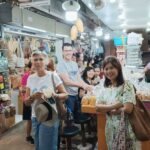
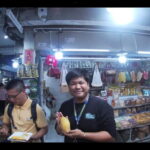
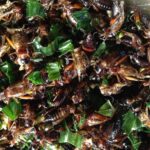
The tour includes a stop for a nice snack or fresh fruit at a local market. If you travel on a day when markets are active, this can feel like a mini cultural reroute rather than a quick pit stop. One example from an actual Saturday ride: the market running meant more to see and more to snack on.
You may also notice that the guide’s pacing gives you room to try small bites without feeling rushed. Coffee and other small treats sometimes come up in the flow of breaks, depending on the day and the guide’s choices.
Wiang Kum Kam: King Mengrai’s old capital ruins on two wheels
The final stretch is where the tour earns its history credit without turning into a museum slog. You cycle through Wiang Kum Kam, a historic settlement founded in 1286 by King Mengrai. It was the capital of the Lanna empire for only about 10 years, which helps explain why you’re looking at ruins rather than a living old-city street grid.
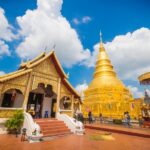
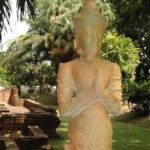
As you ride through the area, you’ll see temples and ruins dating back hundreds of years. Then there’s the headline cultural photo stop: you’ll visit a 700-year-old chedi. If you’re the type who likes to understand what you’re looking at, this is where your guide’s explanations matter, because the site is much easier to read when someone points out what parts are older, what kinds of structures you’re seeing, and why it mattered.
After the ruins and photos, you simply cycle back toward the starting point. The whole ending is designed so you don’t feel like you finished with a sprint. It’s more of a slow ramp-down into the return.


Khao Soy Kai and village crafts: the culture payoff you’ll remember
A lot of bike tours in Asia focus mostly on motion. This one tries to deliver culture through food and everyday craft.
You’ll have opportunities for small tastings along the way: snacks or fresh fruit at the market, plus water or soft drinks during the excursion. Then comes the included meal: Khao Soy Kai, which is Chiang Mai’s take on a rich, aromatic chicken curry dish.
The best part is how food fits the itinerary. You’re not eating in the middle of a shopping mall. You’re eating after you’ve already seen how people live—rice fields, temples, and settlement life—so the meal lands with more meaning than a random lunch stop.
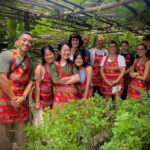
And don’t ignore the craft element. The highlighted stop with women making Thai traditional products is the kind of experience that can turn a cycling day into a cultural one. Even if you’re not buying anything, watching how items get made helps you understand what’s valued locally.
Safety on mixed roads: clear signals and a guide who prevents panic
If you’re not a confident cyclist, you can still do this tour, and that’s not marketing talk. The riding style is built to keep you comfortable: the route is mainly on calmer lanes, with only occasional road crossings that may be busier.
What makes the difference is the guide’s control. In guide feedback, people mention clear hand signals and a careful, considerate approach at intersections. That means you’re not just hoping drivers will be polite; you’re getting guidance that helps you cross without white-knuckle stress.
You’ll also be riding with a bicycle and bicycle helmet provided. That matters because the tour is meant to be “show up and ride,” not “rent your own bike and hope for the best.”
If you’re worried about traffic, say so early. Guides in this style tend to adjust your pace and how you approach road segments, rather than forcing everyone into the same rhythm.
Price and value: what $38 includes, and why it feels fair
At $38 per person, this isn’t just a bike rental with sightseeing tacked on. For that price, you get several value items bundled in:
- Bicycle and helmet
- English-speaking guide
- Water or soft drinks
- Delicious Thai meal/snack
- Insurance
- Free WiFi at the operator’s office
When you price these out yourself in your head, the number starts to make sense. You’re paying for a guided route, not only for the bike. And you’re paying for built-in breaks that keep the day enjoyable instead of turning into a sweaty DIY quest for street snacks and temple entrances.
The other value angle is group size. You can book private or small groups, which usually keeps the tour more personal. And even if you’re with a small group, the plan stays structured: you’re not wandering, you’re riding a route with intentional stops.
Who should book this Chiang Mai cycling tour (and who might not love it)
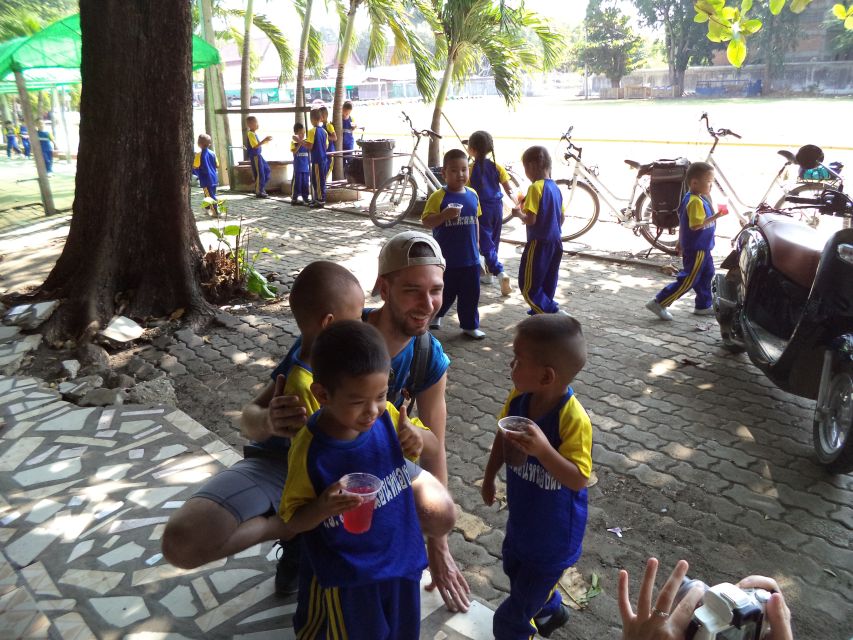
This tour suits you if you want a Chiang Mai day that’s active but not extreme. The distance is manageable for many people, including those who say they aren’t strong cyclists, because the pace is controlled and the ride includes breaks.
It’s also a great choice if you like learning through real places. The combination of temple context, Ping River atmosphere, and Wiang Kum Kam ruins gives you variety in a single half-day.
You might think twice if:
- You strongly dislike cycling or you can’t comfortably handle about 20–25 km of pedaling.
- You want a purely city-based experience with zero countryside elements. This tour is explicitly about life outside Chiang Mai’s busiest areas.
Should you book Colors of Chiang Mai?
I’d book it if you want a guided ride that feels local, not staged. The biggest reasons are simple: quiet roads, a meaningful history stop in Wiang Kum Kam (including that 700-year-old chedi), and the fact that the day includes food and temple explanations, not just scenery.
Go in with two expectations set correctly. First, the countryside details can vary because fields and orchards aren’t always in bloom. Second, expect a mix of calm lanes and a few busier crossings, managed by the guide with clear signals.
If you’re traveling on a day when markets and local shops are open, you’ll likely get the fuller experience with snack stops and more atmosphere. And if you land a guide like Wit (former monk) or one of the other careful, friendly guides mentioned, you’ll get more than a bike ride. You’ll get a story for what you’re seeing as you pedal past it.
FAQ
How long is the cycling tour?
The tour duration is listed as 270 minutes.
How far will I cycle?
The route is listed as 20–25 KM.
What’s included in the price?
Included: bicycle and bicycle helmet, an English-speaking guide, delicious Thai meal/snack, water or soft drinks, insurance, and free WiFi at the office.
What language is the guide?
The tour offers live guidance in English and Thai.
Do I need to bring my own bike?
No. The tour includes a bicycle and a helmet.
Is the tour suitable for solo travelers?
Yes, solo travelers are welcome, but the tour only operates with a minimum of 2 participants.
Where do I meet the guide?
Meet at their place, and arrive 5–10 minutes before the tour starts.
What will I eat during the tour?
You’ll have snacks or fresh fruit during the ride, plus a small Thai meal called Khao Soy Kai.
Does the itinerary always stay exactly the same?
No. The operator may change the route because rice fields and fruit orchards are not in blossom year-round, and because some local shops or schools may be closed during weekends, school holidays, and national holidays.
What is the cancellation policy?
You can cancel up to 24 hours in advance for a full refund.