REVIEW · CHIANG MAI
Authentic Thai Cooking Class and Farm Visit in Chiang Mai
Book on Viator →Operated by Oh-Hoo · Bookable on Viator
Thai cooking class in Chiang Mai can feel like a show. This one mixes a market tour and an organic farm visit before you cook and eat in an open-air setup. You get a recipe book and a real chance to cook multiple Thai staples, not just watch.
I especially like the small group size (max 12), which makes it easier to ask questions as you cook. I also like the variety of dishes you can choose from, so you can build a meal around what you actually want to eat. The main drawback to plan for is that the experience can run longer than the stated time window, so you’ll want some breathing room in your day.
In This Review
- Key things I’d zoom in on
- Market Morning at Tha Phae: Buying Thai Ingredients the Local Way
- Organic Farm Calm (North of Chiang Mai) and the Herbs That Drive Flavor
- Choosing 6 Dishes: How the Menu System Keeps You Focused
- The Open-Air Kitchen: Learning 6 Dishes Without Feeling Lost
- What you’re actually practicing
- A note on the vibe
- Bamboo Hut Lunch or Dinner: Eating What You Cook, Right Then
- Price and Value: What $48.06 Buys in Chiang Mai
- Logistics That Actually Matter: Pickup, Meeting Point, and Timing Reality
- Who This Class Is Best For (and Who Might Want Something Else)
- Should You Book This Chiang Mai Cooking Class and Farm Visit?
- FAQ
- How long is the cooking class and farm visit?
- How much does it cost?
- Is pickup offered from hotels in Chiang Mai?
- Where does the tour start?
- How large is the group?
- Do I choose which dishes to cook?
- What dishes are available to choose from?
- Is there an organic farm visit as part of the experience?
- Is the class suitable for children?
- What happens if weather is bad or the tour is canceled?
Key things I’d zoom in on
- Market-first approach: pick real ingredients with the cooking class in mind
- Organic farm stop: get a calmer, hands-on look at how herbs and produce show up in Thai cooking
- 6 dishes plus sticky rice: you learn core skills, not just one special dish
- Open-air kitchen + bamboo-hut meal: you eat what you make in a more local-feeling setting
- Small-group coaching: even beginner cooks can keep up and get practical guidance
Market Morning at Tha Phae: Buying Thai Ingredients the Local Way
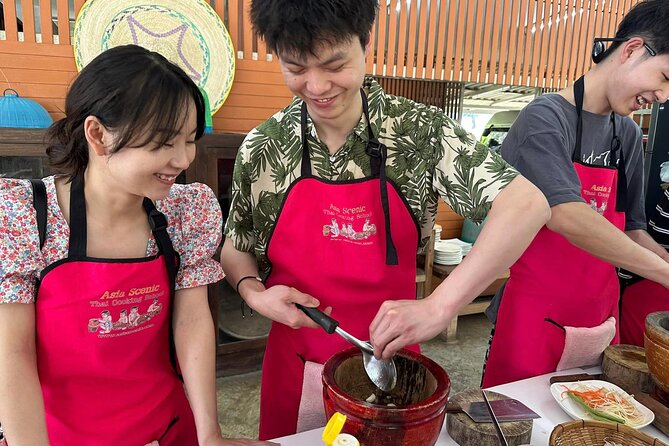
The day starts with transfers from central Chiang Mai, and the meeting point ties to Tha Phae Gate on Tha Phae Road. If you’re staying near the center, pickup usually works smoothly within about 3 km of downtown. You’ll also get a mobile ticket, and one practical tip from the class vibe is to watch for the app message that gives the exact pickup time.
Then comes the market stop. This isn’t just a scenic walk. It’s there so you can see what Thai cooks actually buy for the dishes you’ll make later. You’ll learn what different herbs, vegetables, and spices are used for, and you’ll get an idea of how flavor building works in Thai food.
Why that matters: when you shop this way first, the cooking part makes more sense. You’re not guessing. You’re matching ingredients to dishes, and you start to understand why Thai kitchens treat aromatics like a foundation instead of an afterthought.
You can also read our reviews of more cooking classes in Chiang Mai
Organic Farm Calm (North of Chiang Mai) and the Herbs That Drive Flavor
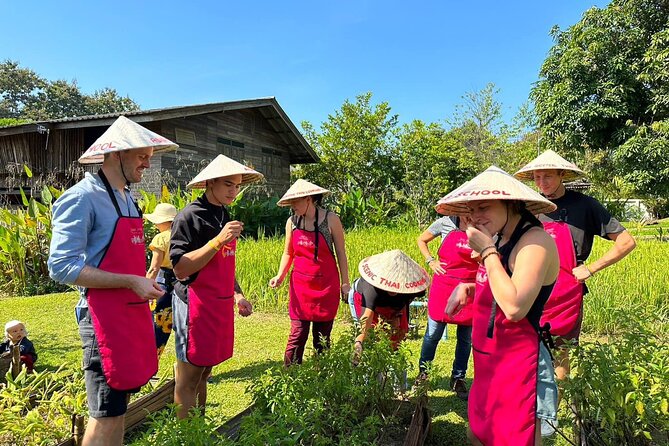
After the market, you head to the organic farm area. In many cases, expect a ride north of the city, and it’s done by an A/C-ed minivan. One detail I like here is that the farm component is about ingredients, not just photos. You get a relaxed setting where produce and herbs feel like the start of the meal you’re about to cook.
You’ll be selecting or picking up items related to the dishes you’ll cook. The result is that you’re not treating herbs as an abstract concept. You see them in a real growing context, then you use them later in the kitchen.
The one consideration: farm time can feel a bit long if you’re on a tight schedule. Reviews mention that the grocery and garden portion can run longer than expected, so if you’re trying to squeeze in other plans, build in extra buffer.
Choosing 6 Dishes: How the Menu System Keeps You Focused
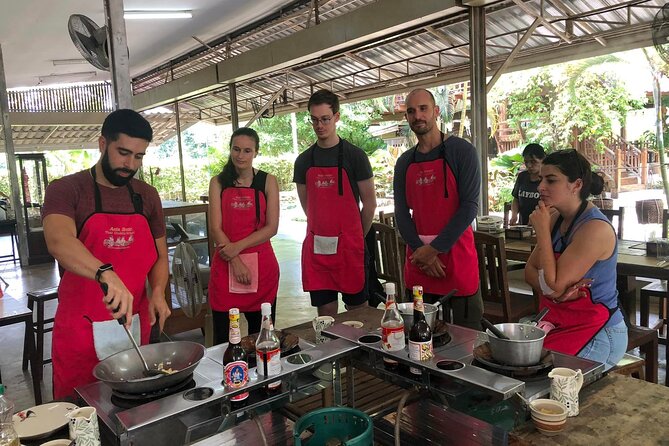
A standout value point is that you choose 6 dishes from a defined list. That choice matters because Thai cooking is wide. Without options, you might end up with a dish you don’t care about. With this format, you can steer your meal toward your preferences.
Here’s what’s in the menu pool (you pick 6):
- Stir-fries: Pad Thai, Pad See Uw, Hot Basil Stir Fried, Cashewnut With Chicken
- Soups: Coconut Milk Soup, Tom Yum, Tom Sab
- Curry pastes and curries: Red, Green, Massaman, Panang, Khaw Soi (as curry paste options and as curry options)
- Desserts: Deep Fried Banana, Banana in Coconut Milk, Sticky Rice With Mango
- Salads: Spicy Chicken Salad, Papaya Salad, Glass noodle Salad
You’ll also get sticky rice instruction as part of the flow. That’s a small detail, but it’s the kind of skill that pays off later when you try Thai food at home.
Practical advice: come in ready to eat and learn. One of the best pieces of real-world advice from the experience is to avoid eating beforehand, because you’ll want full appetite for the lunch or dinner you cook at the end.
The Open-Air Kitchen: Learning 6 Dishes Without Feeling Lost
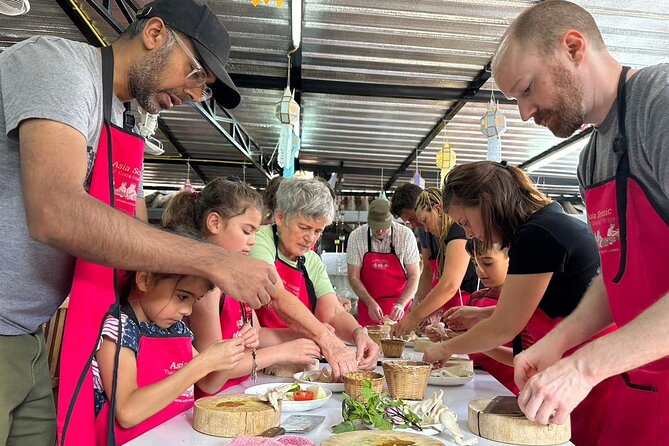
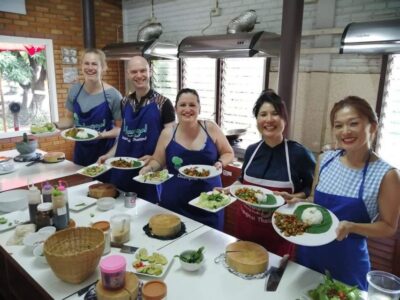
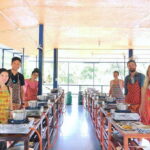
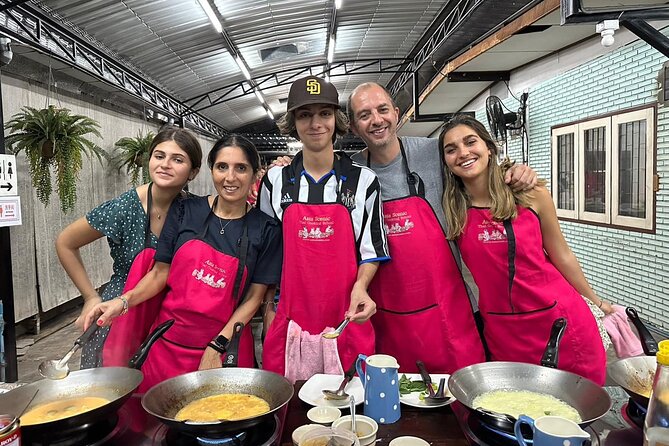
Back at the school area, the cooking happens in an open-air kitchen. That setup is more than an aesthetic choice. It helps you stay engaged, because you can watch what your instructor is doing and work alongside your group instead of facing a wall of cookware from a distance.
The class is led by an experienced chef-instructor, and you might meet names like Chef Nune, Tommy, or Olive depending on the session. What ties these instructors together is energy and clarity, plus an emphasis on ingredients and how they work together.
What you’re actually practicing
Even when you’re cooking multiple dishes, the real learning comes from technique patterns. For example:
- How Thai kitchens build flavor with aromatics and chili profiles
- How curry paste becomes a base for different curry styles
- How stir-fry timing affects texture in pad thai and similar dishes
The pacing is built for a small group (max 12). That’s a big deal for beginners. You can ask a quick question mid-step, and you’re less likely to get stuck waiting for the instructor’s attention.
You can also read our reviews of more tours and experiences in Chiang Mai
A note on the vibe
This feels like a cooking party, not a lecture. Reviews highlight humor and momentum from instructors like Tommy, and that matters because Thai cooking rewards taste adjustments. When the atmosphere is upbeat, you’re more likely to notice subtle differences as you cook.
Bamboo Hut Lunch or Dinner: Eating What You Cook, Right Then
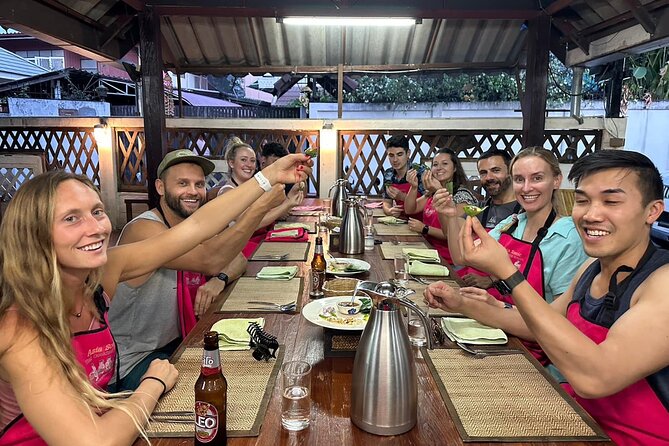
After cooking, you eat your meal in a locally styled bamboo hut. That’s the part I think you’ll remember, because you’re not leaving to find lunch somewhere else. You finish the day by tasting the results of your own work.
You’ll likely get a mouthwatering Thai lunch or dinner that matches your chosen dishes. And before cooking begins, you get a welcome snack or fruit plus a recipe book. That recipe book is where the value becomes practical: you don’t just leave with memories, you can recreate key parts later.
Here’s how to get more out of the meal:
- Pay attention to which dish tastes strongest to you
- Note what flavors feel balanced (sweet, sour, salty, spicy)
- Use the recipe book while the day’s flavors are fresh in your mind
Thai food can be adjusted with lime, chili, and salt in small ways. If you can connect your taste preference to those adjustments, you’ll cook better at home.
Price and Value: What $48.06 Buys in Chiang Mai
At $48.06 per person for about 5 hours, the value mostly comes from three things working together:
- Market + farm + cooking + meal in one half-day block
- Small-group attention (max 12) that helps you keep up
- Hands-on output: you cook multiple dishes and then eat them
If you’ve paid for cooking classes before, you know some include a single dish or feel like a demonstration with a token chance to stir. This one is designed around producing a full meal. Your dish list choice also protects your money. You’re not stuck with six items you don’t want.
The other value lever is the recipe book plus the ingredient insight. You leave with more than a photo of a finished plate. You leave with a map for Thai flavor-building, especially since the class shows sticky rice and covers curry paste and curry options.
Logistics That Actually Matter: Pickup, Meeting Point, and Timing Reality
This experience is built around transfers from central Chiang Mai. If you’re not far from downtown, pickup is likely within 3 km. If you’re closer to Tha Phae Gate, the start point is clear, and it’s easy to orient yourself.
One timing note: the experience runs about 5 hours, but there’s feedback that it can last longer than what’s listed. That’s not unusual for a class that combines a market, a farm, and active cooking. For your schedule, I’d plan your day with extra slack afterward, especially if you’ve got a night market plan, a massage slot, or a Chiang Mai night flight connection.
Weather can also play a role. The experience requires good weather, and if it gets canceled due to poor conditions, you’ll be offered a different date or a full refund. So if you’re booking during monsoon season or shoulder season storms, keep your schedule flexible.
Who This Class Is Best For (and Who Might Want Something Else)
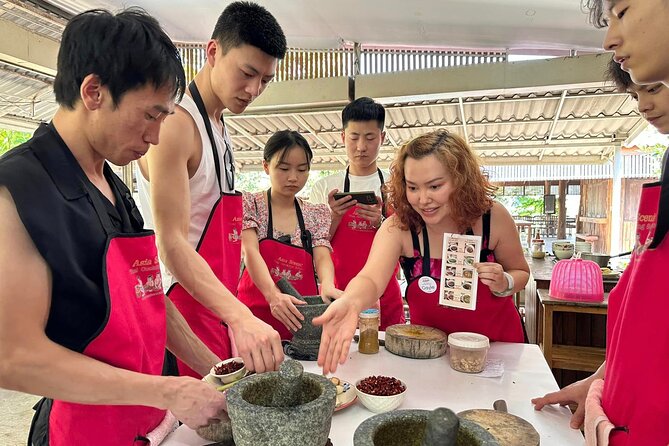
This tour is a strong fit if you want a real Thai food day with structure. It’s also a good choice if you’re not an experienced cook. Reviews mention beginners managing well, because the instructor-led format keeps things approachable and step-by-step.
It’s also a good social fit. One review specifically notes comfort for a solo traveler in a mixed group of Europeans. Since it’s capped at 12 people, you’re unlikely to feel swallowed by a crowd.
It may not be your best match if:
- You have a hard cutoff time later that day (the class can run long)
- You only want a quick one-dish demo and nothing else
- You prefer purely indoor activities and might feel uncomfortable with open-air elements
Should You Book This Chiang Mai Cooking Class and Farm Visit?
Yes, you should book it if you want Thai food instruction that sticks. The combination of market shopping, organic farm context, and cooking 6 chosen dishes gives you both flavor understanding and a meal you actually make. The small group size and the instructor energy (Chef Nune, Tommy, Olive show up across sessions) are major reasons this doesn’t feel like a rushed checkbox activity.
I’d book with extra time in your day, though. Give it some schedule slack, skip heavy food beforehand, and choose dishes you genuinely want to eat. If you do that, you’ll leave with practical recipes, better ingredient instincts, and a Chiang Mai memory built around real cooking, not just watching.
FAQ
How long is the cooking class and farm visit?
It runs about 5 hours (approx.).
How much does it cost?
It costs $48.06 per person.
Is pickup offered from hotels in Chiang Mai?
Yes. Pickup is offered within about 3 km of Chiang Mai downtown, with transfers from central Chiang Mai.
Where does the tour start?
The meeting point is Tha Phae Gate on Tha Phae Road.
How large is the group?
The class has a maximum of 12 travelers.
Do I choose which dishes to cook?
Yes. You can choose 6 dishes from the listed options.
What dishes are available to choose from?
Options include dishes like Pad Thai, Tom Yum, Tom Sab, Massaman curry (and other curry styles), Papaya Salad, and desserts like sticky rice with mango.
Is there an organic farm visit as part of the experience?
Yes. There’s a tour of an organic farm included.
Is the class suitable for children?
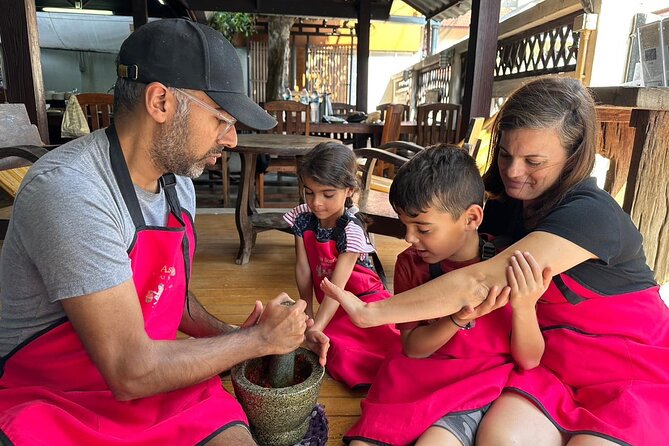
Children between 5 and 11 years old can participate.
What happens if weather is bad or the tour is canceled?
This experience requires good weather. If it’s canceled due to poor weather, you’ll be offered a different date or a full refund.
If you tell me your hotel area (roughly) and which 6 dishes you’re leaning toward, I can help you pick a smart combo that makes a well-rounded Thai meal.