REVIEW · CHIANG MAI
Chiang Mai: Half Day Evening Cooking Class with Market Tour
Book on GetYourGuide →Operated by Yummy Tasty Thai Cooking Class · Bookable on GetYourGuide
Your dinner starts at the market. In this 4-hour evening class, I love the chance to pick your own dishes and cook from an individual station, and I especially love learning the traditional curry paste method. One possible drawback: it’s an open-air kitchen with no AC, so the heat and humidity are part of the deal.
Pickup and drop-off are built in if you’re within 3 km of Kad Kom Market. The instruction is in English, and the pace is hands-on rather than lecture-heavy—exactly what you want when you’re trying to learn Thai cooking for real.
In This Review
- Key things to know before you go
- The best part: your own station, your own dishes, and a real learning rhythm
- Market time near Kad Kom Market: how to shop like the recipe expects
- Yummy Tasty Cooking School: welcome snacks, then you start cooking
- Curry paste from scratch: the skill that makes everything else easier
- The evening flow: step-by-step, then taste what you made
- What you’ll actually cook (and why it matters for home cooking)
- Cooking in an open-air kitchen: plan for comfort so you can learn
- The value question: $35 buys more than a meal
- Who this class suits best (and who should skip it)
- Should you book the Chiang Mai evening class near Kad Kom Market?
- FAQ
- How long is the Chiang Mai evening cooking class?
- Will I cook multiple dishes or just one?
- Do I make curry paste myself?
- Is pickup included, and where does it cover?
- Is the cooking area air-conditioned?
- Can I cancel and get a full refund?
- What do I get to take home?
Key things to know before you go
- Choose your menu and cooking station so the class feels personal, not one-size-fits-all
- Make curry paste from scratch the traditional way, not from a premade tub
- Shop a local market for seasonings, herbs, and ingredients you’ll actually use
- Cook 5 dishes with step-by-step guidance at a station made for you
- Small group size (up to 10) means you get help when you need it
- Open-air kitchen with no AC keeps it authentic, but plan for warm conditions
The best part: your own station, your own dishes, and a real learning rhythm
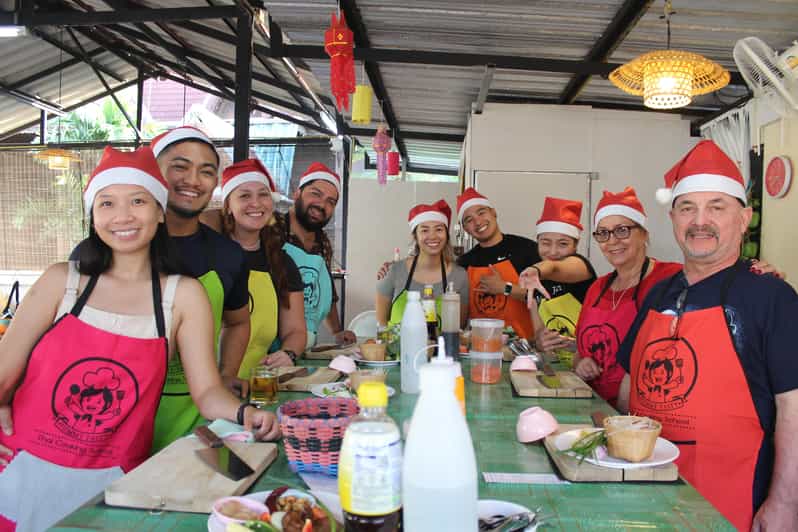
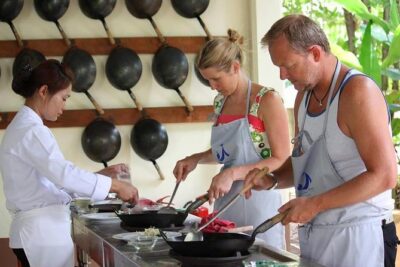
This is the kind of cooking class that works even if you’ve never cooked Thai food before. You don’t sit and watch for hours. You pick an individual menu, set up at an individual cooking station, and follow a step-by-step process designed to get you producing food—not just asking questions.
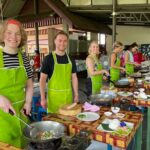
The small group size (limited to 10 people) matters more than it sounds. When the pan is hot and your curry paste is still in progress, you want an instructor to be able to see what’s happening at your station, not just call out instructions across a room.
You can also read our reviews of more shopping tours in Chiang Mai
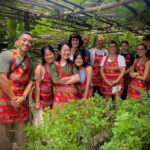
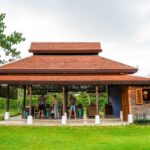

Market time near Kad Kom Market: how to shop like the recipe expects
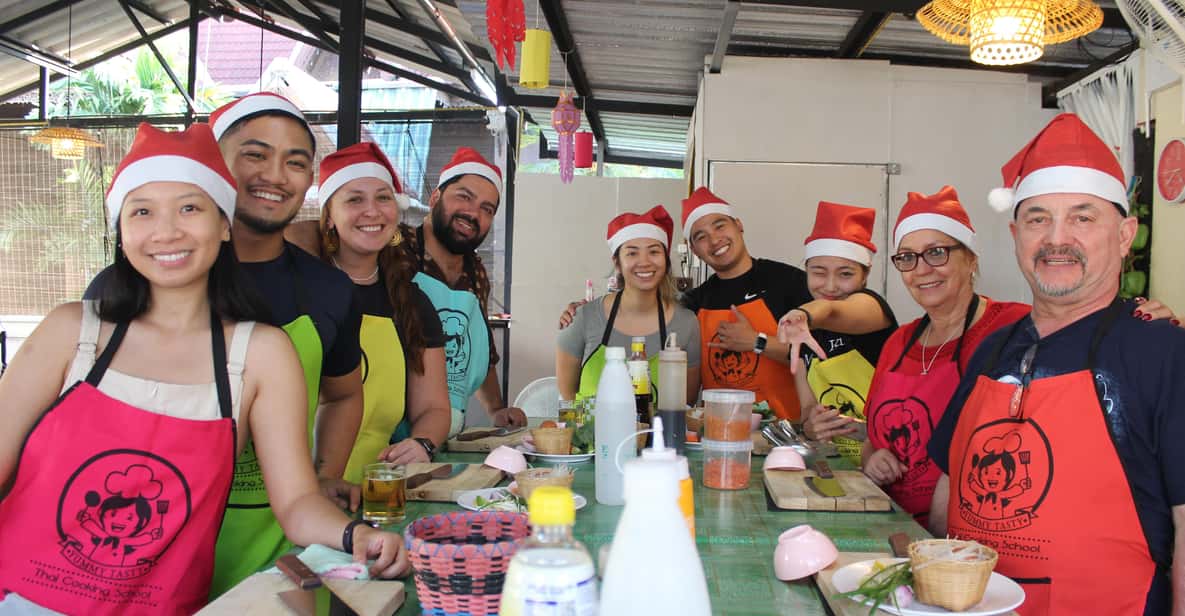
The evening starts with pickup from your hotel (within 3 km of Kad Kom Market). If your hotel is farther out—like many places in Nimman—you’ll meet at Kad Kom Market. That’s not a problem, it’s just the one logistics rule you should plan around.
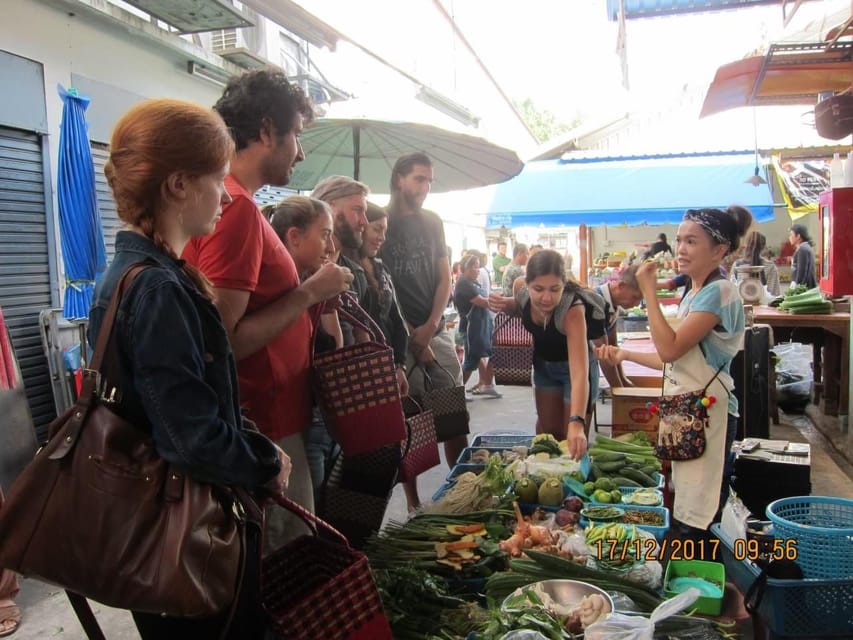
Once you’re at the market, the goal isn’t browsing for souvenirs. You’re shopping for the flavor building blocks you’ll use later in class. You’ll spend time with fresh vegetables and seasonings, and you’ll learn what to look for when ingredients matter. In past classes, guides have explained differences in items like tofu options and types of chili, which helps you stop thinking of Thai cooking as one generic sauce and start seeing it as choices that change the flavor.
I like this market stop because it gives you a context you can reuse at home. When you know what you bought and why, the recipe steps make sense later—especially for curry paste, where balance is the whole game.
Yummy Tasty Cooking School: welcome snacks, then you start cooking
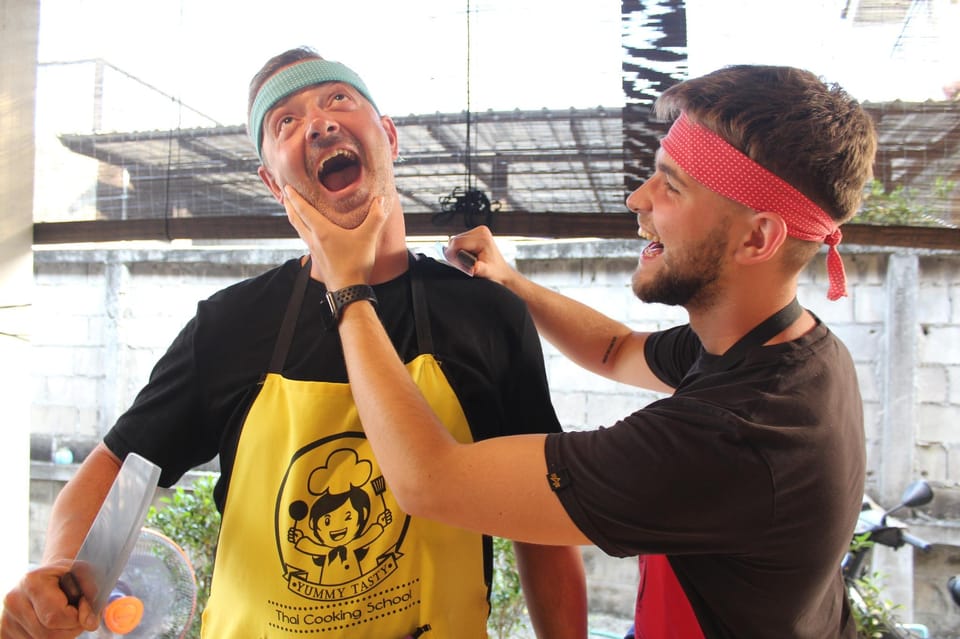
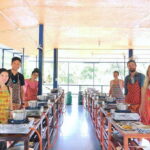
After the market, you settle into the cooking school and get welcome snacks, fruits, and drinking water. It’s a simple touch, but it keeps the evening comfortable. You’ve already been walking and selecting ingredients, and once you’re at your station, you’ll want energy and focus.
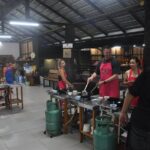
This is also where the open-air setup becomes real. The kitchen is outdoors, with no AC. On an evening class, that can still be warm, so think breathable clothing. It won’t stop you from learning, but it will affect how quickly you move and how comfortable you feel between dishes.
If you tend to run cold, this class might feel great. If you don’t love heat, you’ll want to take your breaks seriously.
Curry paste from scratch: the skill that makes everything else easier
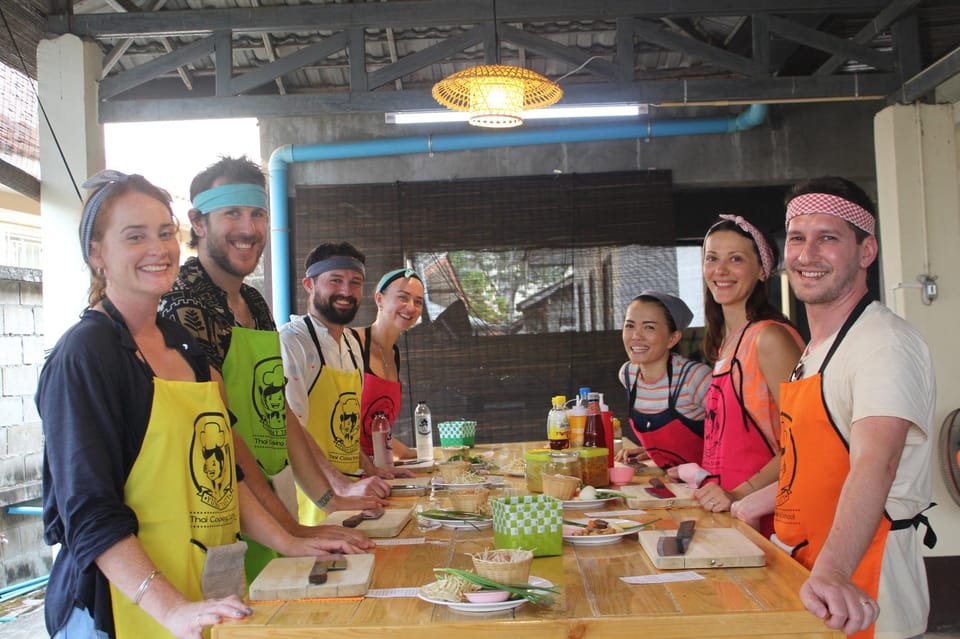
One of the most praised parts of this experience is making curry paste the traditional way. Instead of buying a premade paste and calling it Thai cooking, you create your own paste during class. That means learning what goes into it and how the blend should feel and taste as it comes together.
You’ll get guided instruction on the differences between Thai herbs and seasonings and what substitutions can work when you cook at home. That last piece is practical. Many people can follow steps in a Thai kitchen; fewer people can adapt in their own pantry. This class tries to fix that by teaching the logic behind the flavors.
Also, you’ll feel the difference immediately. When your curry paste is fresh and you’ve built it yourself, the final curry tastes more alive. And since curry paste affects both aroma and heat level, you can better understand why certain dishes taste the way they do.
The evening flow: step-by-step, then taste what you made
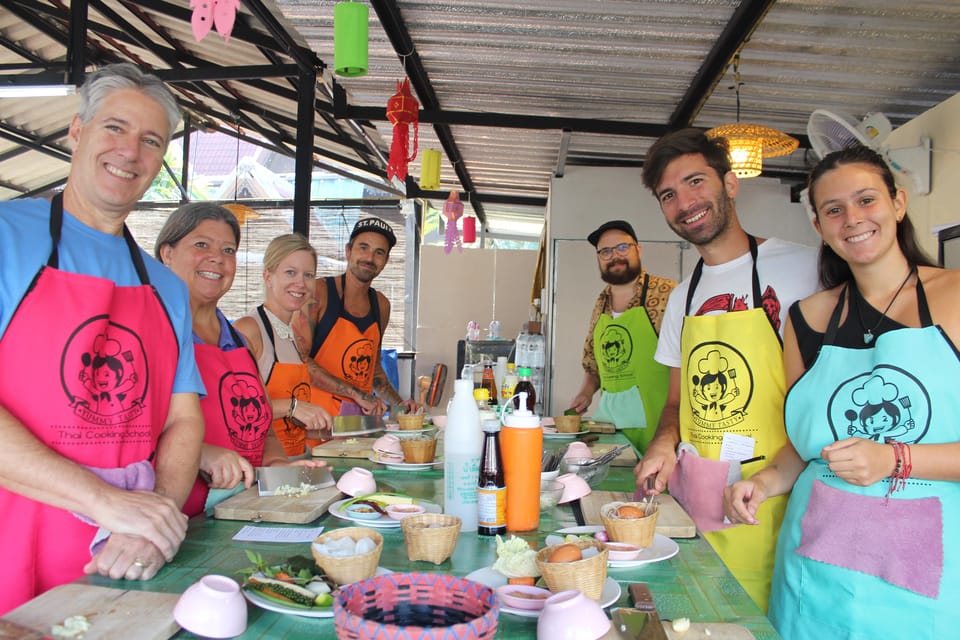
The class is scheduled for the evening session, from about 3:30 p.m. to 8:00 p.m. The structure stays consistent: market shopping first, then cooking with instructor guidance at your station, finishing with a return drop-off to your hotel.
You’ll cook 5 dishes during the class. Depending on what you choose on the day, you may see dishes like Pad Thai or mango sticky rice included in the set—menus can vary, but the key is that you’re not leaving with just one dish and a vague understanding of seasoning.
A neat detail from the experience: even if you’re assigned specific dishes, you can often taste food made by others. That means you get a wider sampling of what the group is cooking, without losing time at your own station.
Clean setup is also part of the experience. The stations are managed so your cooking area doesn’t feel chaotic, and you’re not fighting someone else’s mess to make your own food.
You can also read our reviews of more tours and experiences in Chiang Mai


What you’ll actually cook (and why it matters for home cooking)
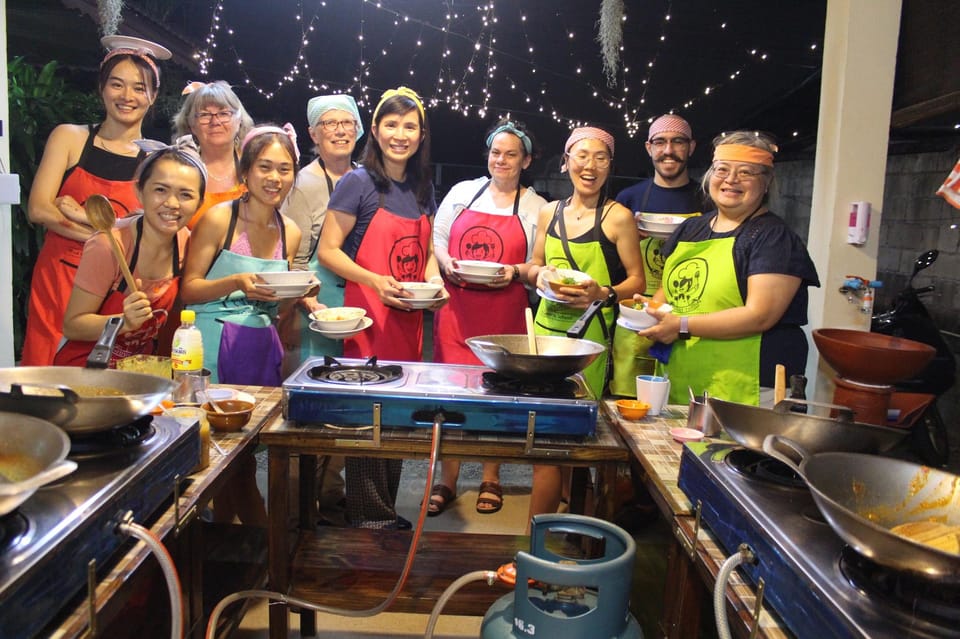
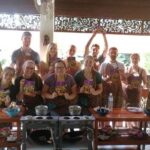
Cooking 5 dishes in a single half-day is ambitious, but it’s also what makes the class useful. You learn multiple techniques instead of repeating the same dish five times.
From the way the lessons are taught, the dishes connect to core Thai flavor skills:
- Balancing sweet, salty, sour, and spicy so the recipe isn’t just heat
- Using herbs and seasonings intentionally, not randomly
- Learning texture goals in curry paste and other ingredients before you plate
And because the instruction includes substitution advice, you can bring the technique home. Even if you can’t source the exact Thai herb, you’ll know what the role is and what to swap for.
Cooking in an open-air kitchen: plan for comfort so you can learn
Here’s the honest consideration: the kitchen is outdoors with no AC. That means you’ll feel the evening air, and you might also deal with light humidity and warmth while you’re chopping and stirring.
For your comfort (and your concentration), I’d dress for movement. Wear something breathable, keep a small towel handy, and don’t overthink it. The class doesn’t require perfect conditions—your job is to follow the steps and keep tasting and adjusting as you go.
If you’re the type who gets cranky in heat, start hydrating during the market portion. The school provides drinking water, but you’ll still appreciate proactive pacing.
The value question: $35 buys more than a meal
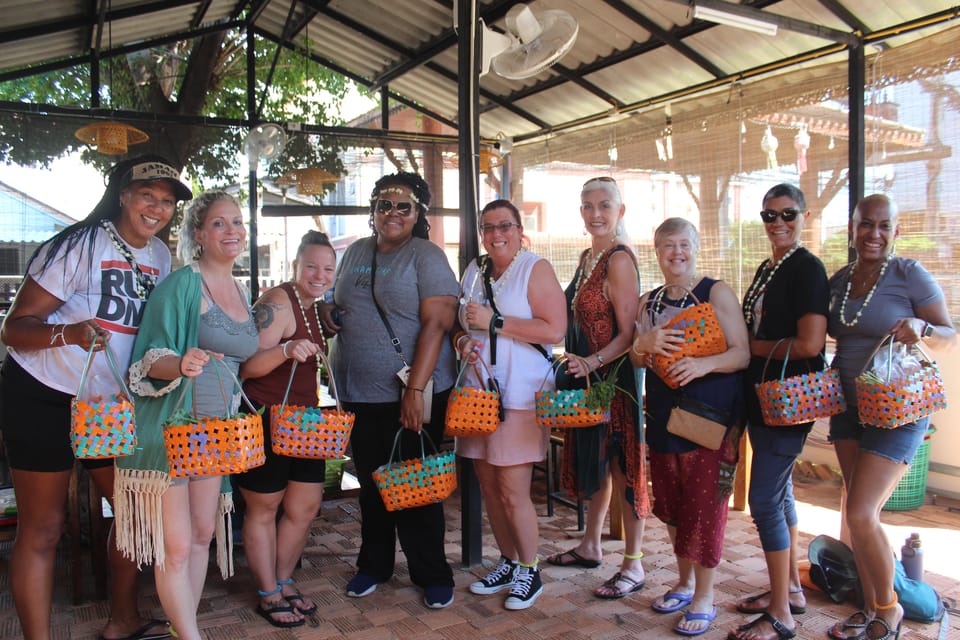
At $35 per person for a 4-hour evening session, the value isn’t just that you eat well. You’re paying for:
- Market shopping time for fresh ingredients
- Individual stations so you can actively cook
- The curry paste skill (a big differentiator)
- Step-by-step instructor guidance
- A PDF recipe so you can recreate the dishes later
In other words, you’re buying knowledge you can repeat. You’re not just paying for a plate of food once.
If your goal is to taste Chiang Mai and still come home with a usable cooking skill, this class makes sense. If your goal is purely to eat a bunch without effort, you’d probably feel like you’re working when you’d rather relax.
Who this class suits best (and who should skip it)
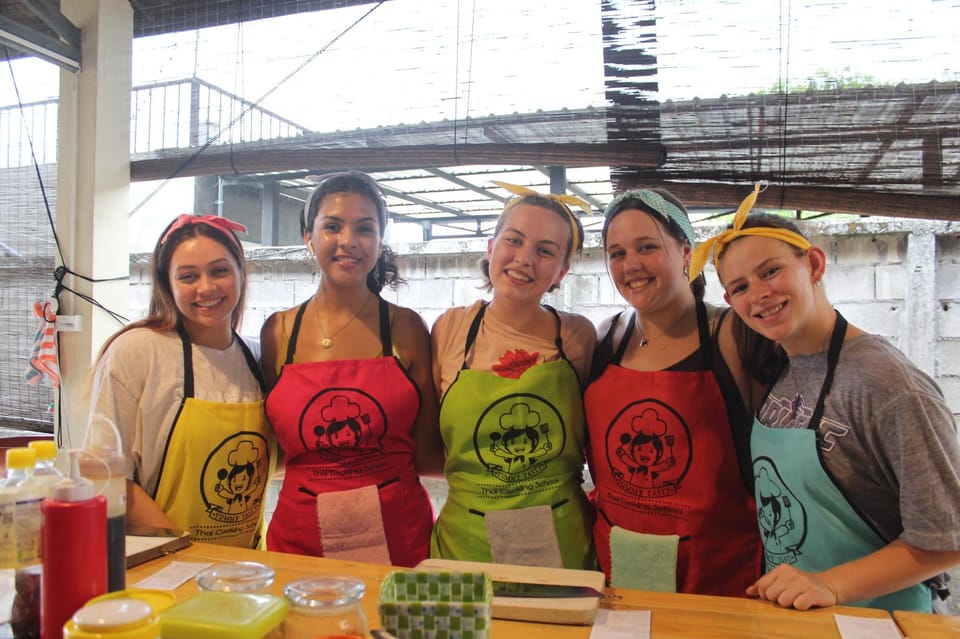
This experience is a good match if you:
- want a hands-on cooking lesson with small-group help
- like learning through doing—chopping, mixing, tasting, adjusting
- want to cook at home with confidence, using the curry paste technique and substitutions
It’s less suitable if you have mobility or health constraints listed by the provider, including people with back problems, wheelchair users, people with a cold, and certain age limits (including children under 2). There’s also a weight limit noted (over 287 lbs / 130 kg). If any of those apply to you, it’s worth checking fit before booking.
Should you book the Chiang Mai evening class near Kad Kom Market?
Yes, I think you should book this if you want a real Thai cooking skill in a short time. The combination of a market tour, make-your-own curry paste, and five dishes cooked at your own station is exactly the formula that turns a cooking class from entertainment into something you can use later.
I’d hold off only if you’re highly sensitive to heat and you know you’ll struggle with an open-air, no-AC kitchen. Otherwise, it’s a practical, fun way to learn Thai flavors where they start—at the ingredients, not just on the plate.
FAQ
How long is the Chiang Mai evening cooking class?
The duration is listed as 4 hours.
Will I cook multiple dishes or just one?
You’ll be able to cook 5 dishes during the class.
Do I make curry paste myself?
Yes. You’ll make your own curry paste using a traditional Thai method during the class.
Is pickup included, and where does it cover?
Pick-up and drop-off are included from your hotel within 3 km from Kad Kom Market. If your hotel is outside that range (for example, in Nimman or farther than 3 km), you’ll meet at Kad Kom Market.
Is the cooking area air-conditioned?
No. The kitchen is outdoors (open air) and there is no AC.
Can I cancel and get a full refund?
Yes. You can cancel up to 24 hours in advance for a full refund.
What do I get to take home?
You’ll receive a PDF recipe book for the dishes you made, plus snacks, fruit, and drinking water during the class.