REVIEW · CHIANG MAI
Full-Day Thai Cooking Class with Grandma – Market and Farm Tour
Book on Viator →Operated by Grandmas Home Cooking School · Bookable on Viator
Spice and markets in Chiang Mai go together. This full-day class pairs market shopping with hands-on cooking, so the food story starts long before you touch a wok. You’ll learn what matters—herbs, spices, and the small technique choices that make Thai flavors taste like Thai.
I especially liked the way you get real food building blocks first: you’ll pick ingredients and then move out to a working farm with rice fields, gardens, and a chicken coop. I also loved the structure of the cooking time—your own station in a small group, cooking multiple dishes instead of watching someone else work.
One thing to consider: it’s a long day (about 6.5 hours), so come hungry and ready to stand and taste your way through a lot of food. If you’re not into walking the market or working outdoors, you may find it a bit tiring.
In This Review
- Key Highlights Worth Your Day
- Market Morning at Charoen Charoen Fresh Market
- Farm Time: Rice Fields, Gardens, Chickens, and Mushrooms
- Grandma’s Home Cooking School: How the Open-Air Kitchen Works
- Coconut Milk the Traditional Way (and Why It’s a Big Deal)
- What You’ll Cook: Dishes, Drink, and the Mango Sticky Rice Finale
- The Feast: Eating Your Work With Rice-Field Air
- Value: Is $58.33 a Good Deal for a Chiang Mai Cooking Class?
- Logistics That Actually Matter: Pickup, Duration, and Comfort
- Who Should Book This Cooking Class?
- Should You Book Grandma’s Home Cooking School?
- FAQ
- How long is the full-day Thai cooking class?
- Where does the tour start in Chiang Mai?
- Is hotel pickup included?
- What’s included in the cooking class?
- Are alcoholic drinks included?
- What’s the cancellation deadline?
Key Highlights Worth Your Day
- Market walk with an instructor to connect spices with the dishes you’ll cook
- Farm time with chickens and eggs (yes, you’ll do hands-on activities)
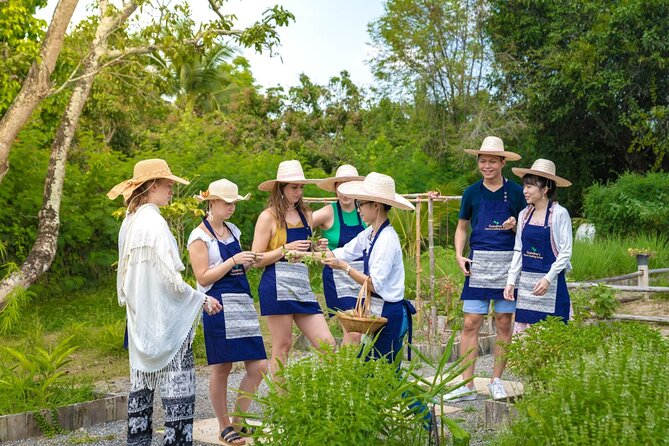
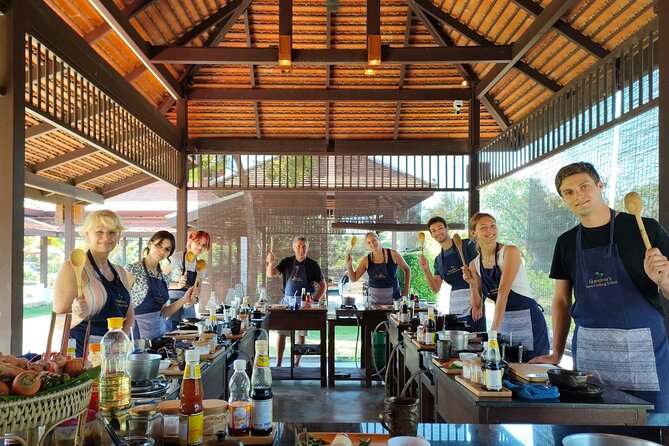
- Open-air kitchen with your own station in a small group setting
- Cook 7 Thai dishes plus 1 drink, ending with mango sticky rice
- Traditional fresh coconut milk skill using a wooden grater
Market Morning at Charoen Charoen Fresh Market
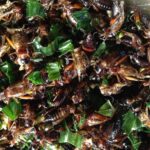
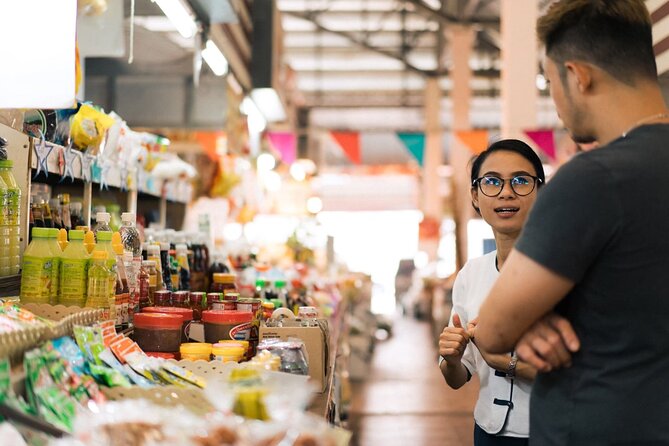
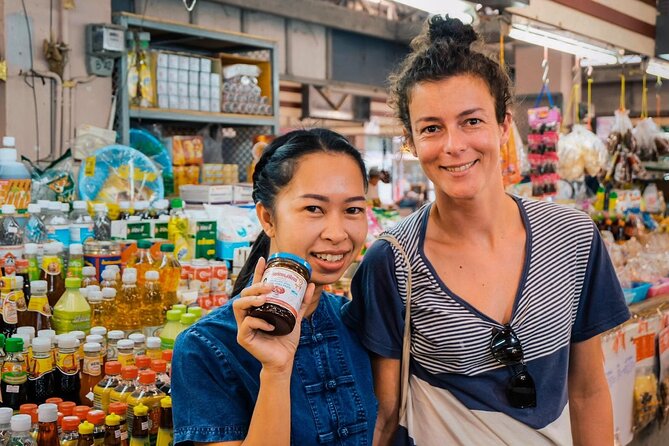
Your day starts with pickup from your Chiang Mai hotel (within 5 km of the city center), and then you’re off to the Charoen Charoen fresh market area. The point of this portion isn’t shopping for souvenirs. It’s learning what to look for—how fresh aromatics smell, how spices look and differ, and what ingredients matter for each Thai flavor profile.
A good market guide can save you months of guesswork later. Here, you’ll get explanations as you walk, so you understand why certain herbs go into specific dishes and why some ingredients are used for aroma while others create heat or sweetness. This is where the class becomes more than a hands-on meal.
You’ll also get a practical advantage: market learning turns into cooking confidence. When you later make these dishes at home, you’ll know how to replace ingredients more intelligently, instead of relying on vague recipe instructions.
You can also read our reviews of more shopping tours in Chiang Mai


Farm Time: Rice Fields, Gardens, Chickens, and Mushrooms
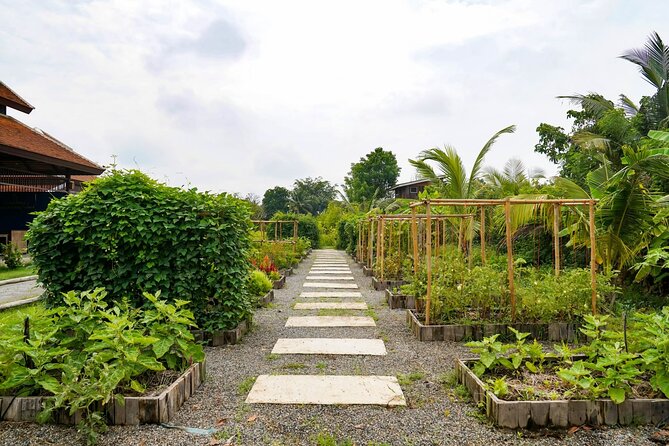
After the market, you head to a large organic farm around rice fields. This part changes the rhythm of the day. You’re no longer just listening and looking—you’re physically interacting with the source of the ingredients.
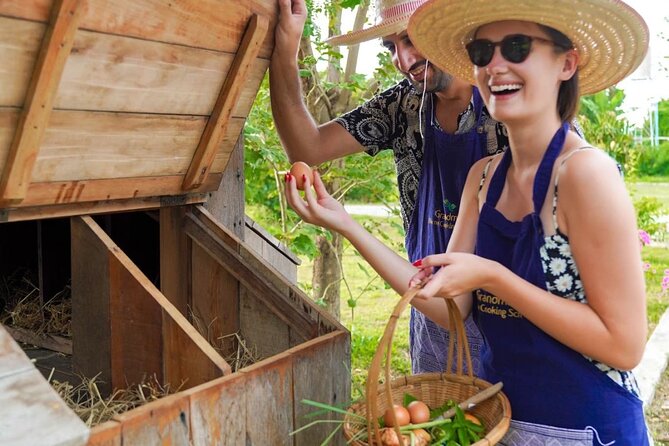
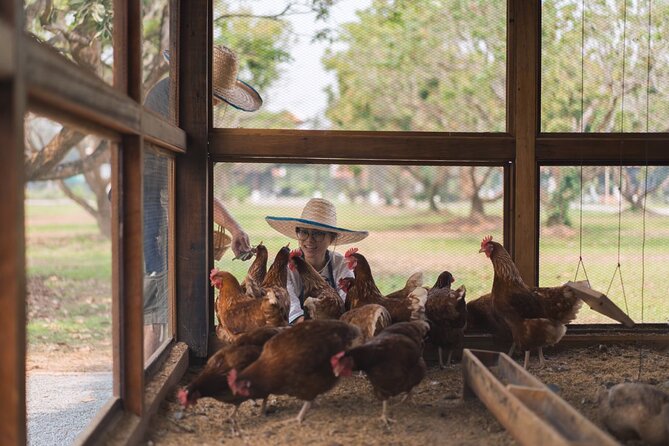
Expect classic farm elements: rice fields, herb and vegetable gardens, a chicken coop, and a mushroom hut. The experience is hands-on, including feeding and hugging the chickens, collecting fresh eggs, and picking mushrooms. Even if you don’t consider yourself a “farm person,” it helps you understand Thai cooking as something seasonal and close to the land.
There’s also a certain Thai logic to the farm-to-kitchen flow. Thai flavors often depend on freshness—herbs at peak aroma, vegetables that still taste like vegetables, and eggs that add richness when used in cooking or sauces. You’re essentially collecting “flavor sources,” then learning how to turn them into dishes.
One practical note: this is outdoors and active. Wear comfortable shoes you can clean, and bring a light layer in case it cools off later in the day. You’ll likely work up a sweat, then enjoy the airiness of the open-air kitchen afterward.
Grandma’s Home Cooking School: How the Open-Air Kitchen Works
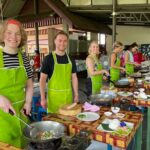
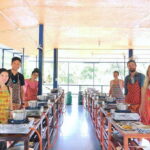
The cooking portion happens in an open-air kitchen with small group stations. Each guest has their own station, which is huge if you hate the “stand behind someone watching” style of classes. Here, you’ll be doing the work—chopping, stirring, and assembling dishes step by step.
The menu includes 7 authentic Thai dishes plus 1 refreshing drink. You’ll learn basics that cover a lot of Thai cooking: stir-fries, soups, and curries. That matters because Thai cuisine isn’t just one style of food. It’s a system—balance of salty, sweet, sour, and heat, plus aromatics that show up repeatedly across dishes.
Your class also includes mango sticky rice, so you end the day on a familiar Thai dessert. It’s not just a sweet finish; it’s also a chance to learn how Thai dessert textures come together (rice plus coconut milk plus mango, and the technique that keeps everything cohesive).
The fact that you cook multiple dish categories is the best part for value. You’re leaving with a toolkit, not just one recipe that happens to taste good.
Coconut Milk the Traditional Way (and Why It’s a Big Deal)
One highlight is learning how to make fresh coconut milk the ancient way using a traditional coconut grater. This isn’t a “show and tell” step. It’s a skill practice, and it’s the kind of step that’s hard to replicate at home if you skip learning how it’s done.
Why does this matter? Because coconut milk quality affects everything. It changes curry body, soup richness, and dessert creaminess. If you’ve ever tried to make Thai food at home and felt like the coconut taste wasn’t right, this is the missing piece you can fix.
The technique also teaches you something bigger than coconut milk. It shows that Thai cooking often relies on preparing ingredients in a specific way to get the right texture and flavor release. Even if your kitchen setup at home is different, you’ll understand what the process is doing.
You’ll be able to connect that to the rest of what you cook, because coconut milk shows up across multiple Thai dishes—including the dessert finale.
What You’ll Cook: Dishes, Drink, and the Mango Sticky Rice Finale
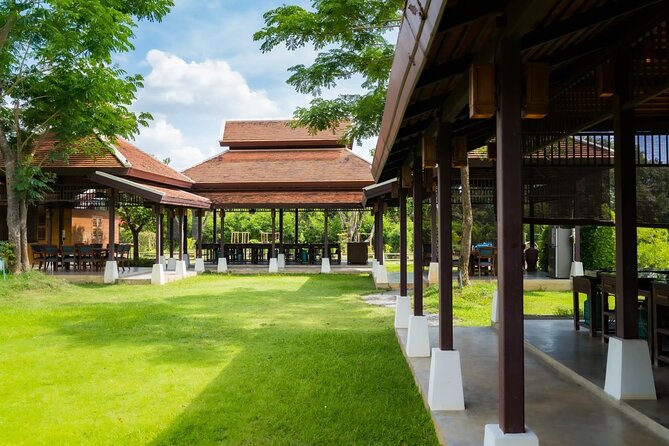
This class is built around real cooking, not a short demonstration. You’ll prepare several typical Thai dishes plus one drink, guided throughout. The schedule moves you through different types of Thai comfort food, from savory stir-fries to soups and curries.
You can think of the format like this: you learn a technique, apply it immediately, then taste and adjust your understanding. That feedback loop is what makes classes like this stick. It’s also why you end up with multiple dishes you can realistically repeat later instead of one “perfect day” meal you’ll never manage again.
You’ll also enjoy a welcome drink during the course—Thai milk tea, lemon tea, or butterfly pea flower tea. It’s a small touch, but it gives you a taste of Thai flavor variety right away, before you spend hours cooking.
At the end, you’ll learn and cook mango sticky rice as part of the class. It’s a classic for a reason. And when you finish it yourself after making coconut milk, you’ll taste the difference between using coconut milk in a generic way versus preparing it fresh.
You can also read our reviews of more tours and experiences in Chiang Mai


The Feast: Eating Your Work With Rice-Field Air
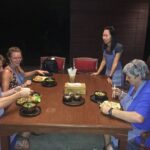
When you’re done cooking, you sit down to enjoy the feast you created. This isn’t just a meal; it’s a moment to compare what you made, how your flavors balanced, and what you’d tweak next time.
The setting helps: you’re surrounded by rice fields and fresh country air. That matters more than you might think. Food tastes better when the day doesn’t feel rushed, and when you can actually relax after a full session of chopping and stirring.
Also, you’ll be able to use the tasting time to notice which dishes you enjoyed most. If you’re deciding whether to repeat the class recipe later, your preference order will give you a useful starting point.
Value: Is $58.33 a Good Deal for a Chiang Mai Cooking Class?
At $58.33 per person, this is priced in the zone where you expect a serious day out—market learning, farm experiences, and full cooking practice. What makes it feel like good value is that you’re not paying only for the recipe. You’re paying for the full flow: ingredient education, hands-on farm time, and a multi-dish cooking session.
Most half-day classes don’t give you enough time to cook widely. Here, you’re cooking 7 dishes plus a drink, plus a coconut milk skill and mango sticky rice. For a single day, that’s a lot of output, and it reduces the risk you’ll spend your money on a class that feels short or repetitive.
It also helps that you get an e-recipe digital ebook to recreate dishes at home. You’re still going to cook from memory, but the ebook acts like a safety net when you forget ratios or steps.
If you’re trying to choose between a purely kitchen class and a market + farm + kitchen class, this format is the one that gives you context. It’s easier to improve your results later when you know where ingredients come from.
Logistics That Actually Matter: Pickup, Duration, and Comfort
Pickup and drop-off are included for hotels within 5 km of Chiang Mai city center. That makes the experience smoother—less hunting for a meeting point mid-traffic. The start time is 9:00 am, and the total duration is about 6 hours 30 minutes, so you’ll plan your day around a full morning-to-afternoon block.
The group size is capped at a maximum of 100 travelers, but cooking is described as small group stations. In practice, that means you’ll likely feel you have room to work at your station, rather than being squeezed into a classroom vibe.
Comfort tips:
- Bring closed-toe shoes for market walking and farm ground
- Expect hands-on farm activities—so plan for water and possible mess
- Dress for warm weather; you’ll be outdoors before you settle into the kitchen
Who Should Book This Cooking Class?
This is a strong fit if you want Thai cooking with a story attached—market ingredients, farm freshness, and techniques you can repeat. It’s especially good for people who like the idea of learning a skill (coconut milk) rather than just copying a dish.
You’ll also like the pacing if you enjoy variety: market first, farm second, then multiple cooking categories. The day doesn’t feel like one long lecture, and it ends with a meal you made.
Families can come too. Children under 10 are welcome as visitors, which can work if your kids are curious and comfortable being outdoors.
Should You Book Grandma’s Home Cooking School?
Book it if you want more than a cooking demo. This class gives you market education, farm activities, and serious kitchen time at your own station. The coconut milk lesson is a standout skill that many shorter classes don’t include.
Skip it (or choose a different option) if you want a calm, seated-only experience. This is active: walking, farm interaction, and cooking for hours in an outdoor setting.
If your goal is to leave Chiang Mai with recipes you can actually make again—and with the why behind the flavor—this is a very sensible pick.
FAQ
How long is the full-day Thai cooking class?
The experience lasts about 6 hours 30 minutes.
Where does the tour start in Chiang Mai?
It starts at Charoen Charoen fresh market (ตลาดเจริญเจริญ) around the Charoen Charoen fresh market area, and it ends back at the meeting point.
Is hotel pickup included?
Yes, hotel pickup and drop-off are included for hotels within 5 km of Chiang Mai city center.
What’s included in the cooking class?
You’ll get a guided market visit, an organic farm tour with activities like feeding chickens and collecting eggs, a hands-on cooking class with your own station, cooking 7 Thai dishes and 1 drink, learning mango sticky rice, making fresh coconut milk traditionally, a digital recipe ebook, and unlimited bottled water plus a free herbal drink during class. A welcome drink is also included.
Are alcoholic drinks included?
No. Alcoholic beverages are not included, but they are available for purchase.
What’s the cancellation deadline?
You can cancel for a full refund if you cancel up to 24 hours before the experience starts. Changes within 24 hours of the start time aren’t accepted.