REVIEW · CHIANG MAI
Guided Chiang Mai City Night Tour by EV Tram
Book on Viator →Operated by Touring Center · Bookable on Viator
Chiang Mai at night is a different planet. This EV Tram city tour keeps things relaxed and smart, swapping long drives for close-up looks at temples, neighborhoods, and markets. You get a built-in orientation to how Chiang Mai works after dark, not just a checklist of sights.
Two things I especially liked: the English-speaking guide ties each stop to how local belief and history shape everyday life, and the pace stays unhurried so you actually have time to notice details and take photos. With a maximum of 12 people, it also feels easy to ask questions rather than being herded.
One consideration: this is a walking-and-stops tour. There are short stretches between sites, including a bit of walking at the start around Three Kings Monument, so comfortable shoes matter, and smart-casual clothing helps you fit temple settings.
In This Review
- Quick highlights
- Why Chiang Mai at 6 PM feels calmer and easier
- EV Tram in Chiang Mai: why the ride is more than a gimmick
- Three Kings Monument to Wat Chiang Man: the Lanna foundation
- Wat Lok Molee to Wat Pa Pao: wooden temple charm and Tai Yai roots
- Chang Puek Gate and Wat Nong Kham: ruins, regional styles, and a more everyday Chiang Mai
- Warorot Market and Tha Phae Gate: see what locals actually buy and gather for
- Chiang Mai Gate Night Market plus Wat Chedi Luang: your evening payoff
- Price and value: what $27.43 buys you (and what costs extra)
- The pacing: short stops, real context, and time to look
- Who this tour is best for
- Should you book this EV Tram Chiang Mai City Night Tour?
Quick highlights

- Quiet EV Tram ride that reduces the noise of typical city hopping
- Top orientation stops in the old city area, including major gates and major temples
- Guide-led context on Lanna culture and Buddhist sites, so you understand what you’re seeing
- Street-food dinner options at Chiang Mai Gate Night Market, plus snacks and drinks during the foodie portion
- A real local market moment at Warorot Market to see fresh goods locals shop for
- Small group size (max 12) for a smoother, less rushed experience
Why Chiang Mai at 6 PM feels calmer and easier
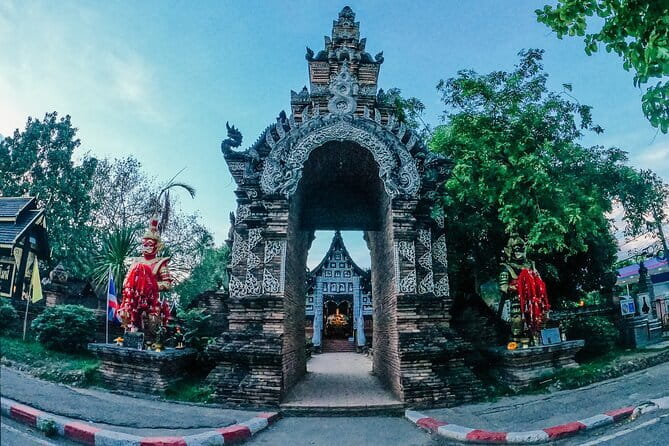
Starting in the early evening lets you dodge some of the day’s energy and heat, while still seeing Chiang Mai in full night mode. The tour’s whole vibe is quieter: you move by tram, you stop often, and you spend time learning what matters to locals. That makes it a great first-night plan, especially if you want to understand the city rather than just cross off landmarks.
You’ll also get a nice photography advantage. Night lighting changes how temples and ruins look, and the air often feels calmer when you’re walking in small pockets rather than standing in big crowds.
You can also read our reviews of more guided tours in Chiang Mai
EV Tram in Chiang Mai: why the ride is more than a gimmick
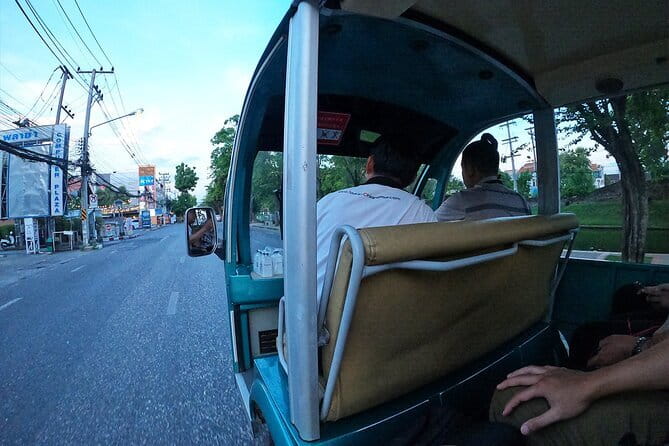
The most practical win here is that the EV tram keeps the evening comfortable. You don’t spend the whole tour in traffic or climbing on-and-off tuk-tuks every few minutes. Instead, you get a consistent, low-stress way to reposition, then use the stops to actually look, listen, and absorb.
It also fits the tour’s purpose. This is not designed as a high-speed sightseeing sprint. The tram helps you slow down, which is exactly what you want when your goal is orientation—figuring out where gates, temples, and markets sit relative to each other.
Three Kings Monument to Wat Chiang Man: the Lanna foundation
You begin at Three Kings Monument, right on Prapokklao Road. This area is tied to Chiang Mai’s early structure and identity, including the idea of a city pillar associated with the founding era. Even if you’re not a history nerd, this stop sets the tone: Chiang Mai isn’t just temples on postcards—it’s a living city built on belief, community, and geography.
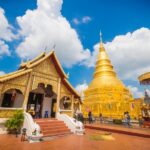
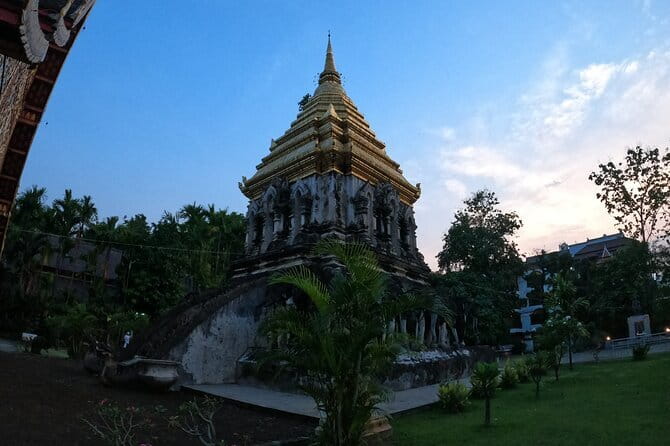
From there, you hop on the tram and reach Wat Chiang Man, described as the oldest temple in Lanna-style chedi forms. You’ll notice the distinctive chedi setup and elephant-shaped buttresses that support the structure. This is a “look closely” stop. It’s quick, but it gives you a solid visual anchor for Lanna architectural style.
What to watch for: take a minute to look up. Lanna-style chedi details reward slow attention more than quick snapshots.
Wat Lok Molee to Wat Pa Pao: wooden temple charm and Tai Yai roots
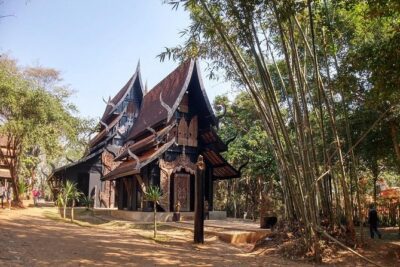
Next is Wat Lok Molee, known for a wooden complex and terracotta sculptures. This is one of the most attractive wát outside the older city walls. The time you spend here is short, but the setting gives you that classic Chiang Mai texture—wood, sculpture, and temple character that feels different from the bigger, more tour-focused sites.
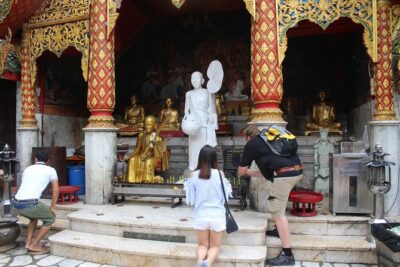
Then you shift toward Wat Pa Pao, the first temple of the Ngiaw or Tai Yai in Chiang Mai. That detail matters. It’s a reminder that Chiang Mai’s religious and cultural story isn’t single-thread. Different Tai groups shaped community life, and temples can be a map of those ties.
Possible drawback: with multiple temple stops in one evening, you’ll want to pace yourself. Don’t try to “beat the clock.” Take breaks at the edges when you can, and let your guide finish the context before you start wandering for photos.
Chang Puek Gate and Wat Nong Kham: ruins, regional styles, and a more everyday Chiang Mai
At Chang Puek Gate, you’re in the northern area of the old city, with ruins connected to the former city wall. This stop is a nice shift from temple ornament into the city’s physical history—the way gates and walls once structured movement and community.
You’ll also visit Wat Nong Kham, known for a mix of Burmese-Shan temple styles. This is a good stop if you like seeing how Buddhism travels and adapts across regions. Rather than looking at a single “local style,” you start spotting how styles overlap in Chiang Mai.
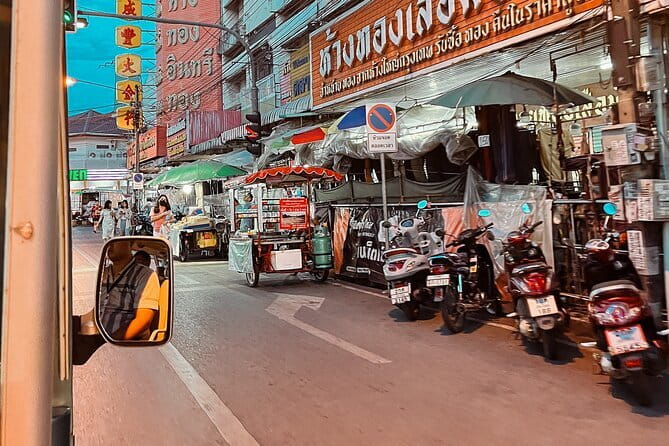
Then the tour pivots toward food and daily life. Chang Puek Gate is also where a night market scene happens, with popular street food and a lineup of dinner options. This is a smart place to start your night eating, because it feels connected to the neighborhoods around it rather than only to tourist lanes.
You can also read our reviews of more city tours in Chiang Mai


Warorot Market and Tha Phae Gate: see what locals actually buy and gather for
Warorot Market is one of the biggest fresh markets in Chiang Mai, and it’s there to give you something different from temple-heavy evenings. You’ll get a chance to explore the market and the kinds of products local people buy. Even if you don’t plan to cook or bring ingredients home, this helps you understand Chiang Mai as a real, working city.
This section also makes the tour feel more complete. Temples explain beliefs. Markets show the routines that beliefs live inside. That combination is what makes the tour more than “pretty lights and monuments.”
Afterward, you reach Tha Phae Gate, described as a center for public city activities and festivals. This is another orientation moment: it helps you visualize where crowds and celebrations tend to gather when the city is in full festival mode.
Chiang Mai Gate Night Market plus Wat Chedi Luang: your evening payoff
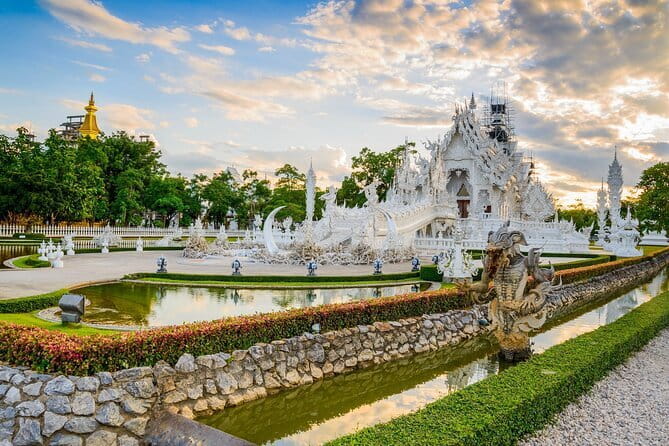
You finish with Chiang Mai Gate Night Market, a solid street-food dinner stop built for people who want lively evening eats. The tour includes admission here, and you’ll also get snacks and drinks during the foodie portion. The practical value is that you’re not just wandering blind—you have a route and context.
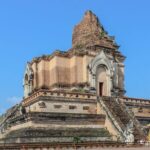
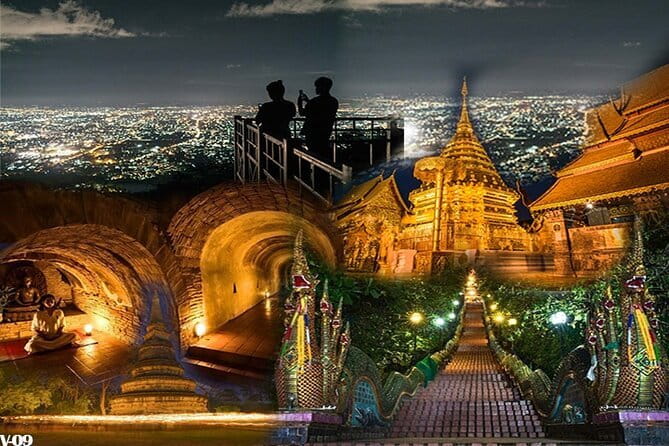
Right after, you visit Wat Chedi Luang Varavihara, famous for Chiang Mai’s biggest stupa. This temple also houses the city pillar together with the Tripiṭaka, the Buddhist scriptures. The architecture here is a highlight, and it’s the kind of stop where understanding the symbolism helps you look past the surface and notice what the structure is meant to communicate.
Tip: keep your questions for this segment if you have them. Your guide has the best chance to tie earlier stops to this grand centerpiece, so the whole evening starts making more sense at the end.
Finally, the tour includes Wat Phra Singh, noted for northern-style chapel architecture. This gives you one last visual style contrast as you close the route.
Price and value: what $27.43 buys you (and what costs extra)
At around $27.43 per person, this tour is priced like a mid-range evening activity. What makes it feel good value is how much is included: EV tram, a professional English-speaking guide, bottled water, and all admission fees as listed.
You’ll see a mix of free entry temples and paid-entry stops. Many temple visits are free, while Chiang Mai Gate Night Market and Wat Chedi Luang have admission included. That matters, because temple fees can add up quickly when you try to DIY a route.
What’s not included is also straightforward. There’s no pick-up/drop-off by default. An optional pick-up/drop-off is available for a fee, and you’ll cover extra food and drinks beyond what’s provided for the foodie portion. Since alcohol isn’t included either, you’ll decide your own level of indulgence at the markets.
The pacing: short stops, real context, and time to look
The route is designed for a relaxed evening. Each stop is short enough to keep energy up, but not so short that you miss the meaning. The guide focuses on history and culture in a way that makes temple details click—especially if you’re new to Chiang Mai and you want the city’s story, not just the names.
One detail that stands out from the overall experience style: it’s “orientation first.” Instead of racing between the most famous sites, the route connects monuments, temples, gates, and markets so you start building a mental map.
If you’re the kind of traveler who enjoys learning why a place exists, this format works well. If you only want long time inside museums or mega-hours at one monument, you might find the schedule more “glance-and-understand” than “stay-and-sit.”
Who this tour is best for
This night EV tram tour is especially good for:
- First-timers who want a city map in your head by the end of the evening
- People who like temples but also want local life at markets and night food stops
- Travelers who’d rather ask questions than read signs and guess
- Anyone who prefers a smaller group (max 12) and a calmer ride
It may be less ideal for people who want a completely free-form, no-guide night. You’ll follow a set route and timing, and that’s the point—your guide is shaping the evening.
Should you book this EV Tram Chiang Mai City Night Tour?
If you’re in Chiang Mai for a short stay and you want one evening that does more than show photos, I think this is an easy yes. You get smart pacing, tram comfort, English guidance, and a route that connects temples with real evening life at night markets and Warorot Market.
Book it if you value understanding the city, especially how faith, history, and daily routines connect. Skip it if you’re chasing a fully independent eating crawl or you hate any short walking in temple areas.
If you match this tour’s style—relaxed, guided, and orientation-focused—this is a strong first-night move.