REVIEW · CHIANG MAI
Walk With Monks Collecting Alms(meeting point maybe change)
Book on GetYourGuide →Operated by Journey D Travel · Bookable on GetYourGuide
A morning walk with monks teaches Buddhism fast. I like the alms-collecting rhythm as you help monks receive food, and I like the later Dhamma conversation that explains what you’re seeing at Wat Chai Sri Phum.
The main catch: this tour accepts only men, so it’s not for everyone.
In This Review
- Key Points I’d Highlight Before You Go
- Chiang Mai’s 5:45 AM start: why this walk works
- Where you meet at Wat Chai Sri Phum (and what “meeting point” really means)
- The first stretch: a quick intro to monk life and temple etiquette
- Walking with monks through the Mueang Mai Market area
- Helping with alms collecting: the etiquette that makes it respectful
- Back to the temple: meeting and dialogue with monks
- Price and value: $20 for a small group with an ex monk guide
- Practical timing: what the 2.5 hours feels like in real life
- What to bring (and what to leave behind)
- Who this tour suits best in Chiang Mai (and who should skip it)
- Language support: Chinese and English guidance
- Tips that make the experience smoother (without turning it into a performance)
- Should you book this monk alms walk in Chiang Mai?
- FAQ
- What time does the walk start, and how long does it last?
- Where is the meeting point?
- What is included in the $20 price?
- Is food or drink included?
- Who can join, and are there age limits?
- What should I bring, and what is not allowed?
Key Points I’d Highlight Before You Go
- Wat Chai Sri Phum at 5:45 AM gets you into the day at a calm, meaningful pace
- Helping monks collect alms gives the practice real context, not just sightseeing
- Ex monk guide (often called Son or Katoon) explains etiquette and Buddhism in plain language
- Mueang Mai Market stop shows local devotees waiting to offer food, plus plenty of photo moments
- Temple dialogue with monks after the walk is where questions turn into learning
- Small group of just 6 helps you actually talk, not just follow along
Chiang Mai’s 5:45 AM start: why this walk works
This experience is built around timing. The meeting happens at 5:45 AM, and the walk begins at 6:00 AM, so you’re there while monks and devotees are doing this as a daily routine—not a performance for tourists. The whole thing runs about 147 minutes (roughly 2.5 hours), which is long enough to learn something real without burning your whole day.
The vibe stays respectful and practical. You’ll be walking with monks as they collect food, passing by places where Buddhist devotees are ready with offerings. It’s a great way to see how Buddhism functions in everyday life, not only in statues and temple photos.
One more reason it works: you get guidance from an ex monk guide who can translate what matters. In past groups, guides have included people named Son, Katoon, and Sun, and they’ve focused on explaining what to do, what to ask, and why the etiquette exists.
You can also read our reviews of more walking tours in Chiang Mai
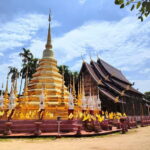
Where you meet at Wat Chai Sri Phum (and what “meeting point” really means)
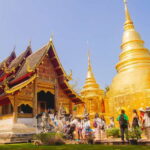
You’ll assemble at Wat Chai Sri Phum, at the front of the chanting hall, where the tourist guide is waiting. The exact spot can change slightly, so don’t arrive late and don’t wander around looking for a random person in robes.
Also, you’ll want to show up ready for an early start. This isn’t a casual “meet whenever” situation. If you want to catch the flow of the monks collecting alms, you need to be there when the group gathers and the guide sets expectations.
As for the pacing: after a brief intro, you start walking and you keep moving. Think of it like a guided “morning practice tour,” not a slow temple stroll where you can stop for coffee every ten minutes.
The first stretch: a quick intro to monk life and temple etiquette
Before the walk, your guide gives a concise overview. The goal is to help you understand what you’re about to witness: how monks collect alms, what devotees are doing when they wait, and what’s expected from visitors.
This prep matters because it changes how you’ll interpret details. A market stall isn’t just a market stall at 6 AM when you’re following a monk’s route. A person offering food isn’t just being polite—they’re participating in a ritual of merit and support for monastic life.
With an ex monk guide, the explanation tends to be grounded and direct. In earlier groups, Son has been described as having experience as a junior monk for many years, and guides like Katoon have focused on answering questions about Buddhism and monk conduct. That kind of background helps you ask better questions, too.
Walking with monks through the Mueang Mai Market area
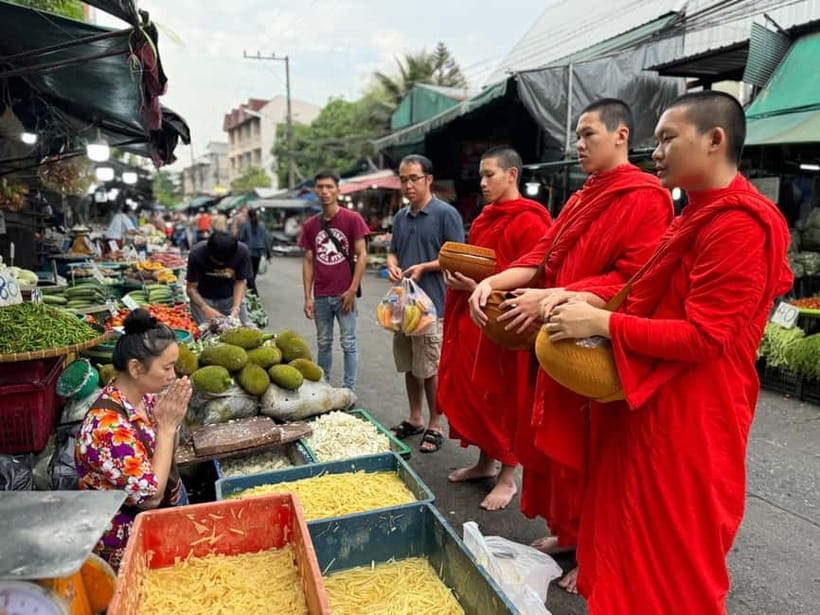
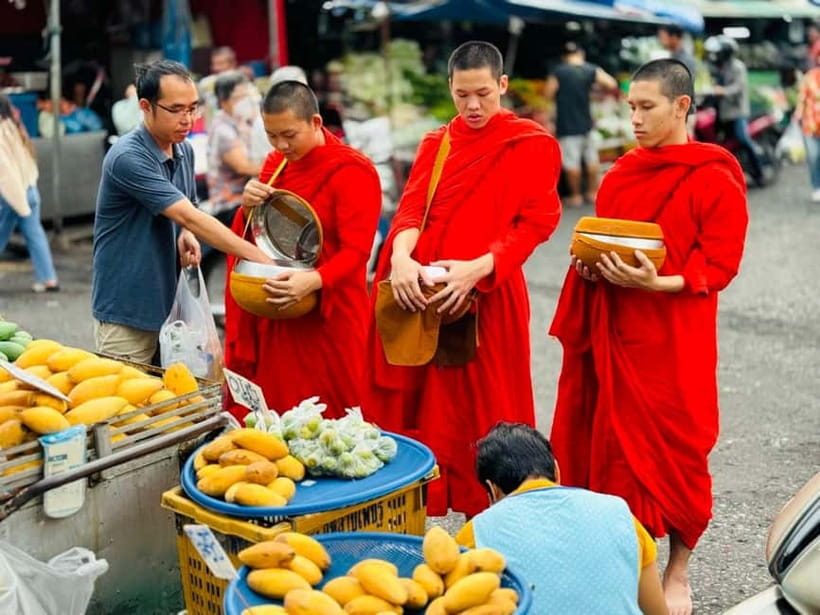
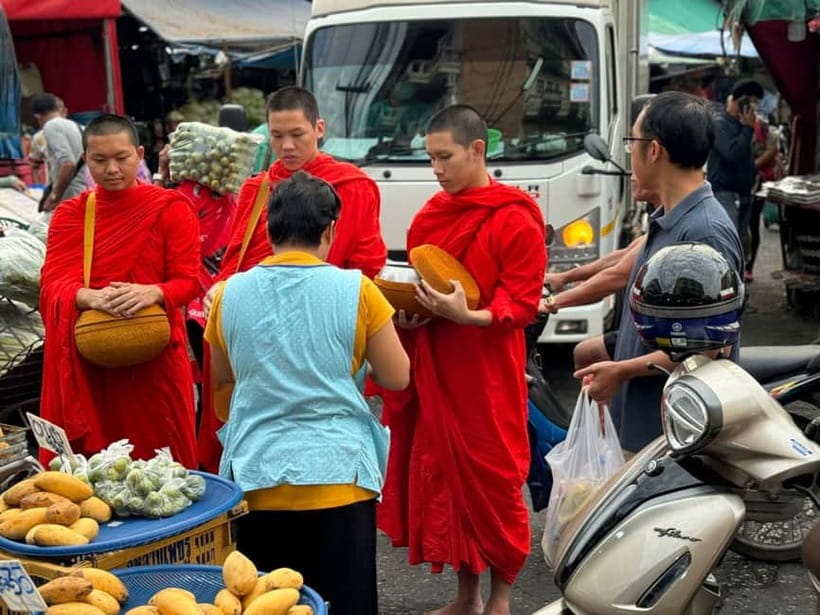
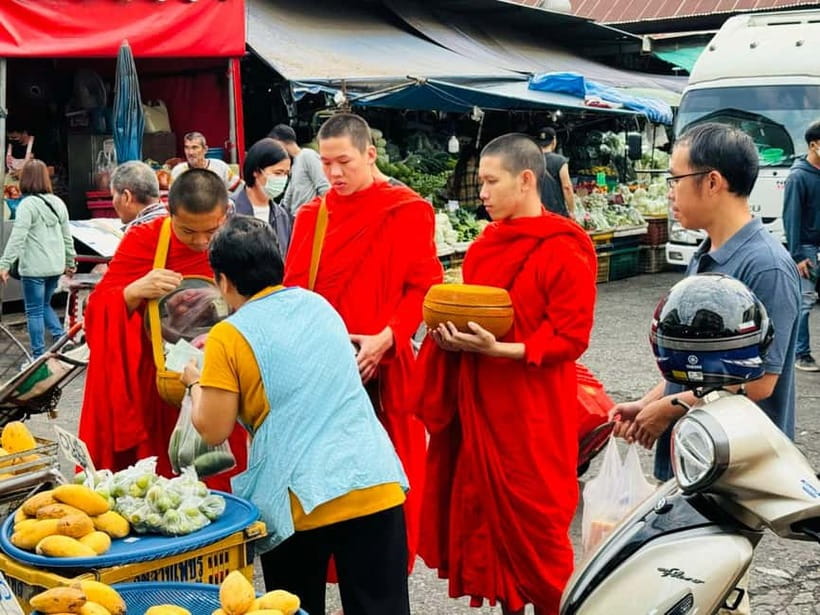
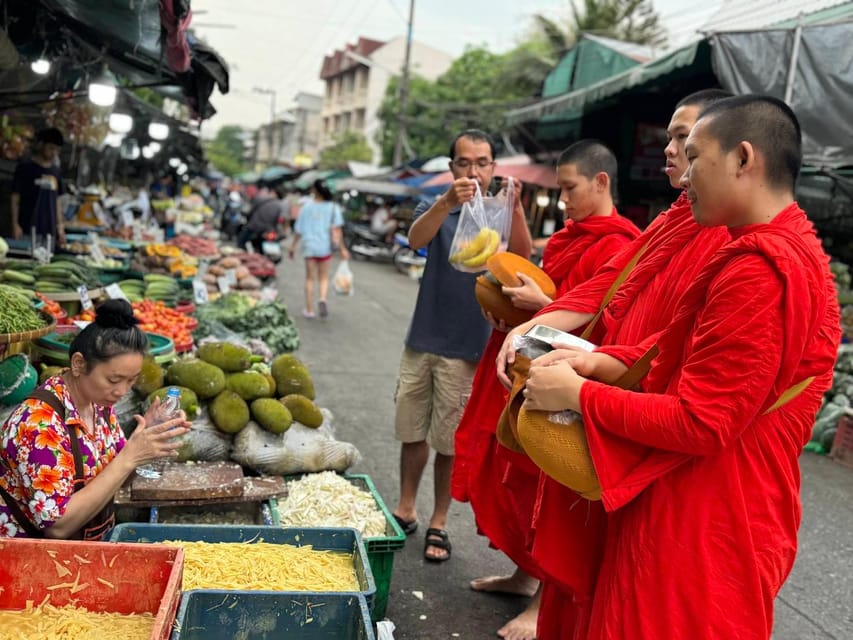
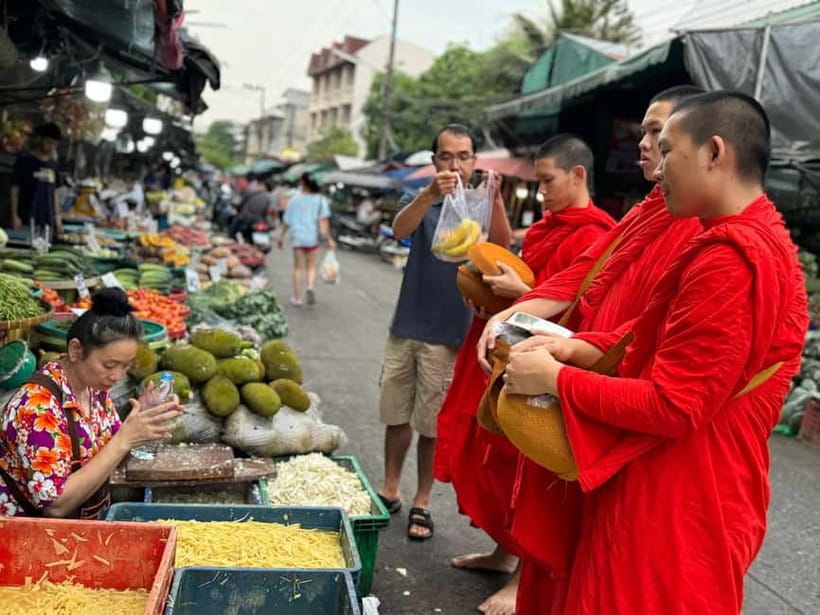
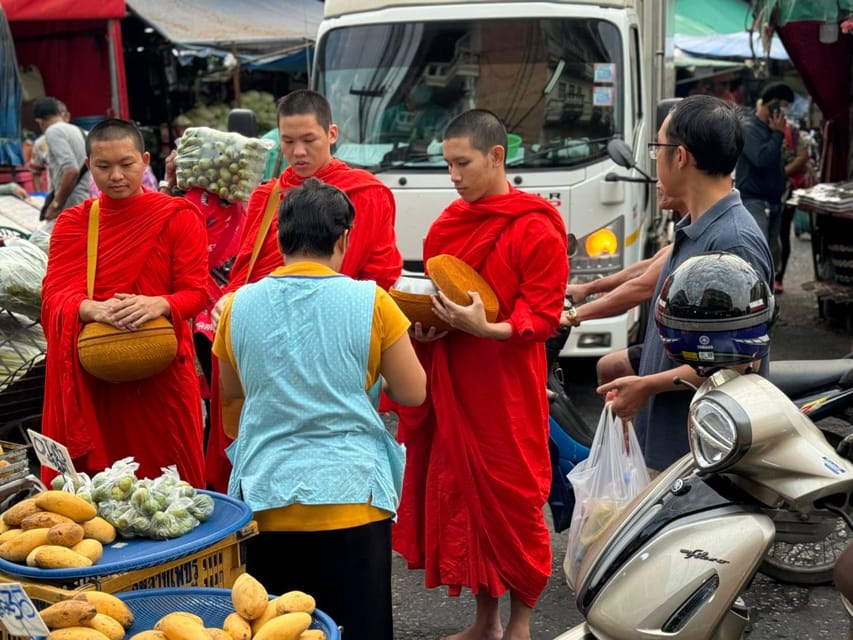
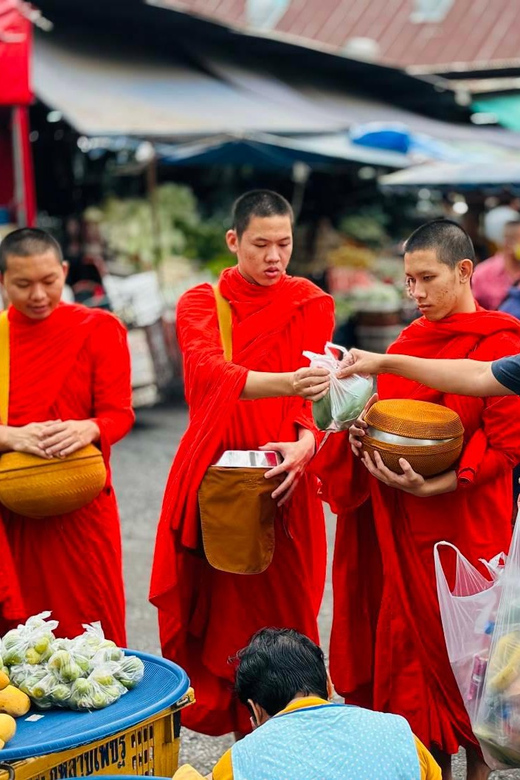
About a short way into the morning, you pass through the market (Mueang Mai Market area) where Buddhist devotees await the monks’ offerings. This is one of the most memorable parts because you’re watching real morning routines unfold.
Here’s what makes the market stop valuable: you’re seeing the human side of the practice. People are preparing, waiting attentively, and offering food as part of the day’s rhythm. You’ll also notice how local produce and everyday business sit right alongside religious life.
Photo-wise, this is the section where you’ll probably want your camera. Fresh produce, early-morning faces, and the steady line of monks create natural photo opportunities. Just keep it respectful—don’t block movement, and follow your guide’s cues.
If you’re expecting a quiet, empty street, adjust your mindset. Even at sunrise, this is where daily life happens. But because it’s organized around the alms routine, it feels orderly and meaningful rather than chaotic.
Helping with alms collecting: the etiquette that makes it respectful
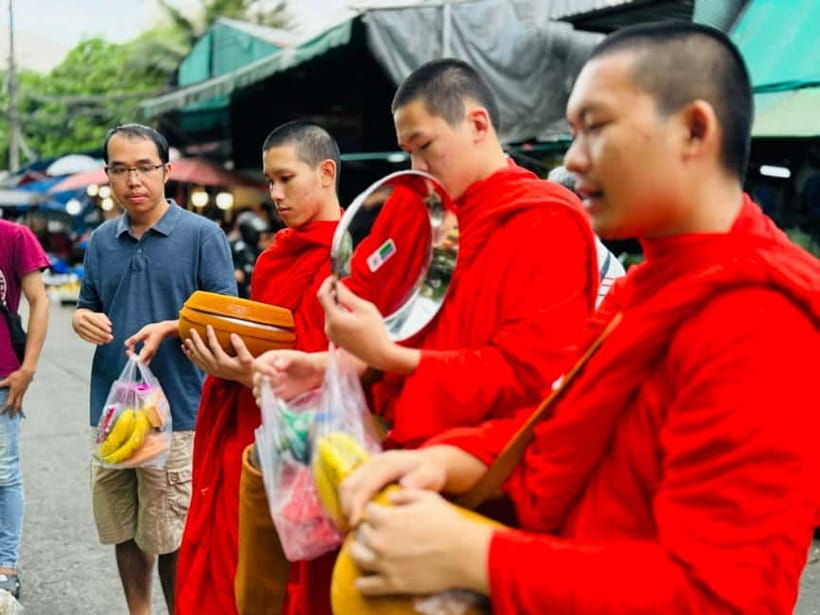
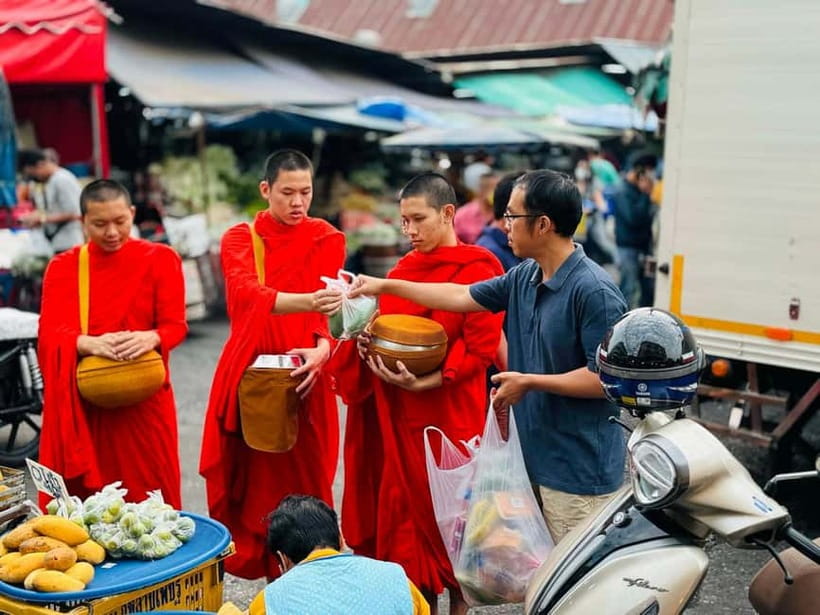
The headline promise is clear: you help monks with the food-collecting practice. That’s not just a photo moment—it’s a hands-on way to understand what alms giving actually looks like on the ground.
What’s important is how you do it. Your guide sets expectations early, and you’ll be reminded through the walk. This is where a former monk guide makes a difference, because they can explain not only the rules but the reason behind them.
Also, keep expectations realistic. You’re not “becoming a monk” for the morning. You’re participating as a lay visitor in a structured practice. The respectful behavior you learn here makes a difference when you later visit temples on your own.
One more detail: you may have an opportunity to give alms at the temple near the end of the experience. That part can add a satisfying sense of closure—like you got to see the ritual and then, with guidance, take part at the appropriate time.



Back to the temple: meeting and dialogue with monks
At around 7:30 AM, you return to Wat Chai Sri Phum. Then the tour shifts from walking to conversation. This is where the experience stops being a route and turns into understanding.
The meeting and dialogue with monks is described as an opportunity to learn Buddhism and take part in Dhamma discussions. In practice, this usually means you’ll get time for questions. If you’ve ever wondered about everyday Buddhist terms you see around Chiang Mai temples, this is the moment when someone can explain them in context.
I like this structure: the walk gives you the visuals, and the dialogue gives you the meaning. Without the second part, alms collecting can feel like a neat cultural scene. With the discussion, it becomes a living system of beliefs and behavior.
Guides have also been known to cover temple etiquette and Thai cultural context, so even if you’re not deeply religious, you’ll still leave with a clearer sense of what you were seeing.
Price and value: $20 for a small group with an ex monk guide
At $20 per person, this is not the cheapest thing you can do in Chiang Mai. But it is good value if you care about authenticity and learning, because you’re paying for three things:
1) A small group capped at 6 participants, which keeps the experience more conversational
2) A live guide with ex monk background, which changes the quality of explanations
3) A time-and-place experience that only works in the early morning, when monks actually collect alms
Food is not included, and neither are drinks. Donations to the temple are also not included, so you should budget extra if you plan to participate with offerings. But that separation can actually help keep the activity respectful and clear—your contribution is your choice, not a bundled cost.
Overall, I think this is a fair price for an experience that isn’t just “temple viewing.” It’s structured around the daily practice of Buddhism.
Practical timing: what the 2.5 hours feels like in real life
The official duration is 147 minutes, and the schedule is tight enough that you should plan your morning around it. You’re up early, you walk with monks, you hit the market area, then you return and talk.
Because it’s a short window, you don’t have time to wander off on your own during the route. The best approach is to treat this like a guided morning class—pay attention, ask questions when invited, and let the pace carry you.
Also, remember: this is early. It’s not a late-morning stroll where you can easily refresh mid-way. Wear comfortable clothes and be ready for a bit of walking.
What to bring (and what to leave behind)
Your packing list is simple, and that’s good.
Bring:
- Change of clothes
Leave behind:
- Anything that could be unsafe or disruptive, including weapons or sharp objects
- Headphones
- Any sort of costume
- Alcohol and drugs
Some rules also point to what the tour operators are trying to prevent. You can’t use baby strollers or baby carriages, and the list also includes electric wheelchairs. The tour also doesn’t allow drinks during the activity, and food and drink aren’t included anyway.
If you’re the type who likes to pack everything “just in case,” keep it minimal here. The rules are straightforward: be ready to walk and participate without extra distractions.
Who this tour suits best in Chiang Mai (and who should skip it)
This experience is built for people who want a respectful, guided look at monk life and Buddhist culture—especially if you like asking questions. A former monk guide and the monk dialogue after the walk make it a better fit for curiosity than for casual sightseeing.
Big note: this tour accepts only men. If you’re traveling as a woman, plan on a different option.
It also isn’t suitable for:
- Children under certain ages (the tour data lists limits for children under 2, 3, 4, and 5 years old)
- People over 95 years
- Wheelchair users
- Babies under 1 year
- Anyone under 90 cm height (3 ft)
If you fall into any of those categories, it’s better to choose a different Chiang Mai activity that matches your mobility and age needs.
Language support: Chinese and English guidance
The live guide is listed as available in Chinese and English. So if you speak either language, you should be able to follow the etiquette guidance and ask questions during the dialogue.
Even if your language comfort is basic, small-group size helps. With only 6 participants, the guide has more room to clarify. You’ll likely get more time than you would on a bigger tour bus situation.
Tips that make the experience smoother (without turning it into a performance)
A monk walk is one of those things where your attitude matters as much as your schedule. I’d keep three things in mind:
- Arrive on time so you don’t disrupt the flow at Wat Chai Sri Phum
- Ask questions during the dialogue, not just during the walking portion
- Respect the pace and space around monks and devotees in the market area
Also, plan your day around the morning. With an early start and limited duration, this tour works best when you don’t schedule too much immediately afterward.
Should you book this monk alms walk in Chiang Mai?
If you’re a man, comfortable with an early start, and you want more than temple photos, I think this is a smart booking. The small group, the ex monk guide, and the walk + monk dialogue combination are what make it worth your time.
I would skip it if the eligibility rules don’t fit you, or if you want a relaxed, flexible itinerary. This isn’t that kind of tour. It’s structured around monk routine and religious etiquette.
When it’s a good match, it’s one of the more meaningful mornings you can have in Chiang Mai—because you’re not just watching belief. You’re seeing how it shows up in daily life.
FAQ
What time does the walk start, and how long does it last?
You assemble at 5:45 AM at Wat Chai Sri Phum, and the walk begins at 6:00 AM. The total duration is 147 minutes (about 2.5 hours).
Where is the meeting point?
You gather at the front of the chanting hall at Wat Chai Sri Phum, where the tourist guide is waiting. The exact spot may change.
What is included in the $20 price?
The tour includes an ex monk guide and the guided walk experience, including the temple dialogue portion.
Is food or drink included?
No. Food and drink are not included, and drinks are listed as not allowed.
Who can join, and are there age limits?
This tour accepts only men. It also has age restrictions (children under the listed ages are not suitable) and it’s not suitable for wheelchair users and people over 95 years.
What should I bring, and what is not allowed?
Bring a change of clothes. Not allowed items and restrictions include weapons or sharp objects, headphones, costumes, and alcohol and drugs (along with other listed restrictions).