REVIEW · CHIANG MAI
Chiang Mai Temples Visit Walking Tour with Ex-Monk Guide Part 1
Book on Viator →Operated by Chiang Mai City Temple Visit Walking Tour With Ex-Monk Tourist Guide (Part 1) · Bookable on Viator
Old temples, explained by a real monk. On this Chiang Mai walking route, I really liked the ex-monk guide who connects Buddhism to what you’re standing in front of, and the light, walkable pace that keeps the day feeling easy. The one catch is simple: a couple of the top temples have entrance fees you pay separately.
You’ll start at the Three Kings Monument, where the guide gives you the context you need before you move. Your TAT-licensed English or Chinese-speaking guide keeps things clear and practical, and the group stays small (max 20), so questions don’t get swallowed.
This is listed as Part 1, and it works well as a first taste of Chiang Mai’s temple world—especially if you want meaning, not just sightseeing. Just note that it requires good weather, so you’ll want to check the forecast.
In This Review
- Key Highlights I’d Plan Around
- Walking Chiang Mai Temples Like a Local: What 3.5 Hours Really Means
- Three Kings Monument: The Setup That Makes the Temples Click
- Wat Sadeu Muang and Inthakhin Temple: The City Pillar Story
- Wat Phra Singh: 14th-Century Craft, Lion Buddha, and a Separate Admission
- Wat Phan Tao: Teakwood Lanna Beauty and a Royal Connection
- Wat Chedi Luang Varavihara: Chiang Mai’s Largest Stupa and Lanna Scale
- Katoon the Ex-Monk Guide: Why the Ex-Monk Angle Matters
- Price and Value: Why $25.96 Can Actually Be a Good Deal
- When Weather Changes the Plan: A Practical Note for Chiang Mai
- Who This Tour Fits Best (and Who Might Want Another Option)
- Should You Book Chiang Mai Temples Visit Walking Tour Part 1?
- FAQ
- How long is the Chiang Mai Temples Visit Walking Tour (Part 1)?
- Where does the tour start, and what’s the meeting point?
- What time does the tour begin?
- Are temple entrance fees included?
- What language(s) is the guide available in?
- Is this a walking tour or does it use transportation?
- What’s the maximum group size?
- Do I need to print a ticket?
- Is the tour dependent on weather?
- What is the cancellation policy?
Key Highlights I’d Plan Around
- Ex-monk perspective: Katoon’s firsthand Buddhist background changes how the sites make sense.
- Short walking segments: Distances feel manageable, not tiring.
- A “why this matters” tour: Explanations tie Buddhism to temple features, not just dates.
- Lanna-style architecture focus: You get specific attention to teakwood halls, stupa scale, and detail work.
- Some free entry temples: A few stops don’t require entrance fees, helping you control total cost.
- Small group of up to 20: Better pace, easier conversation.
Walking Chiang Mai Temples Like a Local: What 3.5 Hours Really Means
This tour is built for a comfortable morning in Chiang Mai: about 3 hours 30 minutes of guided walking and temple time. It’s not a “race to see as many as possible” format. The route is close enough that the walking stays light, which matters because you’ll be looking up, moving slowly through grounds, and absorbing explanations.
The start is 9:00 am at the Three Kings Monument (your meeting point). The tour ends back there, so you’re not trying to figure out a second pickup point or your way back later. That’s small, but it helps. One less logistics puzzle on Day 1.
Group size is capped at 20 travelers. In real terms, that often means the guide can keep an eye on the pace. It also makes it easier to ask follow-up questions when something clicks for you. And from the guide style described, you’re not just getting facts dumped in your lap—you’re getting a reason why people build temples this way and what Buddhist ideas connect to the visuals.
Also, you’ll get a mobile ticket, so you don’t need to hunt for paper. That’s a nice convenience in Thailand, where your phone often does most of your travel work anyway.
You can also read our reviews of more walking tours in Chiang Mai

Three Kings Monument: The Setup That Makes the Temples Click
The tour begins at Three Kings Monument, and the guide uses that first stretch to brief you before you start walking. I like this approach because temple visits can be confusing if you only look at structures without a frame.
This first stop is 10 minutes and free (no admission ticket required). The point is orientation: you get introduced to what you’re about to see and the lens the tour uses for reading Buddhist sites. In practice, that means when you reach the next temple, you’re not starting from zero.
It’s also a practical meeting point. Since the monument is the designated location, you’re not trying to match a guide to a moving crowd. You show up, check in, and go.
If you’re the kind of traveler who likes to know what you’re looking at before you photograph it, this opener pays off.
Wat Sadeu Muang and Inthakhin Temple: The City Pillar Story
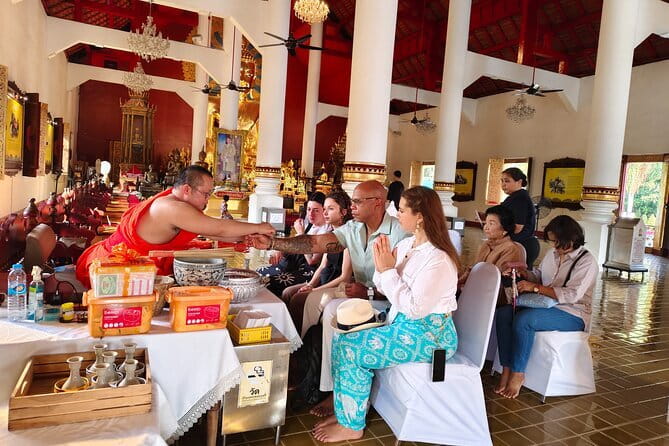
The second stop is Wat Sadeu Muang, with about 30 minutes here. This isn’t one of those temples you’d necessarily pick just by scrolling photos. The value is in the meaning: you’ll start visiting the Inthakhin temple, described as the first place where the city pillar was set.
That detail matters because Chiang Mai’s temple culture isn’t just about individual buildings. It’s also about the way a city organizes its sacred identity—what anchors the community, what symbolizes protection, and how the spiritual and the everyday get linked.
Because this stop is admission-free in the tour plan, it’s also a smart early move. You’re getting context without extra cost right away. And timing-wise, it works well: you’ve already had your tour intro, then you go into a site connected to the city’s spiritual foundation.
If your goal is to understand Buddhism in a Thai context (not just admire buildings), this kind of opening story sets the tone.
Wat Phra Singh: 14th-Century Craft, Lion Buddha, and a Separate Admission
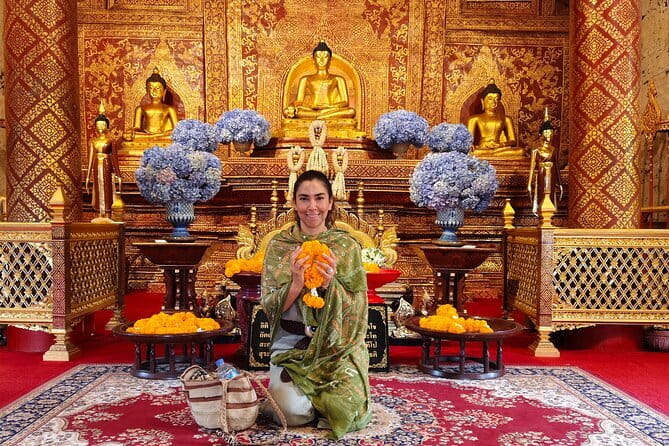
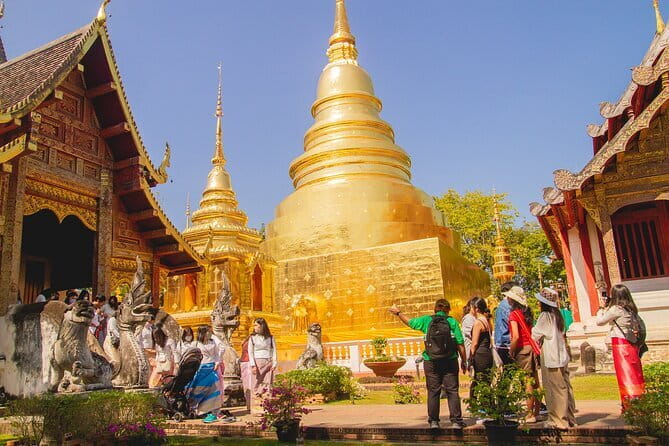
Next comes Wat Phra Singh, with around 45 minutes set aside. This is one of the best-known names in Chiang Mai temple life, and the tour highlights why: it’s described as a 14th-century temple and one of Chiang Mai’s finest.
You also get pointed attention to specific features, including:
- a mosaic-inlaid sanctuary
- a large Lion Buddha statue
- a gilded pagoda area (the description cuts off, but gilded pagoda is explicitly noted)
This stop is where you’ll likely spend more than you expect unless you budget for it. The tour plan lists admission here as not included. So your base price is $25.96, but your real out-the-door cost can rise at big-name sites.
My practical advice: think of entrance fees as the “choose-your-total” part of the trip. This tour gives you guided time across several temples, and a couple of the most important ones are paid on top. You still get strong value because the guide is included for the whole route, and you’re not paying separately for each guided visit.
Wat Phra Singh is a great place to slow down. When you’re given context for the design and symbols, that mosaic work and the lion imagery stop being decorative and start feeling purposeful.
Wat Phan Tao: Teakwood Lanna Beauty and a Royal Connection
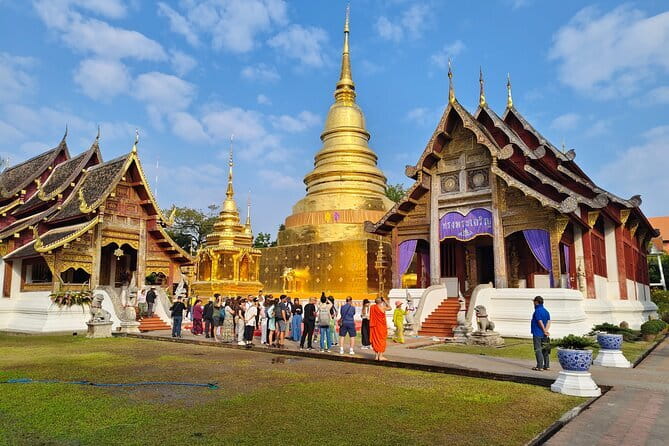
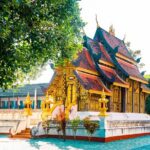
Wat Phan Tao is the next stop, with 30 minutes. This one gets attention for a very specific reason: its Lanna-style ordination hall (Wihan), described as being entirely made of teakwood.
That’s the kind of detail you don’t want to just skim past. Teakwood construction isn’t simply a “materials flex”—woodwork like this carries meaning in how spaces are built for religious ceremonies and status. The description also connects the hall to history: it served as a throne hall during the reign of King Mahotara Prateth.
In other words, you’re not only looking at a temple room. You’re looking at a space that held power and ceremonial authority, later becoming part of religious life again.
This stop is admission-free as listed in the tour plan. That makes Wat Phan Tao a nice cost-control moment while still feeling culturally weighty.
If you’re the type who loves architecture and craft details, this is a strong stop to keep your camera ready—but also to listen, because explanations help you notice what you’d otherwise miss.
You can also read our reviews of more guided tours in Chiang Mai
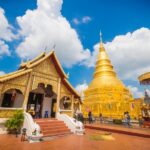

Wat Chedi Luang Varavihara: Chiang Mai’s Largest Stupa and Lanna Scale
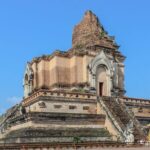
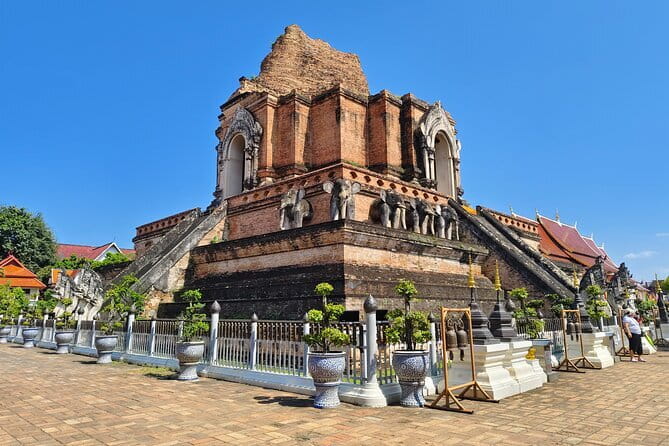
The final temple stop is Wat Chedi Luang Varavihara, with about 45 minutes allocated. The standout detail is scale: the tour description says it has the largest stupa in Chiang Mai.
That matters because stupa size changes how the grounds feel. You don’t just pass through; you walk the compound in a way that makes the monument feel like the center of gravity.
The tour also points you toward what to look for in the design: Lanna-style details. The plan notes you’ll get chances to see these design elements up close as you walk the larger compound.
Like Wat Phra Singh, admission here is not included. So this is your second potential add-on fee after Wat Phra Singh. Again, it’s not a reason to skip the tour—it’s a reason to budget a little buffer so the trip stays smooth.
This stop tends to leave people with the strongest visual memory, mostly because the stupa’s presence forces attention. With a guide explaining the symbolism behind what you see, it’s easier to turn the experience from “pretty structures” into “a living religious tradition with deep roots.”
Katoon the Ex-Monk Guide: Why the Ex-Monk Angle Matters
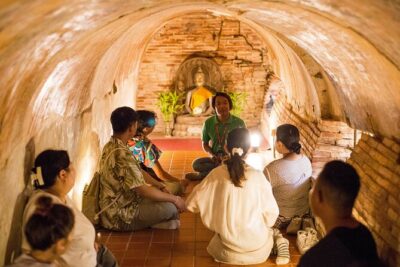
The most praised part of this tour is the guide. The ex-monk perspective isn’t treated like a gimmick. It comes through as a teaching style.
In the feedback you can feel the pattern: Katoon is repeatedly described as someone who explains origins and precepts of Buddhism, gives clear temple history and cultural context, and communicates in strong English (and in some cases, the tour is offered in Chinese as well).
There’s also a very practical side. The same guide is praised for being kind and patient, including thoughtful pacing and even helping with photos. That last detail matters more than people think. Temple photography is tricky—you want the right angle, not random walking around with missed moments. When the guide understands where to stand and how to frame things, your photos improve without turning the tour into a photo shoot.
One review notes the guide has been a monk for 18 years. Even if you don’t focus on the number, the influence shows: you get explanations that come from lived practice, not just textbook facts.
If you want a temple tour that answers questions like:
- what you’re seeing,
- why it exists,
- and how it connects to Buddhist ideas,
this is the right kind of tour.
Price and Value: Why $25.96 Can Actually Be a Good Deal
At $25.96 per person, this tour is priced like a budget-friendly city experience—especially because the main “expensive part” (a guide) is included.
Here’s what you get for the base price:
- a TAT-licensed English or Chinese-speaking guide
- about 3.5 hours of guided time
- visits to multiple major temples
- a walking format that doesn’t require transport fees in the middle
- a small group size (max 20)
- mobile ticket
What you pay separately:
- entrance fees at Wat Phra Singh and Wat Chedi Luang, as listed as not included
So the real budgeting is: base tour price plus likely entrance fees for two big stops. If you’re trying to do temples on your own, you might pay less on paper—but you’ll also lose the “why” that turns architecture into understanding. And in Thailand, not understanding what you’re looking at can make temples feel like repeated scenery.
This tour is for people who want guided context without paying for a private driver. It’s a sweet spot: not luxury-priced, not bare-bones.
When Weather Changes the Plan: A Practical Note for Chiang Mai
The tour requires good weather. That sounds obvious, but it matters in Chiang Mai because rain can change how comfortable it is to walk temple grounds.
If it’s canceled due to poor weather, you’ll be offered a different date or a full refund. So you’re not stuck losing the money if the day turns sour.
My advice: keep an eye on the forecast the night before and don’t schedule this tour when you have something unmovable right afterward.
Who This Tour Fits Best (and Who Might Want Another Option)
This tour says most travelers can participate, and it fits particularly well if you:
- are in Chiang Mai for the first time and want a starting point
- like learning about Buddhism in a Thai context, not just sightseeing
- want a walking route that stays manageable
- value a guide who can explain architecture and meaning, not just give directions
It may be less ideal if you:
- hate paying extra entrance fees on top of a tour price
- want long time at just one temple rather than a curated set of stops
- prefer totally independent travel with no guided explanations
Also, because this is Part 1, it works best if you’re open to continuing the temple theme afterward with additional walks.
Should You Book Chiang Mai Temples Visit Walking Tour Part 1?
I’d book this if you want a meaningful temple introduction that doesn’t feel exhausting. The biggest reason is the guide. An ex-monk guide with a clear, friendly teaching style changes what you notice—and that turns temples into understanding instead of just a checklist.
I’d think twice only if entrance fees at major sites will annoy you, or if you’re traveling on a day where you can’t deal with weather-related changes.
If your goal is to get your bearings fast in Chiang Mai and start connecting Buddhism to what you’re seeing, this is one of the better ways to spend a morning.
FAQ
How long is the Chiang Mai Temples Visit Walking Tour (Part 1)?
It lasts about 3 hours 30 minutes.
Where does the tour start, and what’s the meeting point?
The tour starts at Three Kings Monument (QXRP+3WX, Prapokklao Road, Tambon Si Phum, Amphoe Mueang Chiang Mai, Chang Wat Chiang Mai 50200, Thailand).
What time does the tour begin?
The start time is 9:00 am.
Are temple entrance fees included?
Not fully. The tour lists entrance fees as not included for Wat Phra Singh and Wat Chedi Luang Varavihara. Other stops on the route are listed as free.
What language(s) is the guide available in?
The guide is offered as English or Chinese-speaking, and the guide holds a TAT license.
Is this a walking tour or does it use transportation?
It’s a walking tour. The meeting point is noted as being near public transportation, and the itinerary is set up as a walking route between sites.
What’s the maximum group size?
The group has a maximum of 20 travelers.
Do I need to print a ticket?
No. The tour uses a mobile ticket.
Is the tour dependent on weather?
Yes. The experience requires good weather. If it’s canceled due to poor weather, you’ll be offered a different date or a full refund.
What is the cancellation policy?
You can cancel for a full refund if you cancel up to 24 hours in advance of the experience start time. If you cancel less than 24 hours before, the amount paid will not be refunded.